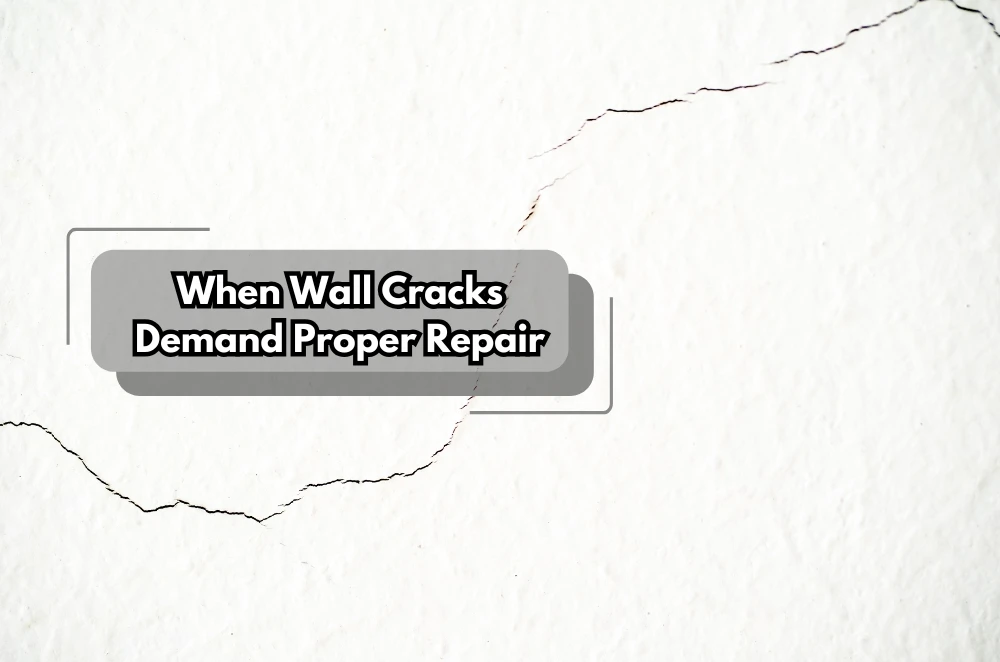

Hairline cracks rarely stay polite. They widen with weather, movement, and old paint that’s given up. If you’ve spotted lines creeping across plaster or render, the fix isn’t just cosmetic; it’s structural. Repairing wall cracks professionally ensures durability and safety. We say that because rushed patch jobs trap moisture, hide movement, and come back angrier. A good repair starts with diagnosis—why the crack formed—then uses the right mortar, mesh, and curing. It ends with a finish that blends cleanly and lasts. Do it right and you protect resale value, stop water ingress, and keep your place looking sharp without the cycle of patch, paint, repeat.
What causes cracks to keep returning?
Often, it’s movement settling, moisture swings, or vibration working against brittle finishes. Without treating the cause, the surface filler fails again.
The tricky bit is that cracks tell stories. Stair-step lines near corners hint at substrate movement. Long verticals can flag deflection. Spidering may indicate poor curing or an old repaint that trapped stress. We start by mapping the crack, tapping for hollows, and testing moisture. Then we open the joint, not just skim it, so repair materials bite properly. Flexible compounds, alkali-resistant mesh, and correct curing time matter more than any fancy paint. Skipping diagnosis is why “quick fixes” don’t last a season.
• Identify whether movement is ongoing
• Test for moisture before patching
• Use compatible mortar and mesh
• Cure fully before refinishing
We also match the finish—texture, grain, and sheen—so the repair disappears in daylight, not just under roller glare. Where movement is likely to continue, we design a controlled joint rather than pretend it’s gone. For rigid substrates and modern finishes, we rely on advanced rendering methods that strike a balance between flexibility and compressive strength, giving the repair a fighting chance when the weather turns.
Which technique actually holds up outside?
Durability outdoors relies on preparation and breathability—materials must shed water while letting trapped vapour escape.
We cut out friable render to sound edges, establish a mechanical key, and bridge the joint with mesh embedded in polymer-modified mortar. Then we feather the texture to blend under angled sun. On coastal sites, we specify corrosion-resistant reinforcement and alkali-stable meshes. Paint systems must be vapour-permeable; otherwise, moisture pressure will push new cracks through your “perfect” finish. The result isn’t overbuilt; it’s sequenced adequately so each layer supports the next.
• Prioritise vapour-permeable coatings
• Choose meshes rated for alkalinity
• Rebuild thickness in controlled passes
• Finish textures to match existing
What’s the bottom line on wall crack repair?
A lasting repair is methodical: diagnose, stabilise, rebuild, then finish to suit the substrate and climate. Anything else is roulette with your walls.
We work to stop the cycle of patch-and-paint by addressing the root causes first. That could mean addressing drainage that wets a footing, relieving a stress point with a fine control joint, or rebuilding a delaminated section that’s been moving for years. Good work looks simple when it’s done because the prep carried the load. If there’s one rule to remember, it’s this: do the slow bits right and the finish will stay quiet. For a deeper dive into how movement and materials interact, consider insights into structural cracks.






























Sign in to leave a comment.