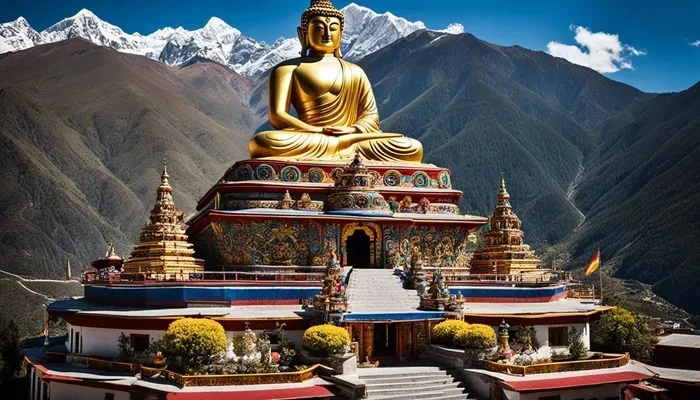

Mahayana Buddhism, meaning “Great Vehicle,” is one of the two main branches of Buddhism. It emerged as a movement that emphasized the Bodhisattva path, which is the aspiration to achieve enlightenment not only for oneself but also for the sake of all sentient beings. This approach made Buddhism more accessible to a wider audience, including laypeople and those outside monastic life. Mahayana teachings are known for their emphasis on compassion (karuṇā), wisdom (prajñā), and the belief that anyone, regardless of social class or gender, can attain Buddhahood.
Unlike early Buddhist traditions that focused more on individual liberation, Mahayana Buddhism presented a universal path to enlightenment. It introduced a vast collection of new scriptures and philosophical developments that expanded the scope of Buddhist practice.
The Early Origins and Spread of Mahayana Buddhism
The exact origin of Mahayana Buddhism is not definitively known, but scholars generally agree that it began in India around the 1st century BCE. It was not a sudden schism but a gradual development within the Buddhist community. At that time, various groups of practitioners began expressing dissatisfaction with the conservative nature of early Buddhist schools. They sought a more inclusive, compassionate path that emphasized altruism and the spiritual needs of all beings.
Over time, Mahayana began to formalize its own scriptures, which included the Lotus Sutra, the Heart Sutra, and the Perfection of Wisdom (Prajñāpāramitā) texts. These works introduced key concepts such as the emptiness (śūnyatā) of all phenomena, the Bodhisattva ideal, and skillful means (upāya).
Scriptures and Doctrinal Foundations
Mahayana Buddhism is characterized by its rich and expansive scriptural canon. These texts differ significantly from those in the Theravāda tradition and present new cosmologies, enlightened beings, and ethical ideals. The Lotus Sutra, for example, teaches that all beings have the potential to become Buddhas and that the Buddha’s presence is eternal, not limited to a historical figure. The Heart Sutra condenses the wisdom of emptiness into a short but profound text, often recited by practitioners worldwide.
These scriptures provided a new framework for understanding enlightenment, compassion, and the role of the practitioner. They were also influential in shaping Mahayana’s appeal among diverse audiences, as their teachings were adaptable to various cultures and languages.
Who Supported Mahayana Buddhism?
Mahayana Buddhism was not supported by one specific group, but rather by a wide range of people across social, political, and spiritual spectrums. The following sections detail the various individuals and communities who contributed to the growth and endurance of the Mahayana tradition over the centuries. Their support helped Mahayana Buddhism move beyond India and take root in many parts of Asia, where it remains a dominant form of Buddhism today.
1. Laypeople and Household Practitioners
One of the most significant differences between Mahayana and earlier Buddhist traditions is its inclusivity. Mahayana teachings encouraged lay participation in spiritual practice, making enlightenment accessible to everyone—not just monks or nuns. Laypeople found inspiration in the Bodhisattva ideal, which emphasized selfless service, compassion, and moral conduct in everyday life.
Householders and commoners supported Mahayana monasteries by providing food, clothing, and funds for temple construction. In return, monks offered teachings, moral guidance, and rituals. This reciprocal relationship helped to create vibrant Buddhist communities. Many sutras were even directed specifically toward lay audiences, further demonstrating their importance in the spread of Mahayana Buddhism.
2. Indian Kings and Dynasties
Royal patronage played a crucial role in legitimizing and expanding Mahayana Buddhism. One of the most famous early supporters was Emperor Kaniṣka of the Kushan Empire, who ruled in the 1st and 2nd centuries CE. Kaniṣka is believed to have convened the Fourth Buddhist Council in Kashmir, which was instrumental in compiling and promoting Mahayana texts and doctrines.
Under Kaniṣka’s patronage, Mahayana Buddhism spread rapidly through Central Asia. His court welcomed scholars, translators, and monks who helped establish Buddhist centers in regions like Gandhara and Bactria. These areas became melting pots of Indian, Greek, and Central Asian artistic and philosophical traditions, influencing the visual representation of Buddhist figures and shaping Mahayana iconography.
3. Visionary Monks and Scholars
Mahayana Buddhism also owes much to the dedicated efforts of monks and scholars who articulated its doctrines and taught them to wide audiences. These individuals were not just spiritual leaders but also philosophers, writers, and translators whose work shaped the intellectual landscape of Mahayana Buddhism.
Among the most influential was Nāgārjuna, the founder of the Madhyamaka school. His teachings on emptiness offered a radical reinterpretation of Buddhist metaphysics. Another key figure was Asaṅga, who, along with his brother Vasubandhu, founded the Yogācāra school, which focused on consciousness and perception. Kumārajīva, a celebrated translator, played a pivotal role in transmitting Mahayana texts from Sanskrit into Chinese. His translations were clear, poetic, and widely accepted, helping the Mahayana tradition flourish in East Asia.
4. Chinese Emperors and Literati
As Mahayana Buddhism entered China via the Silk Road, it encountered both challenges and new opportunities. The support of emperors and intellectuals was essential for its survival and growth in Chinese society. During the Northern Wei dynasty (386–534 CE), emperors like Wencheng actively supported the construction of Buddhist monasteries and cave temples, such as the famous Yungang and Longmen grottoes.
Later, during the Liang dynasty, Emperor Wu became one of Mahayana’s most ardent supporters. He embraced Buddhist ethics and integrated them into state policies. He also became a lay Buddhist himself and hosted public lectures, sponsored ordinations, and built temples throughout his kingdom. His deep commitment encouraged many officials and aristocrats to follow suit, ensuring the integration of Buddhism into the cultural and political fabric of Chinese society.
5. Artists and Craftsmen
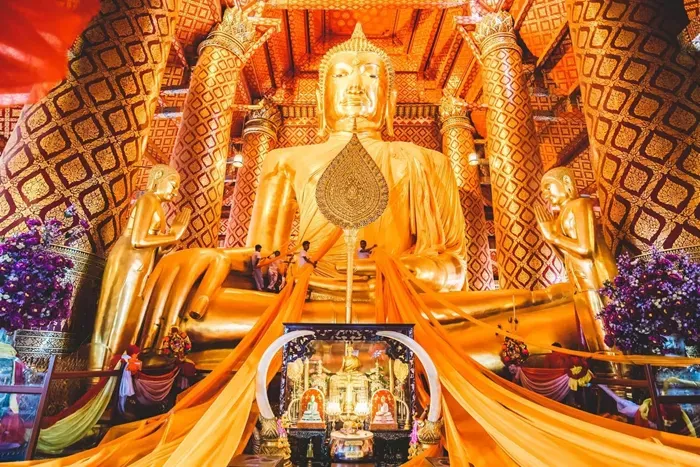
Artists played a significant role in spreading Mahayana Buddhism by bringing its teachings to life through visual art. Sculptures, murals, paintings, and temple architecture became powerful tools for educating and inspiring the public. These works often depicted Bodhisattvas like Avalokiteśvara (Guanyin), Mañjuśrī, and Kṣitigarbha, whose compassionate imagery appealed to lay practitioners.
Art also functioned as a means of worship. Pilgrims visiting temples and cave shrines would offer prayers to these figures, deepening their spiritual connection. Artistic patronage by kings, nobles, and commoners alike ensured that Mahayana imagery remained vibrant and visible across the Buddhist world.
6. Pilgrims, Travelers, and Translators
The desire to access authentic Buddhist texts and teachings led many Chinese monks to undertake perilous pilgrimages to India. Notable among them was Faxian in the 5th century and Xuanzang in the 7th century. These monks traveled for years, crossing deserts, mountains, and foreign lands to reach Buddhist sites in India and retrieve Mahayana scriptures.
Upon returning to China, they translated the texts and wrote travelogues that described their experiences and discoveries. Xuanzang, in particular, became a revered figure for his efforts to clarify doctrinal issues and promote the Yogācāra school. His translations formed a large part of the Chinese Buddhist canon and had a lasting impact on East Asian Buddhism.
Mahayana Buddhism Across Asia
In India
While Mahayana Buddhism flourished in India for several centuries, it eventually declined due to the resurgence of Hinduism and Islamic invasions. However, its influence continued through art, literature, and the spread of its texts to other countries. Indian universities like Nalanda and Vikramashila were major centers for Mahayana learning and attracted students from across Asia.
In China
China became a major stronghold of Mahayana Buddhism. Numerous schools were established, including Tiantai, Huayan, Pure Land, and Chan (Zen). These schools adapted Mahayana teachings to Chinese philosophy and culture, gaining widespread support from emperors, scholars, and the general public. Buddhist scriptures were translated into Chinese, and temples were built in nearly every region.
In Korea and Japan
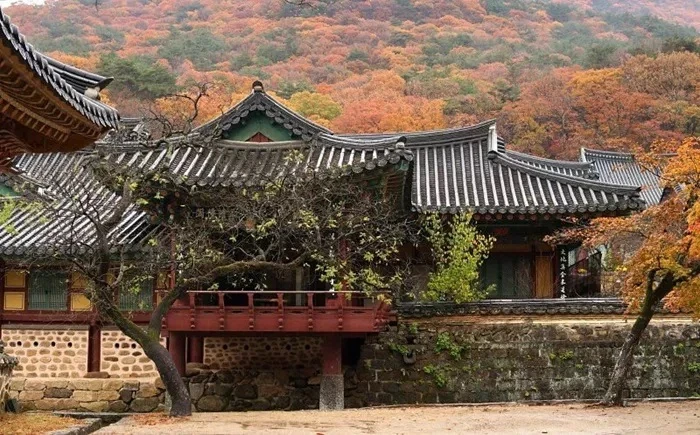
Korean rulers such as King Seong of Baekje promoted Mahayana Buddhism by sending monks and texts to Japan. In Japan, Prince Shōtoku embraced Mahayana teachings and made Buddhism the state religion during the 6th century. Mahayana schools such as Tendai, Shingon, and later Pure Land and Zen thrived, supported by emperors, aristocrats, and samurai.
In Tibet and Mongolia
Tibet adopted Mahayana teachings and combined them with local beliefs to form Vajrayāna Buddhism, also known as Tibetan Buddhism. Early Tibetan kings like Songtsen Gampo were instrumental in this transition. Indian scholars such as Śāntarakṣita and Padmasambhava were invited to Tibet, where they helped translate and transmit Mahayana texts and rituals.
Reasons for Broad Support
Universal Message
Mahayana’s promise of universal salvation made it attractive to a wide audience. Its emphasis on compassion and the Bodhisattva path gave people a sense of purpose and community. This message resonated especially during times of social and political upheaval.
Philosophical Depth
The intellectual richness of Mahayana schools such as Madhyamaka and Yogācāra appealed to scholars, monks, and thinkers. These schools offered profound insights into the nature of reality, mind, and suffering, which deepened the understanding of Buddhist practice.
Art and Ritual
Mahayana made extensive use of visual, musical, and ritual elements to make the teachings more engaging. The accessibility of devotion to Bodhisattvas, the use of mantras, and elaborate ceremonies created a rich religious life that appealed to all classes of society.
State Endorsement
Rulers saw Buddhism as a source of moral authority and social order. By supporting Mahayana Buddhism, they could unify their subjects, promote ethical governance, and legitimize their rule through religious merit.
Conclusion
Mahayana Buddhism would not have achieved its global impact without the support of a diverse range of people. From humble lay practitioners to powerful emperors, from wandering monks to visionary artists, countless individuals contributed to the vitality and spread of the Mahayana tradition. Their collective efforts helped preserve and transmit teachings that continue to inspire millions today.




























Sign in to leave a comment.