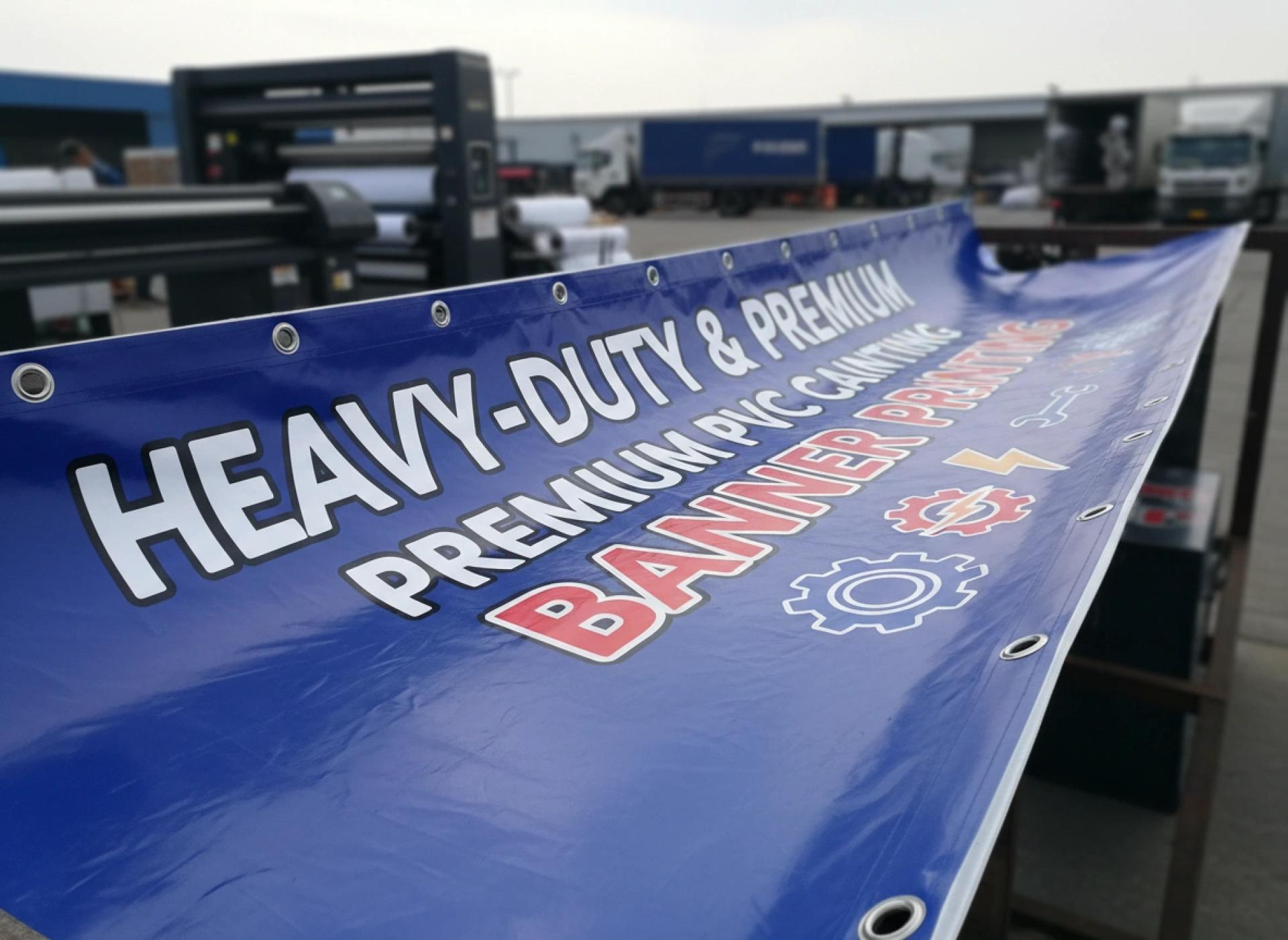

Construction sites are not brand environments.
They are exposed, temporary, regulated, and unforgiving. Materials used on them are not chosen because they are fashionable or well-worded in sustainability reports. They are chosen because they survive long enough to do their job without creating risk, delay, or liability.
This is why, despite years of discussion about alternatives, PVC mesh banner printing remains the default choice across UK construction sites.
Not because the industry resists change but because very few materials perform reliably once theory meets scaffolding, wind load, and real-world installation.
The Role of Banners on UK Construction Sites
Before materials are compared, it helps to be clear about what banners actually do on live sites.
They are not decorative. They are functional site components.
Core Functions of Construction Site Banners
Construction banners are used to:
- Control visual exposure of active works
- Communicate safety and compliance information
- Carry mandatory signage and contractor identification
- Reduce dust and debris visibility
- Provide temporary branding and planning disclosures
These functions operate simultaneously, often under regulatory scrutiny. A banner failure is not just a print issue. It can become a site safety issue or a compliance breach.
This context explains material conservatism better than any sustainability debate.
Wind Is the Governing Force, Not Aesthetics
The defining environmental factor on construction sites is wind.
Unlike retail or event environments, construction banners are installed at height, on scaffolding, fencing, and temporary structures. Wind does not apply evenly. It accelerates around buildings, funnels through gaps, and creates repeated load cycles.
Why Solid PVC Fails on Active Sites
Solid banners behave like sails. Even with heavy-duty substrates, wind load concentrates stress at fixings and hems. Over time, this leads to:
- Eyelet pull-out
- Edge tearing
- Frame distortion
- Increased risk of detachment
This is not theoretical. It is observed repeatedly on exposed sites.
Why Mesh Changes the Equation
PVC mesh banner printing exists for one reason: airflow.
By allowing wind to pass through the surface, mesh reduces pressure build-up and load transfer to fixings. This dramatically lowers failure rates compared to solid banners of similar size.
Mesh Performance Under Load
PVC mesh offers:
- Reduced sail effect
- More predictable stress distribution
- Improved behaviour on large spans
- Greater tolerance of imperfect installation
On scaffolding and perimeter fencing, these traits are not optional. They are safety controls.
Why PVC Remains the Mesh Material of Choice
The question is not why mesh is used. It is why that mesh is still PVC-based.
Tensile Strength and Tear Resistance
PVC mesh combines perforation with internal scrim reinforcement. This structure resists tearing even when individual perforations elongate under load.
Many PVC-free meshes rely on lighter fibres or bonded structures that fatigue more quickly when exposed to repeated movement.
Edge Integrity and Fixing Reliability
Construction banners are rarely installed once and left untouched. They are adjusted, re-tensioned, partially removed, and reinstalled as sites evolve.
PVC mesh tolerates this handling. Alternative materials often do not.
Predictable Lifespan
Site managers value predictability over idealism. PVC mesh offers known performance windows: it will last long enough to justify installation without surprise degradation.
Installation Reality: Where Materials Are Truly Tested
Construction banners are installed under time pressure.
Installers work at height, often in poor weather, coordinating with other trades. Perfect tensioning and textbook fixing patterns are rare.
Why Forgiveness Matters
Materials used on sites must tolerate:
- Uneven tension
- Misaligned fixings
- Movement over time
- Repeated contact with scaffolding
PVC mesh is forgiving. Many alternative materials are not.
This tolerance reduces call-backs, reprints, and safety interventions — all of which cost more than the banner itself.
Compliance and Liability Considerations
Construction environments operate under layered responsibility structures.
If a banner fails:
- The printer may be questioned on specification
- The installer may be questioned on fixing
- The principal contractor may be questioned on site safety
PVC mesh is a known quantity in risk assessments. Its behaviour is understood by contractors, insurers, and safety officers.
The Cost of Unproven Materials
Using untested materials introduces uncertainty. If failure occurs, responsibility becomes harder to defend.
For this reason alone, conservative material choices persist on regulated sites.
Sustainability Pressures and the Practical Response
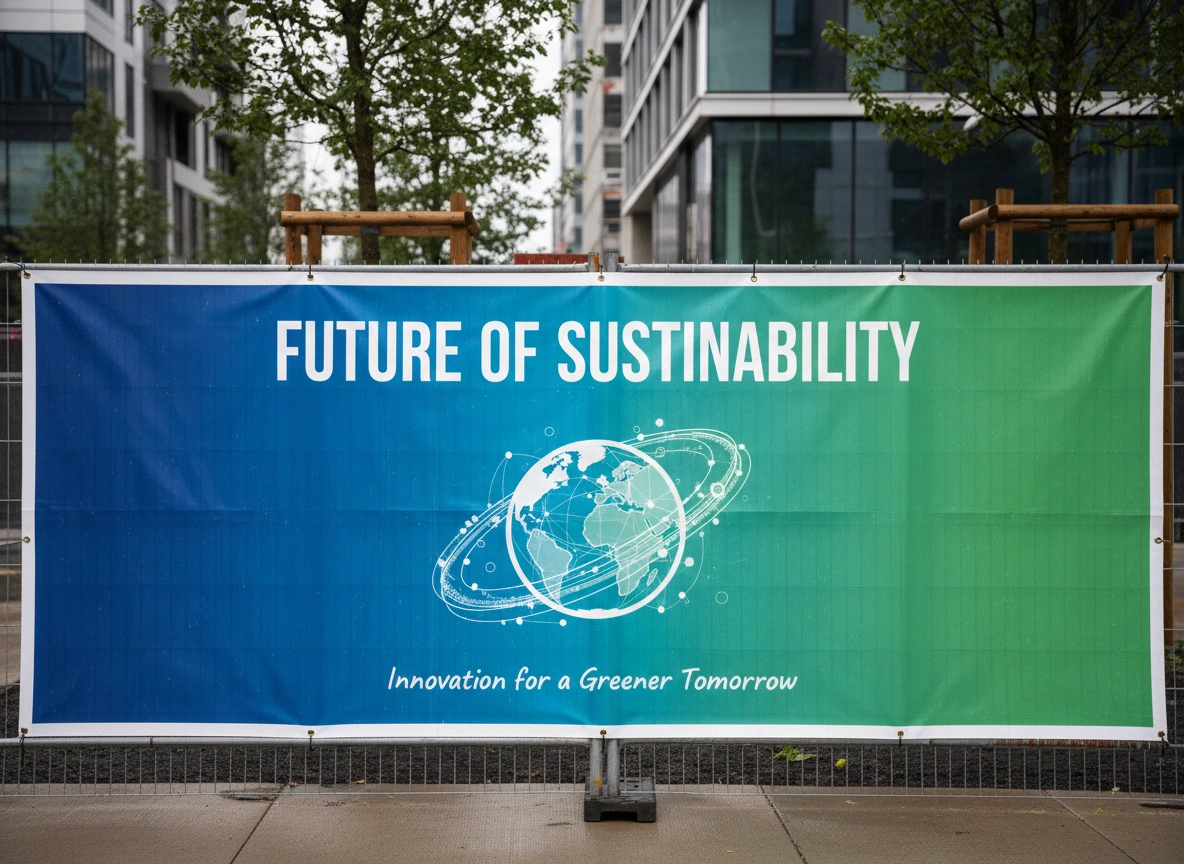
Environmental scrutiny is increasing, including on construction projects. But sustainability decisions are filtered through risk.
Why PVC Has Not Been Eliminated
PVC is not biodegradable. That fact is acknowledged.
However:
- Recyclable PVC mesh is now widely available
- Specialist recovery schemes exist
- Longer lifespan reduces replacement frequency
From a lifecycle perspective, a single durable PVC mesh banner may have lower impact than multiple failed alternatives.
Where Alternatives Are Being Used Successfully
This does not mean alternatives are ignored entirely.
PVC-free meshes are sometimes used:
- On short-duration sites
- In low-wind urban courtyards
- For interior-facing scaffold wraps
Their use increases where exposure and risk decrease.
What they have not done is replace PVC mesh as the default on exposed sites.
Cost Is Secondary to Failure Risk
Construction procurement does not optimise for unit price alone.
A failed banner can trigger:
- Emergency removal
- Replacement printing
- Installation downtime
- Safety audits
These costs dwarf the price difference between materials.
PVC mesh remains economically rational because it reduces downstream risk, not because it is cheapest upfront.
The Printing and Finishing Factor
PVC mesh banner printing is supported by mature production workflows.
Ink adhesion, curing behaviour, finishing techniques, and edge reinforcement are well understood. Welded hems and correctly spaced eyelets integrate reliably with PVC mesh.
Alternative materials often require modified processes, increasing variability.
Consistency matters more than novelty.
What Would Actually Replace PVC Mesh?
For PVC mesh to be displaced on construction sites, a material would need to demonstrate all of the following simultaneously:
- Equivalent wind-load behaviour
- Comparable tear resistance
- Predictable lifespan under UK conditions
- Compatibility with existing fixing systems
- Clear end-of-life handling
- Acceptance by contractors and insurers
No current material meets all six without compromise.
Final Perspective
Construction sites rely on PVC mesh banner printing because it works where failure is not an option.
It survives wind, handling, regulation, and time. It integrates into established safety practices. It fails predictably, rarely catastrophically, and usually after it has done its job.
Until an alternative proves itself under the same conditions — not in labs or case studies, but on scaffolding in British weather — PVC mesh will remain the material of choice.
Not out of habit.
Out of responsibility.
If you want more information visit I you Print.




Sign in to leave a comment.