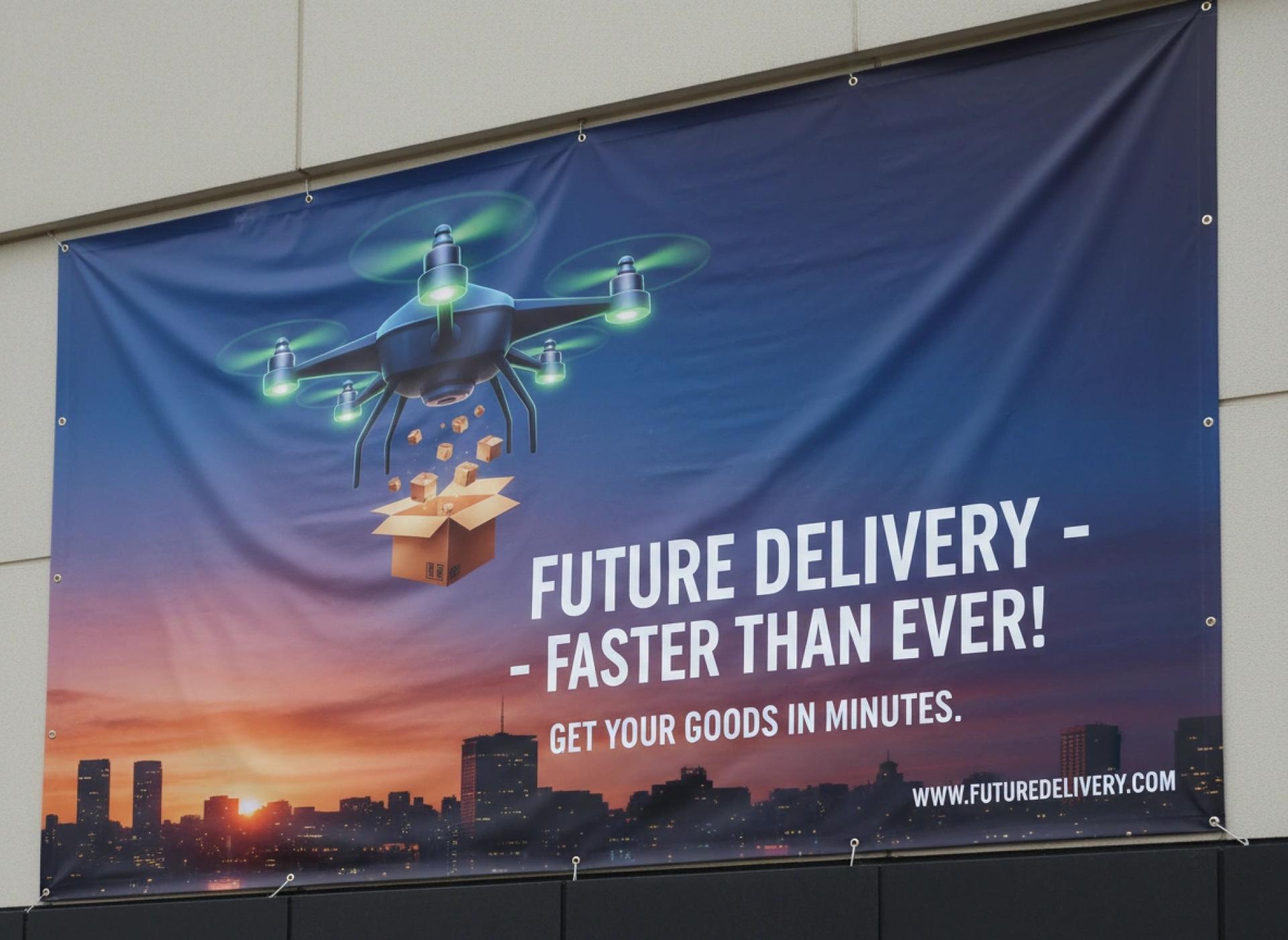

PVC banner printing sits in a strange position within UK visual communication.
It is everywhere, yet rarely discussed seriously. Retailers use it without thinking twice. Event organisers rely on it under pressure. Local authorities specify it cautiously, sometimes reluctantly, but repeatedly.
The material is the same. The expectations are not.
What changes across retail, events, and public-sector use is not the PVC itself, but the risk profile, lifespan requirement, regulatory exposure, and tolerance for failure. Understanding those differences explains why one material continues to serve so many roles — and why misuse is where problems begin.
Why PVC Persists Across Disconnected Sectors
PVC Mesh banners are not dominant because they are perfect. They are dominant because they are predictable.
Across all three sectors, decision-makers prioritise:
- Visibility without power
- Rapid deployment
- Controlled cost
- Known behaviour in UK weather
Digital alternatives fail at at least one of these. Fabric often fails at two.
PVC remains because it fits into real operational workflows, not idealised campaigns.
Retail Use: Speed, Consistency, and Visual Competition
Retail environments are hostile to signage.
Stores compete visually with neighbouring brands, passing traffic, seasonal clutter, and ever-changing promotions. Banners are expected to appear quickly, communicate immediately, and disappear without consequence.
What Retail Actually Needs from PVC Banners
Retail PVC banner printing prioritises:
- Fast turnaround
- Strong colour blocking
- Repeatable output across multiple locations
- Easy installation by non-specialists
Durability matters, but only up to a point. Most retail banners are short-lived by design.
Indoor vs External Retail Deployment
Indoor banners focus on surface quality and colour accuracy. Outdoor retail banners, particularly on shopfronts and railings, introduce wind and weather considerations that are often underestimated.
A common retail mistake is specifying indoor-grade PVC outdoors. It looks fine initially, then curls, fades, or tears within weeks usually after the campaign window has passed, masking the real cost.
Events: Temporary by Name, Not by Conditions
Events are often described as temporary environments. In practice, they are among the most demanding.
Why Event Banners Fail More Often Than Retail Banners
Event banners are:
- Installed under time pressure
- Handled repeatedly
- Exposed to crowds, wind, and improvised fixings
- Removed and reused
PVC banners perform here because they tolerate abuse better than most alternatives.
Mesh vs Solid PVC in Event Settings
Outdoor events frequently require mesh PVC banner printing, especially for fencing, crowd barriers, and temporary structures.
The decision is rarely aesthetic. It is about preventing sail effect in unpredictable wind conditions where crowd safety is involved.
Local Authorities: Regulation Changes Everything
Local authorities use PVC banners very differently.
Here, signage is not promotional. It is informational, regulatory, or consultative. That distinction introduces legal and reputational risk.
What Councils Care About
Local authority banner specifications typically prioritise:
- Legibility over distance
- Compliance with branding guidelines
- Resistance to vandalism and weather
- Predictable lifespan aligned to consultation periods
Failure is not tolerated quietly. A torn or illegible banner becomes a public-facing issue.
Procurement Logic vs Creative Intent
One reason PVC works across sectors is that it satisfies both creative and procurement requirements — often reluctantly.
Creative teams care about appearance. Procurement teams care about cost control, durability, and supplier accountability.
PVC sits at the intersection. It may not excite either group, but it rarely creates conflict.
One Material, Three Lifespan Expectations
The same PVC banner material may be used very differently depending on context.
| Sector | Typical Display Duration | Primary Risk |
| Retail | Days to weeks | Visual competition |
| Events | Hours to weeks | Handling & wind |
| Local Authorities | Months | Compliance & exposure |
Understanding lifespan expectation is more important than material selection alone.
Finishing Choices That Change Outcomes
Across all sectors, finishing determines success more than print quality.
Retail banners often fail due to insufficient eyelets. Event banners fail due to poor edge reinforcement. Council banners fail when materials are not weather-rated for the display period.
PVC allows finishing options — welded hems, reinforced edges, adjustable fixings — that adapt to these risks.
Environmental Scrutiny Across Sectors
Environmental pressure affects each sector differently.
Retail faces consumer perception. Events face waste volume criticism. Local authorities face policy obligations.
PVC remains in use because recyclable PVC options now exist that align with procurement frameworks without introducing performance risk.
This does not eliminate environmental impact. It reduces unintended consequences from premature failure and replacement.
Why Alternatives Struggle to Cross Sectors
Fabric banners work well indoors and in controlled environments. They struggle outdoors and under repeated handling.
PVC-free substrates appeal in principle but often fail under UK weather patterns when deployed beyond short durations.
What works in one sector often collapses in another. PVC remains because it scales across use cases.
The Cost of Misalignment
Problems arise not from using PVC, but from using the wrong specification within PVC.
A retail-grade banner used on a council railing.
An indoor banner reused at an outdoor event.
A solid banner installed where mesh was required.
The material gets blamed. The specification was the real issue.
Final Perspective
PVC banners persist across retail, events, and local authorities not because they are fashionable, but because they adapt.
They meet different operational demands without forcing sectors to reinvent processes, retrain installers, or absorb unpredictable risk.
One material. Many roles.
The difference is not the PVC — it is understanding how and where it is expected to perform.
I YOU PRINT works within that reality, specifying PVC banner printing not by default, but by context — aligning material, finishing, and deployment with how banners are actually used across the UK, not how they are described in catalogues.































Sign in to leave a comment.