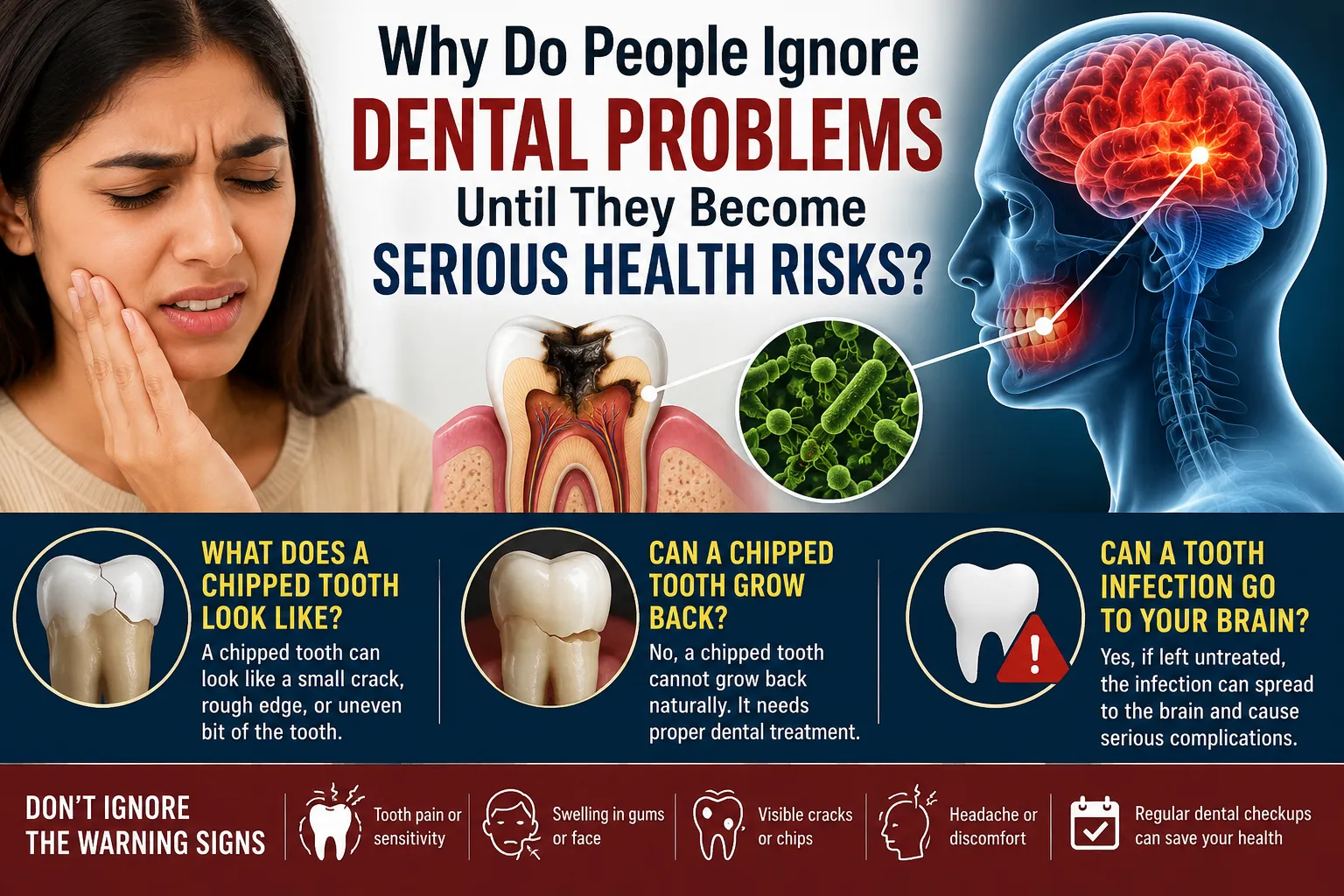

There's something almost universal about the way people deal with dental problems — they don't. Not until the pain becomes unbearable, not until eating becomes a struggle, and not until a minor toothache turns into something far more frightening. It's a pattern that cuts across all age groups, all income levels, and honestly, all common sense. We'll visit a doctor for a cold, rush to the pharmacy for a headache, but somehow, dental discomfort gets pushed to the bottom of the priority list. So why does this happen? And more importantly, why is this habit far more dangerous than most people realize?
The answer goes deeper than laziness or cost. Many people genuinely don't understand how connected their oral health is to their overall health. Most think a toothache is just a toothache — something temporary, something that will pass. But here's what the medical community has been saying for years: an untreated tooth infection doesn't just stay in your mouth. People are often shocked to learn that the question can a tooth infection go to your brain is not a hypothetical one — it's a documented, life-threatening reality. Bacteria from an infected tooth can travel through the bloodstream, and in severe cases, can reach the brain, causing abscesses and conditions that require emergency surgery. This isn't meant to scare you — it's meant to make you take that ignored appointment seriously.
The Psychology Behind Dental Avoidance
Understanding why people avoid the dentist requires looking at more than just excuses. Dental anxiety is real, and it affects millions of people across India and globally. The memory of a painful dental procedure in childhood, the sound of the drill, the smell of the clinic — all of it can create a deep-rooted fear that persists well into adulthood. For many, walking into a dental clinic feels like willingly stepping into discomfort, so the brain does what brains do best — it avoids.
Beyond fear, there's the financial aspect. Dental care in India is often not covered under general health insurance, and many people, especially from smaller towns, treat it as a luxury rather than a necessity. So when the pain isn't unbearable, the logic kicks in: "Why spend money on something that isn't killing me?" The irony is devastating, because that's exactly what it can end up doing — in the most serious of cases.
When a Small Crack Becomes a Big Problem
One of the most commonly dismissed dental issues is a chipped tooth. People crack or chip their teeth all the time — biting into hard food, a small fall, or even grinding teeth at night. And because it doesn't always hurt immediately, it gets ignored. But knowing what does a chipped tooth look like can help you identify it early and take action before things spiral. A chipped tooth usually appears as an uneven or jagged edge along the tooth surface. Sometimes it's visible in the mirror, sometimes you only feel it with your tongue — a sharp edge that wasn't there before. In some cases, the chip is tiny, almost invisible. But even a small crack can expose the inner layers of the tooth, making it vulnerable to bacteria, sensitivity, and eventually, serious infection.
How Delay Turns a Minor Issue Into a Crisis
The human body has a remarkable ability to signal distress — and your mouth is no different. That sensitivity when you drink cold water, that dull ache that appears after meals, the slight bleeding when you brush — these are all warning signs that something needs attention. But because these signals are intermittent and manageable, people convince themselves it's not a big deal. They take a painkiller and go on with their day.
The problem is that oral issues don't plateau — they progress. A small cavity ignored long enough becomes a root canal. A gum infection that goes untreated can lead to bone loss. And an abscessed tooth, if left without care, can turn into something that threatens your life. Medical literature has documented cases where untreated dental infections have spread to the jaw, neck, and chest — a condition called Ludwig's angina — which can block the airway. The progression from "I'll get it checked next month" to a medical emergency can happen faster than anyone expects.
The Role of Awareness and Education
A significant part of the problem is simply not knowing. If you grew up in a household where dental visits were rare, where toothache was treated with clove oil and prayer, then the idea of proactive dental care just doesn't feel normal. This isn't a criticism — it's a reality for a large portion of India's population. Rural and semi-urban areas often have limited access to quality dental care, and when access is limited, awareness also takes a hit.
What's needed is a shift in mindset — viewing dental health not as cosmetic care but as essential healthcare. Your teeth and gums are directly connected to your heart, lungs, brain, and overall immune function. Periodontitis (advanced gum disease) has been linked to an increased risk of heart disease, diabetes complications, and even premature birth in pregnant women. This is not fringe science — it's backed by decades of research published in some of the most respected medical journals in the world.
Social Stigma and the "Tough It Out" Culture
In many Indian households, especially among older generations and men, there's an unspoken rule: you don't complain about pain. Enduring discomfort is somehow equated with strength, and seeking help is seen as weakness. This cultural conditioning plays a massive role in why dental problems go unaddressed. A man with a swollen jaw will often take more painkillers rather than visit a dentist, afraid of appearing fragile. This attitude, while understandable in its cultural context, costs people dearly.
Women, on the other hand, sometimes deprioritize themselves — especially mothers who put the family's health first and quietly deal with their own discomfort until it becomes impossible to ignore. The result is the same: a health issue that could have been resolved in one appointment turns into a complicated, expensive, and painful ordeal.
The Domino Effect on Overall Health
Here's what most people miss: your mouth is the gateway to your body. Whatever bacteria live in your mouth have access to your entire system. Poor oral hygiene contributes to inflammation, and inflammation is at the root of nearly every chronic disease — from arthritis to cardiovascular disease to type 2 diabetes. So when you skip dental care, you're not just protecting your smile — you're gambling with your body's long-term functioning.
People with diabetes, for example, are more susceptible to gum infections, and gum infections in turn make blood sugar harder to control. It becomes a cycle that's difficult to break without addressing the dental issue at its core. Pregnant women with untreated gum disease have a statistically higher risk of premature delivery. For those with existing heart conditions, the bacteria from gum disease have actually been found in arterial plaque. These connections are real, they are serious, and they are entirely preventable.
Conclusion
Here's the bottom line — dental problems don't get better on their own. They don't resolve because you ignored them long enough, or because you switched to a different toothpaste, or because you ate less sugar for a week. They fester, they spread, and they grow into something far more complicated and costly than they ever needed to be.
One of the most common questions people ask after a chip or crack is can a chipped tooth grow back — and unfortunately, the answer is no. Unlike bones, tooth enamel does not regenerate once it's lost. That's what makes early intervention so critical. When you act quickly, a dentist can restore, bond, or cap the tooth before further damage occurs. Wait too long, and you may be looking at extraction, implants, or bridgework — all far more invasive and expensive than a timely visit would have been.
Prevention is not just better than cure — in the case of dental health, it is dramatically cheaper, far less painful, and potentially life-saving. Schedule that appointment you've been putting off. That dull ache you've been tolerating is trying to tell you something. Listen to it before it starts screaming






























Sign in to leave a comment.