

Introduction
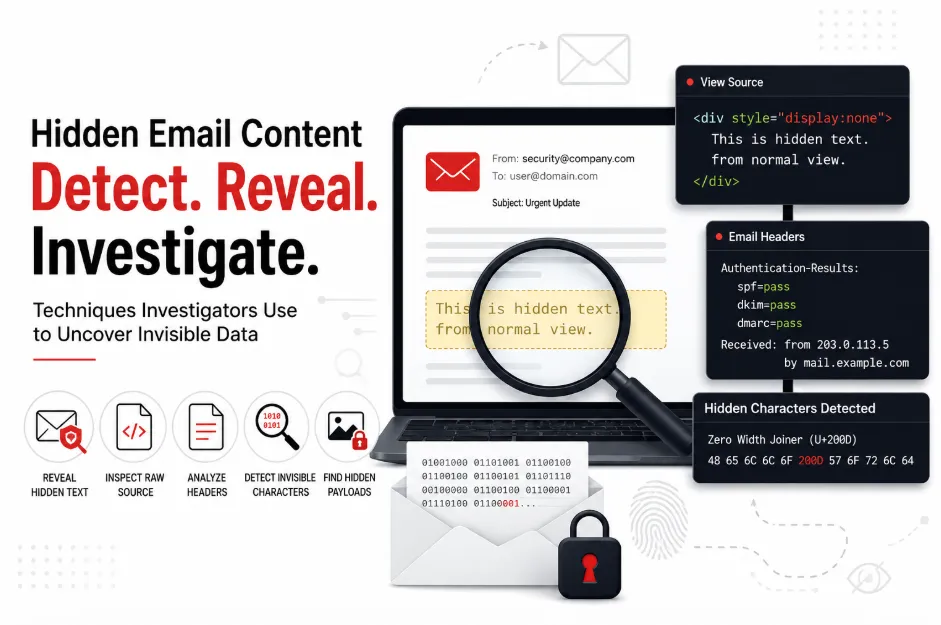
Emails are one of the most widely used communication methods for businesses and individuals. While most recipients focus only on the visible message, emails often contain hidden elements that can reveal important technical details. These hidden components may include metadata, invisible formatting, embedded links, tracking mechanisms, and HTML code.
For cybersecurity professionals and digital investigators, this concealed information can provide valuable insights into an email's origin, authenticity, and intent. Learning how hidden email content works is an important step toward identifying phishing attempts, investigating cyber incidents, and improving email security.
What Does Hidden Email Content Mean?
Hidden content refers to information embedded within an email that does not appear in the standard reading view. It is stored behind the scenes and is often accessible only through technical inspection or forensic analysis.
Examples include:
- HTML source code
- Invisible text
- Hidden hyperlinks
- Tracking pixels
- Sender authentication data
- Message metadata
- Routing information
- Encoded scripts
Although invisible to most users, these elements play a significant role in understanding how an email was created and delivered.
Legitimate Uses of Hidden Elements
Hidden content is not always associated with malicious activity. Many organizations include invisible information to improve email functionality.
Marketing Analytics
Tracking pixels help businesses determine whether recipients have opened marketing emails.
Email Formatting
HTML and CSS elements ensure messages display consistently across multiple email applications.
Authentication
Protocols such as SPF, DKIM, and DMARC help receiving mail servers verify sender legitimacy.
These features support normal email operations and are widely used across the industry.
How Cybercriminals Abuse Hidden Content
Attackers also take advantage of hidden elements to increase the effectiveness of phishing campaigns.
Common tactics include:
Concealed Links
Visible text may appear harmless while redirecting users to fraudulent websites.
Hidden Instructions
Attackers sometimes insert invisible content designed to bypass spam filters.
Tracking User Activity
Embedded tracking elements can notify attackers when an email has been opened.
HTML Obfuscation
Complex HTML code may disguise malicious behavior or conceal harmful scripts.
Because these techniques are difficult to detect through casual reading, technical inspection becomes increasingly important.
Ways to Examine an Email
Several methods allow users and investigators to inspect hidden email information.
View Original Source
Most email services provide an option to display the complete message source, including HTML and technical headers.
Review Email Headers
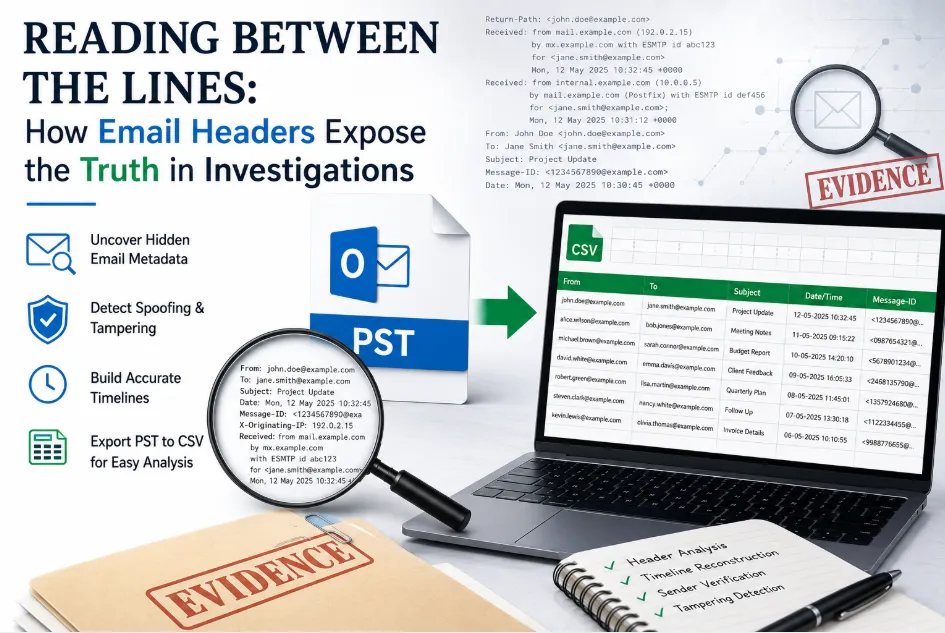
Headers contain valuable information such as server paths, authentication results, timestamps, and sending infrastructure.
Inspect Hyperlinks
Always verify the destination of embedded links before clicking.
Analyze Attachments
Documents and archived files may contain hidden comments, revision history, or embedded objects that are not immediately visible.
Each method contributes to a more complete understanding of the message.
Why Hidden Email Data Is Valuable
During cyber investigations, hidden information often provides evidence that cannot be obtained from the visible message alone.
Investigators may discover:
- Original sending servers
- Communication timelines
- Metadata changes
- Authentication failures
- Embedded tracking mechanisms
- Suspicious domains
- Email routing paths
These technical details help reconstruct events and support incident investigations.
Email Forensics in Modern Investigations
As phishing attacks and business email compromise continue to increase, organizations are investing more heavily in email forensic capabilities.
Professional forensic tools for email investigation enable investigators to recover deleted messages, inspect email headers, analyze HTML content, extract metadata, examine attachments, and correlate communications across multiple mailboxes while maintaining evidence integrity.
These capabilities are particularly valuable during corporate investigations, regulatory audits, and legal proceedings.
Tips for Staying Safe
Reducing email-related risks begins with awareness.
Follow these best practices:
- Verify unfamiliar senders.
- Hover over links before clicking.
- Be cautious with unexpected attachments.
- Keep email software updated.
- Enable multi-factor authentication.
- Report suspicious emails promptly.
- Avoid sharing confidential information through unverified messages.
Simple precautions can significantly reduce the likelihood of falling victim to phishing attacks.
Expanding Your Knowledge
Modern email systems contain much more than what appears on the screen. Hidden technical information often provides essential evidence during cybersecurity investigations and helps explain how suspicious messages reached their intended recipients.
For readers interested in exploring this topic further, How to See Hidden Text in Email offers additional techniques for uncovering concealed email content and understanding its significance during digital investigations.
Conclusion
Hidden email content is an often-overlooked aspect of digital communication. While many hidden elements serve legitimate technical purposes, others may indicate phishing attempts, malicious activity, or unauthorized tracking.
Understanding how to inspect email headers, source code, metadata, and embedded links allows individuals and organizations to make more informed security decisions. As email threats continue to evolve, developing these investigative skills has become an essential part of modern cybersecurity awareness.





























Sign in to leave a comment.