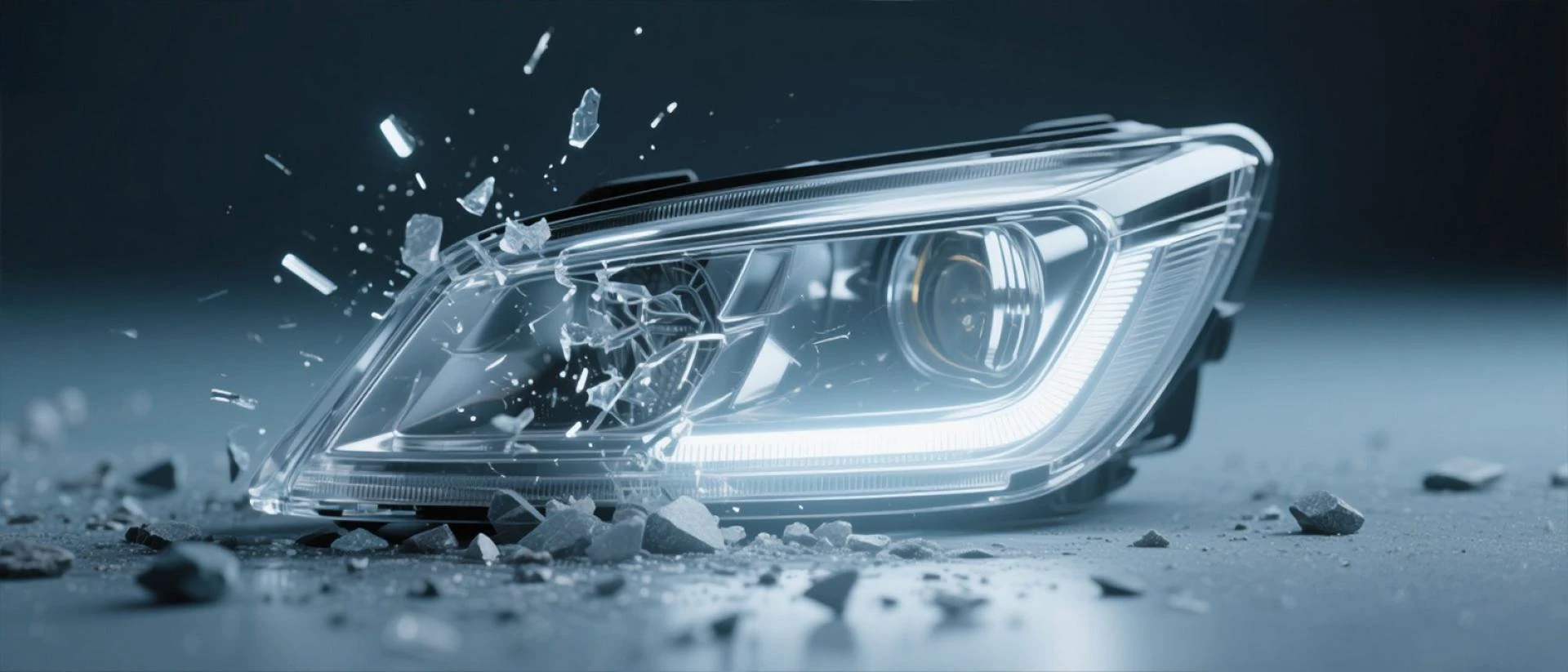

As the core guarantee of nighttime driving safety, the choice of lampshade material is directly related to the reliability and service life of the lighting system. Why is flame-retardant PC always the preferred material for automotive lampshade?
Tips: Click to check an automotive lamp manufacturing case.

As a part of the vehicle driving to withstand the high temperature of the headlight and the external environment, the lampshade needs to meet the multiple requirements of high temperature resistance, flame retardant, light transmission and mechanical strength, etc., and modified plastics are becoming the mainstream materials in the field of automotive parts by virtue of their customizable performance advantages, among which the flame retardant PC shows irreplaceable value in automotive lamp applications due to its outstanding comprehensive performance.
The core advantage of flame retardant PC material comes from the synergy of its molecular structure and modification technology: on the one hand, it has excellent mechanical properties, with tensile strength of 60-70MPa and impact strength (notched) ≥60kJ/m², which can withstand gravel splash and minor collision in the process of driving. On the other hand, its heat distortion temperature (HDT) is as high as 130-140℃, even in the high-temperature environment generated by the continuous operation of the headlight (the internal temperature can be more than 100℃), it can still maintain the dimensional stability and not warp, avoiding the light refraction deviation caused by deformation.
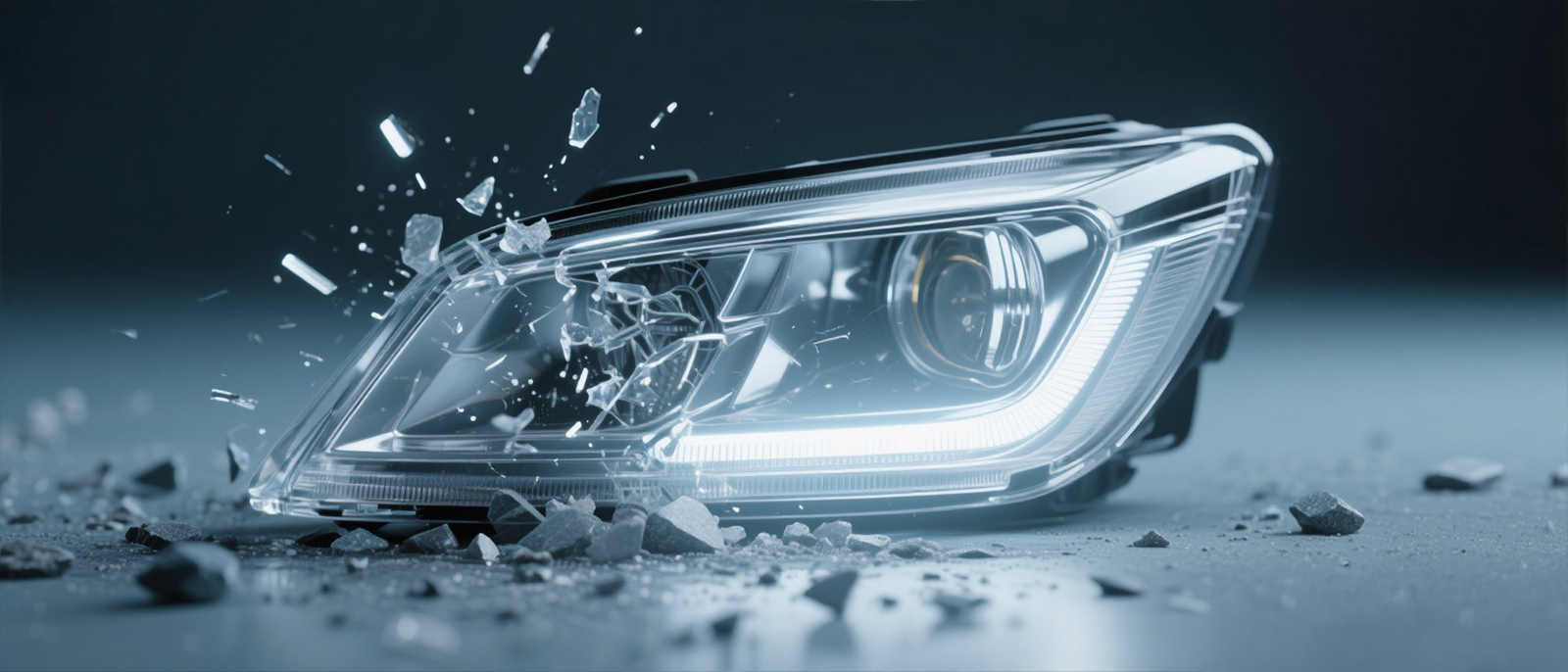
What's more, the flame-retardant PC can reach UL94 V-0 flame retardant standard through the addition of highly efficient flame retardant system, which can effectively prevent the flame from spreading in extreme situations such as accidental short-circuiting and reduce the safety risk. In addition, the material's transmittance of more than 90% ensures efficient light transmission, while its ultraviolet filtering function (blocking more than 90% of UV rays) not only protects the eyes of the driver and passengers, but also slows down the aging and yellowing of the lampshade itself.
Design & Manufacturing Adaptability
From the engineering point of view, the adaptability of flame-retardant PC further expands the possibilities of lamp design: its good melt fluidity allows complex curved shapes to be molded through the injection molding process, which meets the needs of automobile manufacturers for the personalization of the appearance of the lampshade, whether it is a streamlined lampshade or a complex structure with optical prisms, all of them can be realized through one-shot molding. The dimensional stability of the material (shrinkage rate ≤ 0.5%) guarantees the precise fit between the lampshade and the lamp body, avoiding problems such as water ingress and fogging due to excessive tolerances.
Long-Term Reliability & Cost Efficiency
Nowadays, many plastic material suppliers in the market can produce special flame retardant PC materials, and by adding anti-scratch additives (surface hardness up to 2H) and weathering additives, so that the lampshade in long-term outdoor use can still maintain a clean and translucent, without the need for additional coatings, which not only simplifies the production process, but also reduces the pressure of lightweight and cost control of the entire vehicle, and truly realizes the optimization of the double safety performance and engineering efficiency.


























Sign in to leave a comment.