

Online reviews have become the default starting point for homeowners searching for a contractor. A quick scroll through ratings on Google Maps or Yelp can feel like due diligence—stars, comments, before-and-after photos, even quick replies from business owners.
But here’s the reality: reviews alone no longer tell the full story.
Today’s homeowners are more informed, more skeptical, and more emotionally invested in renovation decisions than ever before. Hiring a home improvement contractor in MA (or anywhere) isn’t like choosing a restaurant—it’s a high-stakes decision involving money, time, trust, and disruption to daily life.
This shift has exposed the limitations of online reviews. While still valuable, they are no longer enough to confidently choose the right contractor. Let’s explore why—and what homeowners are really looking for instead.
The Illusion of Trust: Why Reviews Feel Reliable (But Aren’t Always)
At first glance, reviews seem like the perfect decision-making tool. They offer:
- Social proof
- Real customer experiences
- A quick snapshot of reputation
But the problem is that reviews create an illusion of completeness.
Most homeowners assume that a contractor with a 4.8-star rating is consistently excellent. What they often don’t see is:
- The context behind those ratings
- The type of projects reviewed
- The expectations of the reviewer
A five-star review from a small paint job doesn’t necessarily translate to a flawless kitchen renovation. Yet reviews rarely provide that level of clarity.
For homeowners evaluating a home improvement contractor in MA, this gap between perception and reality can lead to mismatched expectations—and ultimately, disappointment.
Reviews Are Curated Snapshots, Not Full Experiences
Reviews tend to highlight extremes:
- Exceptionally good experiences
- Exceptionally bad ones
What’s missing is the middle ground, where most projects actually live.
A typical renovation involves:
- Minor delays
- Budget adjustments
- Ongoing communication challenges
These nuances rarely make it into reviews. As a result, homeowners are left with a distorted understanding of what working with a contractor truly feels like.
Even worse, reviews are often written:
- Immediately after project completion (before long-term issues appear)
- Without full knowledge of construction quality
- Based on emotions rather than outcomes
This makes reviews reactive, not reflective.
The Rise of Review Skepticism
Modern homeowners are no longer blindly trusting online reviews. There’s growing awareness that:
- Some reviews may be incentivized
- Negative reviews can be selectively addressed or buried
- Ratings can be influenced by factors unrelated to actual workmanship
This skepticism is reshaping how people evaluate contractors.
Instead of asking, “Does this contractor have good reviews?” homeowners are asking:
- “Do these reviews feel authentic?”
- “Do they reflect projects similar to mine?”
- “Is there consistency over time?”
When searching for a home improvement contractor in MA, homeowners are increasingly looking beyond star ratings to find signals of credibility, not just popularity.
Reviews Don’t Capture Communication Quality
One of the biggest gaps in online reviews is communication—arguably the most important factor in a renovation project.
Homeowners care deeply about:
- Responsiveness
- Clarity in timelines and costs
- Transparency during challenges
Yet reviews often reduce these complex dynamics to a single sentence:
“Great to work with!”
That doesn’t tell future clients:
- How issues were handled
- Whether expectations were managed properly
- How often updates were provided
In reality, many projects succeed or fail based on communication—not craftsmanship. But reviews rarely capture this in a meaningful way.
Every Homeowner’s Expectations Are Different
Another limitation of reviews is that they reflect individual expectations, which vary widely.
For example:
- One homeowner may prioritize speed
- Another may value meticulous detail
- A third may care most about budget control
A contractor praised by one client could disappoint another—not because of poor performance, but because of misaligned expectations.
This is especially important when hiring a home improvement contractor in MA, where project types, budgets, and homeowner priorities can differ significantly.
Reviews don’t account for this variability. They present opinions as universal truths, when in reality, they are highly subjective.
The Missing Context Problem
Context is everything in home improvement—and reviews rarely provide it.
Key details often missing include:
- Project size and complexity
- Budget range
- Timeline constraints
- Unexpected challenges
Without this context, homeowners can’t accurately interpret reviews.
For instance:
- A delay might seem like poor management—but could be due to material shortages
- A higher cost might seem excessive—but could reflect premium materials or custom work
Without context, reviews can mislead more than they inform.
Visual Proof Is Replacing Written Feedback
Today’s homeowners are shifting toward visual validation.
Instead of relying solely on written reviews, they want to see:
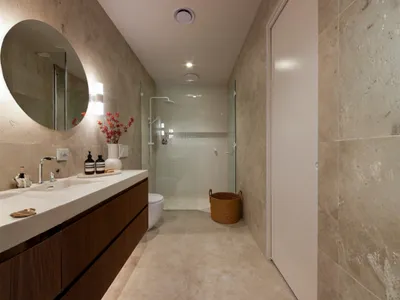
- Before-and-after transformations
- Progress photos
- Real project walkthroughs
Why? Because visuals provide:
- Proof of craftsmanship
- Insight into attention to detail
- A clearer sense of style and quality
A contractor with fewer reviews but strong visual documentation may appear more trustworthy than one with hundreds of vague testimonials.
For a home improvement contractor in MA, showcasing real project outcomes is becoming just as important—if not more—than maintaining high ratings.
Direct Conversations Are Gaining Importance
Another major shift is the growing importance of direct interaction.
Homeowners increasingly want to:
- Speak with contractors before committing
- Ask detailed questions
- Gauge professionalism and transparency
This reflects a deeper need: trust through interaction, not observation.
Reviews can’t replace:
- A clear explanation of the process
- Honest discussions about risks
- Personalized recommendations
In many cases, the decision to hire comes down to how confident a homeowner feels after a conversation—not how many stars a contractor has.
The Role of Consistency Over Time
One overlooked factor in reviews is consistency.
A contractor may have:
- Strong reviews from years ago
- But inconsistent performance recently
Or:
- A few negative reviews that don’t reflect overall quality
Homeowners today are looking for patterns:
- Are reviews consistently positive over time?
- Are similar issues mentioned repeatedly?
- Does the contractor respond professionally to feedback?
This pattern-based evaluation is far more reliable than looking at an average rating.
Reviews Don’t Reflect Problem-Solving Ability
Every renovation project encounters challenges. What matters is not whether problems occur—but how they are handled.
Unfortunately, reviews rarely provide insight into:
- Problem resolution
- Flexibility under pressure
- Accountability
A contractor’s ability to navigate setbacks is one of the most critical success factors—but it’s also one of the least visible in reviews.
For homeowners choosing a home improvement contractor in MA, this missing piece can make all the difference between a smooth experience and a stressful one.
What Homeowners Are Looking for Beyond Reviews
As reliance on reviews declines, homeowners are turning to a more holistic evaluation approach.
They are looking for:
- Transparency: Clear pricing, timelines, and processes
- Proof of work: Detailed portfolios and case studies
- Communication: Prompt, honest, and consistent interaction
- Credibility signals: Licenses, certifications, and local presence
- Personal fit: A contractor who understands their vision
This shift represents a move from passive research to active evaluation.
The New Standard: Multi-Layered Trust
Trust is no longer built through a single channel. It’s built through multiple layers:
- Reviews (initial validation)
- Visual proof (quality confirmation)
- Direct interaction (relationship building)
- Consistency (long-term reliability)
Contractors who rely only on reviews risk falling behind.
Those who invest in a broader trust-building approach are better positioned to meet the expectations of modern homeowners.
Conclusion: Reviews Are Just the Starting Point
Online reviews aren’t going away—but their role is changing.
They are no longer the deciding factor. Instead, they serve as:
- A starting point
- A filter
- A piece of the puzzle
For homeowners, choosing the right contractor requires deeper insight, stronger validation, and more meaningful interaction.
And for any home improvement contractor in MA, this shift presents both a challenge and an opportunity.
The challenge is clear: reviews alone won’t win clients anymore.
The opportunity is even clearer: those who go beyond reviews—by building trust through transparency, communication, and proven results—will stand out in an increasingly competitive market.
In the end, homeowners aren’t just hiring a contractor.
They’re choosing a partner for one of the most important investments they’ll ever make.



























Sign in to leave a comment.