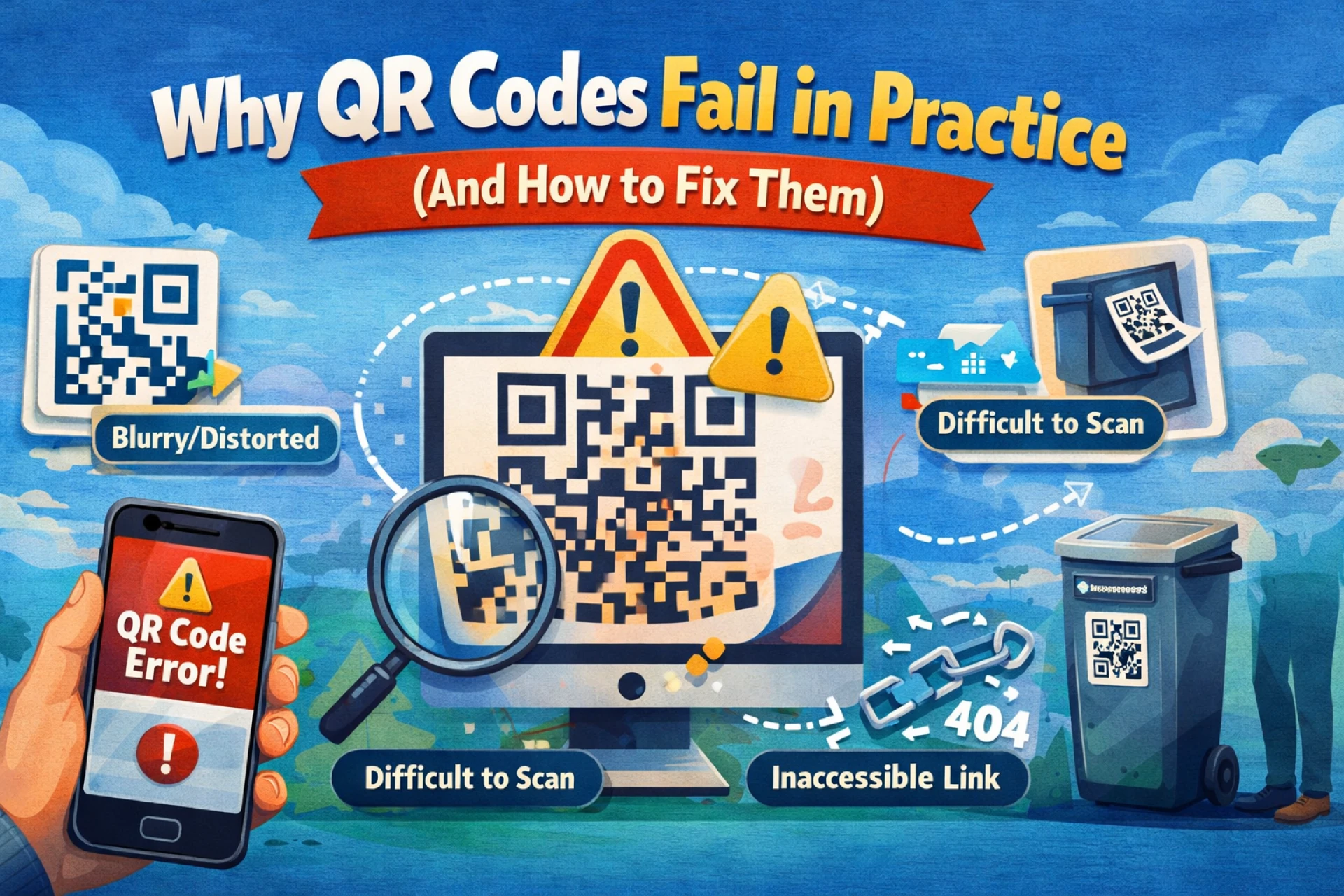

QR codes are often described as “simple,” but simplicity can be misleading. While creating a QR code takes only seconds, making it useful in the real world requires a bit more thought.
Most QR code failures have nothing to do with the technology itself. They come from small, avoidable decisions that break the experience for users.
The Problem: QR Codes Without Clear Purpose
Many QR codes exist without a clear reason.
People scan them expecting something specific and instead land on a generic page with no obvious next step. When the purpose isn’t clear, interest disappears quickly.
The fix is straightforward: every QR code should have a single, well-defined goal. The destination should match the reason someone is scanning in the first place.
The Problem: Broken or Untested Links
Another common issue is lack of testing.
QR codes are printed or shared without checking whether the link works consistently across devices. Sometimes the link is outdated. Sometimes the page doesn’t load properly on mobile.
Testing QR codes before publishing them — and periodically afterward — prevents these failures and maintains trust.
The Problem: QR Codes That Are Hard to Scan
A QR code can technically work and still be ineffective.
Issues like low contrast, small size, or awkward placement make scanning inconvenient. If scanning feels like effort, people simply won’t do it.
Good placement and visibility are just as important as the code itself.
The Problem: No Explanation for the User
A QR code without context creates hesitation.
People want to know what will happen after they scan. Without a short explanation, many choose not to engage at all.
Adding a brief description such as “Scan to view the menu” or “Scan for product details” makes the action feel safer and more worthwhile.
The Problem: Poor Mobile Experience
QR codes always lead to mobile screens.
If the destination page is slow, cluttered, or difficult to read on a phone, the entire experience fails immediately. A QR code cannot compensate for a poorly designed mobile page.
Ensuring fast load times and mobile-friendly layouts is essential.
The Problem: Treating QR Codes as Short-Term
QR codes often live longer than expected.
They appear on menus, signage, packaging, and printed materials that remain in circulation for months or years. If the destination changes or disappears, the QR code becomes useless.
Using QR codes that allow updates helps maintain long-term usefulness.
The Problem: No Follow-Up or Measurement
Many QR codes are deployed and then forgotten.
Without tracking scans or user behavior, there’s no way to know whether the QR code is effective. Measuring performance turns QR codes from decoration into a useful tool.
Fixing QR Codes Starts Before Creation
Most QR code problems can be avoided with planning.
Once the destination is clear, the experience is tested, and placement is considered, creating the QR code itself is easy. A simple tool like
https://generate-qr-code.com
allows you to generate clean, scannable QR codes quickly without adding complexity.
Final Thoughts
QR codes don’t fail because they’re outdated or flawed.
They fail because the experience around them isn’t fully thought through. With clear purpose, proper testing, and attention to usability, QR codes can quietly improve how people access information.
When implemented correctly, they do exactly what they’re meant to do — remove friction, not add it.






























Sign in to leave a comment.