
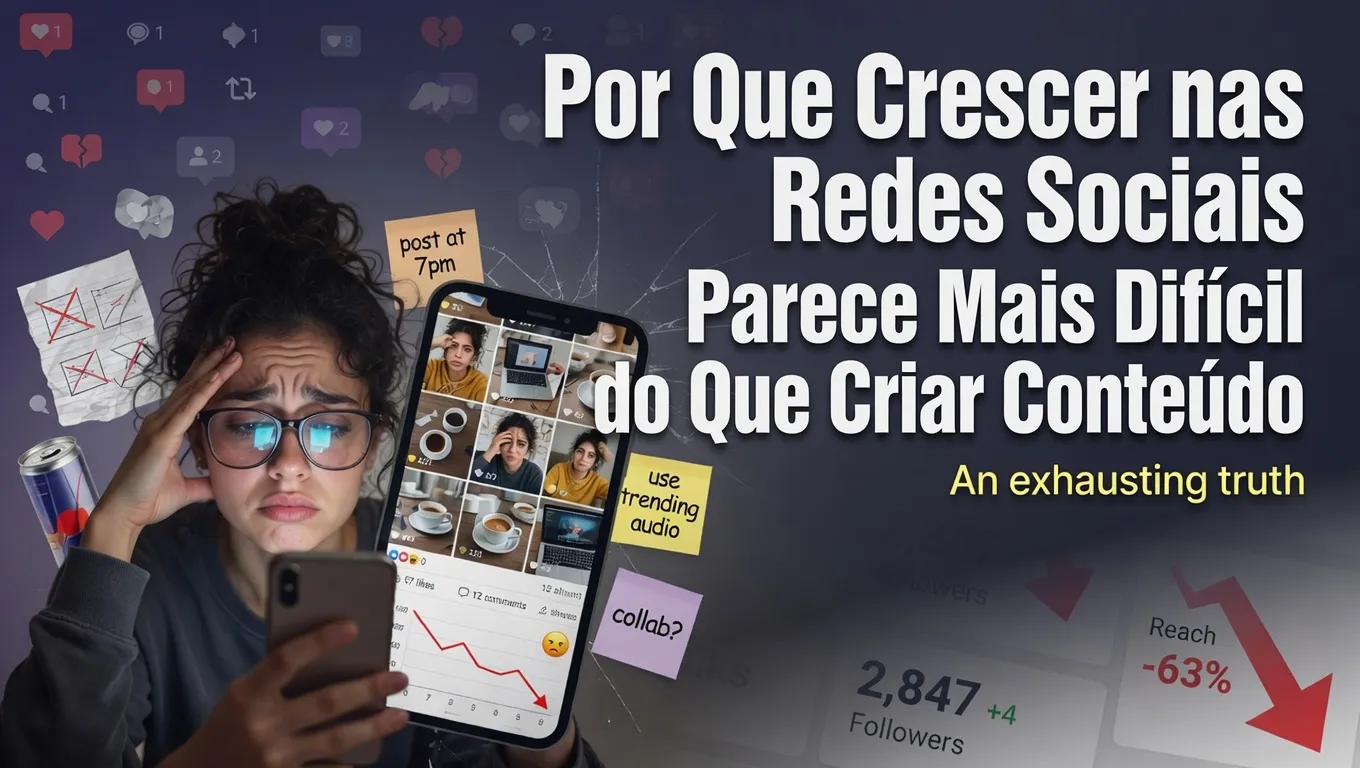
Each and every day, billions of people vent out their views through Instagram, exchange views about brands and businesses through LinkedIn, tweet opinions, leave videos through TikTok, and give product reviews on Facebook. It allows consumers to vent out their frustrations, express their love for a brand, and talk openly about their expectations from businesses. This is consumer insights in its pure form, which businesses ignore.
There's a clear gap between those who actively gather, analyze and utilize social media data and those who manually browse through social media posts, making their marketing efforts largely ineffective. This post covers the reasons why social media data is crucial and how you can leverage it.
Why Traditional Methods of Social Listening Fail
Every content marketer involved in social media relies on the conventional social listening technique, referred to as social listening through manual reading of posts. Some people do it by going through the competitors' Instagram pages, whereas others look at hashtags on Twitter. Although it could prove useful for gathering insights, it is very cumbersome and ineffective.
The reason for that is simple—the number of posts being created on a day-to-day basis. The manual analysis of 10k posts would be impossible for one person to do in order to uncover any meaningful trends. Equally impossible would be following the sentiment changes for a particular keyword, comparing several competing companies, and tracking other metrics.
Why You Need To Leverage Structured Social Media Data
Let us talk about the actual data insights you can obtain using proper, structured data and cannot acquire by manually browsing posts:
- Sentiment trends: Is the conversation about your brand becoming more positive or negative over time?
- How customers discuss certain keywords: Is everybody praising a competitor's innovation or voicing concerns? These and other trends will emerge only from aggregated data.
- Authentic audience vocabulary: The words and phrases your audience uses to describe the issue you solve are priceless for developing SEO strategy and creating better copywriting.
- Content performance benchmarks: The average number of likes, follower growth rates, the most popular formats, and other content metrics calculated for an entire industry rather than a single account alone.
- Influencer mapping and profiling: Key voices driving conversation within the niche, the accounts generating the greatest amount of engagement around your topics.
None of these insights can be achieved through random browsing. Let us move on to data collection techniques.
How to Collect Social Media Data at Scale
While most modern technologies have open access APIs that you can use to pull raw data directly, the same cannot be said about social platforms. Most of the major social networks impose tight restrictions in terms of data that can be pulled and accessed, implement aggressive rate limits, and frequently change policies.
Setting up and configuring your own data scraper requires significant engineering experience and time commitment. Dedicated data extraction services take care of this task for you and allow you to leverage data with ease.
Bright Data's Social Media Scraper, for example, offers full-fledged data extraction and aggregation functionality for a wide range of major social platforms, including Instagram, LinkedIn, TikTok, and others. The service takes care of technical details such as proxy management, parsing content specific to social platform, etc., leaving you free to concentrate on data analysis.
The structured data is exportable in CSV and JSON format and is uploadable in your spreadsheets or BI dashboards. This enables you to work on data without learning how to code, without managing proxies, and without fixing broken data pipeline after platform revamp.
Real Applications for Your Content and Marketing Efforts
Here's how you can leverage your structured social media data:
Ideate Content Based On Real Audiences
Do not waste time coming up with content ideas through brainstorming. Look for popular blog posts from the last thirty days in your field. Look at the issues raised in the comments section. Find out the topics that create engagement among users. You already have your content ideas!
Analyze Competition Without Any Doubts
Monitor your competitor's growth rates on social media. See their content posting schedule, determine which content drives the most engagement among customers. Do they actively post videos or pictures? Is there something they fail to address in their comments? This will help you position your content accordingly.
Search for the Most Suitable Influencers to Work With Effectively
In order to find suitable influencers manually, it takes many hours of searching for appropriate profiles, assessing their followers and engagement rate, among other routine tasks. In contrast, structured data will allow filtering the desired influencer by certain criteria, including engagement rate and topic relevancy.
Spotting Trends Before Others
One of the overlooked advantages of using structured data for social listening is spotting emerging trends. The spike in engagement rate around a certain topic in the niche today means that this topic might grow to the mainstream level very soon. Businesses which see the trend in advance become influencers, while others play catch-up.
Practical Steps to Start Doing It Today
You don't need advanced data science expertise and expensive analytics software to start extracting social media data efficiently. Here's what you should do first:
Choose two or three social platforms. Concentrate on those used by your target audience.
Define your tracking targets. Accounts you will be monitoring (including yours), your two or three primary competitors and three or five most important keywords or hashtags.
Set a collection interval. Weekly pulls will be enough to detect any trends. Daily pulls make sense during active campaigns.
Start reviewing the collected data. Allocate 30 minutes a week to analyzing the insights obtained from it.
Conclusion
Your customers talk openly about their issues on social media and give a lot of useful feedback regarding your business performance. This raw social media data should become your main source of content ideation, competitor analysis and audience profiling efforts. If you start doing this now, you will have an advantage over your competitors.





















Sign in to leave a comment.