
Introduction
If you have worked in a ceramic manufacturing plant even for a short time, you know how much the quality of your powder affects everything else. The pressing, the sintering, the strength of the final piece - it all starts with the powder. Get the powder wrong and everything downstream suffers.
That is where spray drying comes in. It has become one of the most relied-upon processes in ceramic powder production, and once you understand what it does and why it works, it is easy to see why so many manufacturers have made it a core part of their operation.
The Struggle Before Spray Drying
Ceramic raw materials - alumina, zirconia, silicon carbide, porcelain — do not come ready to use. In their natural state they are either too coarse and uneven, or so fine that they clump together and refuse to flow properly through equipment.
Before spray drying became common, manufacturers were working with dry milling, filter pressing, and older granulation methods. The powders these produced were inconsistent. Particle sizes varied. The powder did not flow well. It did not compact the way it should. And that inconsistency kept showing up in the finished product — uneven density, cracking after sintering, parts that did not meet spec, material going to waste.
It was a real headache, and many plants were dealing with it every single day.
So What Does Spray Drying Actually Do
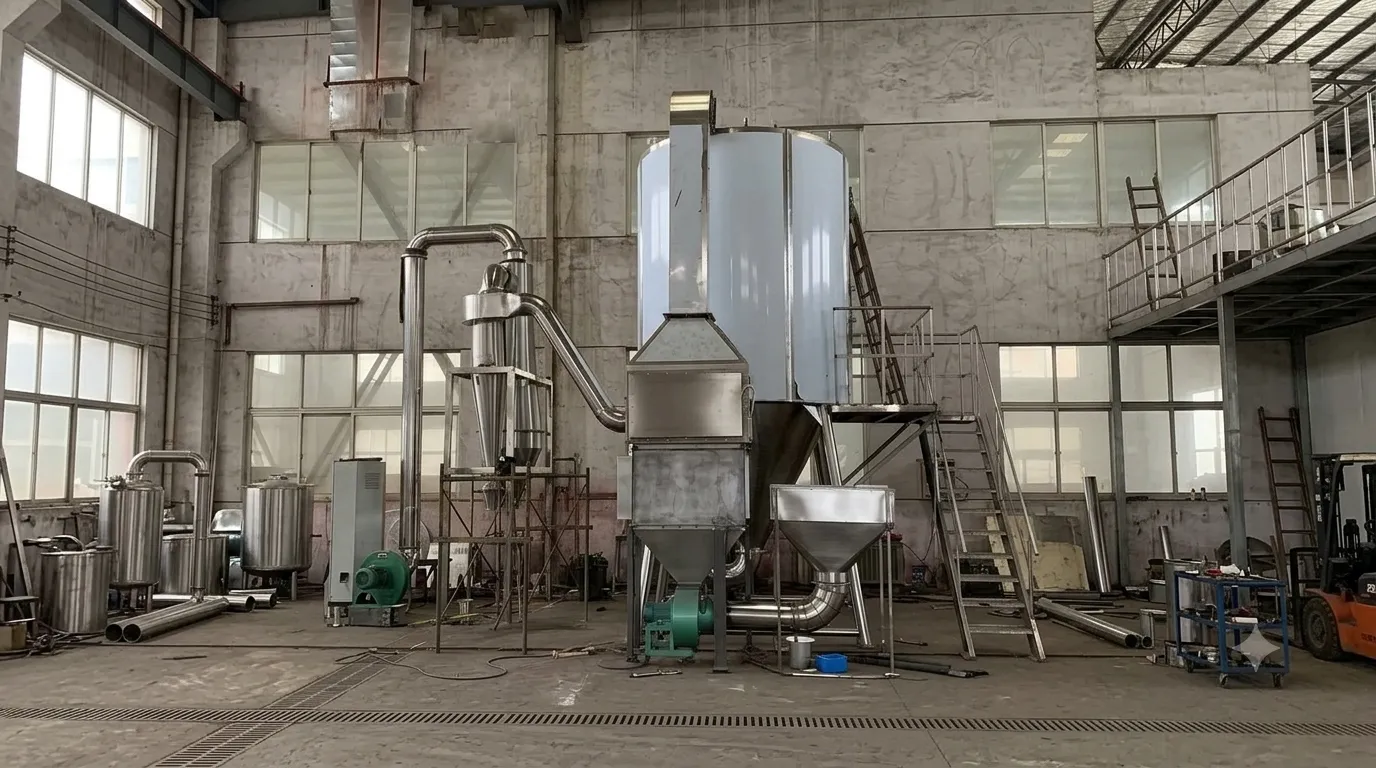
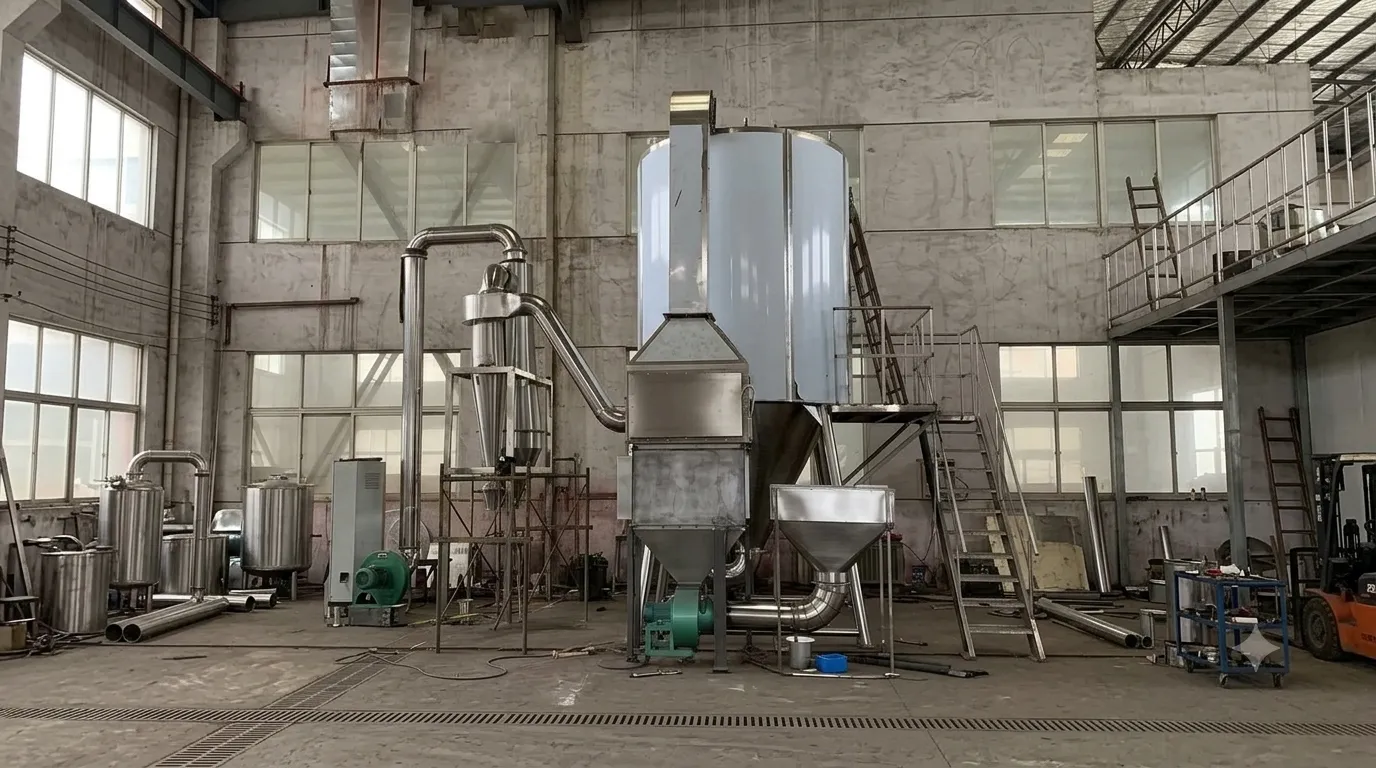
The idea behind spray drying is straightforward. You take your ceramic slurry - the raw ceramic material mixed with water, binders, and sometimes a dispersant - and you push it through a nozzle or rotary atomizer inside a large drying chamber. That breaks the slurry into thousands of tiny droplets. Hot air flowing through the chamber dries those droplets almost instantly, and what falls out at the bottom is a dry, free-flowing granular powder.
The whole thing happens in seconds. And what makes it so useful for ceramics is the shape of the particles that come out - small, round, hollow spheres that are remarkably consistent in size.
That consistency is what changes everything on the production floor. Round particles flow smoothly. They fill a die evenly. They compact predictably under pressure. And when your powder behaves that way, your green body comes out with consistent density, your sintering becomes more predictable, and your rejection rate drops.
Spray drying systems built for ceramic applications let you control granule size, bulk density, moisture content, and flow behaviour through process settings — without having to overhaul the whole setup every time you need a different powder spec.
Why the Shape of the Powder Granule Matters
This might sound like a minor detail but it is actually one of the most important things about spray-dried ceramic powder - the fact that the granules are spherical.
When you press ceramic powder into a die, it needs to move into every part of the mould evenly and then compact uniformly when pressure is applied. Irregular, angular particles just do not do that. They get stuck, they bridge across gaps, they create uneven density in the green body. And that uneven density becomes a problem in the kiln - you get warping, cracking, parts that shrink differently in different areas.
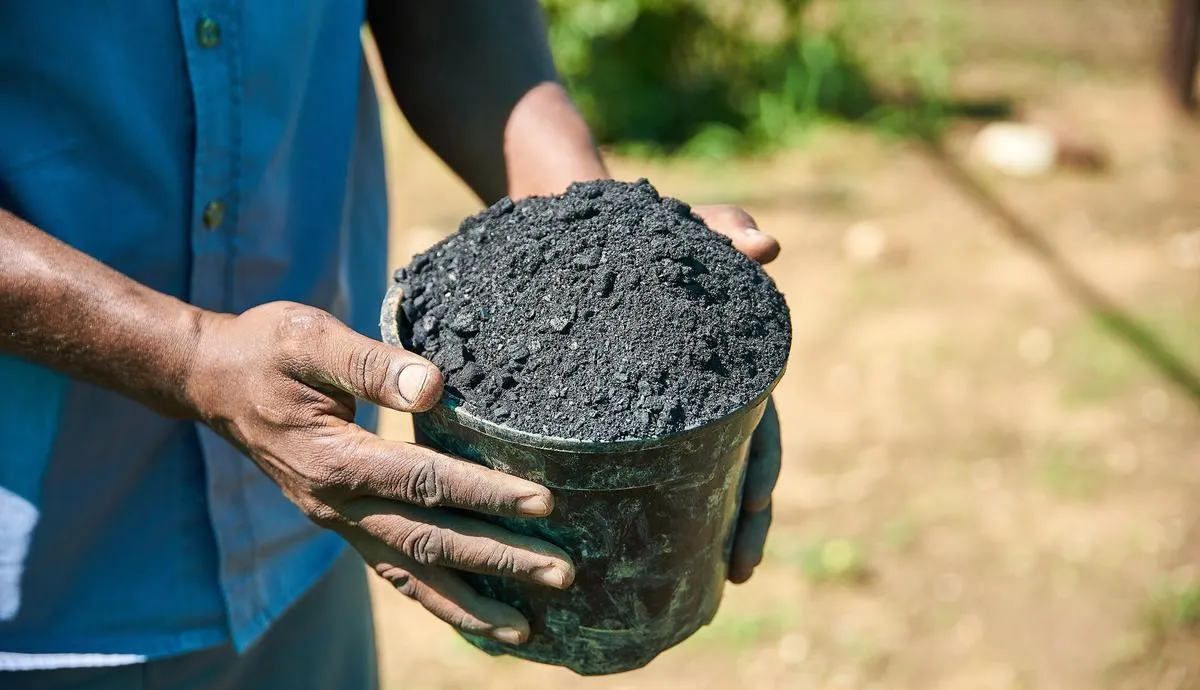
Spherical granules behave completely differently. They roll into place, they pack evenly, and they respond to pressure the same way across the whole part. The green body that comes out of the press is consistent from edge to edge, which means the sintered part is consistent too - right dimensions, right strength, right surface finish.
For anyone making technical ceramics for electronics, medical devices, or automotive parts where the tolerances are tight and there is no room for inconsistency, this is not a small thing. It is what makes the process work.
It Also Makes the Plant Run Better
Product quality is one side of it. But spray drying also just makes the production process easier to manage day to day.
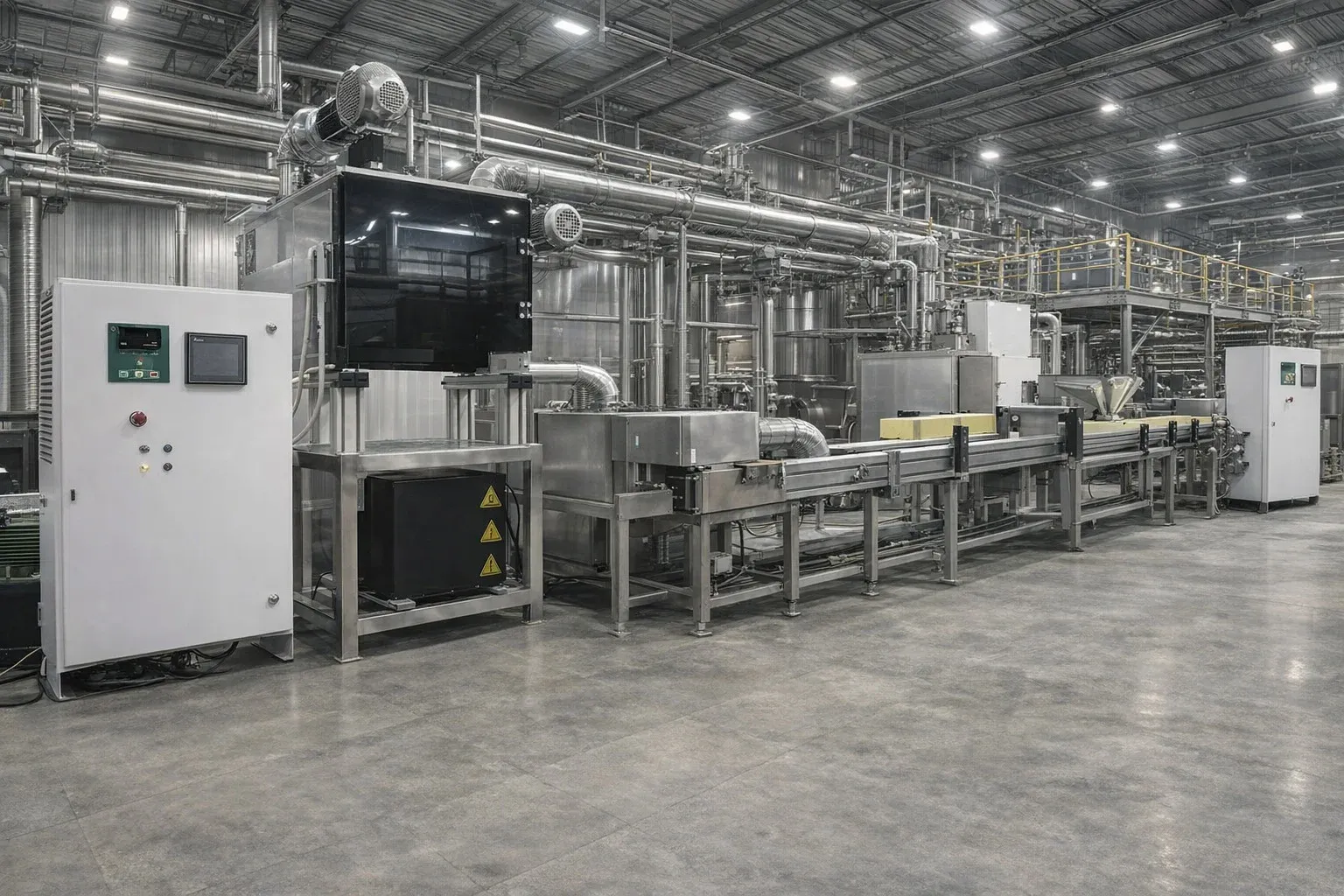
It runs continuously. Once it is set up and running, it keeps producing powder at a steady, consistent rate. You are not dealing with the variation that comes from batch processing where every batch is slightly different from the last. The key process variables — feed rate, inlet temperature, atomization pressure, outlet moisture — are monitored and adjusted in real time, so the powder stays on spec without someone having to manually intervene every hour.
The powder that comes out is also ready to press. You do not need to mill it again or condition it or sieve it in most cases. That cuts out several handling steps, which means less opportunity for contamination, less material loss, and a cleaner, simpler production flow overall.
Energy costs have also come down significantly with newer equipment. Better insulation, smarter controls, and heat recovery from exhaust air have made modern spray dryers much more efficient than older ones. For a plant running high volumes, those savings add up quickly. Ceramic powder drying equipment with these features built in from the start makes a real difference to what it actually costs to run the operation.
Which Ceramic Products Use Spray Drying the Most
Spray drying is used across many ceramic categories but some rely on it more than others.
Technical ceramics - the kind used in electronics substrates, cutting tools, wear-resistant parts, and medical implants - need the most consistent powder you can get. The tolerances in these products are tight and the consequences of getting them wrong are significant. Spray drying is the standard production method for these powders precisely because it delivers that consistency reliably.
Tile and sanitaryware manufacturers use spray drying at very large scale. A high-volume tile plant can go through enormous quantities of porcelain and stoneware powder every day, and spray drying is the only process that can keep up with that throughput while still delivering the consistent powder quality the pressing lines need to run well.
Refractories, structural ceramics, and advanced oxide ceramics for industrial use also benefit from spray drying, especially where complex shapes need to be pressed and sintered to close tolerances.
Conclusion
Spray drying has become a standard part of ceramic powder production because it solves problems that actually matter on the shop floor. Inconsistent powder, poor flow, unpredictable compaction, high rejection rates — spray drying addresses all of these in one continuous, controllable step.
The spherical granules it produces are simply better suited to pressing and sintering than what older methods deliver. And the fact that it runs continuously, stays on spec, and reduces handling steps makes it easier to run a cleaner, more efficient plant overall.
If you are thinking about spray drying for a ceramic powder application or want to talk through upgrading your current setup, the team at keronedryers.com can walk you through the equipment options, and you can reach out directly through kerone.co.in to discuss what your production line actually needs.


























Sign in to leave a comment.