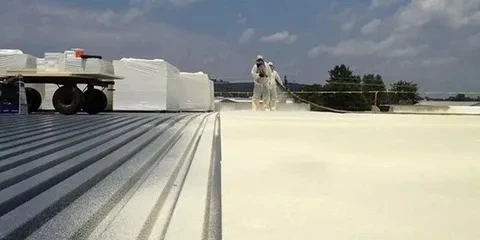

Property owners, especially those with commercial or industrial buildings, are increasingly choosing spray foam roofing for a simple reason: it solves multiple problems with a single solution. A Spray Polyurethane Foam (SPF) roof acts as a durable, waterproof membrane and a high-performance insulator all in one application. This combination directly addresses the most common failures of traditional flat roofs, such as leaks at seams and poor energy efficiency. The ability to apply it directly over many existing roof types also means property owners can avoid the costly and disruptive process of a full tear-off, saving both time and money upfront.
The shift toward SPF roofing isn't just about a new material; it's about a smarter approach to long-term building maintenance and energy management. This article will break down the practical advantages of SPF roofing systems and explain why they are gaining traction, based on insights from certified installers and building performance experts.
The Power of a Seamless Roof
Traditional flat roofing systems, like TPO, EPDM, or built-up roofing (BUR), are installed in sheets or layers. This process creates miles of seams and hundreds of mechanical fastening points. Industry data shows that the vast majority of flat roof leaks, well over 80%, originate at these seams and penetrations. Over time, building movement, UV exposure, and weather fluctuations cause these seams to separate, crack, or fail.
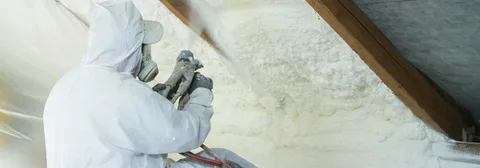
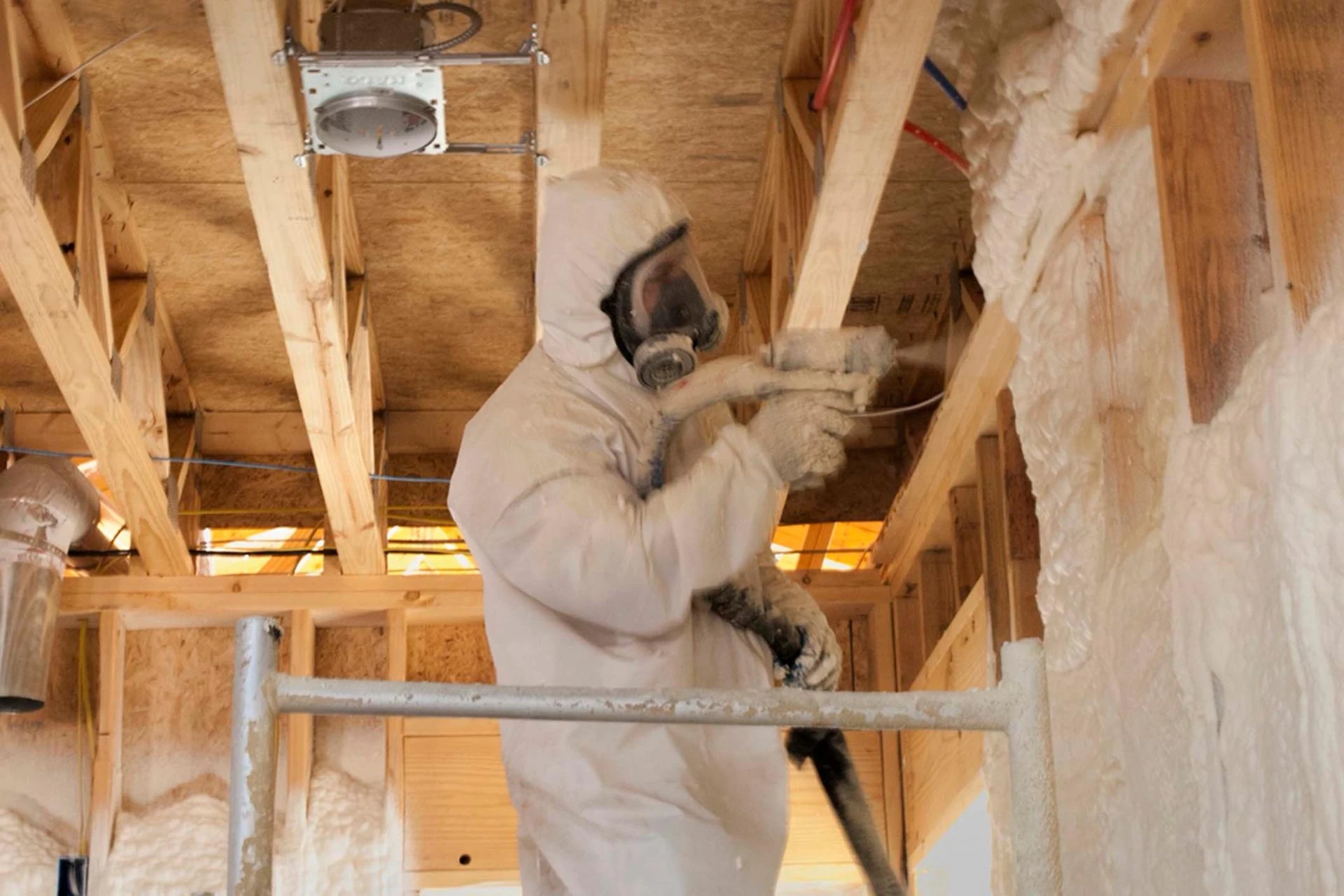
Spray foam roofing eliminates this fundamental weakness. The foam is applied as a liquid that expands and hardens, creating a single, continuous, monolithic layer across the entire roof surface.
- It conforms perfectly to any shape, flowing around vents, pipes, and HVAC curbs without any cuts or joints.
- There are no seams, no fasteners, and no gaps for water to penetrate.
- This seamless barrier is self-flashing, meaning it integrates the roof deck and vertical walls into one waterproof system.
This monolithic nature is arguably the most significant advantage of an SPF roof, turning the most vulnerable part of a traditional roof into its greatest strength.
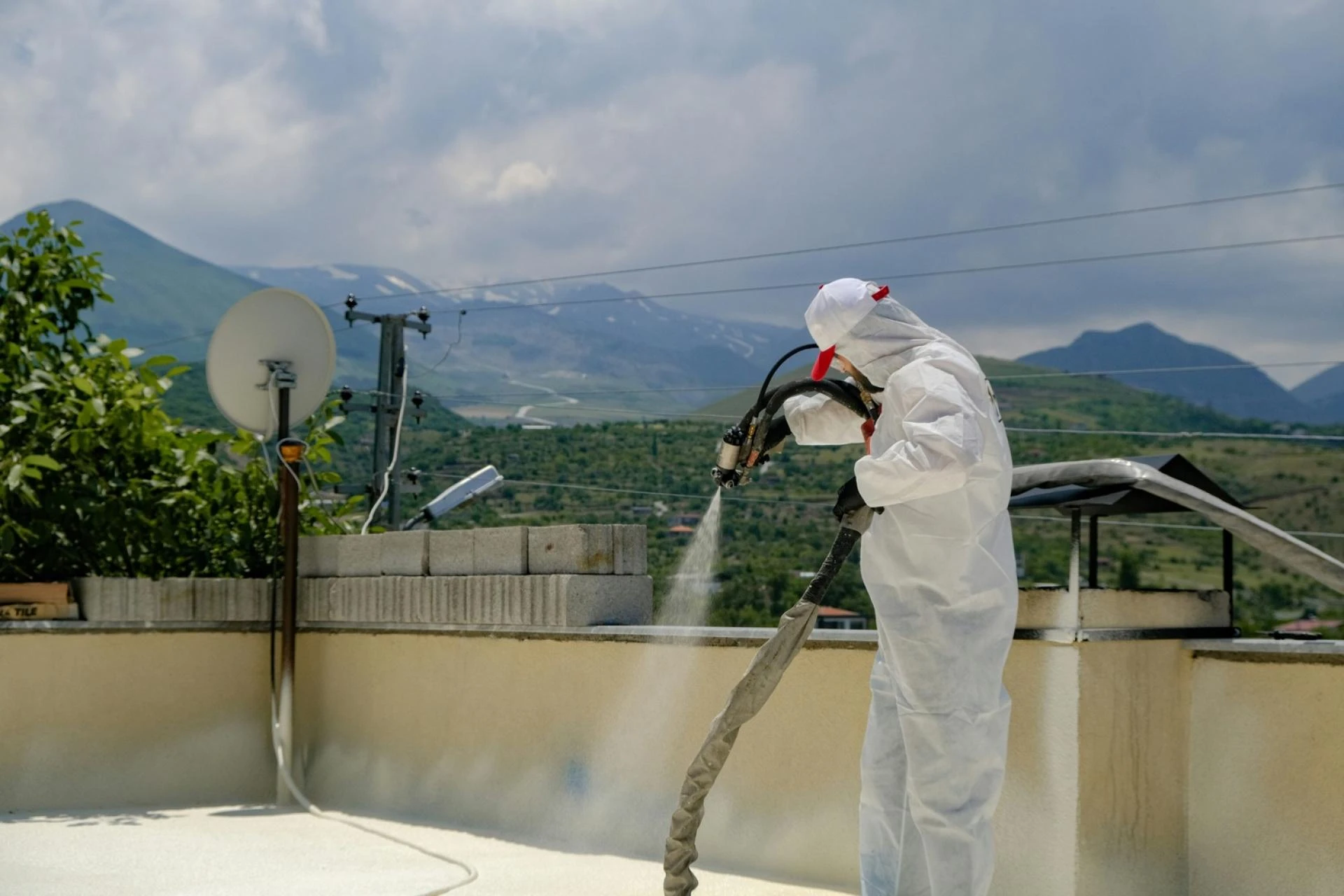
Built-In Energy Efficiency
Beyond being waterproof, every inch of an SPF roof is also a powerful insulator. Closed-cell polyurethane foam has one of the highest R-values of any commercially available insulation, typically around R-6.5 per inch. A standard two-inch application can deliver an R-value of 13, instantly boosting the building's thermal performance.
This is especially important for large commercial buildings, where the roof is a primary source of heat gain in the summer and heat loss in the winter. After application, the foam is coated with a reflective, elastomeric topcoat. This "cool roof" technology reflects a significant portion of the sun's UV rays, which can lower the roof surface temperature by up to 75 degrees. The combined effect of the insulation and the reflective coating can reduce a building's heating and cooling costs by 30-50%, providing a return on investment through energy savings alone.
Bonus Tip: During application, the thickness of the foam can be varied. This allows installers to build up low spots and create positive drainage, eliminating areas of ponding water which is a major cause of roof degradation.
Durability and Long-Term Sustainability
While the material starts as a foam, it cures into a dense, rigid surface that is surprisingly durable and can easily withstand regular foot traffic for maintenance. The strength of an SPF system comes from the combination of the foam and its protective topcoat. This coating shields the foam from UV radiation and provides a tough, weather-resistant finish.
One of the most attractive features for property owners is the system's longevity and ease of renewal. A traditional roof has a finite lifespan and must be completely torn off and replaced every 15 to 20 years. An SPF roof, however, is a sustainable system.
- After 15-20 years, the roof is simply cleaned and a new topcoat is applied.
- This recoating process costs a fraction of a full replacement and can be done repeatedly.
- With proper maintenance and timely recoating, an SPF roof can last for the life of the building.
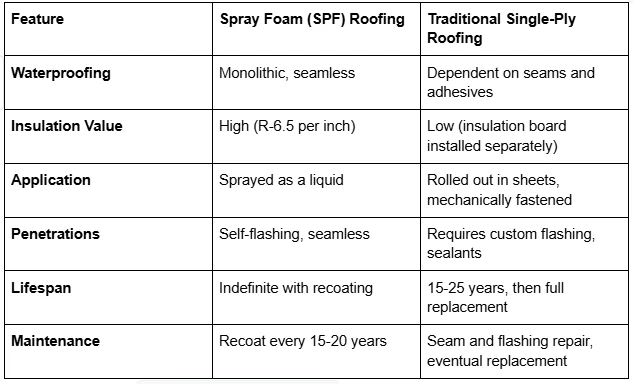
Comparing Roofing Systems
This table outlines some key differences between SPF roofing and traditional single-ply systems like TPO or EPDM.
hings to Consider Before Making a Decision
Spray foam roofing offers many benefits, but success depends heavily on a few critical factors.
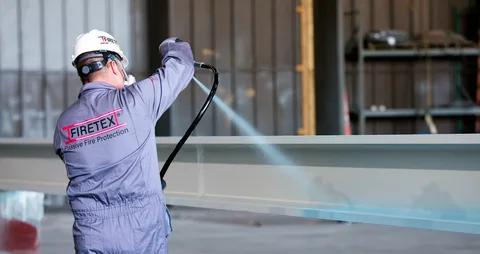
- Installer Qualification: This is not a DIY product. The application of SPF roofing is a chemical process that requires specialized equipment, training, and experience. The quality of the installation crew is the single most important factor in the performance of the roof. Always choose a contractor certified by the Spray Polyurethane Foam Alliance (SPFA).
- The Condition of the Existing Roof: SPF can be applied over many roof types, but the underlying structure must be sound and dry. A thorough inspection is needed to ensure there is no trapped moisture or saturated insulation that needs to be removed first.
- Climate and Weather: Application is weather-dependent. The foam cannot be sprayed in the rain, on a wet surface, or in high winds. A professional crew will carefully plan the installation around the weather forecast.
Bonus Tip: Ask potential contractors about their process for surface preparation. A clean, dry, and properly prepared substrate is absolutely essential for the foam to adhere correctly and form a permanent bond.
Questions People Ask About Spray Foam Roofing
Can you walk on a spray foam roof?
Yes. A cured SPF roof is quite strong and can handle regular foot traffic for maintenance. The foam used for roofing has a compressive strength of 40-60 PSI, which is more than enough to support people and equipment.
How does it hold up against hail or physical damage?
The dense foam is resistant to hail and impact damage. If a sharp object does manage to puncture the surface, the damage is typically localized. Because the foam is a closed-cell material, water will not travel laterally within the roof system, making repairs simple.
What happens if the roof gets a small cut or puncture?
Repairs are straightforward. The damaged area is cut out, dried, and filled with a compatible sealant or a small amount of new foam. Then the protective coating is reapplied over the patch.
Is spray foam roofing environmentally friendly?
It is considered a sustainable choice. The high insulation value reduces energy consumption for the life of the building. Furthermore, the ability to recoat the roof rather than replace it keeps tons of old roofing material out of landfills.
Does the foam lose its insulation value over time?
Modern closed-cell spray foams are very stable. While there is a very small amount of R-value drift over many decades, the foam will retain over 90% of its initial insulation value for the life of the building.
A Smarter Long-Term Investment
The growing popularity of spray foam roofing comes down to performance and long-term value. It offers a solution that is simultaneously a waterproof barrier, a high-efficiency insulator, and a renewable system that can last for decades. For property owners tired of chasing leaks and facing the massive expense of periodic roof replacements, the initial investment in an SPF system often proves to be the more economical and reliable choice over the long run.
Get a Professional Roof Assessment
Choosing the right roofing system is a major decision. If you own a commercial or residential property with a flat or low-slope roof and are considering your options, getting an expert assessment is a critical first step. For property owners in the Chicago area, the team at South Chicago Insulation has specialized knowledge in building performance and spray foam systems. They can evaluate your current roof's condition and determine if it's a good candidate for an SPF installation. To learn more or schedule a consultation, you can contact them by email at [email protected] or by phone at (779) 803-8025.
Author: Bob Gasca attended his first spray foam training in 2007 and has continued to pursue yearly training to stay current with the latest technology and practices. He is a certified Spray Foam Master Installer and a Spray Foam Worldwide Ambassador.
Reviewer: Noah Gonzalez reviewed this article and drew on 9 years of experience to offer suggestions that make the guidance more directly useful for insulation contractors.



























Sign in to leave a comment.