
Key Takeaways
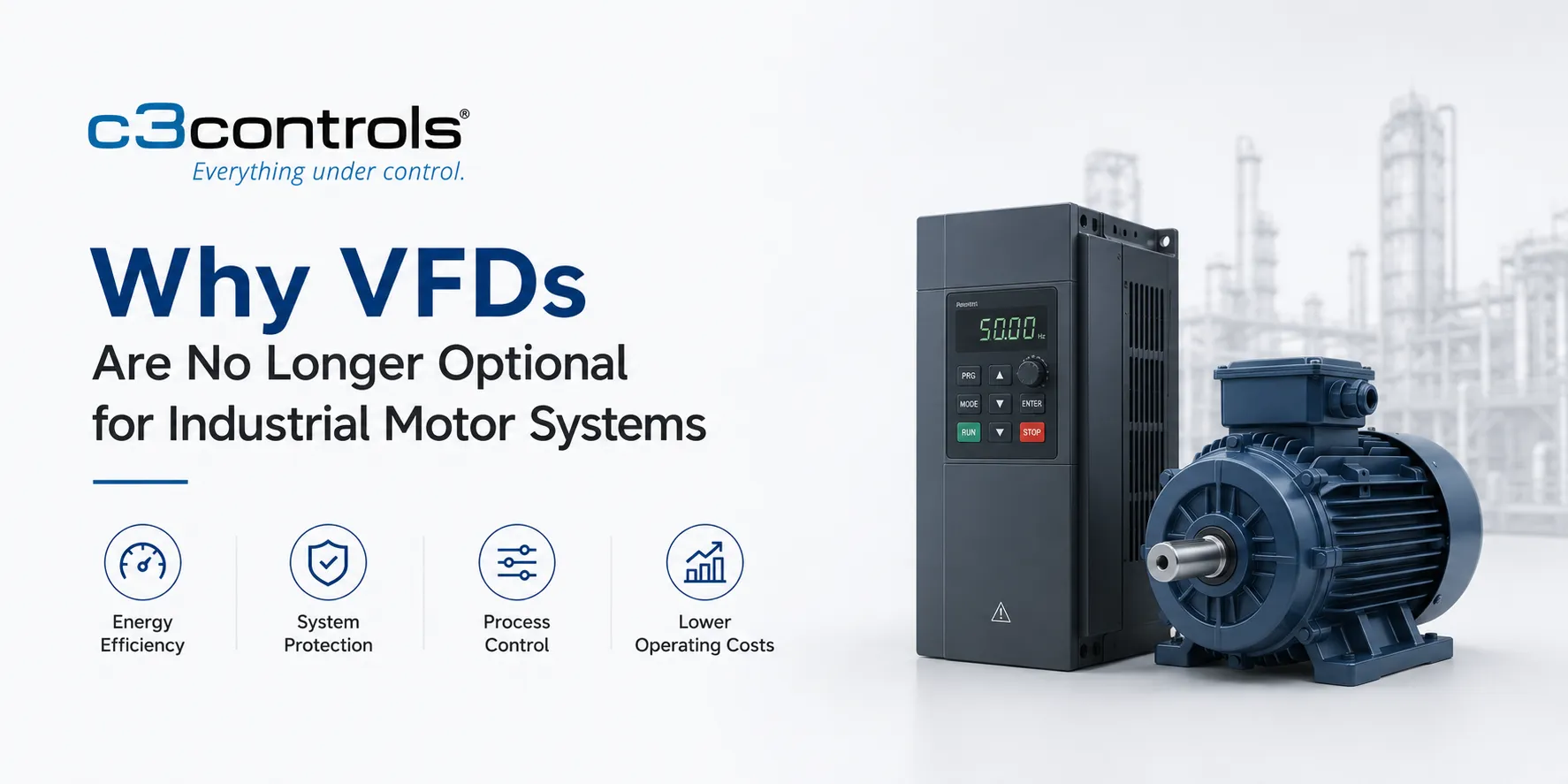
- VFDs improve industrial motor control efficiency by adjusting motor speed based on actual demand.
- Soft starting reduces inrush current and minimizes wear on motors and mechanical components.
- Affinity laws for pumps and fans show that small speed reductions can lead to major energy savings.
- Eliminating throttling valves and dampers improves overall system efficiency.
- Most VFD installations achieve strong VFD energy ROI within 12–24 months.
- Proper circuit protection, monitoring, and ventilation are essential for reliable VFD performance.
Introduction: Beyond the “On/Off” Switch
For decades, many industrial motors operated using a simple concept: full speed or nothing. Traditional across-the-line motor starting works almost like driving a car with the accelerator fully pressed every time you move. There’s no gradual control—just an immediate surge of power.
While this approach may seem simple, it creates several problems. Motors experience high inrush current during startup, equipment faces unnecessary mechanical stress, and energy consumption remains higher than necessary.
This is where a Variable Frequency Drive (VFD) changes everything.
Instead of treating the motor like a basic on/off device, a VFD acts as the “brain” of the system. It continuously adjusts voltage and frequency based on the actual load requirement, allowing the motor to operate more efficiently and smoothly.
In 2026, VFDs are no longer considered a premium upgrade. With rising energy costs and stricter efficiency standards, they have become essential for improving industrial motor control efficiency and reducing operating expenses.
Precise Control: Improving Machine Longevity
One of the biggest advantages of a VFD is soft starting.
When a motor starts traditionally, it draws a large amount of current instantly—often several times higher than its normal operating current. This sudden surge creates what many technicians describe as a “hammer effect” on the electrical and mechanical system.
A VFD eliminates this issue by gradually ramping up motor speed. This controlled acceleration reduces stress on:
- Motor windings
- Bearings
- Belts and pulleys
- Gearboxes and couplings
The result is longer equipment life and reduced maintenance costs.
The benefits go beyond startup protection. VFDs also improve process control by allowing motors to operate at variable speeds instead of running at full capacity all the time.
For example:
- Conveyor systems can maintain better synchronization
- Pumps can deliver precise flow control
- Fans can adjust airflow based on demand
This level of precision improves both performance and reliability across industrial applications.
From a practical standpoint, smoother motor operation often leads to fewer unexpected breakdowns and less downtime over time.
Relevant blog: Replacing VFDs with Motor Starters
The Energy Revolution: Affinity Laws Explained
The real game-changer with VFDs is energy savings.
In applications involving pumps and fans, motor speed has a massive impact on power consumption. This relationship is explained through the affinity laws for pumps and fans.
P∝N3
In simple terms, power consumption changes with the cube of the motor speed. That means even a small speed reduction creates major energy savings.
For example, reducing a fan’s speed by just 20% can reduce energy consumption by nearly 50%.
This is why VFD energy ROI is often achieved much faster than expected.
Without a VFD, many systems rely on throttling valves or dampers to control output. But this method wastes energy because the motor still runs at full speed while the system mechanically restricts flow.
It’s similar to pressing the accelerator fully while controlling speed using the brake.
A VFD solves this problem by controlling speed directly at the motor level. Instead of wasting energy through restriction, the motor only uses the power actually required.
In many industrial facilities, VFD upgrades recover their installation cost within 12–24 months through energy savings alone.
Integration with the Control Panel
A VFD performs best when supported by properly designed control panel components.
One important consideration is circuit protection. Since VFDs handle sensitive electronics and variable loads, proper protection against short circuits and faults is essential. Using UL 489 Miniature Circuit Breakers helps protect the VFD input and improves overall system reliability.
Monitoring is another key factor. Operators need quick visibility into system status, especially in large industrial environments. Pilot devices and stack lights make it easy to identify whether the VFD is:
- Running
- Faulted
- Operating at target speed
This improves troubleshooting and reduces response time during faults.
Heat management also matters. VFDs generate heat during operation, and excessive temperatures can reduce performance and lifespan. Installing VFDs in properly ventilated enclosures with organized terminal block layouts improves airflow and simplifies maintenance.
From a panel design perspective, clean wiring and proper component spacing are just as important as the VFD itself.
Conclusion
Modern industries can no longer afford inefficient motor operation. Rising energy costs, increased automation demands, and stricter efficiency standards are pushing facilities toward smarter motor control solutions.
VFDs provide one of the most effective ways to improve industrial motor control efficiency while also extending equipment life. From motor soft starting benefits to major energy savings through affinity laws for pumps and fans, the advantages are both immediate and long-term.
The biggest takeaway is simple: motors should only run as hard as the process actually requires.
That’s exactly what a VFD makes possible.
Is your panel VFD-ready? Explore c3controls’ range of circuit protection and pilot devices to support your next energy-saving installation.

























Sign in to leave a comment.