
Think about the last time you visited a pharmacy. Did you wait in a long queue? Did the staff struggle to find your prescription history? Did you drive across town only to find out that the medicine was out of stock?
These small frustrations happen every day, and they quietly push customers away from traditional pharmacy setups. Today, patients expect the same convenience from their pharmacy that they get from food delivery apps or online shopping platforms. They want to order medicines from their couch, get reminders for refills, and consult a pharmacist without stepping outside.
This shift in behavior is exactly why pharmacy mobile app development has become one of the fastest-growing segments in health tech. If you own or manage a pharmacy business, whether it is a standalone store or a chain, a dedicated mobile app is no longer a luxury. It is a practical business tool that can directly impact your revenue, customer retention, and daily operations.
This guide breaks down the real reasons why getting a pharmacy app built today makes sense, and what features actually move the needle for your business.
The Pharmacy Industry Is Changing Faster Than You Think
The global online pharmacy market was valued at over USD 74 billion in 2023 and is expected to cross USD 250 billion by 2030. This growth is being driven by one simple fact: people want healthcare services delivered to their doorstep with the same ease as ordering groceries.
After the pandemic, a much larger portion of the population became comfortable with digital health services. Telemedicine, e-prescriptions, and online medicine delivery went from being "nice to have" features to standard expectations. Pharmacies that did not adapt during this period lost footfall to digital-first competitors, some of which launched entirely without physical stores.
If you are running a traditional pharmacy without any digital presence, you are competing against platforms that offer same-day delivery, automatic refill reminders, 24/7 chat support, and loyalty reward programs, all within a single app. The gap is only going to widen.
Key Reasons Your Pharmacy Business Needs a Mobile App
1. Online Medicine Ordering With Home Delivery
The most obvious and impactful benefit of a pharmacy app is giving your customers the ability to browse and order medicines from anywhere. Patients who are elderly, unwell, or simply short on time will consistently choose a pharmacy that delivers over one that requires a physical visit.
When you offer medicine delivery through an app, you are not just gaining convenience points. You are expanding your potential customer base beyond your immediate neighborhood. Someone ten kilometers away who discovers your app becomes a regular customer. Your pharmacy no longer competes only with the store down the street. It competes in a much larger digital marketplace.
2. Digital Prescription Management
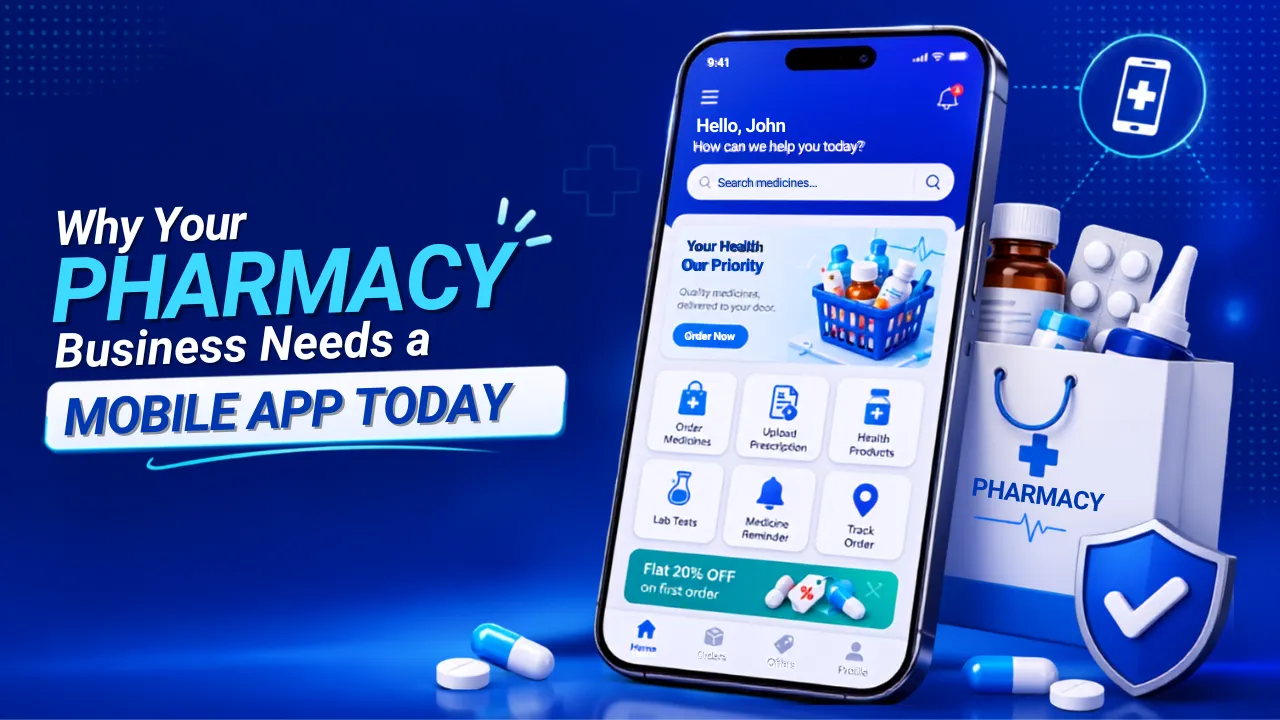
Managing paper prescriptions is one of the biggest pain points for both pharmacy staff and customers. Prescriptions get lost, become illegible, or simply get forgotten at home. A mobile app solves this by allowing customers to upload a photo of their prescription directly through the app.
The pharmacy team can review, verify, and process it digitally. Customers can also store their prescription history inside the app, making reorders faster and reducing errors. For pharmacies operating in regions where digital prescriptions are legally accepted, this feature alone can dramatically cut down on manual processing time.
3. Automatic Refill Reminders
One of the biggest missed revenue opportunities for pharmacy businesses is the gap between a customer's first purchase and their next. Many patients simply forget to refill their medications until they run out, and by then they might buy from whichever pharmacy is most accessible in that moment.
A pharmacy app with smart refill reminders sends push notifications a few days before a medication is expected to run out, based on the dosage and quantity purchased. This keeps your pharmacy top of mind, reduces missed doses for patients, and ensures that reorders come back to you automatically.
For chronic care patients managing diabetes, hypertension, thyroid conditions, or similar ongoing illnesses, this feature builds a long-term relationship between your business and the customer.
4. Real-Time Inventory Visibility
Nothing frustrates a customer more than driving to a pharmacy, only to be told that a specific medicine is not available. With an app, customers can check stock availability before they visit or order, and the pharmacy team can manage inventory alerts internally.
Real-time inventory tracking also helps you identify which products are running low, which medicines are in seasonal demand, and which items are overstocked. Over time, this data supports smarter purchasing decisions and reduces the cost of expired or wasted stock.
5. Loyalty Programs and Customer Retention
Large pharmacy chains have long used loyalty programs to keep customers coming back. A mobile app makes it practical for independent and mid-sized pharmacies to run similar programs without complicated infrastructure.
Through your app, you can offer reward points for every purchase, special discounts on health checkup packages, early access to offers, or referral bonuses for bringing in new customers. These programs are proven to increase purchase frequency and build genuine customer loyalty.
A customer who has accumulated reward points on your platform has a very specific reason to keep coming back to you rather than trying out a competitor.
6. Teleconsultation and Pharmacist Chat
Many customers have simple medication-related queries that do not require a doctor visit. They want to know whether two medicines can be taken together, whether a particular syrup is safe for children, or what the difference is between two similar products.
A pharmacy app can include a built-in chat feature or teleconsultation option that connects customers with your in-house pharmacist. This adds real value to the customer experience and positions your pharmacy as a trusted health resource, not just a transactional shop.
For customers managing complex medication schedules or dealing with chronic illness, this access to professional guidance can be the deciding factor in where they choose to buy their medicines.
7. Health Record and Medication History Storage
A well-designed pharmacy app can also act as a personal health companion for the user. When customers can view their full medication history, track their health records, and keep their doctor's notes in one place, they are more likely to engage with the app regularly.
This kind of engagement goes beyond just buying medicines. It builds a digital relationship between your pharmacy and the customer's entire healthcare journey. And every time they open the app, they are reminded of your brand.
Operational Benefits for Your Pharmacy Team
A pharmacy mobile app is not just a customer-facing tool. It also improves how your internal team works.
Order management becomes more organized when digital orders are routed through a dashboard rather than taken over phone calls. Staff can prioritize deliveries, manage prescriptions, and track order status without switching between different systems.
Integration with pharmacy management software means that inventory, billing, and order fulfillment can all flow through a single connected system. This reduces human error, saves time, and makes it easier to train new staff.
Reports and analytics provided by the app give you a clear view of which medicines are selling, which times of day see the most orders, and which customer segments are most active. These insights help you make informed decisions about staffing, stocking, and promotions.
What Features Should a Pharmacy App Include?
If you are planning to get a pharmacy mobile app developed, here are the core features that should be part of the first version:
- User registration and profile management
- Medicine search with filters by category, brand, and generic alternatives
- Prescription upload and digital storage
- Real-time inventory status
- Cart, checkout, and multiple payment options
- Order tracking with delivery updates
- Refill reminders and medication schedules
- Push notifications for offers and health tips
- Pharmacist chat or teleconsultation
- Loyalty points and rewards dashboard
- Admin panel for the pharmacy team to manage orders, inventory, and users
As your app grows, you can add more advanced features like AI-based medicine recommendations, integration with health wearables, or multi-branch support for pharmacy chains.
How Much Does It Cost to Build a Pharmacy App?
The cost of pharmacy app development depends on several factors, including the number of features, the complexity of the design, the platforms you want to target (Android, iOS, or both), and the development team you choose to work with.
A basic pharmacy app with essential features typically falls in the range of USD 10,000 to USD 25,000. A more advanced app with teleconsultation, AI features, and multiple integrations can go higher. Working with an experienced mobile app development company ensures that the app is built on a scalable architecture, which means you will not need to rebuild it from scratch as your business grows.
It is worth treating this as a long-term business investment rather than a one-time expense. The returns in terms of customer retention, order volume, and operational efficiency start appearing within months of launch.
Choosing the Right Development Partner
Building a pharmacy app requires more than just coding skills. Your pharmacy app development company needs to understand healthcare compliance requirements, data privacy regulations, and the specific workflows of a pharmacy business.
Look for a company that has prior experience in healthcare or pharmacy app development, follows relevant data security standards, and provides post-launch support. A good development partner will also help you plan the app's feature roadmap based on your business goals, rather than simply building whatever you ask for without thinking about long-term usability.
Final Thoughts
The question is no longer whether a pharmacy business needs a mobile app. The real question is how long you can afford to wait before getting one.
Customer behavior has already shifted. A growing number of people now expect to manage their healthcare digitally, including where and how they buy their medicines. Pharmacies that make this transition early will capture a loyal digital customer base. Those that wait too long will find it increasingly difficult to compete.
A well-built pharmacy mobile app gives your business a way to serve customers better, run operations more smoothly, and grow beyond the limits of your physical location. For any pharmacy business that is serious about staying relevant and beyond, building a mobile app is one of the smartest decisions you can make right now.
Frequently Asked Questions
Q1. Is a pharmacy mobile app only useful for large pharmacy chains?
No. Independent pharmacies and mid-sized businesses benefit equally from mobile apps. In fact, a well-designed app helps smaller pharmacies compete effectively against larger chains by offering personalized service and convenience.
Q2. How long does it take to build a pharmacy app?
A basic pharmacy app with core features typically takes three to five months to develop and launch. More complex apps with advanced features may take longer depending on the scope.
Q3. Do I need separate apps for Android and iOS?
Not necessarily. Cross-platform development frameworks allow a single codebase to run on both platforms, which reduces development time and cost while maintaining a consistent user experience.
Q4. What data security measures should a pharmacy app have?
Your app should use end-to-end encryption for data transmission, secure storage for prescription and health records, and comply with relevant healthcare data regulations in your region.
Q5. Can a pharmacy app integrate with existing pharmacy management software?
Yes. Most modern pharmacy apps are built with API integrations in mind, which allows them to connect with existing inventory, billing, and management systems your pharmacy already uses.

























Sign in to leave a comment.