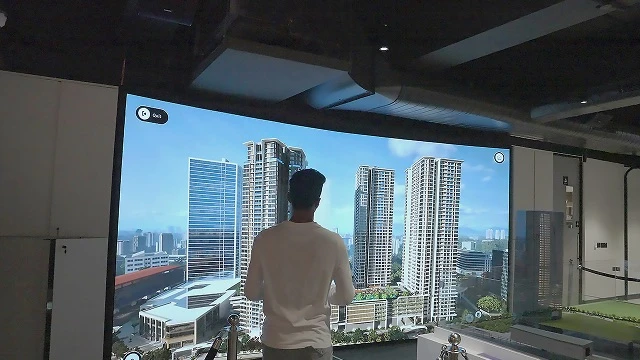

There's a version of this problem that every developer with more than one project knows well. You've spent significant money building out an experience centre for Project A — physical model, printed renders, show flat, the works. Now Project B is launching. Project C is in the pipeline. Each new project means rebuilding from scratch: new models, new prints, new show flat, new budget. Meanwhile your sales team is working with tools that can't be updated in real time, can't be adapted mid-conversation, and look exactly like every other developer's experience centre on the same road. The question isn't whether 3D real estate walkthroughs are better than what you're using now. The question is whether the infrastructure you're investing in can actually scale.
The Scalability Problem That Traditional Experience Centres Don't Solve
Physical experience centre assets are expensive to build and impossible to update quickly. When a project's inventory changes — as it does constantly during an active sales campaign — the physical model is already out of date. When a buyer asks to see a unit on a floor that isn't represented in the show flat, the salesperson has to explain, describe, and hope the buyer can visualize.
When a second project launches, the whole infrastructure investment happens again. The learnings from the first project's sales process don't carry forward in any meaningful way. Each project starts from zero.
This isn't a complaint about traditional tools — it's just an honest description of their structural limitations. They were designed for a market where developers launched one project at a time, buyers made decisions slowly, and the visualization technology available was limited to what could be built physically. None of those conditions apply to the Indian real estate market today.
How 3D Architectural Visualization Software Changes the Scale Equation
A properly architected 3D visualization platform changes the economics of experience centre investment in a fundamental way.
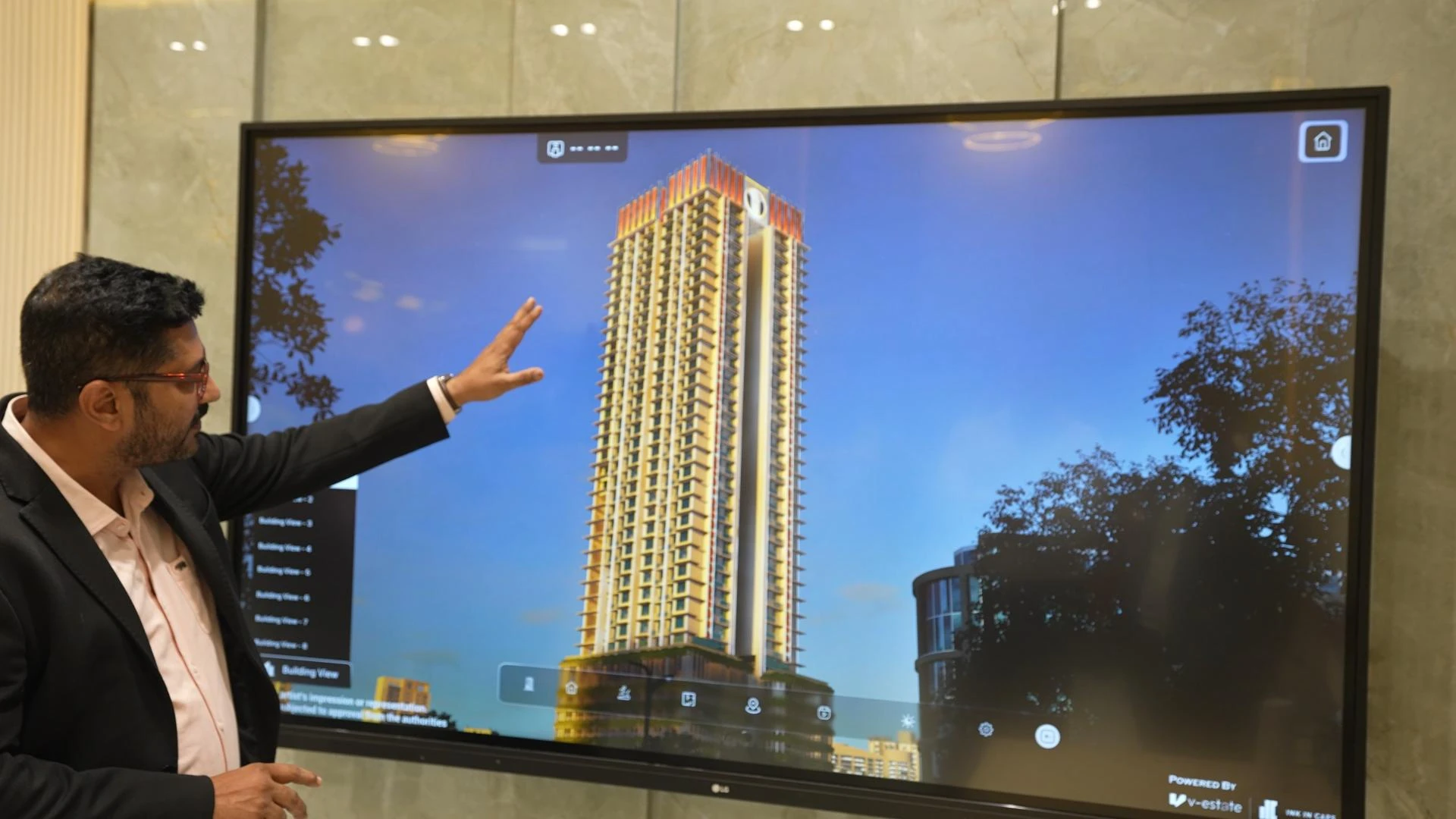
The core infrastructure — the interactive platform, the sales tool integration, the display hardware — is built once and deployed across multiple projects. Each new project adds content to the platform rather than requiring a new physical installation. The accumulated learning about what buyers respond to gets built into how the next project is presented.
Vestate's platform is designed with exactly this scalability in mind. Across their project portfolio — Godrej Properties, L&T Realty, Runwal, Adani Realty — the same underlying platform has been adapted for projects with very different scales, typologies, and audience profiles.
What scalable deployment looks like in practice:
- Multi-project inventory management — Live unit availability across multiple projects is reflected in the platform without rebuilding the underlying infrastructure.
- Configuration flexibility — The same platform that runs a township walkthrough for a large-format project can be reconfigured for a boutique high-rise presentation without starting from scratch.
- Sales team continuity — A team already using the platform for one project applies the same skills immediately to the next. No relearning curve.
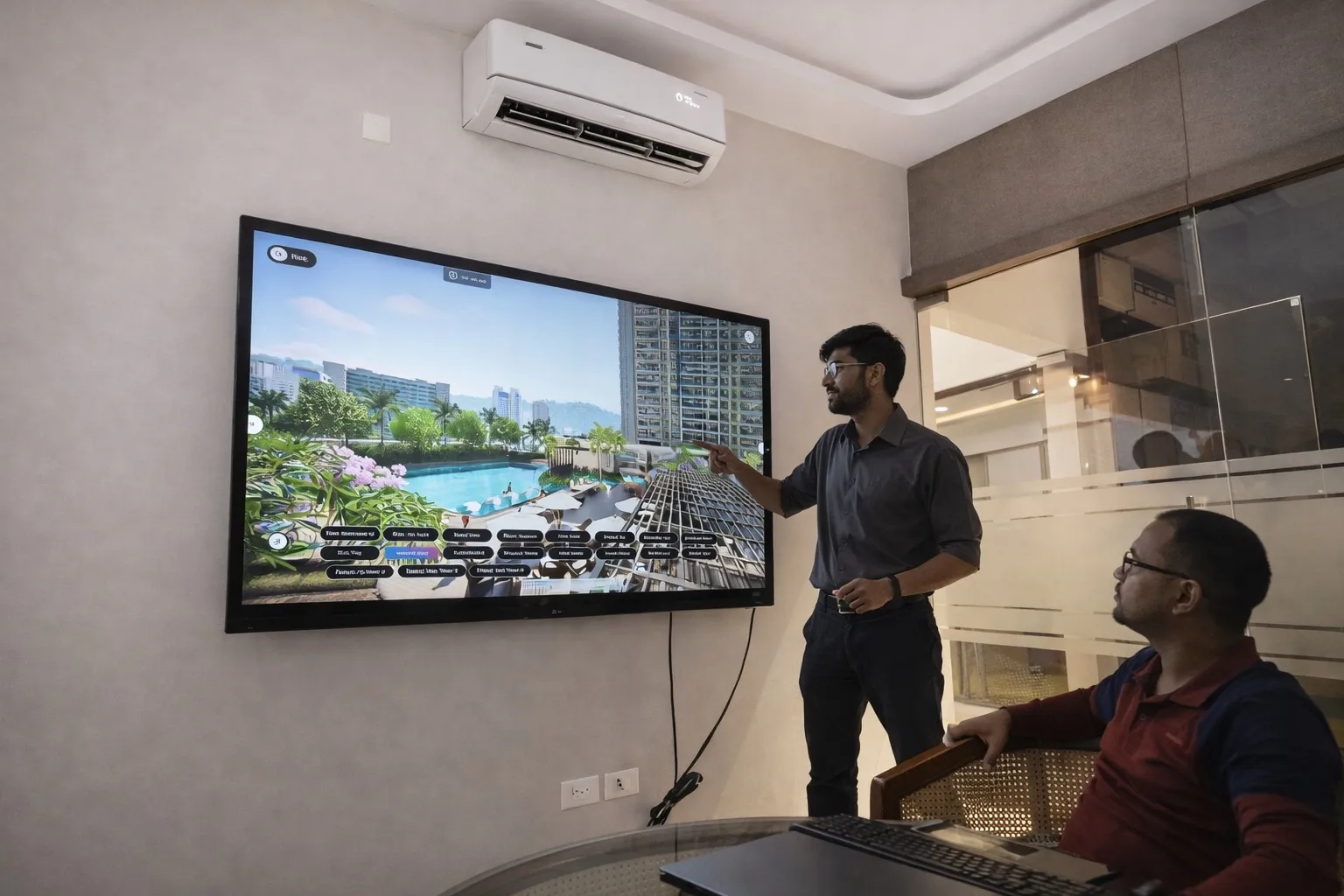
- Hardware compatibility — From 24-inch touch screens to 100-inch displays, video walls, 4K projectors, and VR headsets — the software runs across the full range of display environments.
Adani Realty Codename LIT, Thane: Scaling Ambition with the Right Infrastructure
The Adani Realty Codename LIT project in Thane presented a challenge that sits at the intersection of brand ambition and sales infrastructure. Adani Realty is a brand buyers associate with scale, quality, and ambition. A project carrying that positioning needed an experience centre that reflected it — not just in interior design and physical finishes, but in the actual sales tools in use.
The brief was essentially this: the experience centre needs to feel as ambitious as the project itself. A conventional presentation setup wasn't going to achieve that.
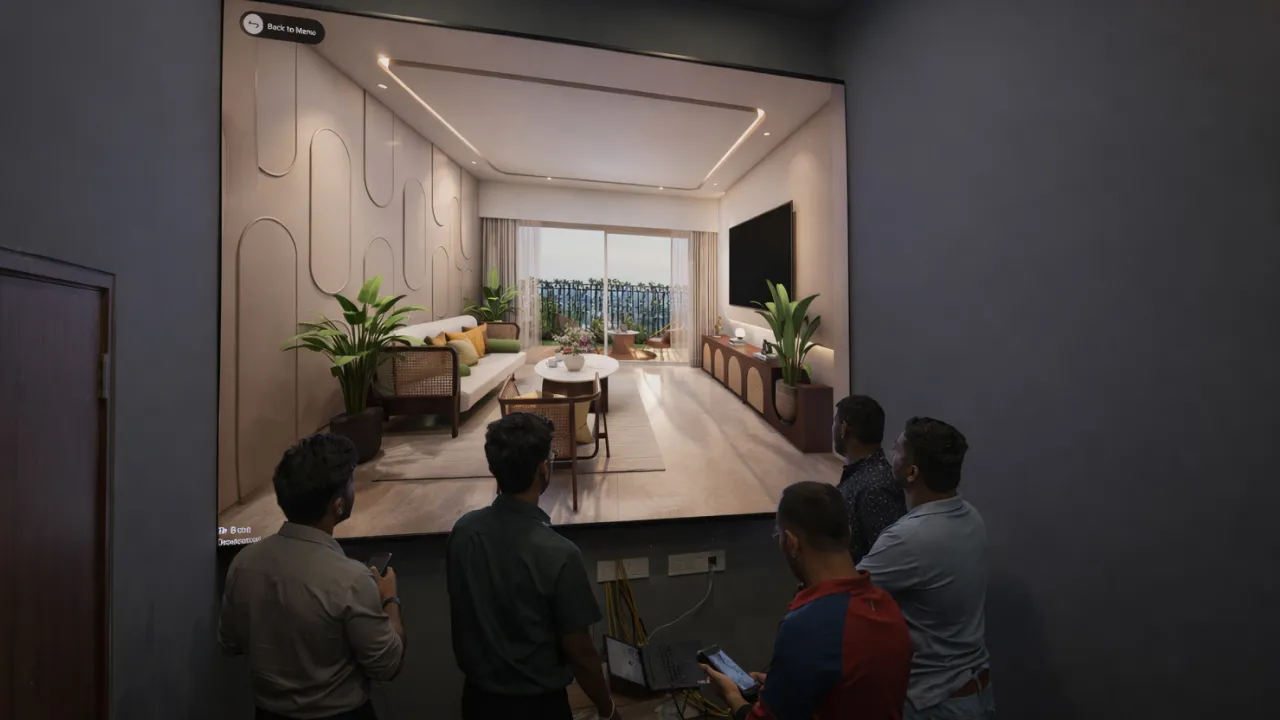
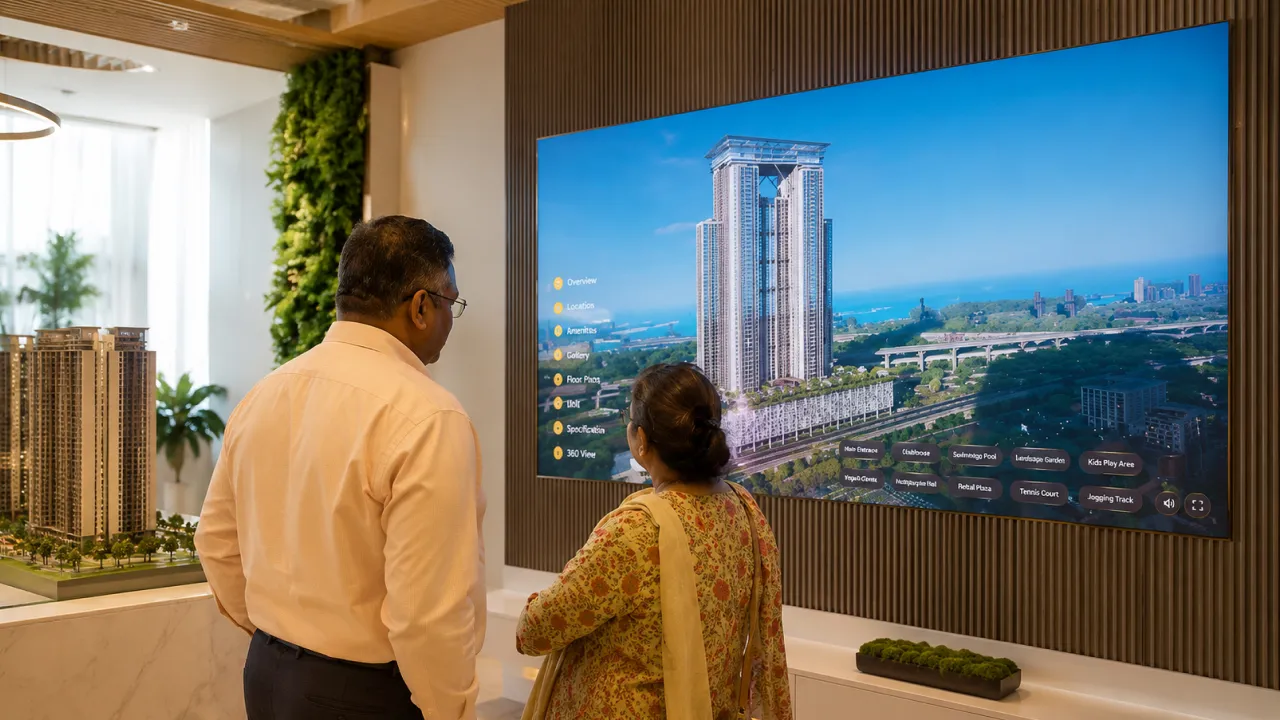
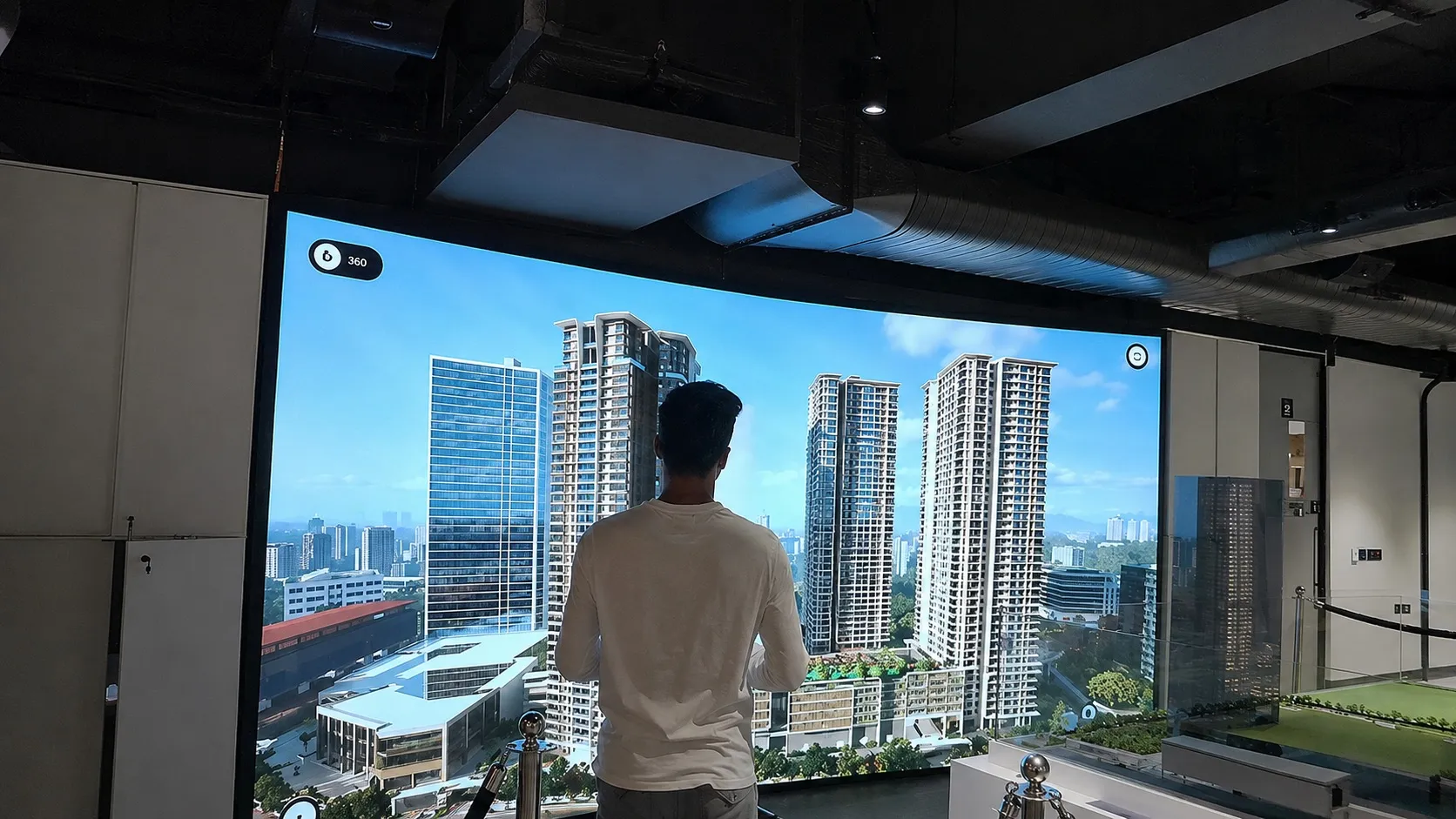
Vestate deployed their 3D architectural visualization software for Codename LIT with a setup that matched the project's brand ambition. Buyers experienced the project through a combination of large-format immersive displays, interactive touchscreen exploration, and detailed unit walkthroughs that gave them complete confidence in what they were evaluating.
The platform also gave the sales team real agility. For a project at this scale and price point, buyers come in with sophisticated questions and expect sophisticated answers. The ability to switch instantly between project overview, vicinity context, amenity exploration, and unit configuration meant the sales team could match the buyer's pace and depth of inquiry — rather than trying to manage it with static materials.
The result was an experience centre that reinforced rather than contradicted the brand's positioning.
See the Adani Realty Codename LIT experience →
The Long-Term ROI of a Platform Investment vs. a Project Investment
A project-by-project investment in physical experience centre assets produces project-level returns. The money spent on the model and show flat for Project A produces sales velocity for Project A. When Project A is sold out, that investment is done.
A platform investment — in 3D visualization solutions for property developers that deploy across projects — produces compounding returns. The infrastructure gets better with use. The sales team gets more skilled. The data about how buyers engage with different presentations informs how the next project is set up.
For developers with multiple projects in the pipeline, the platform model is structurally more efficient than the project model. The cost per project decreases as the platform is amortized across more launches. The quality of the sales experience increases as the team builds more fluency with the tools.
Understand how the Digital Twin platform scales across projects
What Buyer Behaviour Data Tells You
The pattern across projects using Vestate's infrastructure tells a consistent story:
- Buyers who interact with an immersive 3D environment make unit preferences faster than those relying on static materials.
- The number of follow-up visits required before a booking decision decreases, reducing sales cycle length and cost of acquisition.
- NRI and outstation buyers show significantly higher conversion rates when the virtual walkthrough is comprehensive enough to stand on its own.
- Average transaction values tend to be higher when buyers have explored the project in depth — because they're deciding with confidence, not caution.
If you're launching more than one project in the next two years, the infrastructure question matters as much as the content question. Talk to V-Estate about building a visualization infrastructure that scales with your pipeline.






















Sign in to leave a comment.