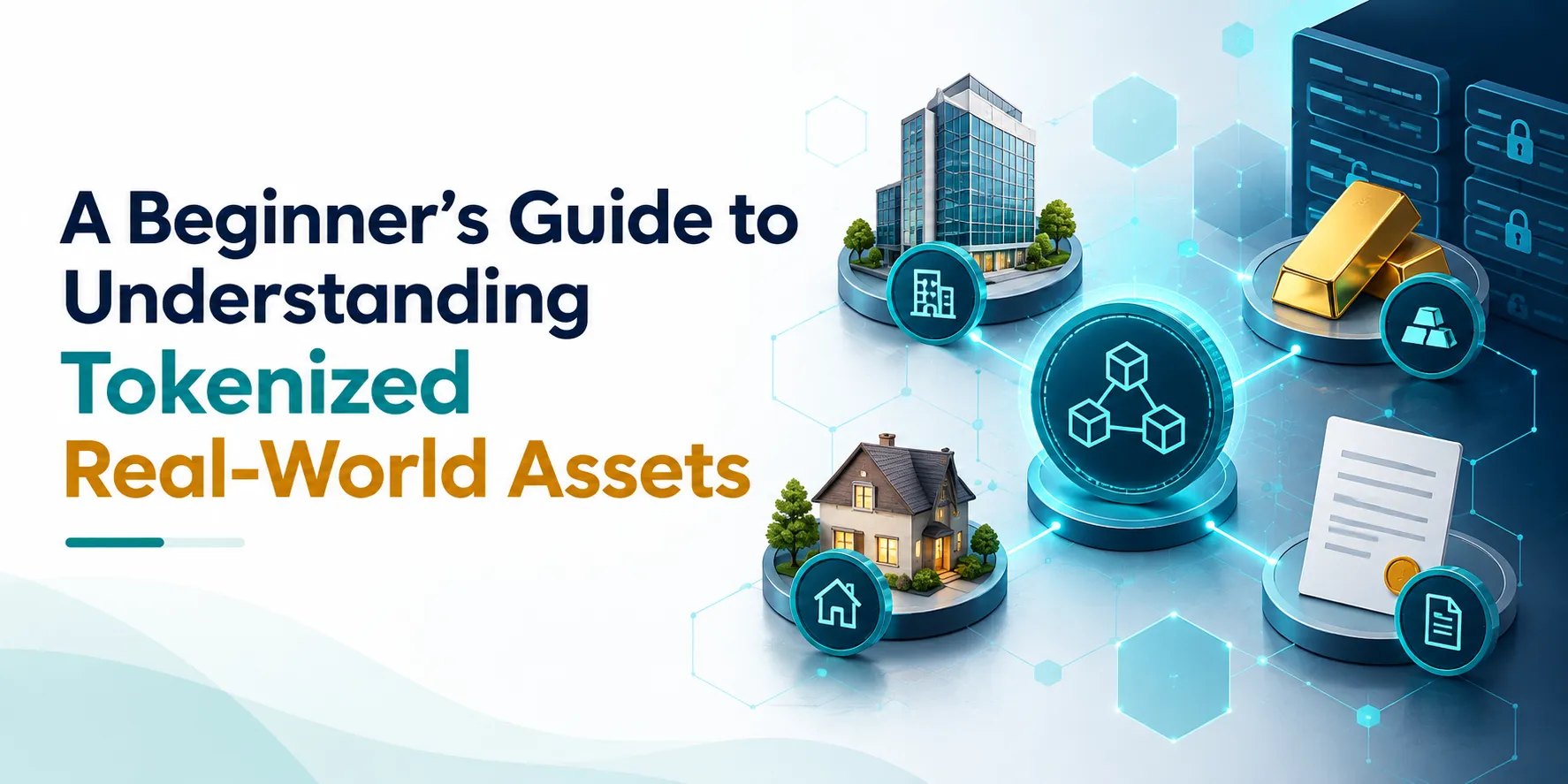

Tokenized real-world assets (RWAs) are becoming an important part of the broader digital asset and financial technology landscape. The basic idea is simple: an asset that exists in the physical or traditional financial world can be represented digitally as a blockchain-based token. That asset could be a government bond, real estate, gold, private credit, investment fund, company shares, or another asset with measurable value.
The concept matters because traditional assets often depend on fragmented records, intermediaries, manual processes, and limited trading hours. Tokenization can place ownership records and transaction rules onto programmable blockchain infrastructure, potentially making transfers faster and more transparent. The Bank for International Settlements (BIS) describes tokenization as recording claims on real or financial assets on a programmable platform, allowing messaging, reconciliation, and asset transfer to become more closely integrated.
However, tokenization is not simply a matter of putting an asset on a blockchain. The legal rights attached to the asset, custody arrangements, valuation, compliance requirements, investor protections, and connection between the digital token and the underlying asset remain critical. Understanding these fundamentals helps beginners separate genuine tokenization use cases from unrealistic claims about blockchain technology.
What Are Tokenized Real-World Assets?
Tokenized real-world assets are digital representations of ownership, rights, or claims related to assets that exist outside a blockchain. Instead of relying entirely on conventional databases or paper-based records, ownership information can be represented through tokens recorded on a distributed ledger.
For example, imagine an investment fund holding $10 million worth of U.S. Treasury securities. Rather than representing investor interests only through traditional account records, the fund could issue blockchain-based tokens representing eligible interests in the fund. Investors could hold these tokens in compatible wallets, subject to the rules governing the offering.
The same principle can apply to real estate. A property worth $2 million could potentially be placed into an appropriate legal structure, with interests in that structure represented by digital tokens. Instead of one investor needing to purchase the entire property, the structure could allow multiple eligible investors to hold fractional interests.
This distinction is important. Tokenization does not automatically make someone the legal owner of a physical asset. The token must have legally enforceable rights connected to the underlying asset or entity. The U.S. Securities and Exchange Commission's 2026 statement on tokenized securities emphasizes that tokenized securities remain securities when they meet the relevant legal definition, even though ownership records are maintained partly or entirely through crypto networks.
For businesses exploring this market, Secure RWA Tokenization Services, Enterprise RWA Tokenization Platform solutions can combine blockchain infrastructure with smart contracts, investor interfaces, wallet integration, compliance workflows, and asset-management functionality. The technology, however, should be designed around the legal and financial structure rather than treating blockchain as the entire solution.
Why Is RWA Tokenization Growing?
The growth of tokenization reflects a broader shift toward digitally native financial infrastructure. Traditional financial markets already use electronic records, but many processes still involve separate systems operated by different participants. Tokenization attempts to bring asset representation, transfer rules, settlement logic, and other functions closer together.
Current market data illustrates the acceleration. CoinDesk Research reported that the total on-chain tokenized RWA market reached $34.7 billion in August 2026, a record end-of-month value. Tokenized stocks and equities reached $4.45 billion, making them the third-largest tokenized asset category at that point.
Earlier in 2026, tokenized assets reached $28.9 billion in May, with tokenized Treasuries accounting for approximately $16.2 billion. BlackRock's BUIDL was also reported as the largest tokenized fund at $2.98 billion during that month.
These numbers do not mean every physical asset is rapidly moving onto blockchains. Instead, they show that tokenization is gaining traction in specific areas where blockchain infrastructure can provide useful benefits.
Government securities and money-market products are particularly important because they combine relatively standardized financial instruments with demand for efficient settlement and digital distribution. BlackRock, for example, expanded its tokenized money-market product offering in August 2026 with two blockchain-based products designed around regulated money-market funds.
How Does Tokenization Work?
The tokenization process generally involves several connected stages. The exact structure differs depending on the asset, jurisdiction, investor group, and regulatory framework.
1. Selecting and evaluating the asset
The first step is determining what should be tokenized. Businesses may consider real estate, bonds, private credit, commodities, funds, equities, intellectual property, or other assets.
The asset must have clear ownership, measurable value, appropriate documentation, and a practical reason for tokenization. Tokenizing an asset simply because blockchain technology is available does not automatically create economic value.
2. Establishing the legal structure
This is one of the most important stages. Developers need to determine what investors actually own and what rights the token represents.
For example, a token could represent an ownership interest in a legal entity that owns a property rather than directly representing title to the property. In another structure, the token may represent an interest in a fund or a contractual claim against an issuer.
The legal framework also determines transfer restrictions, investor eligibility, redemption rights, distributions, taxation, and dispute resolution.
3. Creating the token
Once the legal structure is established, the digital token can be created on a suitable blockchain network. Smart contracts define how tokens are issued, transferred, burned, redeemed, or otherwise managed.
For regulated assets, smart contracts can also incorporate features such as whitelisted wallets, transfer restrictions, compliance checks, and controlled distributions.
4. Connecting the token to the underlying asset
The blockchain cannot independently prove that a physical building, gold reserve, bond, or other off-chain asset actually exists. That connection requires reliable legal documents, custodians, administrators, auditors, valuation systems, and sometimes oracles.
This is one of the biggest differences between tokenizing a real-world asset and creating a purely digital cryptocurrency.
5. Issuance and distribution
After the technical and legal infrastructure is ready, eligible investors can acquire the tokens through the appropriate distribution channel.
Depending on the regulatory structure, investors may need to complete identity verification, know-your-customer procedures, accreditation checks, suitability assessments, or other compliance requirements.
6. Trading, settlement, and redemption
The final stage involves managing the asset throughout its lifecycle. Investors may transfer tokens, receive income distributions, participate in secondary markets, or redeem their positions according to the governing rules.
BIS highlights delivery-versus-payment as a major potential application of tokenization because asset transfer and payment can be linked through programmable infrastructure.
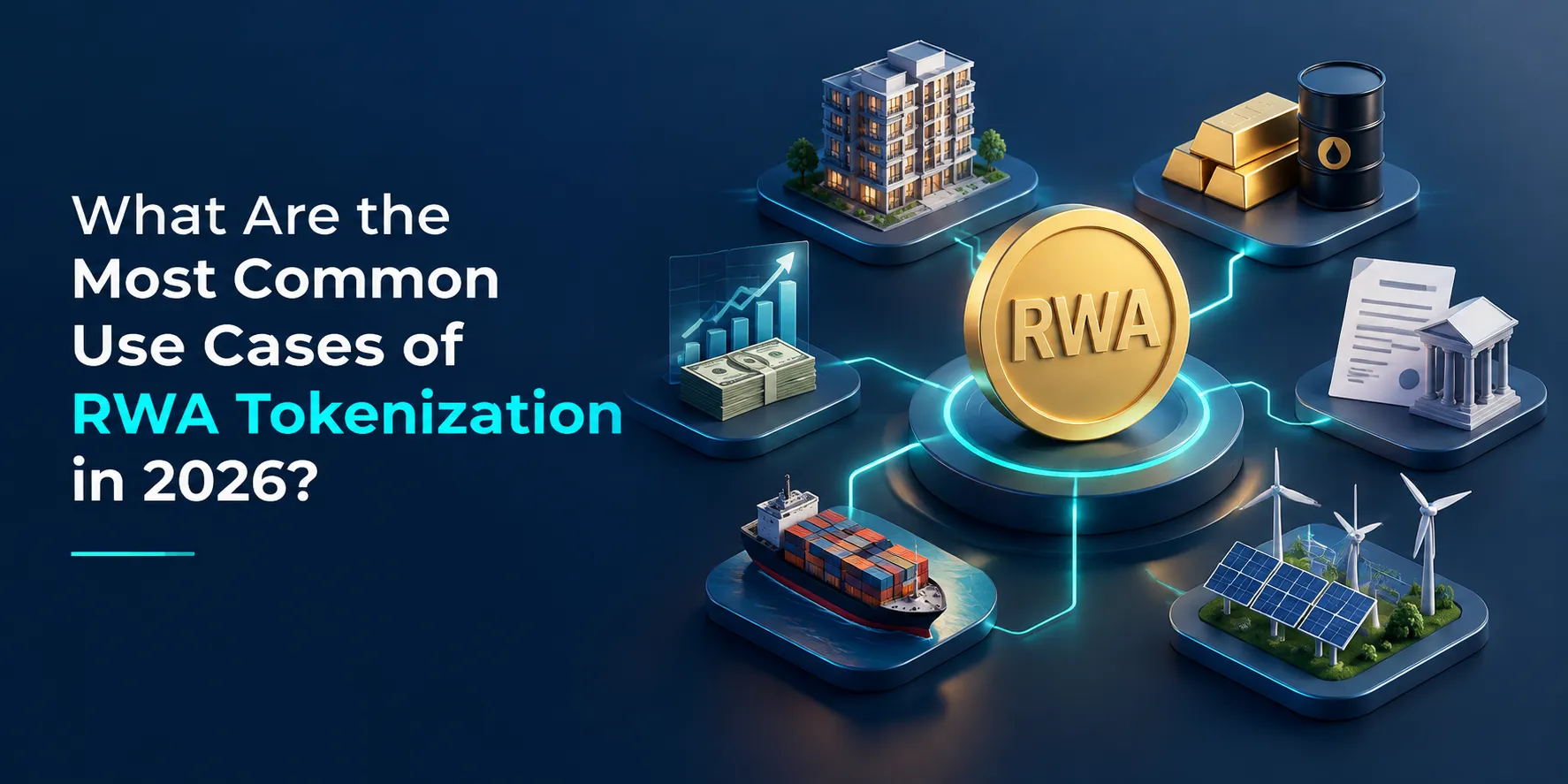
What Types of Assets Can Be Tokenized?
Tokenization can potentially cover a wide range of asset classes, although the practical suitability varies.
Real estate: Properties can potentially be divided into smaller investment interests, improving accessibility while creating digital records for ownership and transfers.
Government bonds: Treasury instruments are already among the largest tokenized asset categories. Their standardized nature makes them attractive for blockchain-based settlement and distribution.
Private credit: Loans and credit instruments can be represented digitally, potentially improving recordkeeping, transferability, and portfolio management.
Commodities: Gold and other commodities can be represented through tokens connected to underlying reserves or custody arrangements.
Investment funds: Fund shares can be represented through blockchain-based tokens, enabling digital distribution and potentially more efficient settlement.
Equities: Tokenized stocks and equity interests are another rapidly growing category. By August 2026, tokenized stocks and equities had reached $4.45 billion in market capitalization, according to CoinDesk Research.
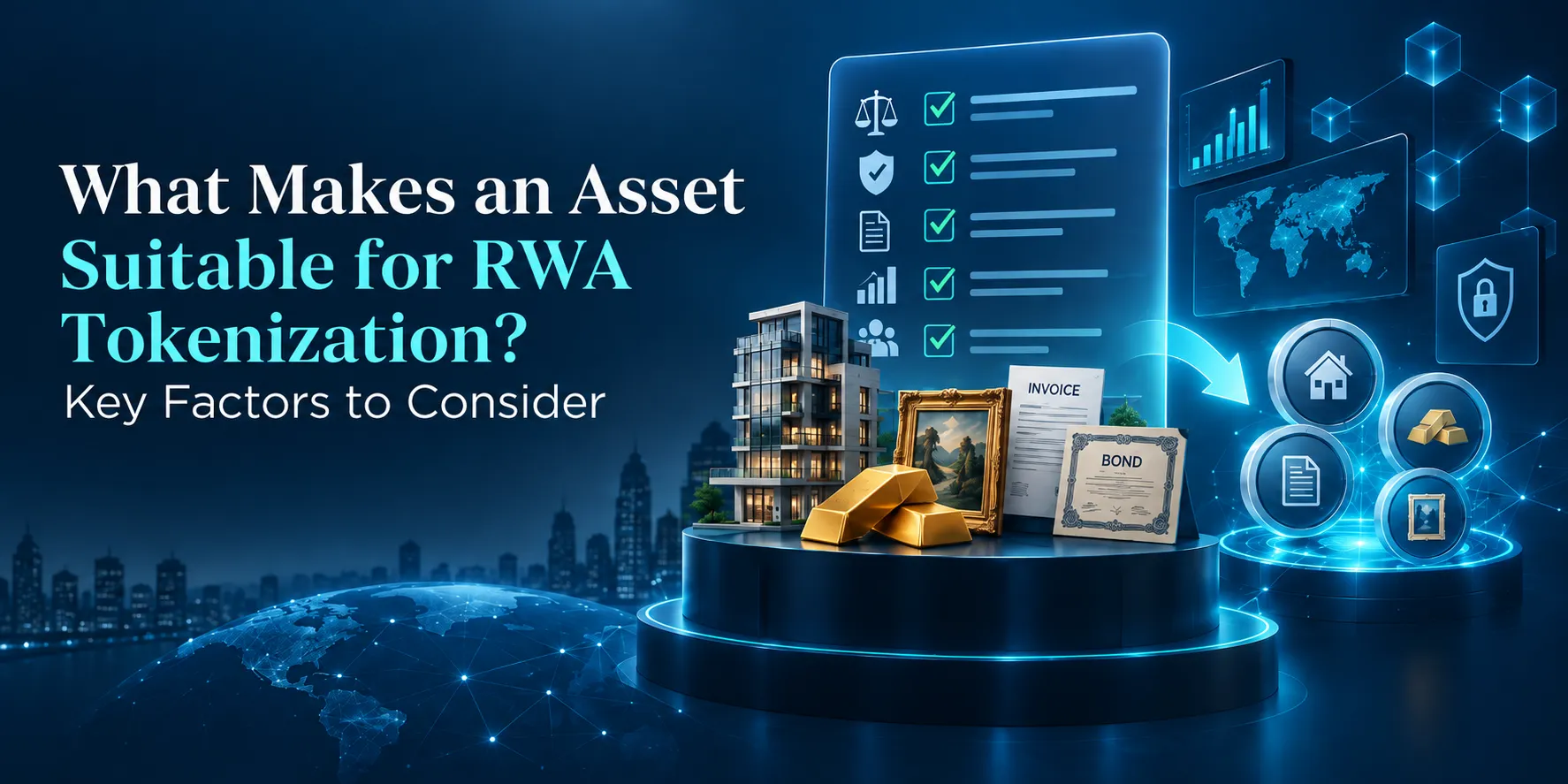
The most suitable assets generally have clear ownership structures, reliable valuation mechanisms, and a strong economic reason for improved transferability or digital distribution.
What Are the Main Benefits?
One major advantage is fractionalization. An expensive asset can potentially be divided into smaller interests, allowing eligible investors to gain exposure without purchasing the entire asset.
Another benefit is greater operational efficiency. Traditional transactions may involve brokers, custodians, administrators, clearing systems, registrars, and reconciliation processes. A programmable blockchain environment can potentially automate portions of these workflows.
Transparency is another important advantage. Depending on the blockchain and privacy architecture, authorized participants can obtain a consistent record of transactions and ownership changes.
Tokenization can also support 24/7 transaction infrastructure. Unlike traditional markets that operate according to specific schedules, blockchain networks can support transactions outside conventional market hours. BIS notes that tokenization can bring issuance, trading, settlement, and custody into a more integrated digital environment.
Liquidity is another frequently discussed benefit, particularly for traditionally illiquid assets. Research published by BIS on tokenized real estate found that tokenized property trading increased by 35% cumulatively over two days following natural disasters in the studied dataset, although the research also noted that this liquidity effect depended on platforms providing buyback mechanisms, which can introduce additional risks.
What Are the Risks and Challenges?
Tokenization should not be confused with eliminating risk. It changes how assets are represented and managed, but the underlying economic and legal risks remain.
Regulatory uncertainty is a major challenge. Securities, property interests, funds, commodities, and other assets can fall under different regulatory regimes. Requirements may also differ significantly between jurisdictions.
Smart contract risk is another concern. A coding error can affect token transfers, permissions, distributions, or other functions. Blockchain immutability can make certain mistakes difficult to reverse.
Custody risk also matters. A token can exist on a blockchain while the underlying asset remains under the control of a custodian or another institution. Investors therefore need to understand who holds the asset and what happens if that entity fails.
Oracle and valuation risk can emerge when off-chain information must be transferred onto a blockchain. If the data source is inaccurate, manipulated, delayed, or unavailable, the tokenized system may behave incorrectly.
BIS identifies operational fragilities, third-party dependencies, liquidity and maturity mismatches, leverage, valuation problems, and interconnectedness as important risks associated with tokenization.
Most importantly, investors need to understand the difference between owning a token and having enforceable rights to an asset. The legal documentation must clearly establish what the token represents.
A Practical Example: Tokenized Real Estate
Consider a commercial property valued at $5 million. A company could place the property into a legally appropriate entity and create 500,000 digital tokens representing defined interests in that structure.
An investor purchasing 5,000 tokens would hold a 1% token position. Depending on the legal structure, that investor might receive an economic interest in rental income, appreciation, or proceeds from a property sale.
Smart contracts could manage approved transfers and automate certain distributions. An investor dashboard could display holdings, transaction history, income distributions, and relevant property information.
However, the blockchain would not remove the need for property valuation, legal agreements, tax management, property administration, insurance, custody, and regulatory compliance. The technology supports the financial structure. It does not replace it.
What Should Beginners Look for Before Investing?
Beginners should evaluate the underlying asset before focusing on the token itself. Important questions include:
- What exactly does the token represent?
- Who legally owns the underlying asset?
- Who has custody of it?
- How is the asset valued?
- What rights does the token holder receive?
- Can the token be transferred or redeemed?
- Which investors are legally permitted to participate?
- What regulations apply?
- Has the smart contract been independently audited?
- What happens if the issuer, custodian, or platform fails?
These questions are especially important because tokenization can make an asset appear highly accessible while the underlying legal structure remains complex.
The Future of Tokenized Real-World Assets
The next phase of RWA tokenization is likely to focus less on simply creating tokens and more on building complete financial infrastructure around them. This includes compliant issuance, identity management, custody, settlement, investor servicing, secondary markets, and interoperability.
The BIS argues that tokenization has the potential to integrate traditionally separate financial processes, but also stresses that the benefits depend on complementary infrastructure, appropriate regulation, and sound governance.
The market's development in 2026 suggests that institutional participation is becoming increasingly important. Tokenized Treasuries, funds, equities, and other regulated products are demonstrating that RWA tokenization is moving beyond experimental concepts. Yet the long-term success of the sector will depend on whether platforms can connect blockchain efficiency with legally enforceable ownership, reliable asset backing, investor protection, and sustainable liquidity.
Conclusion
Tokenized real-world assets represent an important evolution in how traditional assets can be issued, managed, transferred, and accessed through digital infrastructure. The strongest applications combine blockchain technology with clear legal structures, secure custody, smart contracts, compliance systems, and reliable asset verification. As the market continues to mature, businesses need technology that addresses both the blockchain and financial sides of tokenization. Blockchain App Factory provides best services for businesses exploring RWA tokenization, offering solutions designed around the technical and operational requirements of modern tokenized asset ecosystems.























Sign in to leave a comment.