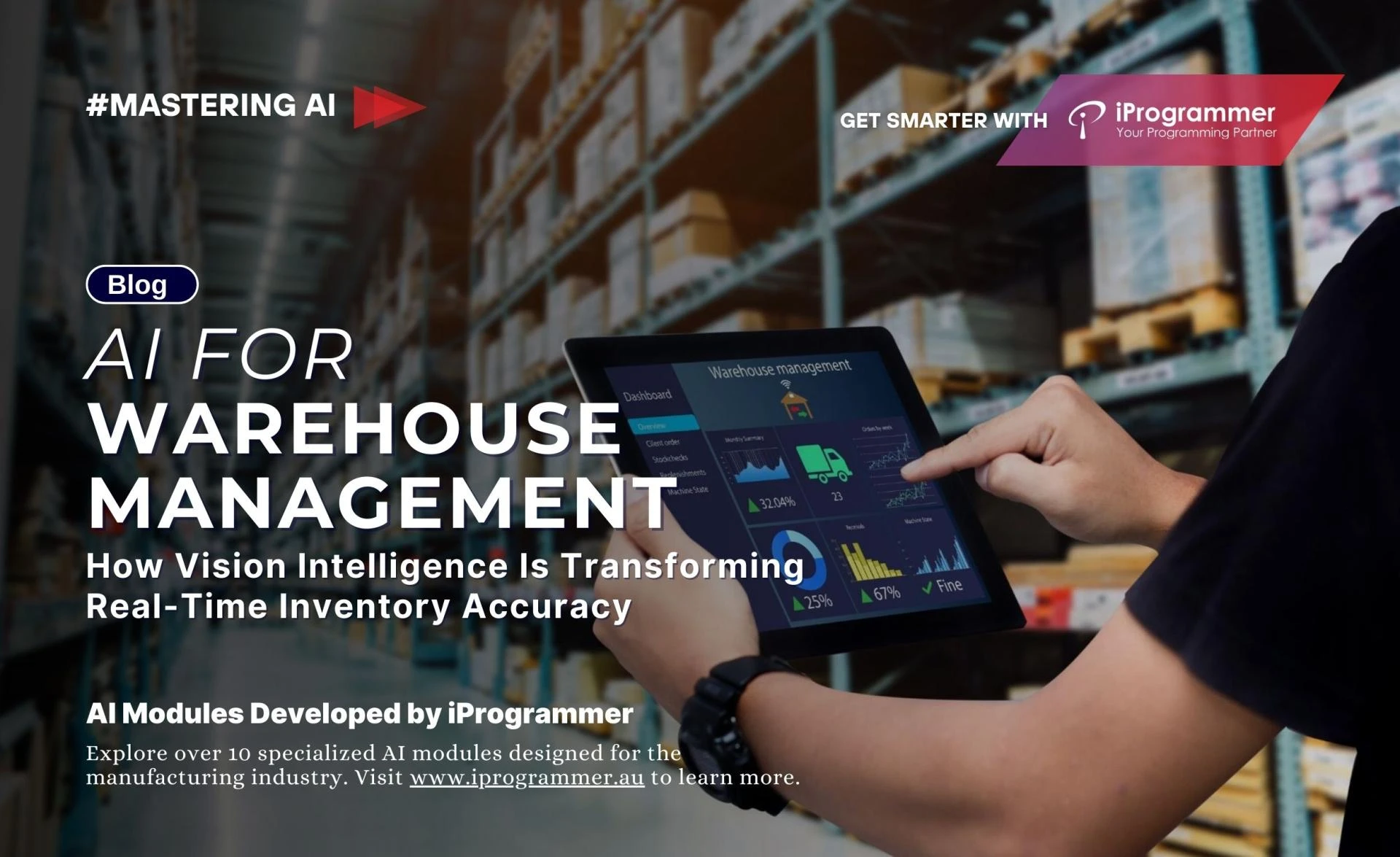

Most warehouse teams know the moment well. A picker reports a missing unit. The supervisor checks the rack, nothing there. The WMS (Warehouse Management System) says it’s there. What begins as a two-minute check turns into an hour-long search. Across the floor, similar gaps are pulling productive time into reconciliation loops that shouldn’t exist.
The numbers tell a harder story. Average inventory accuracy across companies sat at just 83% in 2024, meaning nearly one in five items exists in a state of uncertainty. That uncertainty isn’t free. Global losses from inventory distortion like shrinkage, overstocks, and misplacements, reached $1.77 trillion in recent studies.
Real-time clarity is the fix here. Vision intelligence gives teams the ability to observe and correct as work happens. It does not replace staff. It strengthens decisions at the point of action. This blog will explore that. You will learn how AI for Warehouse Management brings that clarity. It covers Vision AI, dynamic stock reallocation, and vision-led SKU differentiation. It also shows how these capabilities help warehouses trust their numbers again.
Why Accuracy Breaks Down in Fast-Moving Warehouses
In a warehouse, errors rarely come from a single point. They build through small shifts. A pallet is placed one rack higher. A box is scanned but set on the wrong line. A picker misidentifies a similar SKU. These slips do not stop the workflow. They hide within it. And once they hide, they disrupt the larger structure around them.
Traditional WMS systems depend on exact inputs. The system assumes that every scan is correct and that every putaway action follows the storage rule attached to it. But real warehouse floors move with speed, interruptions, and pressure. People adapt to what they see in front of them. They take quick decisions to keep work flowing. And that flexibility, though necessary, introduces variation.
Manual checks attempt to catch errors. Audits help maintain baseline confidence. But both depend on time. They happen after the fact. They reveal what went wrong, not when it went wrong. By then, the product may have moved through several hands. Tracing issues takes effort that adds little value.
The challenge is not lack of discipline. It is lack of real-time visibility. When teams cannot see the exact status of items at each moment, accuracy becomes an ongoing chase. And the cost of that chase increases as volumes rise.
How AI Is Used in Warehousing
AI in warehousing works by understanding movement, placement, and patterns without human input. It learns from the visual and operational data that the warehouse already generates. Instead of leaving cameras as passive recorders, AI uses them as sources of live intelligence.
When the system sees a pallet enter an aisle, it identifies its attributes. It locates the exact rack or bin where it is set. It checks if that location matches the WMS record. It notices if an item shifts during handling or if a unit is missing from a carton. It tracks the sequence of actions that take place in busy zones. This creates a layer of awareness that runs alongside daily work.
The benefit is not only in correction. It is in prevention. AI flags inconsistencies in real time. It sends alerts before errors flow into downstream processes. It reduces reliance on audits by ensuring the floor stays aligned with system records. It is built to support teams that move fast and want to maintain control without slowing down.
Vision AI: The New Backbone of Real-Time Awareness
Vision AI forms the core of this new capability. It sees each item as a combination of shape, size, texture, and pattern. It recognises pallets, cartons, and loose units in motion. It notes their position in space and follows their route through the floor.
This level of detail matters because most warehouse errors are physical, not digital. Items are placed in the wrong rack. Pallets are parked near the right aisle but not in it. Similar SKUs mix. Cartons shift during conveyance. Vision AI reads these conditions without relying on the accuracy of earlier actions.
When a pallet enters the putaway zone, the system checks the destination. If the location does not match the instruction, it sends an alert. If a box is taken from a rack that does not belong to its SKU group, the system detects it as a deviation. If a picker chooses an item that resembles another, Vision AI verifies the match.
Vision AI also records real-time footage that builds a historical trail. This trail helps supervisors review movements without searching through multiple feeds. It gives them context behind each action. And it strengthens future predictions by training the model with more patterns.
Dynamic Stock Reallocation: Inventory That Adjusts Itself
Warehouses often rely on static storage rules. Fast-moving SKUs go near dispatch areas. Slow-moving items stay deeper in the racks. But demand patterns shift. Orders rise in waves. New products enter the mix. And storage rules that worked last month may slow the floor today.
Dynamic stock reallocation uses AI to analyse flow, congestion, and handling speed. It identifies locations where travel time increases because of traffic. It detects zones that face repeated delays. It maps the movement patterns of pickers and MHE operators. With this insight, the system recommends new locations for SKUs based on real needs, not fixed rules.
If a batch of SKUs gains demand, the system suggests shifting them to a closer slot. If a zone becomes crowded, it redistributes stock to reduce the load. If a particular rack creates repeated mis-picks, the system adjusts the layout. These shifts may seem small, yet they reduce minutes per pick and raise floor efficiency.
Dynamic reallocation also supports inbound planning. When trucks arrive in rapid sequence, the system predicts the ideal lanes and zones for smooth flow. This prevents pile-ups, reduces cross-movement, and speeds up the start of picking cycles.
Vision-Led SKU Differentiation: The End of Look-Alike Mix-ups
Vision Led SKU
Many errors stem from visually similar SKUs. Minor shifts in packaging design, seasonal variants, or identical box shapes introduce confusion. Even trained pickers face difficulty during peak hours. And each mix-up leads to returns, rework, and frustration.
Vision-led SKU differentiation solves this with precision. The model studies micro-patterns on boxes. It learns the curves, edges, labels, and textures that make each SKU unique. It becomes skilled at identifying differences that are invisible during fast movement.
When a picker reaches for a unit, Vision AI cross-checks the SKU in real time. If the person grabs a similar-looking one, the system highlights the mismatch. During putaway, it ensures that the correct SKU enters the correct bin. For high-value or regulated items, the system verifies every movement to prevent errors that may trigger compliance issues.
In FMCG, apparel, electronics, and pharmaceuticals, this level of accuracy reduces returns. It also improves customer trust, since orders reach the user with the right mix and quantity.
Can AI Also Be Used for Inventory Management?
Can AI be used in Inventory Management?
Yes. AI supports inventory management in several ways. It automates cycle counts by tracking item presence through Vision AI. It compares physical stock against WMS records without waiting for manual audits. It identifies stock variances during regular movement.
AI also tracks usage patterns. It flags SKUs that are not moving. It warns supervisors about overstocking or understocking risks. It helps plan replenishment by analysing real-time demand. It alerts teams when storage zones run at full capacity.
The value lies in the consistency. When the system observes stock throughout the day, it creates a live inventory view. Teams can take decisions based on what is actually present, not what the system believes is present.
Read Full Blog Here - AI for Warehouse Management



























Sign in to leave a comment.