
The room is packed. Important people in suits. Partners who've flown in from different cities. Everyone's expecting something impressive — this is a flagship event, after all. But as the presentation begins, you notice something: eyes are drifting. Phones are coming out. The polite nods are getting more mechanical.
This is the reality of most corporate events. The stakes are high, but the engagement methods haven't kept pace with audience expectations.
Augmented reality services are changing this dynamic. Let me show you how two very different companies — Amazon and IndusInd Bank — solved their event engagement challenges using the same underlying technology approach.
The Common Problem: Event Engagement Crisis
Here's what most event planners won't tell you: traditional event formats are broken.
Static displays don't engage — people walk past banners without a second look. Presentations are passive — even great content loses impact when delivered lecture-style. One-way communication means attendees receive information but can't explore what interests them. And low retention means however good the content, most of it is forgotten within 48 hours.
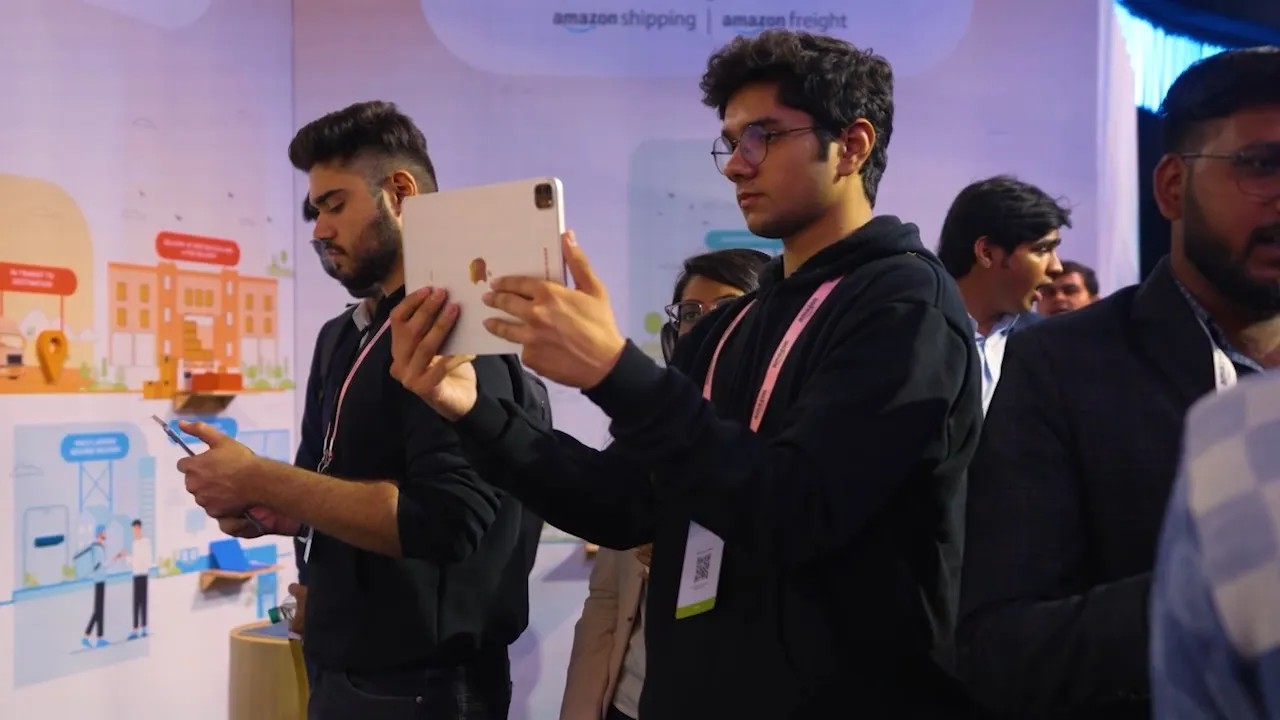
Amazon faced this with their Smbhav Freight and Amazon Shipping summit. They needed to showcase logistics capabilities and achievements — not just list them, but make partners and executives understand and remember them.
IndusInd Bank faced the same challenge at their partner meet and app launch. They had years of achievements, complex rural banking initiatives, and thousands of pages of data to communicate. Traditional presentation methods would have resulted in information overload and low retention.
Both companies arrived at the same solution: interactive augmented reality experiences that put control in the attendees' hands.
Amazon's Interactive AR Wall
Amazon partnered with IIC Lab to create an augmented reality wall for their Smbhav summit. The goal: transform complex logistics information into an interactive experience that attendees would naturally want to explore.
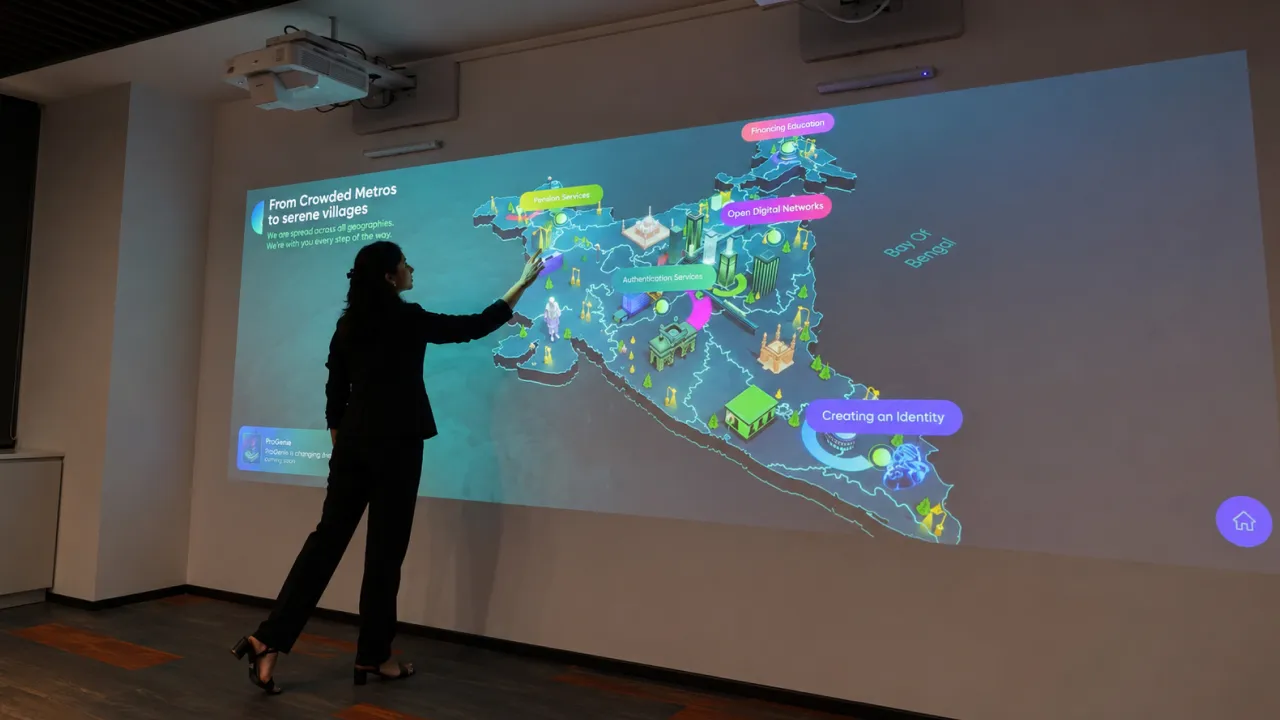
The AR wall used motion sensors and real-time tracking to create a gesture-based interaction experience. Attendees didn't just stand and watch — they moved, explored, and discovered information through natural movements. Users controlled what they saw through gestures and movement. Complex logistics data became intuitive visual stories. The system handled multiple simultaneous users seamlessly. And users could dive deep into areas that interested them rather than following a predetermined narrative.
Amazon's logistics capabilities are inherently complex. Trying to explain them through slides or brochures inevitably oversimplifies or overwhelms. The AR wall let users explore at their own pace, following their curiosity rather than a predetermined script.
The results spoke for themselves: 3x engagement time compared to traditional displays, higher content retention in post-event surveys, social sharing as the installation became a photo focal point, and natural lead capture facilitated by interactive engagement.
IndusInd Bank's Interactive Technology Zones
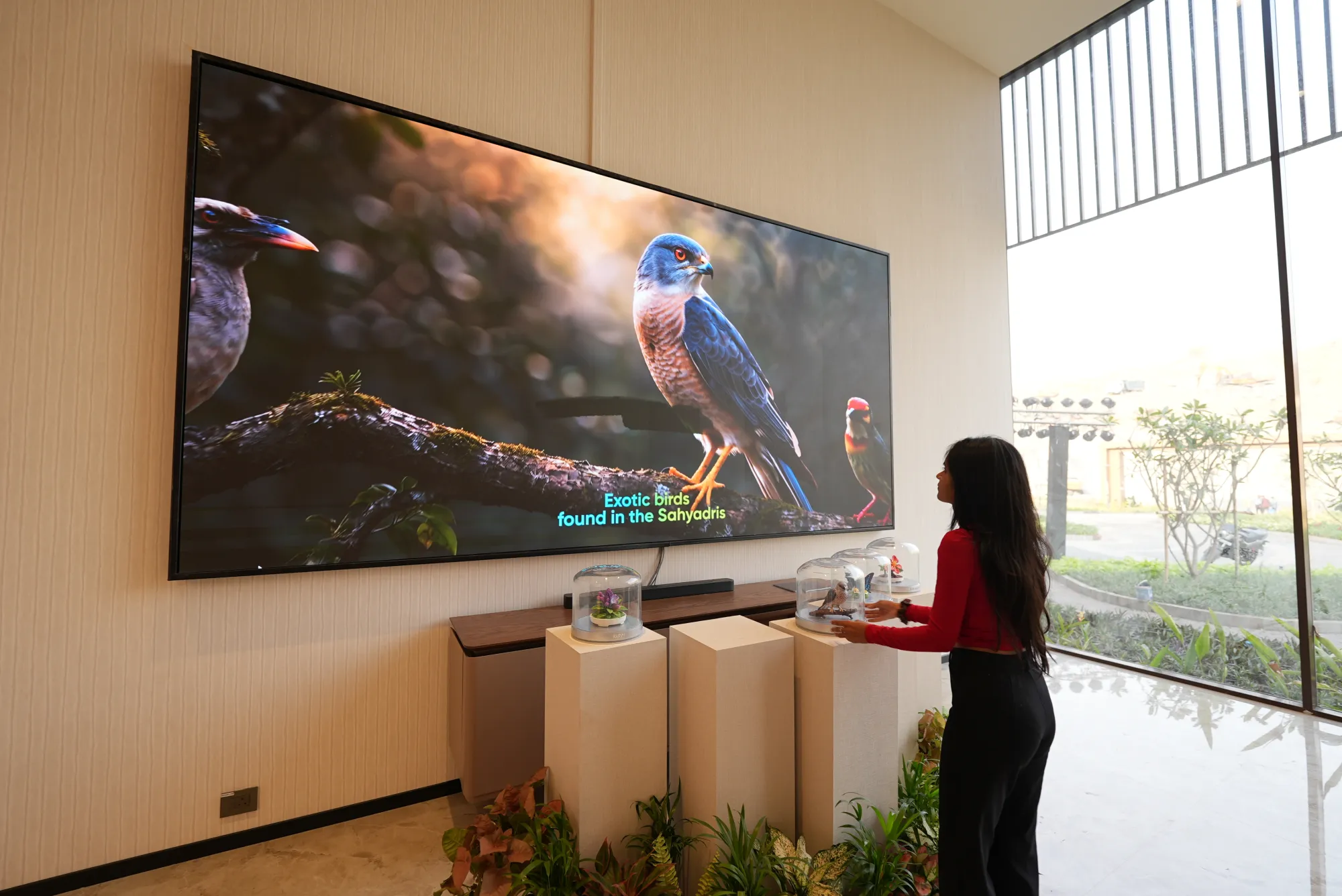
For their high-profile partner meet, IndusInd Bank took a different but equally effective approach. Instead of a single installation, IIC Lab created eight interactive technology zones, each using different technologies to present different aspects of the bank's achievements.
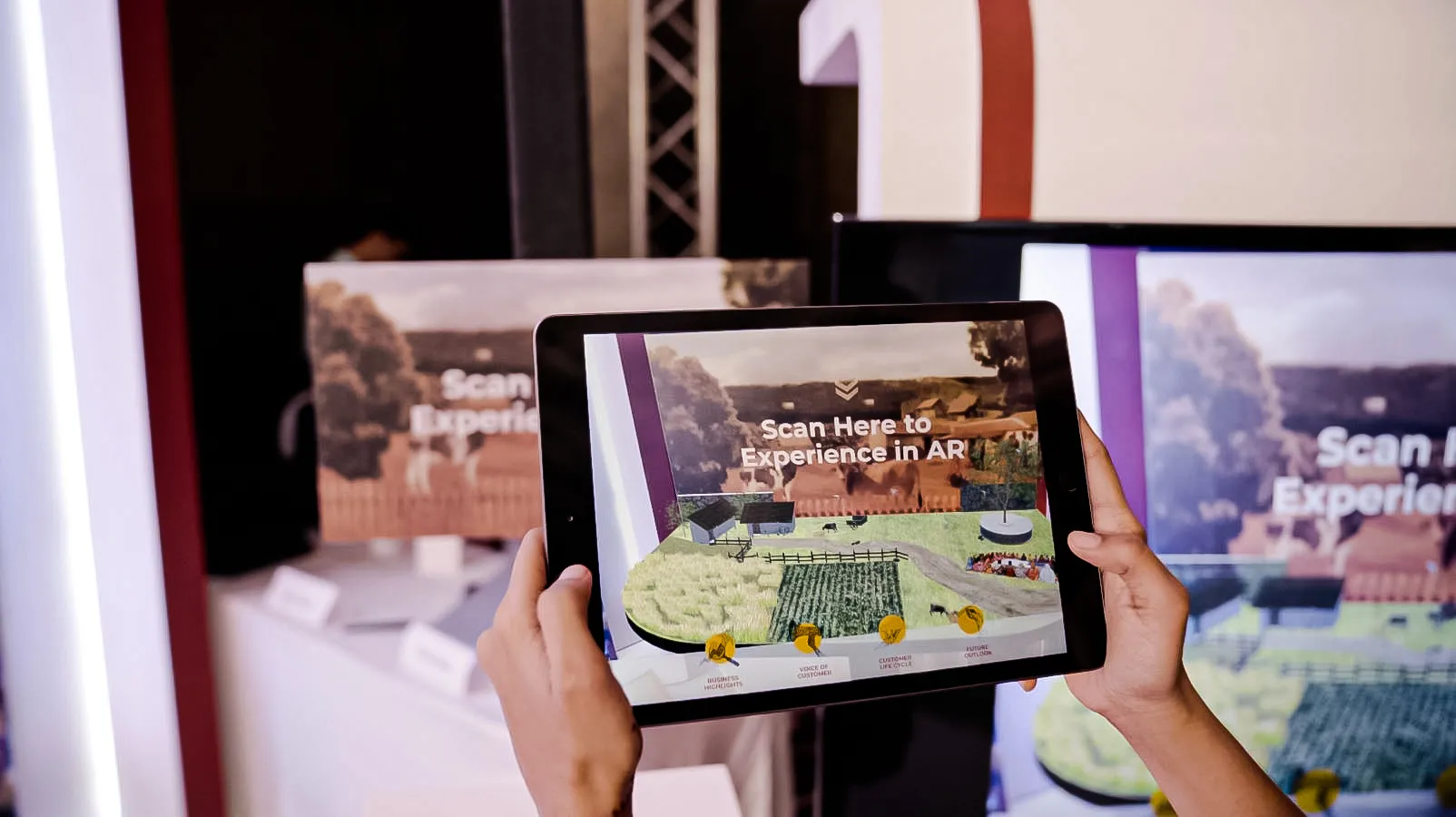
Augmented Reality Zone — A 3D environment showcasing rural banking initiatives, bringing Gram Panchayats, small shops, and microfinancing to life. This wasn't just visual — it was contextual. Rural banking is inherently geographic, and AR let IndusInd show that context instead of trying to describe it.
Multi-Touch Interactive Panel — This transformed thousands of pages of confidential data into an intuitive, swipeable interface. Users could select from multiple achievement categories, drill down into sub-categories, explore at their own depth and pace, and focus on what mattered to them.
The multi-zone approach solved several problems at once. Different attendees could engage with zones that interested them. Complex data was structured for intuitive exploration. Users controlled their journey through the content. And the experience stood out in a sea of corporate events.
The outcome? 100% of attendees visited and engaged with the installations. The interactive nature made complex information accessible without dumbing it down.
What These Case Studies Reveal About AR at Events
AR respects audience intelligence — Both examples avoid the trap of gamification for its own sake. The interactions weren't about adding "fun" — they were about making complex information accessible. This respects the audience's intelligence while still being engaging.
AR enables exploration, not just consumption — Traditional events feed information to attendees. These AR experiences let attendees discover information themselves. The difference in engagement is significant.
AR scales personalization — In a large event, personalizing content is usually impossible. But AR installations can adapt to each user's journey, providing different experiences based on what they choose to explore.
AR creates social moments — Both the Amazon AR wall and IndusInd's zones became conversation starters and photo opportunities. This social dimension extended the impact beyond the immediate interaction.
The Technical Foundation
Making these experiences work requires more than creative concepts — it demands technical expertise. Augmented reality services at this level involve sensor integration where motion sensors, touch interfaces, and cameras work together; real-time processing with instant response to user interaction without lag; content optimization for smooth performance; and fail-safe design with backup systems ensuring reliability during high-stakes events.
The Business Case for Event AR
The question isn't whether AR is cool — it's whether it delivers business results. Based on these case studies, the answer is clear. Users spend 3x longer with AR installations versus traditional displays. Interactive exploration creates stronger memory formation than passive viewing. AR experiences stand out in crowded event environments. User interactions provide insights into what content resonates most. And visual installations generate social media exposure beyond the event.
For enterprises investing in events, these metrics matter. Events aren't cheap — if you're going to invest in them, it makes sense to invest in engagement methods that actually work.
Is Your Event Ready for AR?
The technology is particularly valuable when you need to explain complex products, services, or data; when you're presenting to different stakeholder groups simultaneously; when you need to stand out in a competitive industry; when current event displays aren't holding attention; or when you have significant data to make accessible and understandable.
Both Amazon and IndusInd Bank had complex information to communicate to important audiences. Traditional methods would have failed. AR didn't just make the events more impressive — it made the communication more effective.
Ready to Transform Your Event Engagement?
Your next flagship event doesn't have to be another round of polite nodding and forgotten presentations. Whether you're planning a product launch, partner summit, or industry conference, augmented reality services can help you create genuine engagement.
IIC Lab has been building interactive experiences for global brands across industries for over seven years. From concept to execution, they bring technical precision and strategic thinking to every project.
Let's talk about what interactive AR could do for your next event.
Contact IIC Lab to explore how augmented reality services can transform your event presence.






















Sign in to leave a comment.