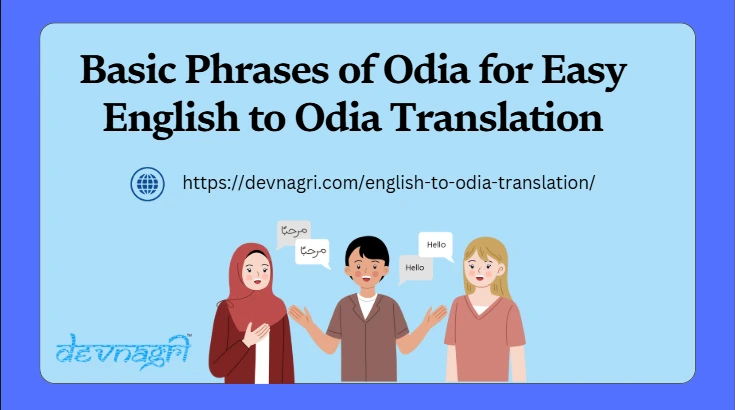

Census of India, 2011, speaks about the Indo-Aryan language to which Odia belongs, mainly spoken by nearly 40 million people residing primarily in the eastern Indian state of Odisha. This language is full of history and culture. With globalisation on the rise, communication across languages has become even more critical. Here, English to Odia translation comes into the picture. It would be beneficial for a person intending to start their linguistic journey, to begin with some basic phrases. Through this post, you will be inducted into some basic Odia phrases. You are essential for somebody interested in translating from English to Odia and fostering cross-cultural understanding.
Why Learn Basic Odia Phrases?
Learning some basic words in Odia is not just a good idea, it's a practical necessity for anyone looking to communicate effectively and build rapport with Odia speakers. Whether you're touring Odisha, conducting business, or simply expanding your vocabulary, these phrases will prove invaluable. By showing respect for the local culture, you'll find that interactions become smoother and more meaningful. Plus, you'll have a solid foundation for translating more complex English to Odia, giving you a sense of preparedness and confidence.
Key Odia Phrases for the Novice:
Here are some of the useful Odia phrases, their approximate English translation, and pronunciation guides; keep in mind the pronunciation is slightly different with the dialect:
Greetings and Introductions:
- Namaskar (ନମସ୍କାର): Hello/Greetings. (Pronounced: No-mos-kar)
- Kemiti achhanti? (କେମିତି ଅଛନ୍ତି?): How are you? (Formal) (Pronounced: Ke-mi-ti o-chon-ti)
- Tu kemiti achhu? (ତୁ କେମିତି ଅଛୁ?): How are you? (Informal) (Pronounced: Tu ke-mi-ti o-chu)
- Mun bhala achhi. (ମୁଁ ଭଲ ଅଛି।): I am fine. (Pronounced: Mun bho-lo o-chi)
- Apana nku swagat (ଆପଣଙ୍କୁ ସ୍ଵାଗତ): Welcome. (Pronounced: A-po-no-nku sho-ga-to)
- Apana nka nama kana? (ଆପଣଙ୍କ ନାମ କଣ?): What is your name? (Formal) (Pronounced: A-po-no-nko na-mo ko-no)
- Tuma nama kana? (ତୁମ ନାମ କଣ?): What is your name? (Informal) (Pronounced: Tu-mo na-mo ko-no)
- Mun nka nama… (ମୁଁ’ଙ୍କ ନାମ…): My name is… (Pronounced: Mun-nko na-mo…)
Basic Courtesy:
- Dhan’yabad (ଧନ୍ୟବାଦ): Thank you. (Pronounced: Dhon-yo-bad)
- Swagatam (ସ୍ଵାଗତମ୍): You’re welcome. (Pronounced: Sho-ga-tom)
- Kshama kariba (କ୍ଷମା କରିବ): Excuse me/Sorry. (Pronounced: Ksho-ma ko-ri-bo)
- দয়া କରି (Daya Kari): Please (Pronounced: Do-ya Ko-ri)
Useful Phrases for Everyday Situations:
- Hun (ହଁ): Yes. (Pronounced: Hun)
- Nahn (ନାହିଁ): No. (Pronounced: Na-hin)
- Mu bujhi parilini (ମୁଁ ବୁଝି ପାରିଲିନି): I don’t understand. (Pronounced: Mu bu-jhi pa-ri-li-ni)
- Eti kana? (ଏଠି କଣ?): What is this? (Pronounced: E-ti ko-no)
- Kete? (କେତେ?): How much? (Pronounced: Ke-te)
- Kuade? (କୁଆଡ଼େ?): Where? (Pronounced: Ku-a-de)
- Sahajya karantu (ସାହାଯ୍ୟ କରନ୍ତୁ): Help me. (Pronounced: Sa-ho-jyo ko-ron-tu)
Numbers (1–5):
- Eka (ଏକ): One (Pronounced: E-ko)
- Dui (ଦୁଇ): Two (Pronounced: Du-i)
- Tini (ତିନି): Three (Pronounced: Ti-ni)
- Chari (ଚାରି): Four (Pronounced: Cha-ri)
- Pancha (ପାଞ୍ଚ): Five (Pronounced: Pan-cho)
The Importance of Accurate English to Odia Translation:
While these basic sentences can be used in daily conversation, professional translation from English to Odia demands more than just language skills. It requires a deep understanding of both cultures. Word-to-word translation often leads to incorrect or meaningless sentences. A good translator is acutely aware of the nuances of grammar, idioms, and cultural sensitivities. They create a translated version that not only conveys the message accurately but also respects the cultural context, making the audience feel respectful and considerate.
Many sites offer online translation solutions, but they must be approached cautiously and the answers checked for accuracy. Many apps and websites also teach Odia to beginners.
There's no substitute for meeting native Odia speakers to enhance pronunciation and familiarize yourself with colloquialisms. Their insights and guidance will not only improve your language skills but also deepen your understanding of the culture, making you feel more engaged and connected.
Conclusion:
Learning the bare words of Odia is a fantastic starting point from which anyone keen to connect and communicate with people who speak and understand Odia can begin doing so. However, English to Odia translation becomes a professional call for well-experienced people proficiently translating appropriately. They are sought because they have enough linguistic and cultural knowledge to correctly and effectively fulfil the translation requirements. Language studies and prioritising proper translation efforts could enhance a considerable amount of language understanding and correct communication.
Source: https://medium.com/@devnagriai./basic-phrases-of-odia-for-easy-english-to-odia-translation-eaa3ba091965
























Sign in to leave a comment.