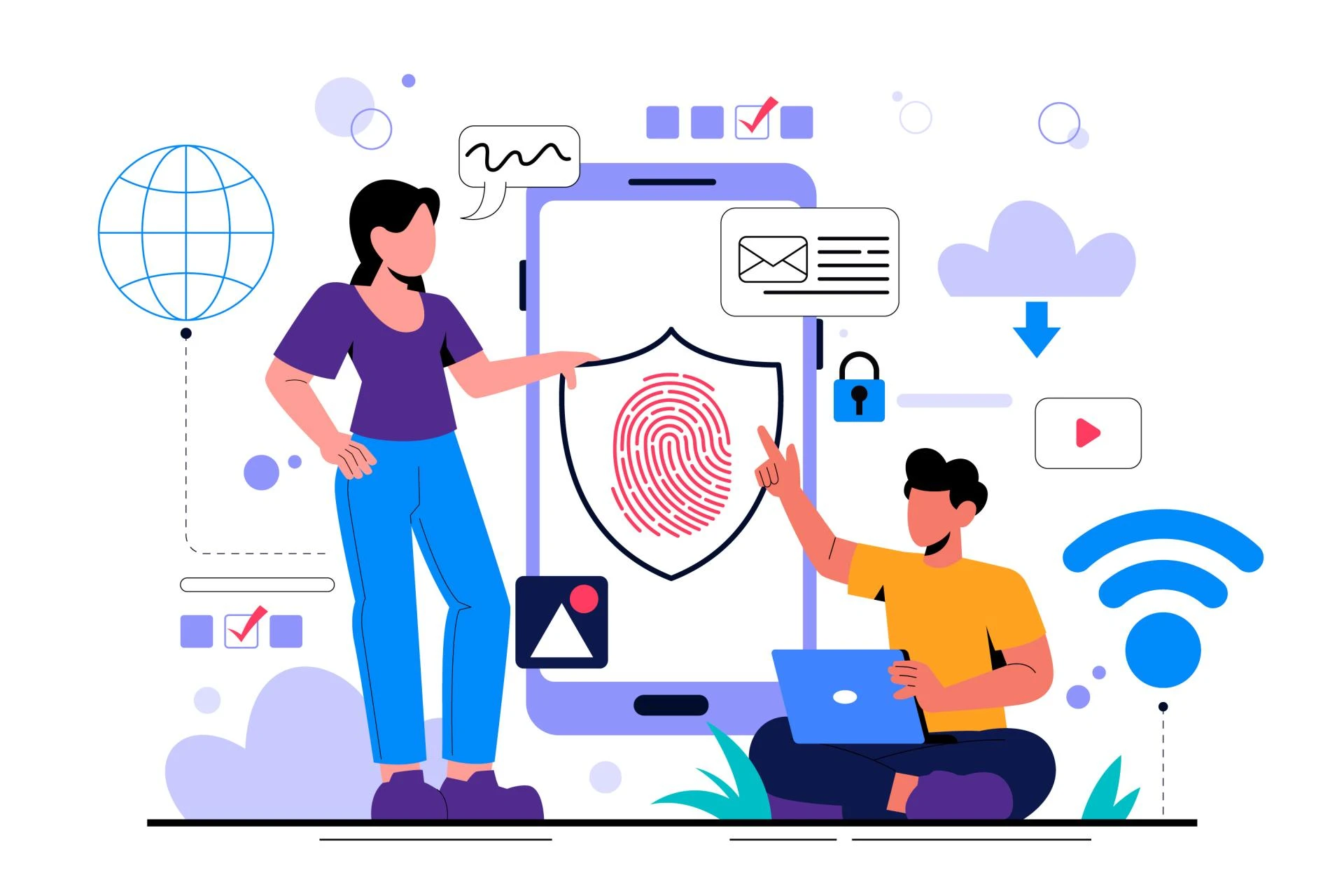

In a world where digital security is paramount, choosing the right authentication method has never been more critical. As users demand seamless yet secure access to their accounts, biometrics and passkeys have emerged as frontrunners in the race to replace traditional passwords. So, which method comes out on top? Let’s break it down.
Biometrics: A Unique Digital Signature
Biometric authentication relies on unique physical or behavioral characteristics to verify a user's identity. Common forms include fingerprint scans, facial recognition, iris scans, and even voice recognition.
Pros of Biometrics
- High Security: Difficult to replicate or forge.
- Convenient: No need to remember passwords.
- Fast Authentication: Quick login without manual input.
Cons of Biometrics
- Privacy Concerns: Some users may feel uneasy about sharing biometric data.
- Potential for False Positives/Negatives: Errors can occur in identifying users.
- Hardware Dependency: Requires specialized devices like fingerprint scanners or cameras.
Passkeys: The Passwordless Revolution
Passkeys are cryptographic keys stored on a user’s device and secured by biometric or PIN-based verification. They eliminate the need for traditional passwords altogether.
Pros of Passkeys
- Eliminates Password Risks: No more weak or reused passwords.
- Seamless User Experience: Quick, hassle-free authentication.
- High Security: Resistant to phishing and credential stuffing attacks.
Cons of Passkeys
- Device Dependency: Access might be limited if the primary device is lost.
- Adoption Challenges: Not yet universally supported by all systems.
Head-to-Head: Biometrics vs. Passkeys
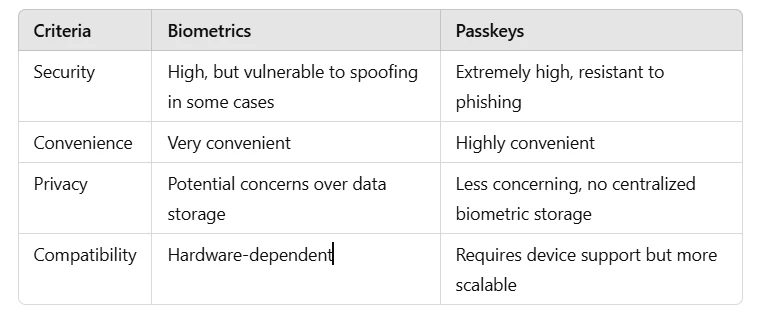
Which One Wins?
The "winner" depends on the use case:
- For Security-Focused Environments: Passkeys may have an edge due to their phishing resistance and cryptographic strength.
- For Seamless Consumer Experiences: Biometrics shine in scenarios requiring quick, user-friendly access.
The Future Is Hybrid
Rather than choosing one over the other, many organizations are combining both methods for enhanced security and usability. Biometrics can serve as an added layer of verification alongside passkeys, creating a multi-factor approach that’s both secure and convenient.
Final Thoughts
Both biometrics and passkeys represent the future of authentication. As the digital landscape evolves, the best solution may not be choosing between them but using them together to provide users with secure and seamless access.
What’s your take? Do you see biometrics or passkeys leading the way? Share your thoughts below.




























Sign in to leave a comment.