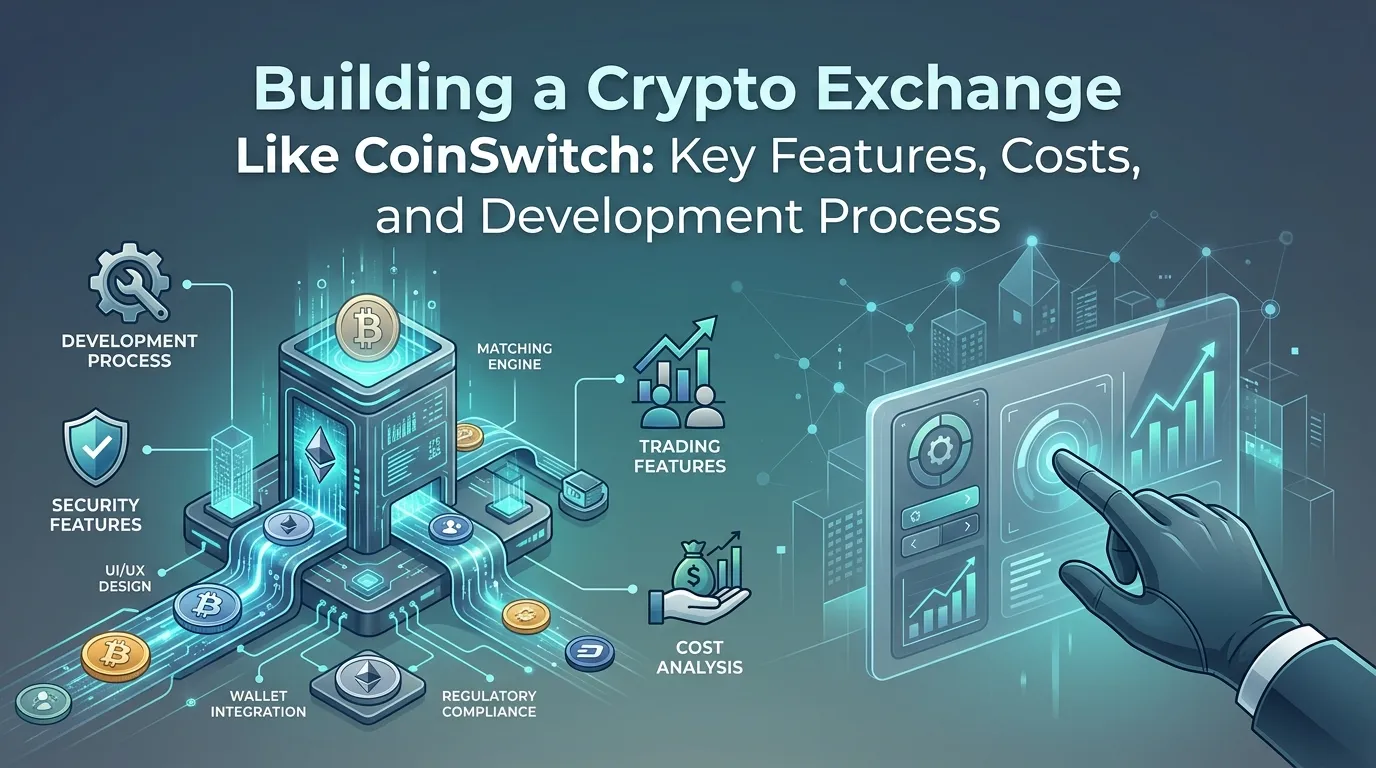

The cryptocurrency industry has grown into a major financial sector, with millions of users trading and managing digital assets through exchanges. As crypto adoption expands among both retail and institutional investors, many businesses are exploring opportunities to launch platforms similar to CoinSwitch, Binance, and Coinbase.
CoinSwitch has gained popularity by making cryptocurrency investing simple and accessible for everyday users. Its intuitive interface, broad asset support, and focus on compliance demonstrate how exchanges can make complex blockchain technology easier to use. However, building a crypto exchange involves much more than developing a standard fintech application. It requires real-time trading capabilities, robust security systems, regulatory compliance, liquidity management, and a seamless user experience.
Understanding the essential features, development process, and associated costs is crucial for businesses planning to enter this competitive market.
Understanding the Business Model of a Crypto Exchange
A cryptocurrency exchange serves as a digital marketplace where users can buy, sell, exchange, and sometimes stake cryptocurrencies. These platforms generate revenue through multiple streams, including trading fees, withdrawal charges, listing fees, staking services, institutional offerings, and premium subscriptions. Understanding these revenue models is essential for businesses planning to partner with a crypto exchange development company to build a sustainable and profitable trading platform.
CoinSwitch’s success highlights an important industry trend: user experience is now as important as technology. By simplifying onboarding and trading processes, the platform appeals to a broader audience beyond experienced crypto traders. Ultimately, the success of any exchange depends on maintaining the right balance between security, liquidity, and usability. A strong exchange must not only provide reliable trading infrastructure but also deliver a secure and user-friendly experience that encourages long-term customer trust and engagement.
Core Features Required in a CoinSwitch-Like Crypto Exchange
The feature set ultimately determines the competitiveness and scalability of a crypto exchange. While some functionality can be added after launch, several core components must be present from day one.
User Registration and Identity Verification
User onboarding represents the first interaction customers have with the platform. A frictionless registration process can significantly improve conversion rates while maintaining regulatory compliance.
Modern exchanges typically incorporate:
- Email and mobile verification
- Multi-factor authentication (MFA)
- KYC (Know Your Customer) verification
- Biometric authentication options
- Automated identity validation
- Risk-based customer screening
Automated KYC systems can verify government-issued identification documents within minutes, reducing manual review workloads while improving user experience.
Crypto Wallet Infrastructure
Wallet management is one of the most critical technical components of any exchange.
A robust exchange generally utilizes a combination of:
Hot Wallets
Connected to the internet for fast transaction processing and immediate withdrawals.
Cold Wallets
Offline storage systems that safeguard the majority of user funds from cyberattacks.
Leading exchanges often store more than 90% of customer assets in cold storage environments to minimize security risks. Sophisticated wallet systems also include multi-signature authorization mechanisms and transaction monitoring tools.
Trading Engine
The trading engine serves as the operational core of the platform. It processes orders, matches buyers with sellers, and executes transactions in real time.
A high-performance matching engine must provide:
- Millisecond-level execution speeds
- Order matching capabilities
- Real-time market updates
- Market and limit orders
- Order book management
- Trade history generation
- High-volume transaction processing
Performance becomes particularly important during periods of market volatility when trading activity spikes dramatically. Delays or failures can result in financial losses and reputational damage.
Liquidity Management
Liquidity is frequently overlooked by first-time exchange founders, yet it represents one of the most important determinants of success.
Without adequate liquidity:
- Trades experience higher slippage
- Price spreads widen
- Users receive unfavorable execution prices
- Trading activity decreases
New exchanges often integrate with external liquidity providers or connect to larger exchanges through liquidity aggregation APIs. This approach allows platforms to offer competitive pricing even before building substantial internal trading volumes.
Real-Time Market Data
Users expect continuous access to accurate market information.
Essential market data features include:
- Live cryptocurrency prices
- Interactive charts
- Trading volume metrics
- Historical price analysis
- Portfolio tracking
- Market sentiment indicators
- Asset performance dashboards
Advanced visualization tools can significantly improve user engagement and encourage more active trading behavior.
Payment Gateway Integration
For mainstream adoption, exchanges must support seamless fiat-to-crypto transactions.
Common payment integrations include:
- Bank transfers
- Credit and debit cards
- UPI payments
- Digital wallets
- Regional payment methods
The ability to purchase cryptocurrency using familiar payment options significantly reduces barriers to entry for new users.
Security Architecture: The Most Critical Investment
Security remains the single most important factor in cryptocurrency exchange development.
Over the past decade, the industry has witnessed numerous high-profile exchange breaches resulting in billions of dollars in losses. These incidents have reinforced the importance of implementing enterprise-grade security infrastructure from the beginning.
A CoinSwitch-like platform should incorporate multiple layers of protection.
Multi-Factor Authentication
Users should verify access through multiple authentication factors, including passwords, authenticator applications, biometrics, or hardware security keys.
End-to-End Encryption
Sensitive data—including user credentials, personal information, and transaction records—must be encrypted both during transmission and storage.
DDoS Protection
Distributed Denial-of-Service attacks remain a common threat against exchanges. Dedicated mitigation systems help maintain platform availability during attack attempts.
Anti-Fraud Monitoring
Artificial intelligence and behavioral analytics increasingly play a role in detecting suspicious activity.
These systems can identify:
- Account takeover attempts
- Abnormal withdrawal behavior
- Automated bot attacks
- Money laundering patterns
- Fraudulent transaction activity
Regular Security Audits
Professional penetration testing and security audits help identify vulnerabilities before attackers can exploit them.
Many successful exchanges conduct ongoing security assessments rather than relying solely on annual audits.
Perhaps the most important lesson from the cryptocurrency industry is that security cannot be treated as an optional enhancement. It must be embedded into every stage of platform architecture and development.
Regulatory Compliance and Legal Considerations
One of the most significant challenges facing crypto exchange operators is regulatory compliance.
Governments worldwide continue to refine cryptocurrency regulations, creating a dynamic legal environment that requires continuous monitoring and adaptation.
Compliance requirements typically include:
- KYC verification procedures
- Anti-Money Laundering (AML) controls
- Transaction monitoring systems
- Suspicious activity reporting
- Data privacy compliance
- Tax reporting infrastructure
- Licensing and registration requirements
Jurisdiction selection can substantially impact development costs and operational complexity. Some regions provide clear regulatory frameworks that encourage innovation, while others impose extensive licensing requirements.
Businesses planning to launch exchanges should engage legal experts early in the development process. Regulatory requirements often influence architecture decisions, onboarding workflows, data management systems, and operational procedures.
Failure to address compliance proactively can result in costly redesigns, operational restrictions, or regulatory penalties after launch.
Regulatory Compliance and Legal Considerations
Meeting Regulatory Requirements
Regulatory compliance is a fundamental requirement for any crypto exchange. Since cryptocurrency regulations differ across countries and continue to evolve, businesses must ensure adherence to local laws before launching. Key compliance measures include Know Your Customer (KYC) verification, Anti-Money Laundering (AML) monitoring, transaction screening, and suspicious activity reporting to prevent fraud and financial crimes.
Data Protection and Licensing
Exchanges must also comply with data privacy regulations and implement secure systems for handling user information. Depending on the target market, operators may need specific licenses, registrations, and regular compliance audits. Although these requirements increase operational costs, they help establish credibility, reduce legal risks, and create a stronger foundation for long-term growth.
Development Process for Building a Crypto Exchange
Market Research and Planning
Developing a cryptocurrency exchange like CoinSwitch begins with thorough market research and business planning. At this stage, businesses define their target audience, supported cryptocurrencies, revenue model, and unique selling proposition. A clear strategy helps shape the platform’s features and ensures the product aligns with market demand.
Design and Core Development
Once the requirements are finalized, developers design the platform architecture and user interface. The development phase involves building essential components such as the trading engine, wallet infrastructure, user authentication system, payment gateway integrations, and admin panel. Special attention is given to creating a seamless user experience across both web and mobile platforms.
Security Testing and Deployment
Security implementation is integrated throughout development, including features such as multi-factor authentication, encryption, cold wallet storage, and fraud detection systems. Before launch, the platform undergoes extensive performance, security, and compliance testing to identify vulnerabilities and ensure stable operation. After deployment, continuous maintenance and updates help keep the exchange secure and competitive.
Cost of Building a CoinSwitch-Like Crypto Exchange
Basic Development Costs
The cost of building a crypto exchange varies based on complexity and functionality. A basic platform with essential trading features, wallet integration, and standard security measures may cost between $30,000 and $80,000. The final budget depends on development scope, technology choices, and team expertise.
Factors Affecting Development Expenses
Several elements influence the overall cost, including trading engine development, security infrastructure, payment gateway integration, liquidity management, mobile app development, and compliance systems. Advanced features such as staking, automated trading tools, and AI-powered fraud detection can further increase development expenses.
Long-Term Operational Investment
For a feature-rich exchange comparable to CoinSwitch, total development costs typically range from $100,000 to $500,000 or more. Beyond development, businesses must also account for ongoing expenses such as cloud hosting, security audits, regulatory compliance, customer support, platform maintenance, and marketing. These investments are essential for ensuring long-term growth, reliability, and user trust.
Conclusion
Building a cryptocurrency exchange like CoinSwitch requires a strategic combination of advanced technology, robust security, regulatory compliance, liquidity management, and a user-centric design. From developing a high-performance trading engine and secure wallet infrastructure to implementing KYC/AML frameworks and scalable architecture, every component plays a crucial role in the platform’s success. While the development process demands significant investment and expertise, a well-executed exchange can capitalize on the growing demand for digital asset trading and generate substantial long-term value. For businesses looking to enter this competitive market, partnering with an experienced crypto exchange development company can accelerate deployment and reduce technical complexities. Blockchain App Factory provides comprehensive crypto exchange development services, helping enterprises build secure, scalable, and feature-rich trading platforms tailored to evolving market and regulatory requirements.
























Sign in to leave a comment.