

Cybersecurity is an industry that moves at breakneck speed. Tools that were once industry standards can become obsolete overnight, replaced by more sophisticated, cloud-based, or AI-driven alternatives. Yet, to truly understand modern security, you have to understand the foundations. You need to know about the tools that paved the way.
One such tool is Cain and Abel. For years, it was a staple in the toolkit of network administrators and ethical hackers alike. While it is now considered legacy software—and often flagged as malware by modern antivirus programs due to its capabilities—understanding its function provides critical insight into how password recovery, network sniffing, and cryptanalysis work.
This guide explores the history and functionality of Cain and Abel, explaining why it was so effective, how it was used for network audits, and the lessons it teaches us about securing data against threats like a phishing attack.
What Is Cain and Abel Cybersecurity Software?
If you entered the IT security field in the early 2000s, you likely didn't need to ask "what is Cain and Abel cybersecurity software?" It was ubiquitous. Developed by Massimiliano Montoro, it was a password recovery tool for Microsoft Windows.
Unlike simple keyloggers or brute-force scripts, Cain and Abel was a comprehensive suite. It allowed users to recover various kinds of passwords by sniffing the network, cracking encrypted passwords using dictionary, brute-force, and cryptanalysis attacks, recording VoIP conversations, decoding scrambled passwords, recovering wireless network keys, revealing password boxes, uncovering cached passwords, and analyzing routing protocols.
The Dual Nature of the Tool
The name itself—referencing the biblical brothers—hints at its dual nature. It could be used for "good" (Abel) or "evil" (Cain).
- The Administrator's View: For a network admin, it was a lifesaver. If a user forgot their password or an employee left the company without unlocking critical files, Cain and Abel could recover access. It was also used to test network strength, identifying weak passwords that needed updating.
- The Attacker's View: For a malicious actor, it was a Swiss Army knife for gaining unauthorized access. Once inside a network, an attacker could use it to silently sniff traffic, harvest credentials, and escalate privileges.
Key Features and Capabilities
To understand why this tool was so potent, we have to look at its specific features. It wasn't just about guessing passwords; it was about exploiting the way Windows and networks handled authentication.
Network Sniffing and APR
Cain and Abel was famous for its ability to sniff network traffic. In a switched network, traffic is usually directed only to the specific ports involved in the communication. This makes it hard for a third party to "listen in."
Cain bypassed this using ARP Poison Routing (APR). By flooding the switch with forged ARP (Address Resolution Protocol) packets, the tool could trick the switch into sending data meant for other computers to the attacker's machine instead. This allowed the attacker to intercept data-in-transit, including unencrypted passwords or hashes.
Cracking Encrypted Passwords
The tool excelled at cracking hashes. When systems store passwords, they rarely store the plain text (e.g., "Password123"). Instead, they store a mathematical scramble of that text, called a hash.
Cain and Abel utilized several methods to reverse this:
- Dictionary Attacks: Trying every word in a pre-defined list.
- Brute-Force Attacks: Trying every possible combination of characters (time-consuming but thorough).
- Cryptanalysis: Using rainbow tables (pre-computed tables for reversing cryptographic hash functions) to crack hashes almost instantly.
VoIP Recording
A feature that often surprised users was the ability to monitor Voice over IP (VoIP) calls. If the tool successfully poisoned the network routing, it could capture and reassemble audio packets, allowing the user to listen to conversations happening over the network.
The Role of Cain and Abel in Network Audits
Despite its potential for misuse, the primary legitimate use case for Cain and Abel was the network audit. Security professionals used it to answer a simple question: "How secure are we, really?"
Testing Password Policies
An organization might have a policy requiring 12-character passwords with symbols and numbers. But are users actually following it? An administrator could run Cain and Abel against the domain controller's hashed password database. If the tool cracked 40% of the employee passwords in under an hour using a simple dictionary attack, the admin knew the current policy was failing.
Identifying Cleartext Protocols
The sniffing capabilities helped admins identify software that was sending credentials in "cleartext" (unencrypted). If Cain could easily pluck an email password or an FTP login out of the air, it was a sign that the organization needed to switch to encrypted protocols like SSL/TLS or SSH.
Modern Threats: From Sniffing to Phishing
While tools like Cain and Abel focused heavily on technical exploitation of network protocols and hashes, the threat landscape has shifted. Today, the easiest way to get a password isn't to crack a complex hash—it's to just ask the user for it.
This is where the phishing attack comes in.
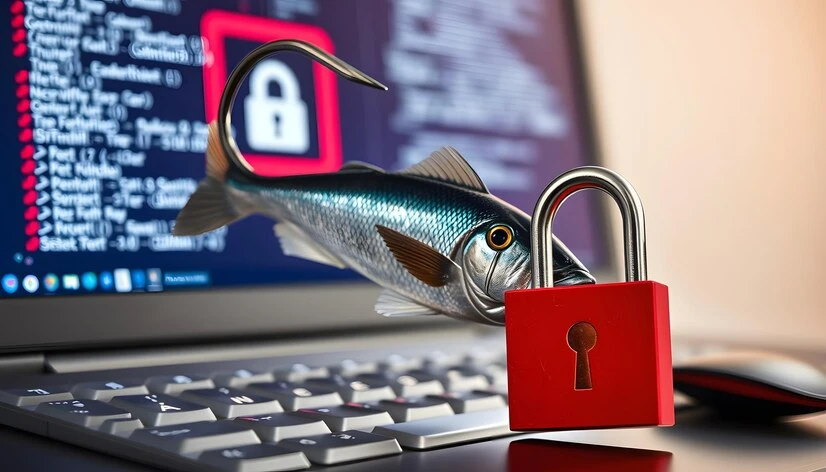
A phishing attack is a method of social engineering where an attacker sends a fraudulent message designed to trick a human victim into revealing sensitive information. Unlike the technical brute-force methods of Cain and Abel, phishing targets the human element.
Why Phishing Is the New "Cracking"
Modern encryption is incredibly strong. Cracking a salted, 256-bit hash of a complex password could take millions of years, even with powerful hardware.
However, sending an email that looks like it came from the IT department saying, "Your account will be locked, click here to reset," takes five minutes. If the user clicks and types their credentials into a fake login page, the attacker bypasses the need for tools like Cain and Abel entirely.
That said, the two concepts often work together. An attacker might use a phishing email to get a foothold on a single workstation. Once inside the network, they might deploy a tool similar to Cain and Abel to sniff the internal network, move laterally to other servers, and escalate their privileges until they control the entire system.
Is Cain and Abel Still Relevant?
If you try to download Cain and Abel today, your browser will likely block it. Windows Defender will scream. The official development ceased years ago. So, is it dead?
In a practical sense, yes. It struggles with modern operating systems (Windows 10/11) and modern network protocols (IPv6, HTTPS/HSTS). Modern switches also have better protections against ARP poisoning.
However, the concepts it championed are more relevant than ever.
- Wireshark has taken over the packet sniffing and network analysis role.
- Hashcat and John the Ripper are the modern kings of password cracking, utilizing GPU power that Cain could only dream of.
- Metasploit handles the exploitation and privilege escalation.
Security professionals study Cain and Abel not to use it in 2024 production environments, but to understand the logic of the attack. You cannot defend against ARP poisoning if you don't understand how a tool like Cain achieved it. You cannot write better password policies if you don't understand how rainbow tables work.
Strengthening Your Defense
Whether defending against a legacy tool like Cain or a modern phishing attack, the principles of defense remain consistent.
1. Enforce Stronger Encryption
Legacy authentication protocols (like NTLMv1) are easily cracked. Ensure your networks use modern standards like Kerberos and that all data in transit is encrypted using TLS 1.3.
2. Implement Multi-Factor Authentication (MFA)
This is the single most effective defense against both password cracking and phishing. Even if a tool sniffs a password, or a user gives it away in a phishing scam, the attacker cannot log in without the second factor (like a code on a phone).
3. Educate Users
Technical controls can fail. Regular security awareness training helps employees recognize the signs of a phishing attack. They need to know that IT will never ask for their password via email.
4. Segment the Network
If a breach occurs, network segmentation ensures the attacker is stuck in one small area of the network rather than having free reign to sniff traffic across the entire organization.
Conclusion
Cain and Abel holds a legendary spot in the history of cybersecurity. It was a tool that democratized network hacking, making complex attacks accessible to anyone with a Windows PC. While its code may be gathering dust, the vulnerabilities it exploited—weak passwords, unencrypted traffic, and human error—are very much alive.
By understanding how these legacy tools operated, we gain a clearer perspective on the necessity of modern defenses. We see why MFA is non-negotiable, why encryption matters, and why the human element remains the strongest, and weakest, link in the security chain.































Sign in to leave a comment.