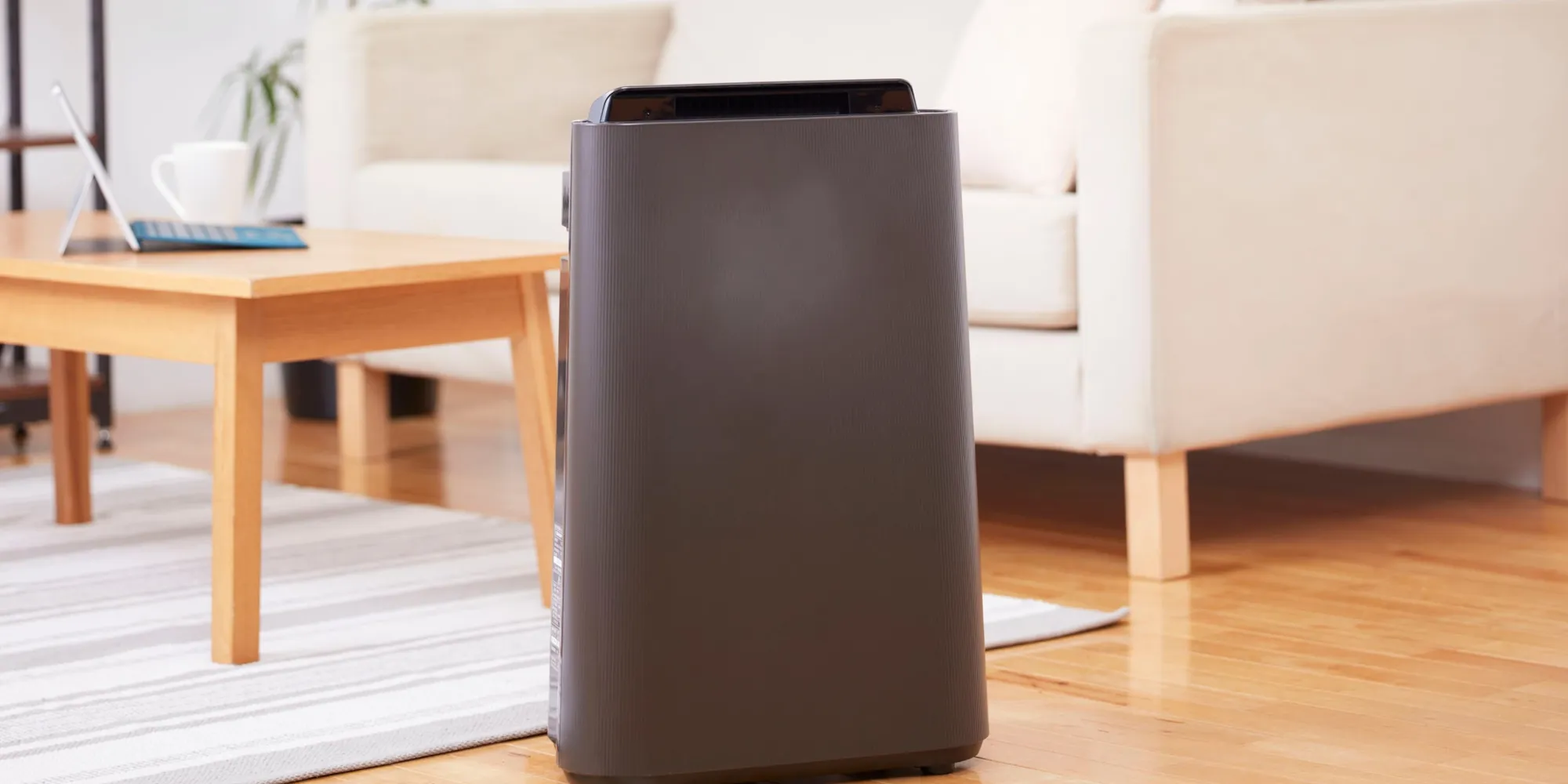

Yes. A HEPA filter air purifier can catch microplastic particles floating in your indoor air. That is the direct answer. But knowing how it works helps you use it the right way; so, let's walk through it.
What Are Indoor Microplastics?
Microplastics are tiny pieces of plastic smaller than 5 millimeters. Inside your home, they mostly come from synthetic fabrics: your sofa, carpet, curtains, and clothes. Every time you sit down, do laundry, or move around, tiny plastic fibers shake loose into the air.
These fibers are light. They float for hours. You breathe them in without knowing it.
Here is the part that surprises most people: indoor air usually has more microplastics than outdoor air. There is no wind to carry them away. The same air keeps circulating through your home.
How Does a HEPA Filter Catch Them?
A HEPA filter works by pulling air through a tightly packed layer of fine fibers. Particles, including plastic ones, get trapped inside that layer and stay there.
HEPA filters are certified to catch particles as small as 0.3 microns at 99.97% efficiency. Most airborne microplastic fibers fall right in that range. That is why a HEPA filter air purifier is such a good fit for this problem.
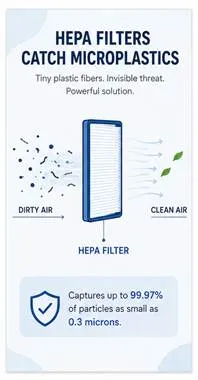
The method is simple: mechanical filtration. No chemicals. No ozone. Air goes in dirty. Air comes out clean.
One thing to know: the full system matters. If air slips around the filter through a poor seal, the HEPA rating on the box means very little. Build quality is just as important as filter quality.
What About the Tiniest Plastic Particles?
This is a fair question. Standard HEPA filters catch most microplastics well. But there is a smaller category called nano plastics- particles far below 1 micron- that standard filters do not catch as reliably.
Nano plastics behave more like ultrafine particles in air. For those, you want a medical-grade or Hyper HEPA purifier. These go well below the 0.3-micron threshold. If you have specific air quality concerns at that level, look for that spec when you shop.
Does Room Size Matter?
Yes, and this is where many people go wrong.
A small indoor air purifier working in a large room cannot cycle the air fast enough. Microplastic fibers have more time to stay airborne and reach your lungs before the unit pulls them in.

The two most important things to check when buying a purifier are room size and filter type. Match the unit to your space. Look at the CADR (Clean Air Delivery Rate). It tells you how much filtered air the purifier produces per minute. A higher CADR means faster, more thorough cleaning.
A simple rule: your purifier should cycle the room air at least 4 to 5 times per hour.
What About Offices and Larger Spaces?
Microplastics are not just a home problem. Offices, gyms, and retail spaces- anywhere with synthetic textiles and heavy foot traffic- deal with the same issue. Often worse.
Pairing your building's air system with standalone commercial air purifiers in busy areas like open offices gives the best results. Commercial air purifiers are built for higher air volumes and longer run times. If you manage a shared space, running commercial air purifiers through the day makes a real difference in the number of particles people breathe in.
How to Get the Most from Your Purifier?
Buying the right unit is step one. Using it well is step two. Here is what actually works:
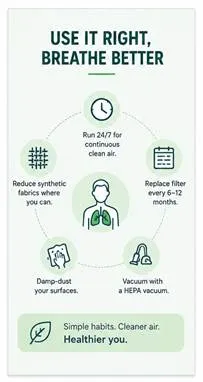
• Run it all day and night: Microplastics shed from your textiles constantly. Running your purifier around the clock gives you the full benefit. Switching it on only when the room feels stuffy misses most of the problem.
• Replace the filter on schedule: A clogged, overdue filter can start releasing trapped particles back into the air. Most HEPA filters need replacing every 6 to 12 months. Do not skip this.
• Vacuum with a HEPA vacuum: Microplastics settle on your floors. Every time someone walks through, those particles go back into the air. A HEPA vacuum stops that cycle.
• Damp-dust your surfaces: Dry dusting sends particles airborne again. A lightly damp cloth traps them instead.
• Cut down on synthetic textiles where you can: Natural fiber rugs, curtains, and bedding shed far fewer plastic particles. You do not need to replace everything. Swapping just one or two items in the rooms where you sleep makes a difference.
Does It Actually Work?
Yes, with the right setup and consistent use.
A good HEPA filter air purifier not only reduces microplastics. It also reduces dust, allergens, fine smoke, and bacteria; all at the same time. The microplastic benefit comes built in, as long as you pick a well-sealed unit that matches your room size and you keep up with filter changes.
The same approach that reduces indoor dust and smoke also reduces airborne plastic fibers. That is good news. You are not solving one narrow problem. You are improving your overall indoor air quality in one move.
What Should You Look for When Buying?
Keep it simple. Ask these four questions before you buy:
• Is it a True HEPA, H13 grade or better?
• Is the unit sized for my room's square footage?
• Does it have a strong CADR rating for fine particles?
• Is the filter easy and affordable to replace?
If you check all four, you have a purifier that will genuinely lower your microplastic exposure over time.
A Brand Worth Knowing
If you are looking for a solid option, AtmosC is a proudly Canadian air purifier brand. They make medical-grade HEPA purifiers for spaces ranging from small bedrooms to larger living areas up to 1,500 sq. ft. Their units are built around sealed, high-efficiency filtration; the kind that this problem actually needs, not just a rating on the packaging.
The Short Version
Microplastics are in your indoor air right now. They shed from your fabrics, float for hours, and you breathe them in every day. A HEPA filter air purifier is one of the most practical tools to cut that exposure. It traps particles physically, runs quietly in the background, and improves your air quality across the board; not just for microplastics.
Pick the right size for your room. Run it continuously. Change the filter on time. That is genuinely all it takes to make your indoor air measurably cleaner.























Sign in to leave a comment.