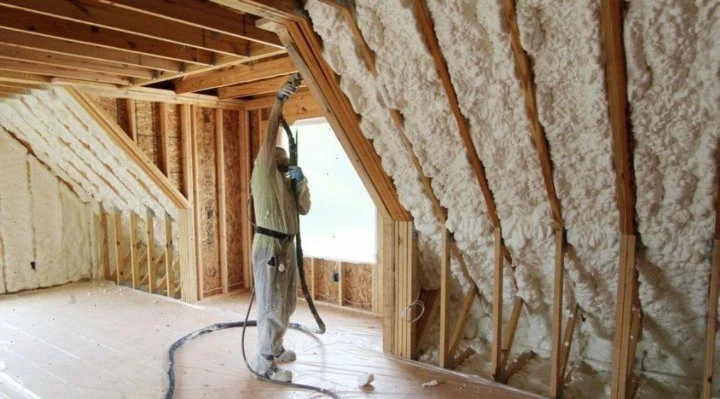

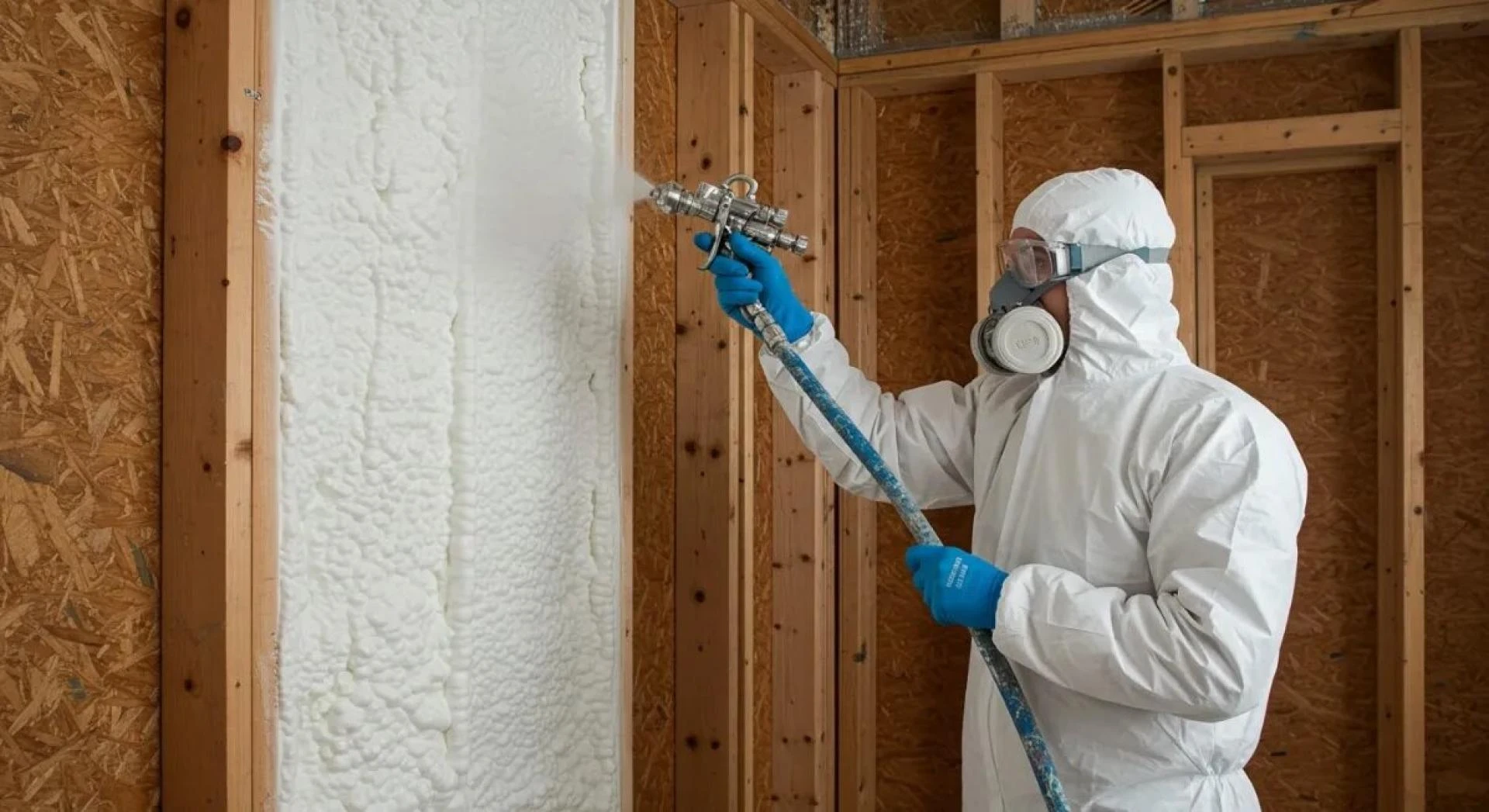
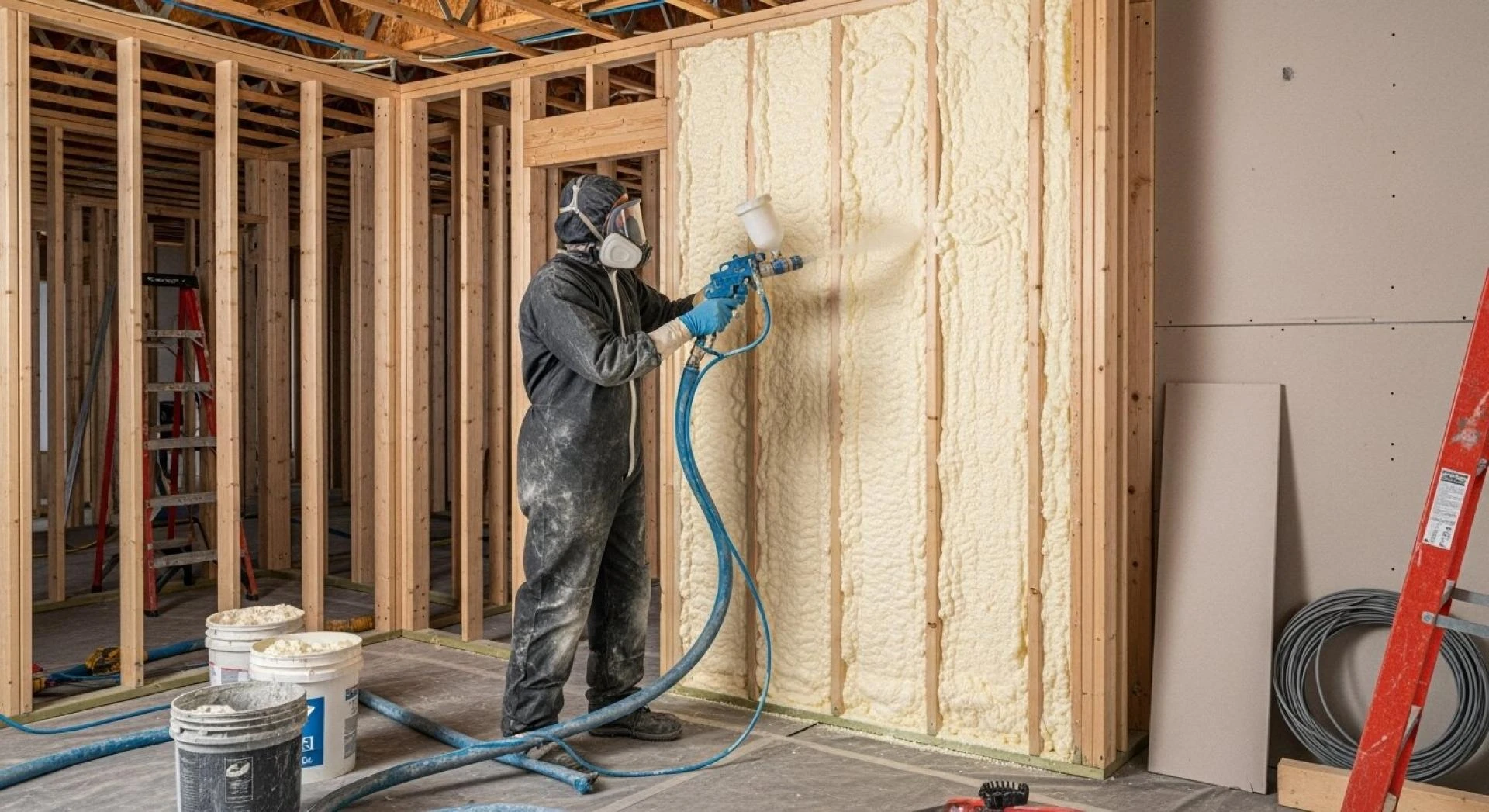
Open-cell spray foam has become a popular choice for homeowners and commercial property managers looking to improve energy efficiency. One recurring question is whether open-cell spray foam can be applied over existing insulation. This topic often comes up during renovation, energy audits, or when insulation performance declines.
Applying spray foam over older materials can be effective in some situations, but not in others. Understanding the material properties, compatibility concerns, and installation implications is essential before deciding on this approach.
Can Open-Cell Spray Foam Be Installed Over Existing Insulation?
In many cases, open-cell spray foam insulation can be applied over existing insulation—but this depends on the type, condition, and placement of the old insulation. Not all materials are compatible, and in some situations, this method may not offer the best results.
Compatibility With Fiberglass and Cellulose
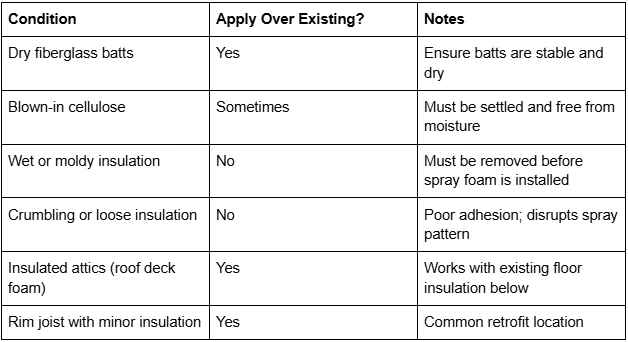
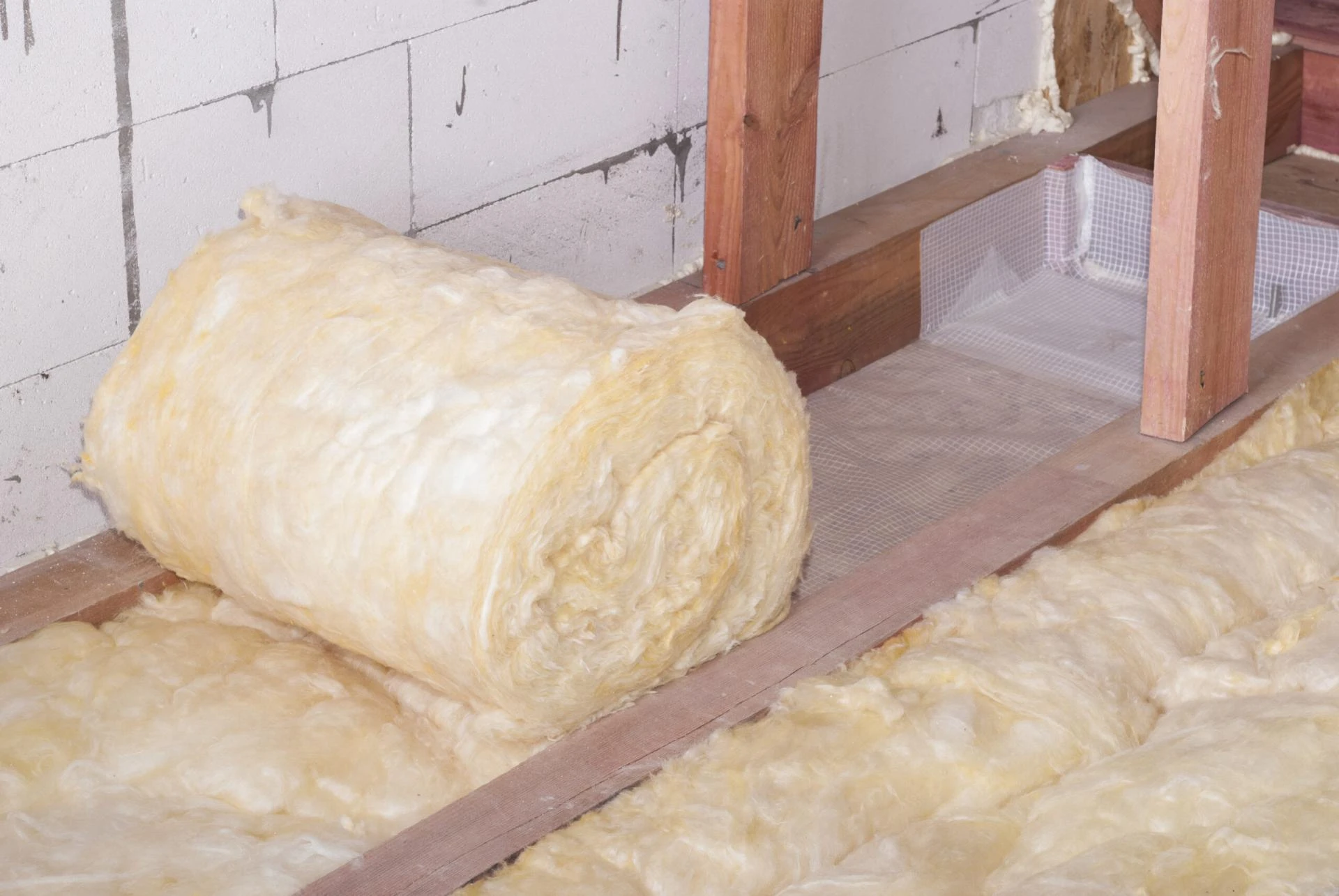
Spray foam can be installed over some existing materials like fiberglass batts or blown-in cellulose. However, proper air sealing and adhesion must be verified.
- Fiberglass Batts: Open-cell foam can be sprayed directly over fiberglass, but the batts must be dry and securely in place. Compression or movement can affect performance.
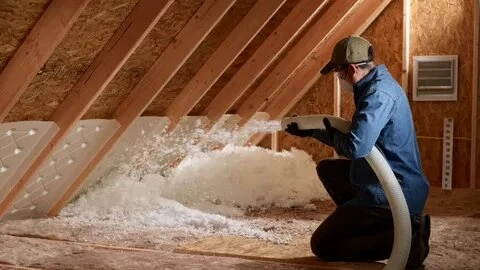
- Blown-in Cellulose: Foam can cover this type of insulation if it’s stable and dry. Loose or shifting cellulose may create adhesion issues.
Existing Moisture or Mold Problems
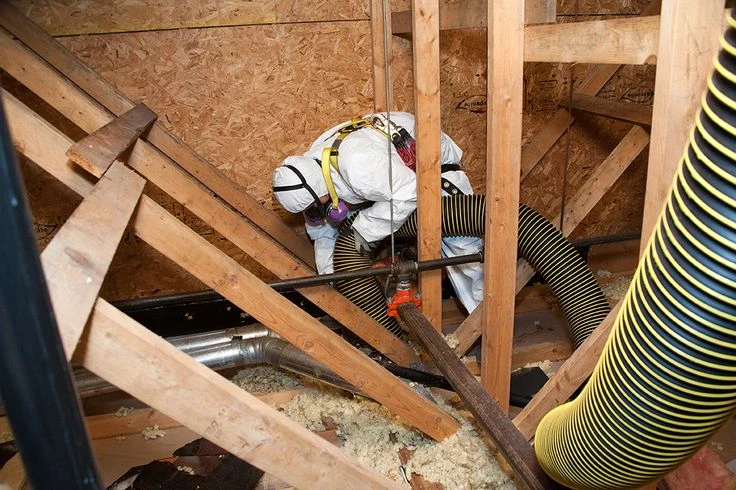
Insulation materials that are wet, moldy, or deteriorated should be removed before applying foam. Covering them will trap moisture and accelerate structural damage.
- Open-cell foam is vapor-permeable, allowing some drying, but it should not be used as a solution to pre-existing moisture issues.
- A professional inspection should be done before any application of over aged or water-damaged insulation.
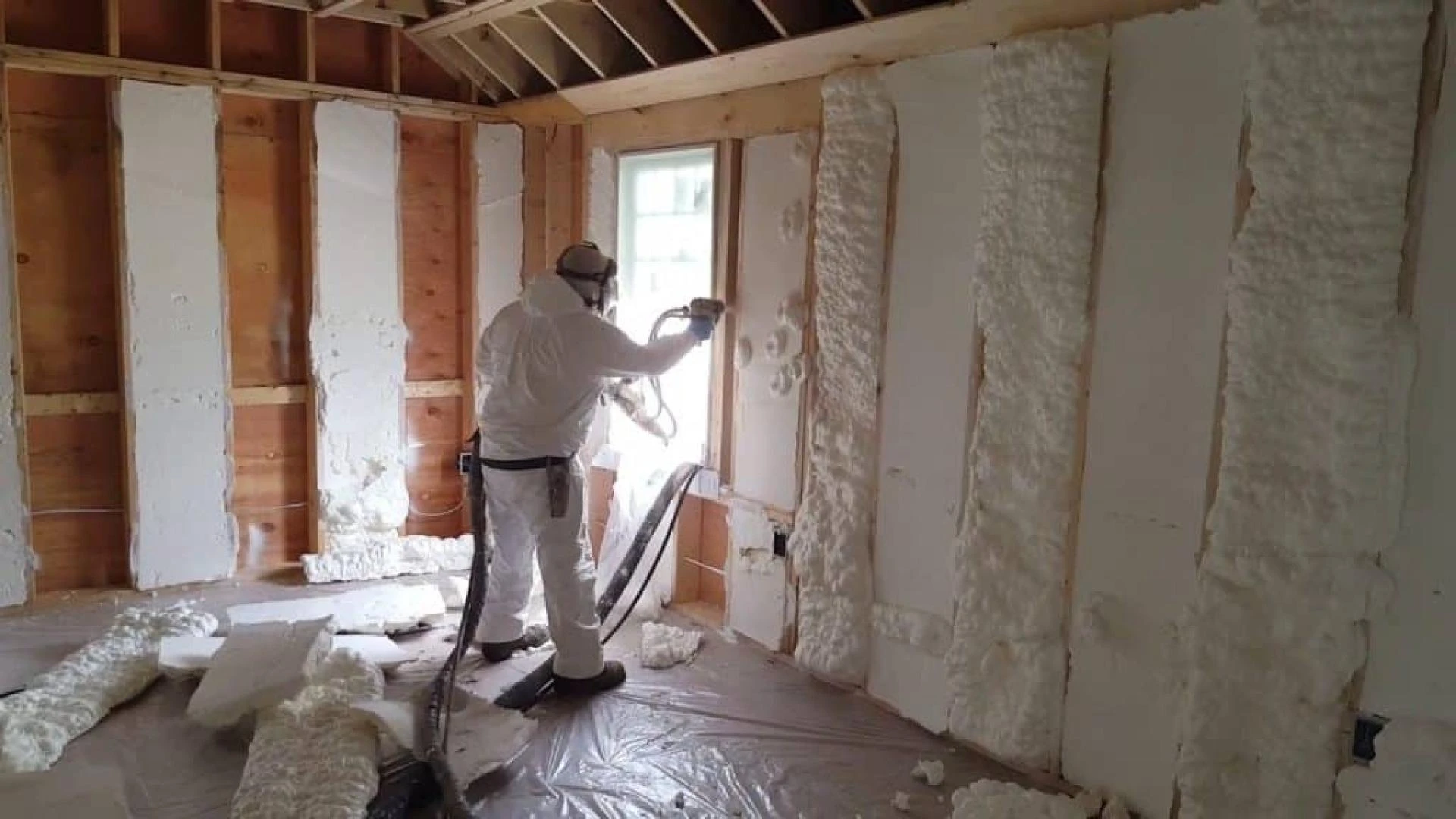
When Is Removal Necessary Before Spray Foam Installation?
There are conditions where removing existing insulation is strongly recommended, either for performance or safety reasons.
Poor Air Sealing or Loose Insulation
If the existing material does not support air sealing, its presence may reduce the effectiveness of spray foam.
- Air sealing is one of the main advantages of open-cell foam.
- Loose fill insulation (especially in attics) may shift during application and disrupt uniform spray patterns.
Fire Barrier and Code Compliance
Some older materials are not compatible with current fire safety codes or may interfere with the thermal barrier requirements of foam systems.
- Local building codes may restrict the layering of insulation types.
- Spray foam may need to be covered with ignition or thermal barriers depending on the space (e.g., attics, crawl spaces).
Performance Differences in Hybrid Insulation Systems
Combining spray foam with existing insulation can result in mixed performance if not installed correctly. Evaluating the structure’s goals—air sealing, moisture control, and R-value—is key.
Thermal Performance vs. Air Sealing
Traditional materials like fiberglass offer thermal resistance (R-value) but do not stop air movement. Foam adds both R-value and air sealing.
- Spraying foam over existing fiberglass may not yield full air-sealing benefits unless gaps and cavities are fully filled.
- For optimal performance, foam should contact the air barrier (e.g., drywall or roof deck).
Moisture Considerations in Open-Cell Foam Use
Open-cell foam is vapor-open, allowing for drying but not preventing moisture intrusion.
- In mixed climate zones, combining vapor-open foam with water-retaining materials like cellulose may increase risk without proper design.
- Always evaluate indoor humidity levels, roof venting, and existing envelope conditions.
Areas Where Applying Spray Foam Over Existing Insulation Works Best
Not every part of a building reacts the same way to layered insulation. Some spaces allow for effective foam application over existing insulation.
Attics and Rooflines
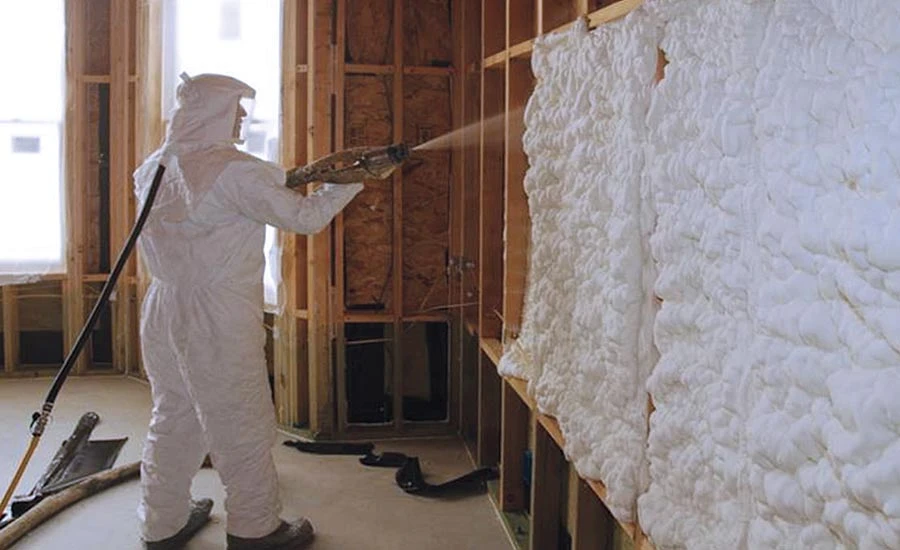
In vented attics, existing insulation on the floor can stay if foam is added to the roof deck—known as an unvented attic assembly.
- This approach works well in conversions where HVAC systems are moved into conditioned space.
- Rigid board may be added along with foam for added R-value and thermal breaks.
Rim Joists and Crawl Spaces
Spray foam is commonly used over thin batt or board insulation in tight areas like rim joists or crawl spaces, where air infiltration is high.
- Open-cell is often preferred for its flexibility and sound dampening in rim joists.
- Ensure any prior insulation is clean and dry before applying foam.
Comparison Table: When to Apply Spray Foam Over Existing Insulation
What To Evaluate Before Applying Spray Foam Over Existing Insulation
Every structure needs an assessment before proceeding. Installers often review insulation condition, air leakage, and code alignment.
Inspection and Pre-Testing
Before applying foam, the installer should check for:
- Moisture content in existing materials
- Air movement using blower door or smoke tests
- Gaps, settling, or pest damage in current insulation
Ventilation and Indoor Air Quality
Spray foam changes the building envelope, so adjustments to ventilation may be necessary. Sealing off leaks can reduce air exchange.
- Consider adding mechanical ventilation (e.g., ERV) if sealing the building envelope significantly.
- Ensure foam is allowed to cure fully to avoid off-gassing in closed environments.
Conclusion
Open-cell spray foam can be applied over existing insulation in some cases, but not all. The key is understanding the condition and performance of the existing material. Dry, secure fiberglass batts or stable blown-in cellulose can often remain in place. Wet, loose, or deteriorated materials should be removed to avoid problems with adhesion, air sealing, and moisture trapping.
A professional spray foam insulation evaluation is essential before moving forward. In many situations, combining spray foam with existing insulation can be a practical way to boost energy efficiency without a complete removal—if the materials and conditions are right. This approach often works well in areas like rim joists, attics, and crawl spaces. However, in living spaces or wall cavities, full replacement may offer better control over insulation performance and moisture management.
FAQs
Can open-cell spray foam be applied directly over fiberglass batts?
Yes, if the batts are dry, undamaged, and firmly in place. Foam will adhere and help improve air sealing, but shifting or compressed batts may reduce effectiveness.
Is it safe to leave old insulation under new spray foam?
Only when the existing insulation is clean, dry, and free of mold or pests. Trapping damaged material under foam can lead to moisture buildup and indoor air quality issues.
Will spray foam stick to old cellulose insulation?
It may stick if the cellulose is dry and compacted. Loose or fluffy cellulose may interfere with adhesion and require removal for reliable coverage.
Do I need to remove attic insulation before spraying foam on the roof deck?
No, in many cases attic floor insulation can remain when foam is applied to the underside of the roof sheathing. This creates a conditioned attic space but may require adjustments to ventilation.
Is it better to remove existing insulation before spraying foam in walls?
Yes, in most wall applications, removing old insulation allows for full cavity fill, better air sealing, and moisture control. Retrofitting spray foam in walls is more effective with clean framing cavities.
Author: Robert Lamothe has over two decades of experience in spray foam insulation, carpentry, and building science. As owner and lead installer at Lamothe Insulation, Robert is known for precision work and solutions that last. He also owns the Goddard School of Auburn, where he brings the same attention to energy efficiency in early childhood environments.
Reviewer: Ethan Taylor brings 8 years of spray foam insulation experience. He reviewed this article to ensure clarity, technical accuracy, and alignment with best practices in insulation assessment and retrofit work.

























Sign in to leave a comment.