
Anyone who has ever waited too long for a hotel shuttle outside a busy terminal knows the feeling. You are tired, you have luggage, your phone is at three percent, and the van you were promised is nowhere in sight. Multiply that frustration across thousands of passengers a day, across dozens of vehicles, and across drivers juggling paper manifests and walkie-talkies, and you start to see why so many shuttle operators are quietly drowning in operational chaos.
The good news is that the technology gap is finally closing. Cloud-based airport shuttle management platforms have moved from a nice-to-have into a genuine competitive necessity. They give operators something they have never really had before, which is real-time visibility into every vehicle, every passenger, and every dollar of fuel burned, all from a single dashboard accessible on any device.
If you run an airport shuttle service, manage a hotel transportation department, or oversee a parking lot transfer operation, this article is for you. We will walk through what these platforms actually do, why the shift to the cloud matters, and how the right system can transform your service from a constant source of complaints into a quiet, reliable revenue driver.
Why Traditional Shuttle Management Is Breaking Down
For decades, shuttle operations ran on a combination of clipboards, spreadsheets, two-way radios, and a dispatcher with an encyclopedic memory. That model worked when fleets were small and passenger expectations were low. Today, both of those things have changed dramatically.
Passengers now compare every transportation experience to Uber. They expect to know exactly when their ride is arriving, where it currently is, and how long the trip will take. Meanwhile, fleet managers are under pressure to cut fuel costs, hit sustainability targets, prove compliance with hours-of-service rules, and somehow keep drivers happy in a tight labor market. Doing all of that with paper logs and a whiteboard is no longer realistic.
The cracks usually show up in the same places. Vehicles run half-empty on one route while passengers pile up on another. Drivers clock overtime that nobody noticed until payroll. Maintenance gets skipped because the reminder lived on a sticky note that fell off the desk. And when a flight gets delayed, nobody updates the schedule until angry passengers start calling the front desk.
What Cloud-Based Shuttle Management Software Actually Does
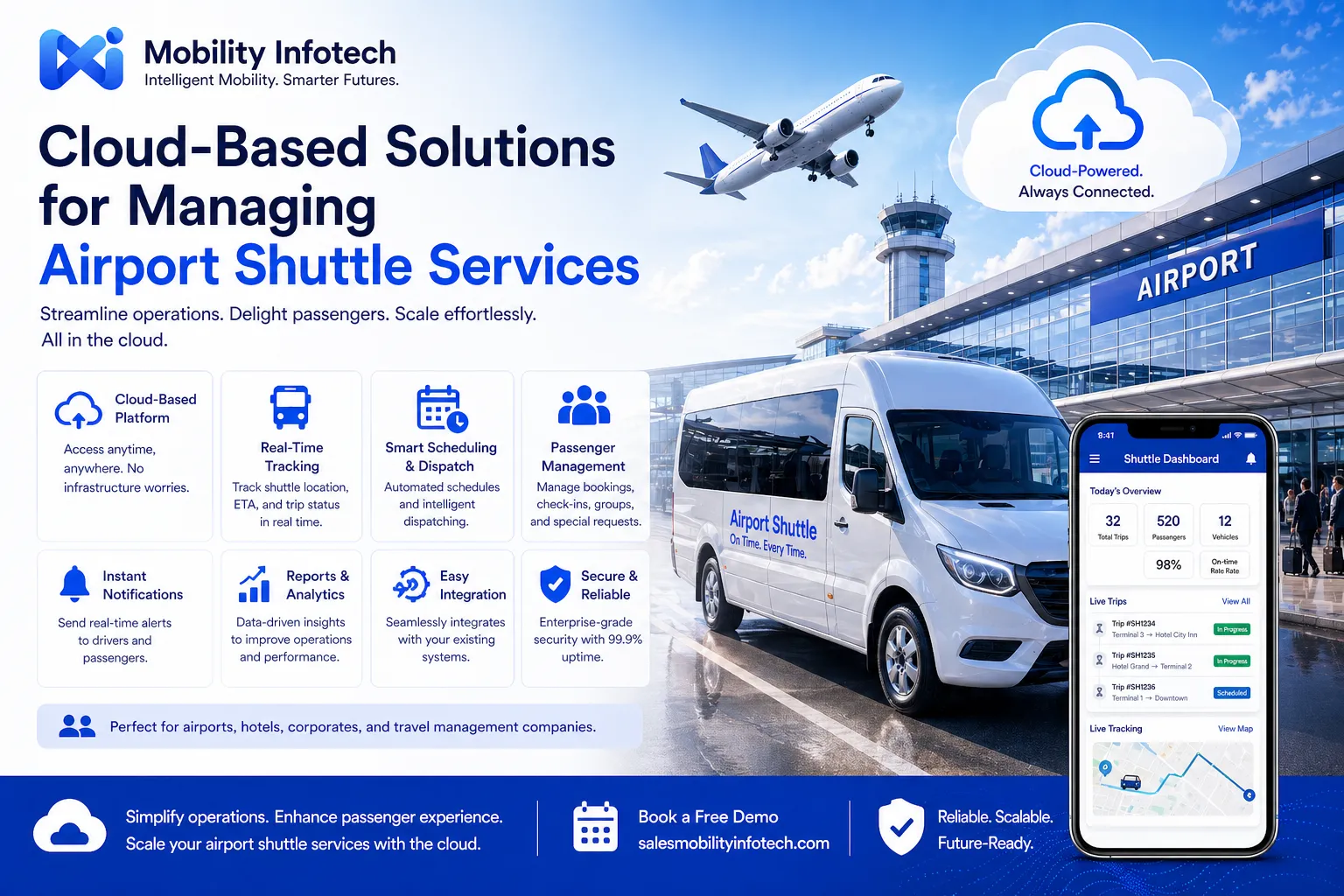
A modern cloud platform pulls every piece of your operation into one connected system. Instead of hopping between a scheduling tool, a GPS tracker, a spreadsheet, and three group chats, your dispatchers, drivers, and managers all work from the same live data.
Here are the core capabilities you should expect from any serious solution on the market today:
• Real-time GPS tracking and ETAs that passengers can see on their phones, dramatically reducing the number of "where is my shuttle" calls your team has to field.
• Automated dispatch and route optimization that reassigns vehicles dynamically based on demand, traffic conditions, and flight arrival data pulled directly from airport feeds.
• Driver mobile apps that replace paper manifests with digital trip sheets, turn-by-turn navigation, and one-tap status updates that flow straight back to dispatch.
• Online and kiosk booking for individuals and groups, with automated confirmations, reminders, and digital boarding passes.
• Fleet maintenance tracking that schedules service based on actual mileage and engine hours, not guesswork, helping you avoid breakdowns and warranty issues.
• Reporting dashboards that show occupancy rates, on-time performance, fuel consumption, and revenue per vehicle in real time, so you can make decisions based on facts instead of hunches.
Because everything lives in the cloud, none of this requires a server room, an in-house IT team, or expensive hardware upgrades every few years. Updates roll out automatically, your data is backed up continuously, and your team can log in from a laptop at headquarters or a phone at the curb.
The Real Business Impact
It is easy to get lost in feature lists, so let us talk about outcomes. Operators who move from manual processes to a cloud-based platform consistently report a few measurable wins.
Fuel and labor costs typically drop by ten to twenty percent within the first year, mostly because route optimization eliminates empty miles and automated scheduling stops the slow bleed of unnecessary overtime. On-time performance improves significantly, often climbing past ninety-five percent, which directly translates into better passenger reviews and stronger contract renewals with hotels, airports, and corporate clients.
Customer complaints fall sharply once passengers can track their shuttle in real time. The single biggest source of frustration in ground transportation is uncertainty, and a live map on a phone solves it instantly. Meanwhile, your dispatchers stop spending half their day answering radio calls and start focusing on actual exceptions, which makes their jobs both easier and more valuable.
There is also a quieter benefit that does not show up on most pitch decks. Cloud platforms generate a clean, continuous record of everything your operation does. When an insurance question, a regulatory audit, or a contract dispute comes up, you can pull the exact data in seconds instead of digging through filing cabinets. That alone has saved operators we have spoken with from some genuinely expensive surprises.
What to Look for When Choosing a Platform
Not every cloud solution is built the same, and airport shuttle operations have specific needs that generic fleet software often misses. As you evaluate options, pay close attention to a few non-negotiables.
• Flight tracking integration is essential. If the platform cannot automatically adjust for delayed or early arrivals, you will still be stuck doing it manually.
• Look for genuine scalability. A system that works for ten vehicles should also work for two hundred without a complete reimplementation.
• APIs and integrations matter more than people realize. Your shuttle software should talk to your property management system, your accounting software, and your payment gateway without expensive custom work.
• Driver experience is often overlooked. If the mobile app is clunky, drivers will route around it, and your data will be incomplete.
• Finally, ask about implementation support. The best vendors offer hands-on onboarding, training for your team, and a real human to call when something goes sideways.
The Move to Sustainability and Smarter Fleets
Airport authorities and corporate clients are increasingly asking for proof that their shuttle providers are reducing emissions. Cloud-based platforms make this kind of reporting almost effortless. Because the system already tracks mileage, idle time, and route efficiency, generating a sustainability report becomes a matter of clicking a button rather than building a spreadsheet from scratch.
Many platforms now also support electric and hybrid fleet management, including charging schedules, range planning, and battery health monitoring. As more operators add EVs to their fleets over the next few years, this functionality will move from optional to essential.
Ready to See It in Action?
If your shuttle operation still runs on spreadsheets, radios, and the heroic memory of one or two long-tenured dispatchers, you are leaving money, time, and customer goodwill on the table every single day. The shift to cloud-based shuttle management is no longer something to plan for next year. Your competitors are already doing it, and your passengers are already expecting it.
The fastest way to understand what a modern platform can do for your specific operation is to see it running with real data and real scenarios that look like yours. Book a personalized demo with our team and we will walk you through exactly how the system would handle your routes, your fleet size, and your peak hours. There is no obligation, no high-pressure sales pitch, and no generic slideshow. Just a real conversation about whether this is the right fit for your business.
Tell us a little about your operation, pick a time that works for you, and one of our shuttle technology specialists will reach out within one business day. The demo takes about thirty minutes, and most operators tell us it is the most useful half hour they have spent on their business in months.
Request Your Free Demo Today
See how cloud-based shuttle management can transform your airport operation in under 30 minutes.

























Sign in to leave a comment.