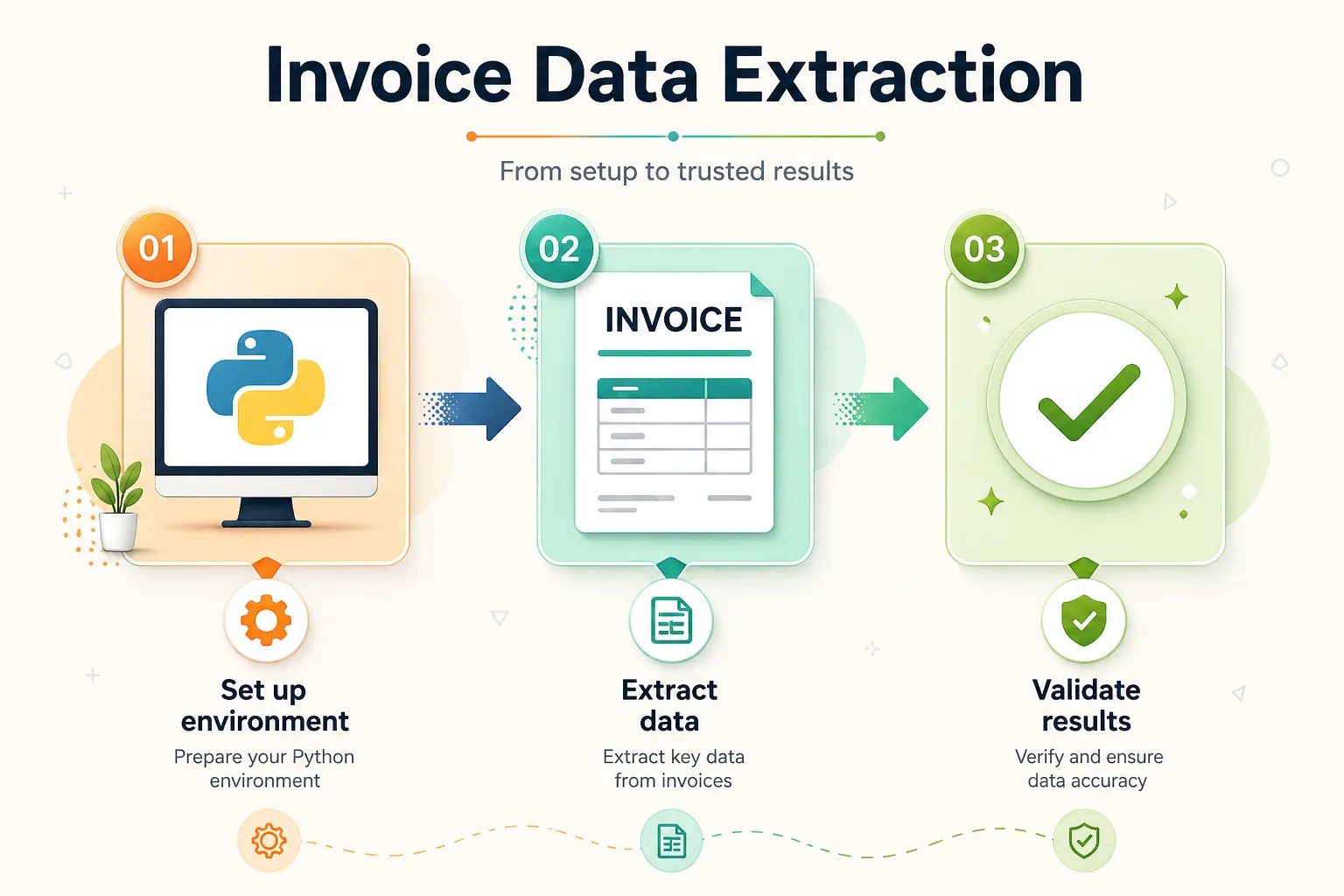

Businesses today process hundreds or thousands of invoices every month. Whether it's accounts payable teams or logistics companies managing freight bill processing, invoice data extraction remains one of the most time-consuming and error-prone tasks in financial operations. Understanding the core challenges and how to overcome them is critical for any organization aiming to improve efficiency and reduce costs.
Why Invoice Data Extraction Is So Difficult
Invoices come in countless formats. Some arrive as PDFs, others as scanned paper documents, spreadsheets, or even images. Each supplier has a different layout, font, language, or currency format. This lack of standardization makes it nearly impossible for manual teams to maintain speed and accuracy simultaneously. Even experienced staff make errors when processing large volumes, leading to payment delays, compliance issues, and financial discrepancies.
Challenge 1: Inconsistent Invoice Formats
One of the biggest roadblocks in invoice data extraction is dealing with unstructured and semi-structured documents. When each vendor uses a unique template, automated systems struggle to locate key fields like invoice numbers, dates, line items, and totals.
The solution lies in adopting intelligent OCR (Optical Character Recognition) combined with machine learning models. These systems learn from patterns across thousands of invoices and adapt to new formats over time, dramatically reducing manual intervention.
Challenge 2: Low-Quality Scanned Documents
Many businesses still receive paper invoices that get scanned and emailed. Poor scan quality, skewed images, or faded text creates major obstacles for data capture tools.
Advanced image preprocessing techniques, such as noise reduction, deskewing, and contrast enhancement, help clean up documents before extraction begins. Pairing this with AI-driven recognition engines ensures that even low-quality documents yield accurate results.
Challenge 3: Errors in Freight Bill Processing
For logistics and supply chain businesses, freight bill processing adds another layer of complexity. Freight invoices often contain multiple charges, carrier codes, accessorial fees, and shipment references that must be validated against purchase orders and contracts.
Automated freight bill auditing tools can cross-reference extracted data against predefined rules, flag discrepancies in real time, and reduce overbilling. This not only saves money but also speeds up the entire accounts payable cycle.
Challenge 4: Data Validation and Integration
Extracting data is only half the battle. That data must then be validated for accuracy and seamlessly pushed into ERP or accounting systems. Manual re-entry at this stage reintroduces errors and defeats the purpose of automation.
Cloud-based invoice data extraction platforms with built-in API integrations eliminate this gap. They validate data against business rules and sync directly with systems like SAP, Oracle, or QuickBooks without human touchpoints.
The Path Forward
Organizations that invest in smart automation for invoice data extraction and freight bill processing gain a significant competitive edge. Faster processing, fewer errors, and stronger vendor relationships are the direct outcomes of getting this right.
nVision Global delivers powerful, AI-driven solutions that help businesses conquer invoice complexity at scale. If you're ready to transform your invoice operations and drive measurable ROI, connect with nVision Global today and take the first step toward smarter financial processing.


























Sign in to leave a comment.