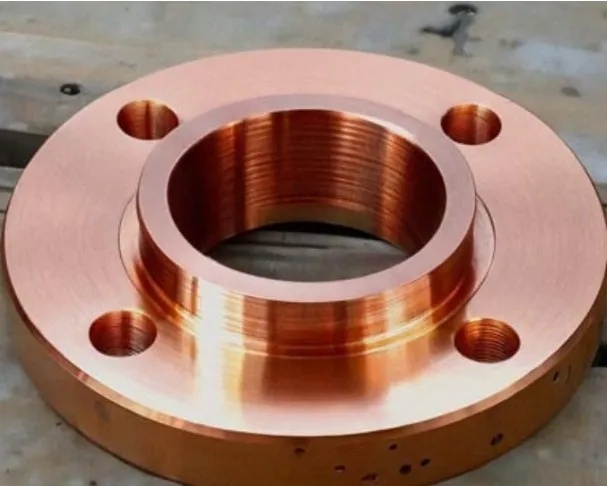

Copper flanges are essential components in piping systems, widely valued for their corrosion resistance, excellent thermal conductivity, and durability. Commonly used in plumbing, HVAC, marine, and industrial systems, copper flanges provide secure connections between pipes, valves, and other equipment. This guide covers everything you need to know about selecting the right copper flange, including types, applications, and best practices.
What Are Copper Flanges?
Copper flanges are flat, circular discs with holes for bolts, designed to connect pipes, valves, pumps, or other equipment to form a piping system. They create a strong mechanical joint that allows easy assembly, disassembly, and maintenance.
Copper as a material offers several advantages:
- High resistance to corrosion
- Excellent thermal and electrical conductivity
- Antimicrobial properties
- Long service life
These qualities make copper flanges ideal for systems that require reliability and performance under varying conditions.
Types of Copper Flanges
Copper flanges come in various designs, each suited for specific applications and pressure conditions.
1. Slip-On Flanges
Slip-on flanges are designed to slide over the pipe and are then welded in place.
Features:
- Easy to install and align
- Cost-effective
- Suitable for low to moderate pressure systems
Applications:
- Water supply systems
- HVAC pipelines
- Low-pressure industrial processes
2. Weld Neck Flanges
Weld neck flanges have a long tapered hub that is welded directly to the pipe.
Features:
- Strong and durable connection
- Reduces stress concentration
- Suitable for high-pressure and high-temperature applications
Applications:
- Power plants
- Chemical industries
- Oil and gas systems
3. Socket Weld Flanges
Socket weld flanges allow the pipe to be inserted into a recessed area before welding.
Features:
- Good for small-diameter pipes
- Provides strong and leak-resistant joints
- Suitable for high-pressure systems
Applications:
- Hydraulic systems
- Steam lines
- High-pressure piping
4. Threaded Flanges
Threaded flanges have internal threads that match the external threads of pipes.
Features:
- No welding required
- Easy to install and remove
- Ideal for systems where welding is not feasible
Applications:
- Low-pressure applications
- Hazardous environments
- Temporary piping systems
5. Blind Flanges
Blind flanges are used to close the end of a piping system.
Features:
- Provides a secure seal
- Allows for future expansion or inspection
- Can handle high pressure
Applications:
- Pipeline terminations
- Pressure testing systems
- Maintenance operations
Applications of Copper Flanges
Copper flanges are widely used across multiple industries due to their versatility and reliability.
Plumbing Systems
They are commonly used in residential and commercial plumbing systems for water distribution. Copper’s corrosion resistance ensures clean and safe water supply.
HVAC Systems
In heating, ventilation, and air conditioning systems, copper flanges help connect pipes carrying refrigerants and water, ensuring efficient heat transfer.
Marine Applications
Copper’s resistance to seawater corrosion makes it suitable for shipbuilding and offshore installations.
Industrial Applications
Used in chemical plants, food processing units, and manufacturing industries, copper flanges provide reliable connections in systems handling various fluids.
Electrical and Thermal Systems
Due to copper’s excellent conductivity, flanges are also used in systems where heat and electricity transfer are critical.
Benefits of Copper Flanges
Corrosion Resistance
Copper naturally resists corrosion, making it ideal for use in harsh environments, including marine and chemical industries.
High Thermal Conductivity
Copper efficiently transfers heat, making it suitable for HVAC and heat exchanger systems.
Durability and Longevity
Copper flanges have a long lifespan and require minimal maintenance when properly installed.
Ease of Fabrication
Copper is easy to shape, cut, and weld, allowing for flexible design and installation.
Hygienic Properties
Copper has natural antimicrobial properties, making it suitable for potable water and food-related applications.
Best Practices for Selecting Copper Flanges
Choosing the right copper flange requires careful consideration of several factors.
1. Understand the Application
Determine whether the flange will be used in plumbing, industrial, or high-pressure systems. This helps narrow down the type of flange required.
2. Check Pressure and Temperature Ratings
Ensure the flange can withstand the operating conditions of the system, including pressure and temperature variations.
3. Select the Right Type
Choose the flange type based on installation requirements, maintenance needs, and system design.
4. Consider Compatibility
Ensure the flange material is compatible with the pipe material and the fluid being transported to avoid corrosion or chemical reactions.
5. Follow Industry Standards
Always select flanges that meet recognized standards such as ASTM or ASME to ensure quality and safety.
6. Focus on Proper Installation
Improper installation can lead to leaks and system failures. Ensure correct alignment, bolt tightening, and sealing techniques.
7. Maintenance and Inspection
Regular inspection helps detect wear, corrosion, or damage early, extending the lifespan of the system.
Common Mistakes to Avoid
- Choosing the wrong flange type for the application
- Ignoring pressure and temperature requirements
- Poor alignment during installation
- Using incompatible materials
- Skipping regular maintenance checks
Future Trends in Copper Flanges
Advancements in manufacturing and material science are improving the performance of copper flanges. Enhanced alloy compositions, better machining techniques, and stricter quality standards are contributing to more reliable and efficient products.
With increasing demand in construction, HVAC, and industrial sectors, manufacturers such as Astec Tubes are also focusing on delivering high-quality copper flange solutions to meet evolving industry requirements.
Final Thoughts
Copper flanges are a critical component in piping systems, offering reliability, efficiency, and long-term performance. Their corrosion resistance, thermal conductivity, and versatility make them suitable for a wide range of applications.
By understanding the different types, applications, and best practices, you can make informed decisions when selecting copper flanges for your project. Proper selection and installation not only improve system efficiency but also ensure safety and durability over time.


























Sign in to leave a comment.