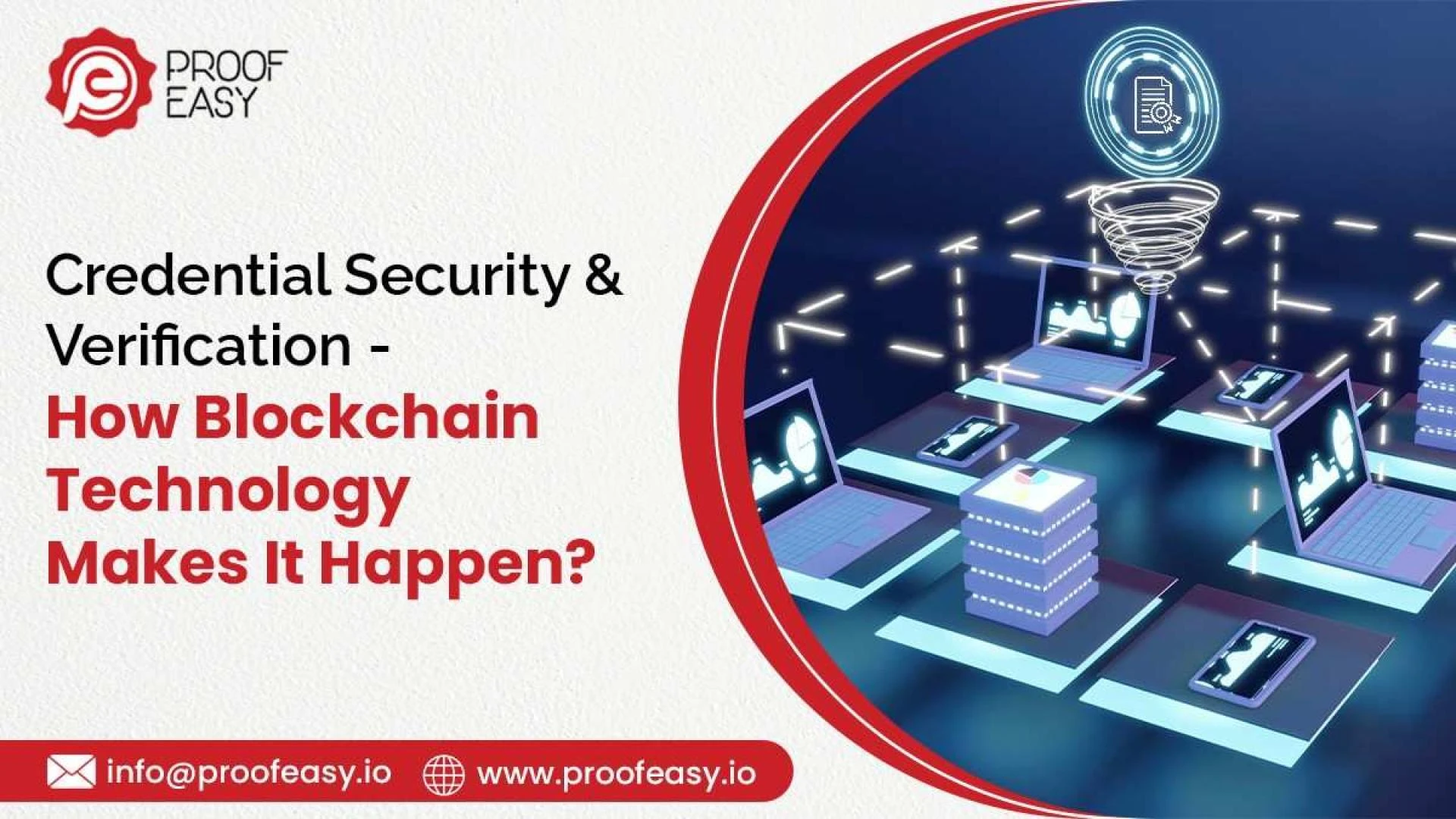

Your hard-earned diploma or certificates require to be backed up by authenticity and integrity. Afterall, the cases of fake certificates, forgeries, tampering etc. plagues the security of these essential credentials.
Whether you are a student or a business, getting credentials to be verifiable gives you credibility and helps in building trust with whom you are sharing these documents. They are like a stamp of proof giving your credentials immense value.
However, in recent times, there are several ways these credentials are manipulated for illicit gains. The traditional methods of verification primarily depend on centralized authority. Unfortunately, they are not secure enough and fall short against many vulnerabilities like delay, errors, in the process.
Individuals and organizations alike, need a robust solution to verify credential and blockchain technology emerges as an impressive one. Coming a long way from its cryptocurrency origins, blockchain poses an impressive solution for digital credentialing platforms.
Where the Problem Lies in Credential Verification Systems?
As the online world is becoming intricate and sophisticated, the traditional means of verifying credentials are proving to be inefficient. Although they are familiar, they are prone to exploitation leading to reputational damage of institutions, unfair employment, etc. Some of the common challenges that persists are —
Cumbersome Processes: Traditional credential verification often involves manual checks and paper-based systems, which can be slow and labor-intensive. For example, verifying a university degree might require contacting the institution, waiting for manual confirmation, and navigating through various bureaucratic layers. This process not only consumes valuable time but also delays decision-making in critical situations, such as job hiring or academic admissions.
Depending on Centralized Authority: Centralized authorities, such as universities, certification bodies, and government agencies, are the traditional gatekeepers of credential verification. This centralization poses several issues:
Single Point of Failure: If the central authority's system is compromised, it can lead to a breach of sensitive data, exposing personal and professional information to unauthorized parties.Data Inaccessibility: Individuals may struggle to access their own credentials if the issuing authority's records are outdated, incomplete, or lost. This can be particularly problematic when institutions close down or when individuals move across borders.There are more challenges such as fraudulent activities due to poor security environment, lack of trust and transparency, administrative burden etc.
Blockchain Proving As An Ideal Solution for Credential Verification
Blockchain technology offers a decentralized, secure, and transparent solution to these challenges. Here’s how it works:
Decentralization: Unlike traditional systems that rely on a central authority to issue and verify credentials, blockchain distributes data across a network of computers. This decentralized nature ensures that no single entity has control over the entire system, making it harder for malicious actors to tamper with the data.
Immutable Records: Once information is recorded on the blockchain, it cannot be altered or deleted. This immutability guarantees that credentials, once issued and verified, remain unchanged. This feature is particularly valuable in preventing fraud, as any attempt to falsify a credential would be immediately detectable.
Transparency and Privacy: Blockchain provides a transparent record of all transactions while maintaining privacy. Individuals can control who has access to their credentials without compromising the data's integrity. This transparency also extends to verification processes, allowing employers, institutions, and other stakeholders to confirm the authenticity of credentials with ease.
Real-World Applications of Blockchain in Credentialing
Education: Universities and educational institutions are leveraging blockchain to issue digital diplomas and certificates. Graduates can share their verified credentials with potential employers or other institutions, eliminating the need for paper documents and reducing administrative burdens.
Professional Certifications: Blockchain enables professionals to store and share their certifications securely. This is particularly useful in industries where certification renewals are frequent, as it ensures that only up-to-date, verified credentials are recognized.
Identity Verification: Governments and organizations are exploring blockchain for digital identity verification. This application is crucial for scenarios such as voting, travel, and accessing financial services, where verifying an individual's identity is paramount.
The Future of Credential Security with Blockchain
As blockchain technology continues to evolve, its potential applications in credential security and verification are expanding. The adoption of blockchain could lead to a more efficient, secure, and trustworthy system for managing credentials globally.
For individuals, this means greater control over their personal data and easier access to opportunities. For institutions, it means a reduction in administrative costs and a more reliable method of verifying qualifications.
Conclusion
Blockchain technology is poised to revolutionize the way we think about credential security and verification. Its unique features of decentralization, immutability, and transparency offer a robust solution to the challenges faced by traditional systems. As we move towards a digital future, embracing blockchain for credential management could unlock new levels of efficiency and trust in our digital interactions.
Whether you're an individual looking to safeguard your qualifications or an institution seeking a reliable verification system, blockchain technology provides the key to a more secure and transparent credentialing process.





















Sign in to leave a comment.