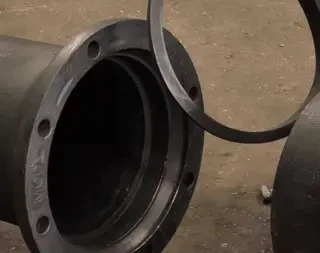

In modern industrial production, piping systems play a vital role in ensuring the safe and efficient transport of fluids, with flange connections serving as an essential component. Although bolted flange joints designed under current standards can typically meet sealing requirements under normal conditions, their reliability is severely tested in extreme environments—particularly under high temperature and high pressure. In such conditions, the combined effects of temperature and medium pressure can easily lead to sealing failure. Once leakage occurs, it not only results in material and energy loss but may also cause significant economic damage, environmental pollution, or even catastrophic accidents. Consequently, the sealing requirements for pipelines and vessels have become increasingly stringent, and gasket creep has emerged as one of the primary causes of sealing failure in high-temperature applications.
The Impact of High-Temperature Creep on Sealing Gaskets
Among the many factors influencing gasket performance, high-temperature creep is one of the most critical. It directly affects a gasket’s sealing effectiveness and can trigger a series of chain reactions that ultimately lead to the failure of the entire sealing system.
1. Definition and Importance of Creep
Creep is a key indicator of a sealing material’s ability to resist deformation and stress relaxation over time. It represents the time-dependent relationship between stress and strain, which is influenced by temperature, applied stress, duration, and gasket thickness. In general, slower creep rates result in higher residual compressive stress and better sealing performance. However, under high temperatures, creep becomes more significant, and the resulting stress relaxation often leads to leakage.
Creep is a form of inelastic deformation in which material strain increases with time under constant load. Because of this, the stress state of a material depends not only on its current deformation but also on its deformation history. Even after the external load is removed, time-dependent deformations may continue to occur.
2. Mechanism of Sealing Failure Caused by Creep
In high-temperature environments, flange connection failures are rarely due to insufficient strength but rather to stress relaxation resulting from gasket and bolt creep. As gasket creep progresses, residual compressive stress decreases. When this stress falls below the minimum required for sealing, leakage occurs.
Maintaining adequate gasket stress is crucial for sealing integrity, particularly at elevated temperatures. Among the various factors that influence gasket behavior, creep is often the dominant one, as it reduces both bolt tension and gasket compression—ultimately compromising the sealing performance of the joint.
Gasket Failure and Its Relationship with Creep
Sealing gaskets can fail in several ways, but under high-temperature conditions, creep is often the key factor that initiates or accelerates failure. It alters the physical and mechanical characteristics of gasket materials, leading to various modes of degradation.
1. Common Failure Modes
Gaskets are compressed between flange faces by bolt preload, generating elastic-plastic deformation that fills surface irregularities and prevents leakage. However, at high temperatures, gaskets may experience embrittlement, creep, and other forms of degradation that reduce sealing efficiency.
Common failure modes include:
- Creep relaxation failure – loss of residual stress due to prolonged deformation;
- High-temperature recovery failure – inability to recover from thermal or mechanical deformation;
- High-temperature strength failure – loss of mechanical integrity under extreme heat and pressure.
2. Relationship Between Creep and Failure
Gasket creep refers to the continuous increase in deformation under constant stress, while stress relaxation is the gradual reduction in stress under constant strain. These two phenomena are closely related and mutually reinforcing. At elevated temperatures, gasket materials undergo aging, thermal degradation, and increased creep, leading to a reduction in residual compressive stress.
As this stress decreases below the minimum sealing requirement, leakage ensues. The rate of creep relaxation thus reflects the gasket’s ability to maintain adequate sealing pressure. While both stress and temperature influence creep, temperature is the more dominant factor.
Material Selection for High-Temperature Gaskets
Proper material selection is fundamental to ensuring reliable sealing in high-temperature applications. Materials must resist both creep and stress relaxation while maintaining their sealing properties under fluctuating conditions.
1. Corrosion-Resistant PTFE Gaskets
Among available gasket materials, corrosion-resistant PTFE gaskets offer excellent performance for high-temperature service. They exhibit outstanding resistance to corrosion, aging, and chemical attack. Through special modification processes, they gain enhanced creep resistance and reduced cold flow, making them suitable for long-term use across a wide temperature range.
PTFE gaskets perform well even on uneven or scratched flange surfaces and are widely used in industries such as chemical processing, power generation, pulp and paper, refining, and machinery—especially where hydrocarbons and aggressive chemicals are present.
2. Property Changes at Elevated Temperatures
At high temperatures, gasket properties change markedly. During assembly, a gasket must be sufficiently compressible to ensure tight initial sealing. As the system heats up and bolts elongate, a separation tendency develops between the flange and gasket surfaces. Therefore, the gasket must retain sufficient recovery to compensate for creep-induced deformation.
Under extreme temperature and pressure fluctuations, material stiffness and yield strength decline, plastic deformation increases, and elastic recovery diminishes. If the sealing medium pressure is also high, the gasket may be extruded from the joint, causing sudden leakage.
3. Limitations of Graphite-Metal Spiral Wound Gaskets
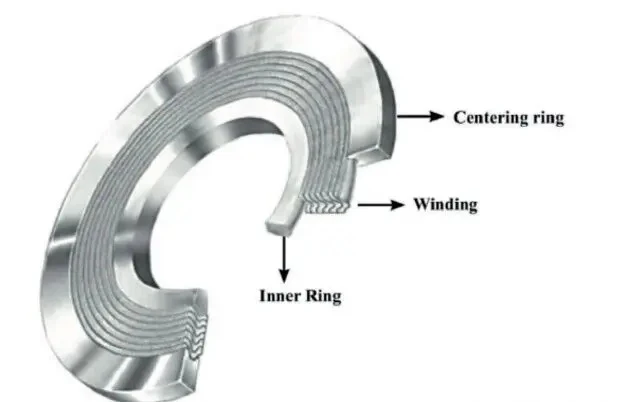
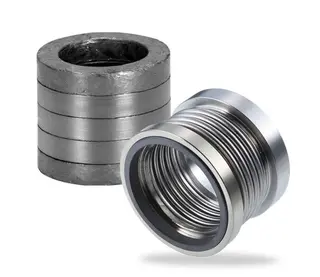
Graphite-metal spiral wound gaskets are widely used for high-temperature service involving sulfur or chloride compounds. However, their stainless steel windings or inner rings can suffer from stress corrosion cracking, leading to fracture and eventual failure.
Additionally, graphite with high sulfur or chloride content can accelerate corrosion of the metallic reinforcement, further weakening the gasket. In such environments, alternative materials—such as specially treated composite gaskets or high-alloy metal gaskets—should be considered. Proper design and installation must account for both corrosion resistance and anti-creep properties to ensure long-term reliability.
Maintenance of Gaskets in High-Temperature Systems
Gasket performance inevitably degrades over time under prolonged high-temperature exposure, making systematic maintenance and management essential for safe operation.
1. Importance of Thermal Retightening
As gasket materials lose elasticity and strength under sustained heat, separation may occur between flange faces and the gasket. Thermal retightening—re-tightening bolts at elevated temperatures—can help restore compression. However, this process must be performed cautiously, as aged gaskets may have become brittle or hardened. Excessive force or improper timing can lead to gasket rupture or sudden failure.
2. Regular Inspection and Replacement
Regular inspection and timely replacement are key to maintaining sealing reliability. High temperature significantly shortens gasket lifespan, so maintenance schedules should be based on actual service conditions. Inspections should check for signs of deformation, aging, or corrosion, allowing corrective action before leakage occurs.
Conclusion
Gasket creep in high-temperature environments is a critical challenge in industrial sealing applications. It directly impacts the reliability and safety of piping systems and pressure vessels. Under extreme temperature and pressure, excessive gasket creep can cause sealing failure, leading to serious consequences.
To mitigate this, engineers must select appropriate materials—such as corrosion-resistant PTFE or specially formulated composite gaskets—and implement proper maintenance strategies, including cautious thermal retightening and scheduled inspections.
Looking forward, advancements in high-performance, anti-creep gasket materials will offer more effective and durable solutions for high-temperature sealing challenges, ensuring greater safety and efficiency in industrial operations.It's important to know about Google SEO to help your website rank higher in search results.



























Sign in to leave a comment.