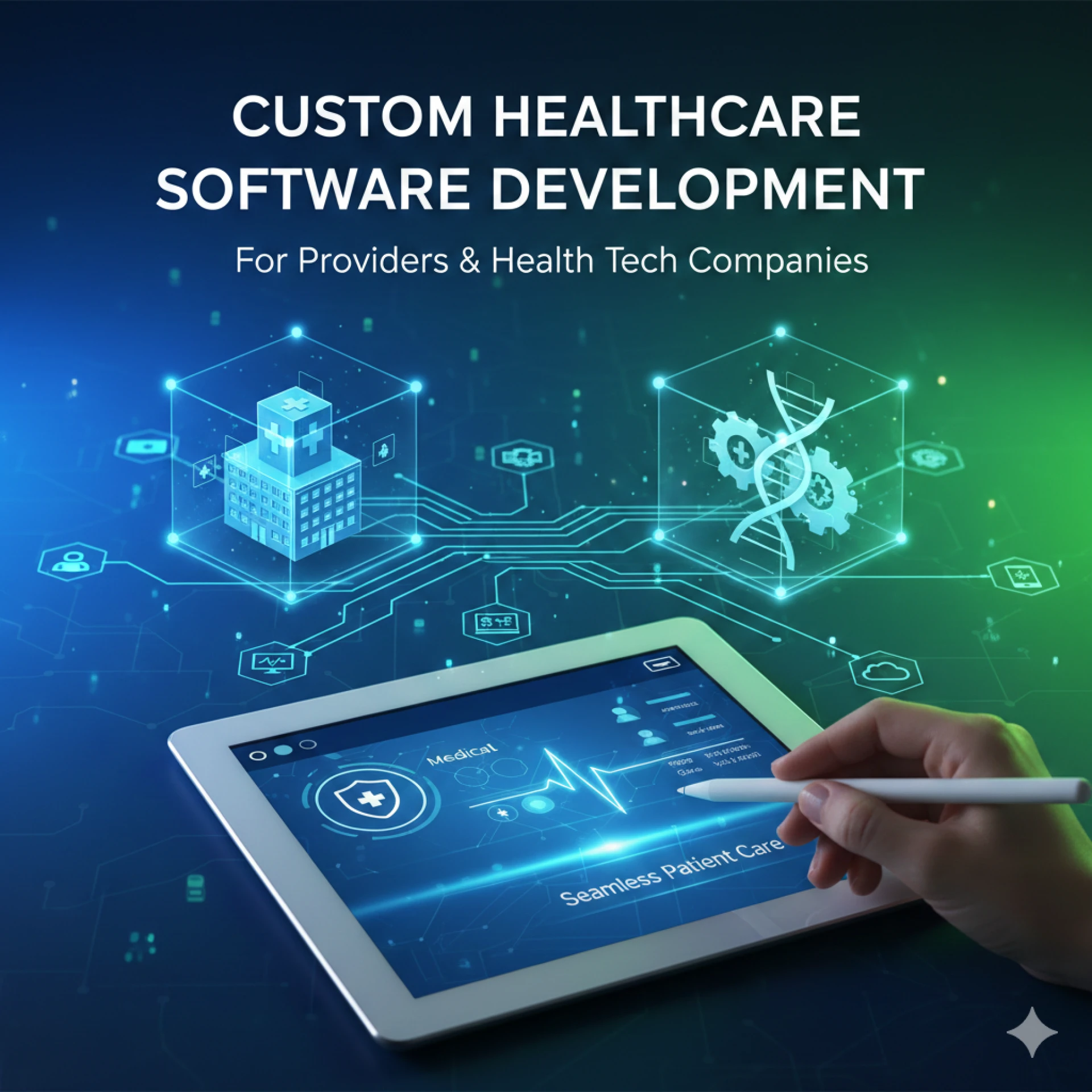

Healthcare organizations are under increasing pressure to deliver better outcomes, operate efficiently, and innovate faster, all while navigating complex regulatory requirements. In this environment, off-the-shelf software often fails to meet evolving clinical, operational, and business needs. This is why custom healthcare software development has become a strategic priority for providers and health tech companies looking to build scalable, compliant, and future-ready digital solutions.
Custom-built healthcare software enables organizations to design systems around their care models, data strategies, and growth plans, rather than forcing workflows to fit generic platforms.
Software Needs That Demand Custom Development
Not all healthcare use cases can be addressed with packaged solutions. Certain platforms require deep customization, specialized integrations, and long-term flexibility that only custom development can deliver.
RPM, Telehealth, and Care Management Platforms
Remote Patient Monitoring (RPM), telehealth, and care management solutions are highly workflow-driven and patient-centric. These platforms must support continuous data ingestion, real-time alerts, care team collaboration, and personalized care pathways.
Custom healthcare software development allows organizations to:
- Design care workflows tailored to specific populations or conditions
- Integrate seamlessly with EHRs, devices, and care coordination tools
- Scale programs without being constrained by vendor feature limitations
This level of flexibility is difficult to achieve with rigid SaaS platforms.
Medical Device and IoMT Integrations
Healthcare organizations increasingly rely on connected medical devices and Internet of Medical Things (IoMT) ecosystems. Each device may use different data formats, communication protocols, and security models.
Custom development enables:
- Real-time device data ingestion and normalization
- Standards-based integration using HL7, FHIR, and device APIs
- Reliable data flows into clinical systems, analytics platforms, and dashboards
For device-driven care models, custom software is often the only viable option.
Population Health and Analytics Systems
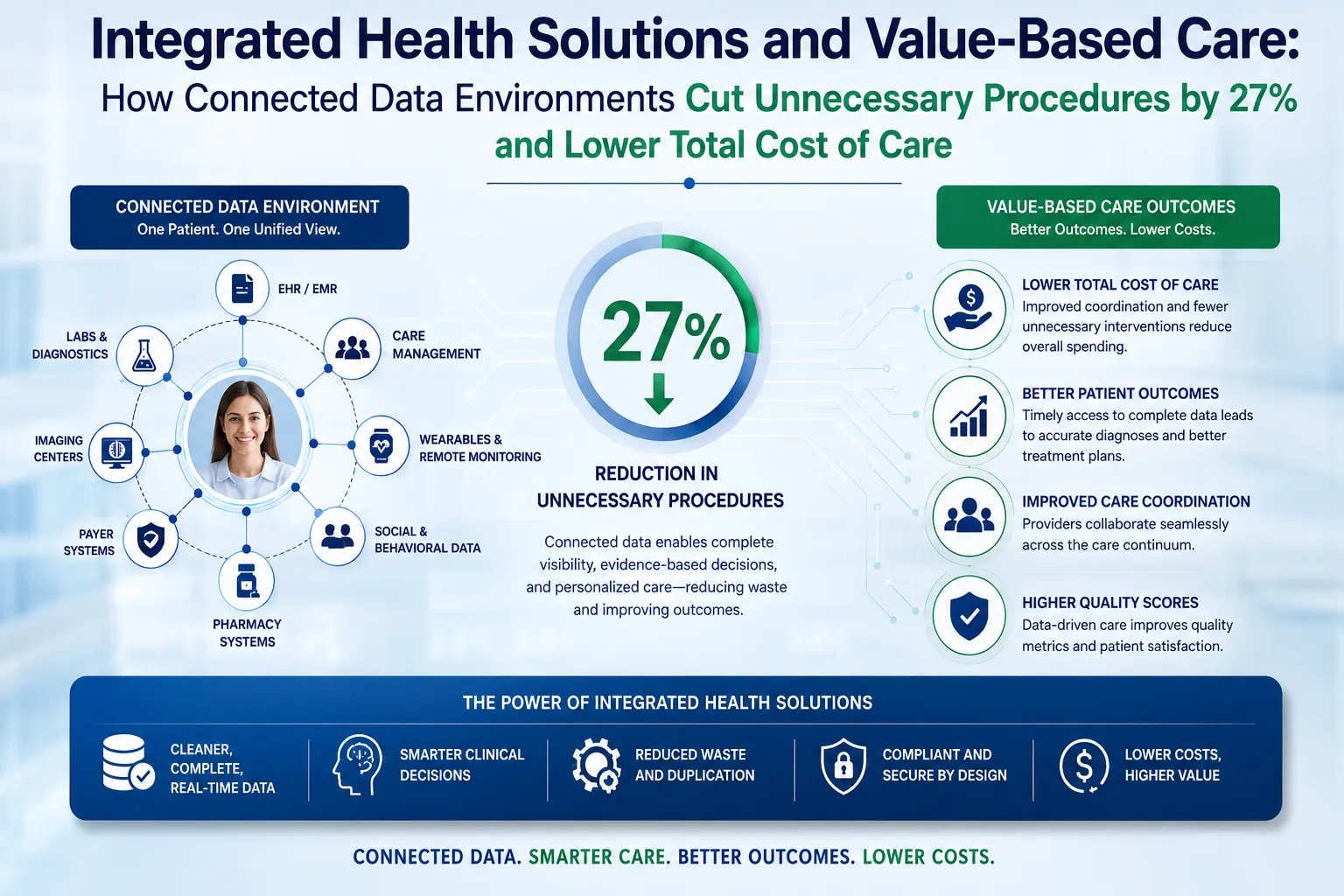
Population health initiatives depend on aggregating data across multiple sources, including EHRs, claims systems, RPM platforms, and social determinants of health.
With custom healthcare software development, organizations can:
- Build unified data platforms tailored to reporting and risk stratification needs
- Apply advanced analytics and AI models on clean, normalized datasets
- Support value-based care and performance measurement programs
Generic analytics tools rarely provide the depth or flexibility required at scale.
Technology Stack for Custom Healthcare Software
The success of custom healthcare software development depends heavily on the underlying technology architecture. Modern healthcare platforms must be scalable, interoperable, and secure by design.
Cloud, AI, and Data Platforms
Cloud-native architectures form the foundation of modern healthcare software. They support scalability, high availability, and rapid innovation.
Custom solutions often leverage:
- Cloud platforms for elastic infrastructure and cost efficiency
- AI and machine learning for predictive analytics, decision support, and automation
- Centralized data lakes and warehouses for clinical and operational intelligence
This technology stack enables healthcare organizations to evolve their platforms as needs change.
Interoperability (FHIR, HL7, APIs)
Interoperability is no longer optional. Custom healthcare software must exchange data reliably across EHRs, devices, payer systems, and third-party applications.
Key interoperability capabilities include:
- FHIR-based APIs for modern data exchange
- HL7 integrations for legacy system connectivity
- Secure REST APIs for external partner integrations
Custom development ensures interoperability is aligned with both current standards and future regulatory requirements.
Security and Identity Management
Healthcare software must protect sensitive patient data while enabling seamless access for clinicians, staff, and patients.
Custom-built platforms can incorporate:
- Role-based access control and identity federation
- Encryption at rest and in transit
- Audit logging, monitoring, and compliance reporting
Security and privacy controls can be tailored to organizational risk profiles and regulatory obligations.
Selecting the Right Development Partner
Choosing the right partner is as critical as choosing the right technology. A strong development partner brings not only technical expertise but also healthcare domain knowledge and long-term strategic alignment.
Healthcare Domain Expertise
Healthcare software development is fundamentally different from building applications in other industries. Domain expertise ensures that solutions align with real-world clinical workflows and operational constraints.
An experienced partner understands:
- Provider, payer, and patient workflows
- Clinical terminology and data models
- The impact of technology decisions on care delivery
This reduces rework, accelerates delivery, and improves adoption.
Regulatory and Compliance Readiness
Compliance is a non-negotiable requirement in healthcare. Custom healthcare software development must account for regulations such as HIPAA, GDPR, and regional healthcare standards.
A qualified partner will:
- Design compliance into the architecture from day one
- Support audit readiness and documentation
- Stay aligned with evolving regulatory requirements
This minimizes risk and protects long-term platform viability.
Long-Term Support Models
Healthcare platforms are living systems that evolve over time. Beyond initial development, organizations need partners who can support optimization, scaling, and continuous improvement.
Look for partners that offer:
- Ongoing maintenance and enhancement services
- Performance monitoring and optimization
- Strategic guidance as business and regulatory needs change
A long-term partnership ensures your software continues to deliver value.
Conclusion
Custom healthcare software development Empowers providers and health tech companies to build digital solutions that truly support their care models, data strategies, and growth objectives. From RPM and device integration to analytics and interoperability, custom development delivers flexibility, scalability, and control that off-the-shelf solutions cannot match.
By investing in the right technology stack and partnering with an experienced healthcare software development team, organizations can accelerate innovation, improve outcomes, and stay competitive in a rapidly evolving healthcare landscape.

























Sign in to leave a comment.