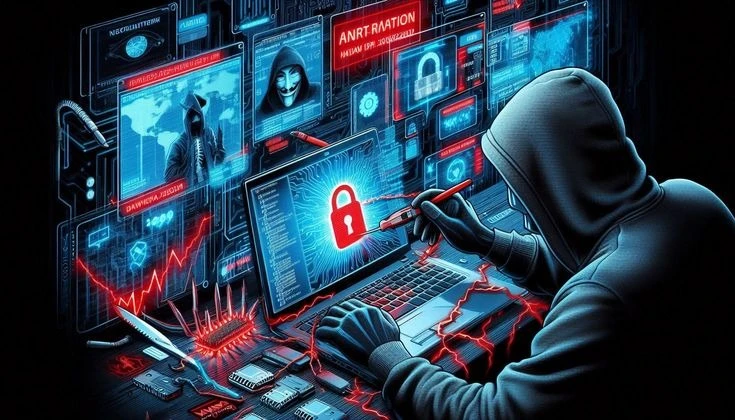

Open a laptop on any given Tuesday morning, and the headlines paint a chaotic picture. A healthcare giant held for ransom. A supply chain compromised through a vendor’s vendor. A new zero-day vulnerability discovered in software used by millions.
For Information Security officers and business leaders, this constant barrage of daily hacking news isn't just noise; it is the baseline reality of modern business. The era of "set it and forget it" firewalls is long gone. Today, the sheer velocity of emerging exploits forces organizations to fundamentally rethink how they protect their assets.
Understanding these headlines is no longer about morbid curiosity. It is about survival. The specific nature of recent attacks—from sophisticated social engineering to AI-driven intrusions—dictates that cybersecurity strategies must evolve from static defenses to dynamic, intelligence-led operations.
The Acceleration of the Exploit Lifecycle
Ten years ago, there was a comfortable window between the discovery of a vulnerability and the widespread exploitation of it. IT teams had weeks, sometimes months, to test and deploy patches. That window has shattered.
Today, the time between a vulnerability disclosure and active exploitation is often measured in hours. In some cases, the exploitation happens before the vulnerability is even public knowledge (zero-day exploits). This acceleration implies that a strategy based solely on "patch management" is destined to fail. If you are waiting for the patch, you might already be breached. Keeping up with daily hacking news is critical to stay ahead of emerging threats and adjust defenses proactively.
This shift drives a new strategic imperative: resilience over impenetrability. Organizations are accepting that they cannot stop every attack at the perimeter. Instead, the focus is shifting toward detection and containment. How fast can you spot an intruder who has already bypassed the firewall? Strategies are pivoting toward endpoint detection and response (EDR) systems that look for behavioral anomalies rather than just known virus signatures.
The Evolution of the Phishing Attack
While technical exploits grab headlines, the human element remains the most fragile link in the security chain. The humble phishing attack has evolved into something far more sinister and difficult to detect.
Gone are the days of poorly spelled emails from "princes" offering millions of dollars. By leveraging generative AI, attackers can now craft grammatically perfect, contextually relevant emails that appear to come from a CEO, a vendor, or a trusted colleague.
This evolution is forcing a change in training strategies. Annual compliance videos are insufficient against spear-phishing campaigns that utilize deepfake audio or scraped social media data to build trust. Modern defense strategies now prioritize:
- Continuous Simulation: frequent, randomized phishing simulations that mimic real-world trends found in daily hacking news.
- Verification Protocols: implementing multi-factor authentication (MFA) not just for logins, but for process approvals, such as wire transfers or data access requests.
- AI Defense: using email security tools that analyze communication patterns to flag anomalies that a human might miss.
From Trusted Perimeters to Zero Trust
Perhaps the most significant strategic shift driven by current exploit trends is the death of the "trusted network."
Historically, security was modeled like a castle: high walls on the outside, but once you were inside, you could move freely. High-profile breaches over the last few years have demonstrated the folly of this approach. Once attackers compromise a single set of credentials (often through a phishing attack) or exploit a VPN vulnerability, they can move laterally across the network, stealing data or planting ransomware.
This has accelerated the adoption of Zero Trust architecture. The core principle of Zero Trust is "never trust, always verify." In this model, location does not imply trust. Just because a user is on the office Wi-Fi doesn't mean they should have access to the payroll server.
Zero Trust strategies require:
- Identity verification for every request: Access is granted based on who the user is, the health of their device, and the context of the request.
- Micro-segmentation: Breaking the network into small zones so that if a breach occurs, it is contained within a small area.
- Least Privilege Access: Users are given only the bare minimum access required to do their jobs.
The Role of Threat Intelligence
With the threat landscape shifting so rapidly, "daily hacking news" has transformed from a media cycle into a critical business function known as Threat Intelligence.
Reactive security waits for an alert to go off. Proactive security hunts for threats based on global data. Large enterprises now employ teams whose sole job is to monitor the dark web, security forums, and industry reports to see what attackers are discussing.
If a specific ransomware group is targeting manufacturing firms in Southeast Asia, a manufacturing firm in Ohio should know about it. They can then preemptively adjust their defenses to block the specific tactics, techniques, and procedures (TTPs) used by that group. This intelligence-led approach allows companies to anticipate attacks rather than just recover from them.
Frequently Asked Questions
Why is following daily hacking news important for small businesses?
Small businesses often believe they are too insignificant to be targeted. However, many attacks are automated "spray and pray" campaigns that target vulnerabilities, not specific company names. Additionally, hackers often target small businesses to use them as a backdoor into the larger companies they supply. Keeping up with news helps small business owners understand what basic preventative measures (like updating software) are currently most critical.
How can I identify a modern phishing attack?
Modern phishing is sophisticated, but there are tell-tale signs. Look for a sense of urgency (e.g., "act now or lose access"), check the sender's email address carefully (not just the display name), and be wary of unexpected attachments or links. If an email from a colleague feels "off" or requests unusual financial transactions, verify it through a secondary channel like a phone call or Slack message.
What is the biggest cybersecurity threat right now?
While trends shift, Ransomware-as-a-Service (RaaS) remains a dominant threat. This business model allows non-technical criminals to purchase ransomware tools from developers, expanding the number of potential attackers. These attacks often combine data encryption with data theft (double extortion), threatening to release sensitive data if the ransom isn't paid.
Staying Ahead of the Curve
The only constant in cybersecurity is change. As defenders build higher walls, attackers learn to build taller ladders—or simply dig tunnels underneath.
The reliance on daily hacking news isn't about fear-mongering; it is about situational awareness. The exploits creating headlines today are the case studies for the security patches of tomorrow. By understanding how the threat landscape is changing—from the nuance of a phishing attack to the brute force of ransomware—organizations can stop playing catch-up and start building a defense that is ready for whatever Tuesday morning brings next.





























Sign in to leave a comment.