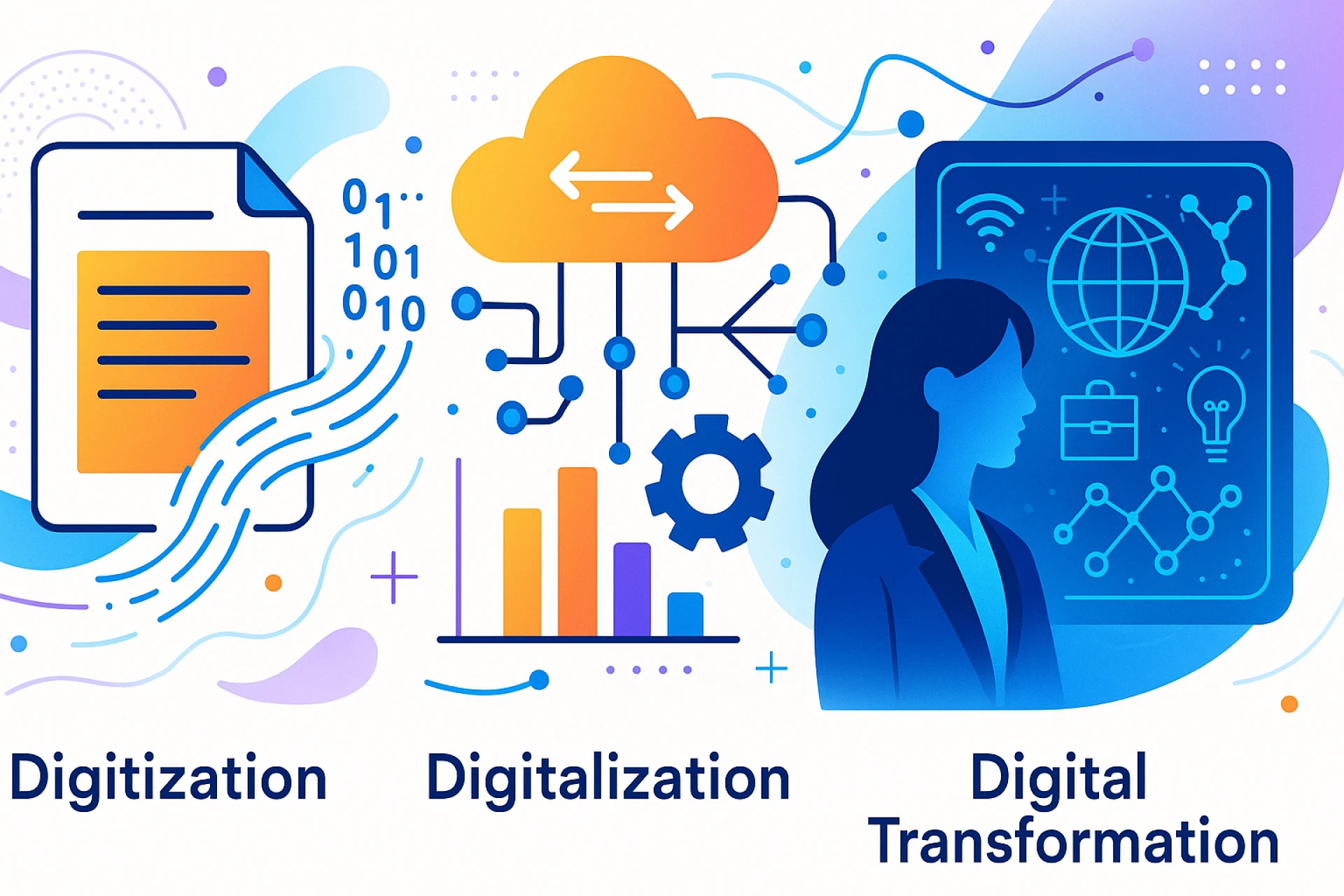

Over the last two decades, businesses worldwide have been reshaping themselves under the influence of technology. A recent study by IDC estimated that by 2026, global spending on digital transformation will reach over $3.4 trillion, proving that organizations are no longer treating digital initiatives as optional extras. They are central to survival and growth.
Yet, when discussing these shifts, three terms often get mixed up: digitization, digitalization, and digital transformation. People sometimes use them interchangeably, but they actually describe very different stages of technological change.
I’ve often noticed during client meetings that when leaders say, “We’re undergoing digital transformation,” what they mean is they’ve simply scanned their paperwork into PDFs. While that’s progress, it isn’t transformation. As one CIO once told me, “Buying new software doesn’t transform a business. Changing how people work with it does.”
Let’s break down these three terms clearly, with examples, so the differences become crystal clear.
What Is Digitization?
Digitization is the simplest of the three. It refers to converting information from a physical format into a digital one.
Think of it as the first step toward a digital future. Instead of storing contracts in filing cabinets, a company scans them and saves them as PDFs. Instead of paper-based X-rays, hospitals switch to digital radiology images.
A few common examples include:
- Converting printed photographs into JPEGs.
- Scanning paper invoices into an accounting system.
- Storing university transcripts as digital files rather than physical records.
Digitization is about data - turning analog into digital. It doesn’t change how a company operates; it just makes information easier to store, search, and share.
What Is Digitalization?
Digitalization goes one step further. It’s about using digital data and tools to improve processes and efficiency.
Here’s how it differs: while digitization is converting something physical into digital, digitalization is about changing the workflow.
For instance:
- Instead of emailing scanned invoices back and forth, a company uses an online billing platform that automatically generates, tracks, and processes payments.
- A school doesn’t just upload homework as PDFs; it uses an online learning management system where assignments can be submitted, graded, and tracked in real-time.
- In healthcare, digitalization can mean patient portals where test results, prescriptions, and doctor appointments are integrated into one accessible platform.
Digitalization isn’t about simply storing digital files - it’s about optimizing tasks through digital means. Businesses save time, reduce errors, and operate more smoothly.
What Is Digital Transformation?
Digital transformation is the broadest and deepest of the three. It’s not just about using digital tools; it’s about reimagining business models, customer experiences, and organizational culture around digital capabilities.
In other words, it’s about changing how a business operates, competes, and grows.
For example:
- Retail: Moving from a traditional brick-and-mortar model to an omnichannel strategy where in-store experiences, e-commerce, and mobile shopping apps are fully integrated.
- Banking: Shifting from physical branches to mobile-first banking, where customers can do everything from opening accounts to applying for loans through an app.
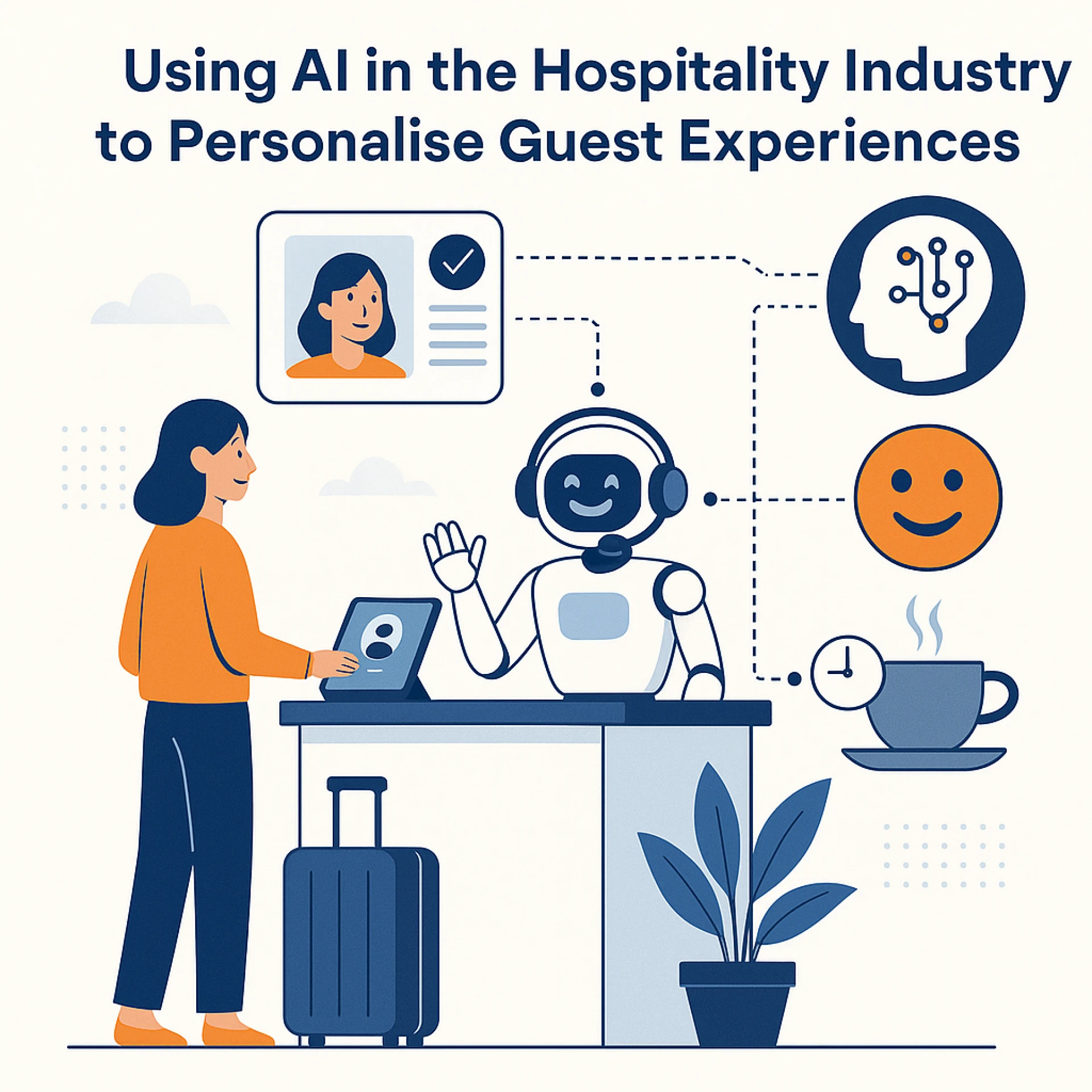
- Hospitality: Hotels using AI chatbots for customer service, predictive analytics for personalized offers, and digital check-ins to redefine the guest experience.
Digital transformation is a cultural shift as much as a technological one. It requires leadership commitment, employee buy-in, and often an entirely new way of thinking about customer value. Many companies choose to work with specialized digital transformation service providers who help create roadmaps, implement technologies, and drive change in a more structured way.
As Satya Nadella, CEO of Microsoft, once said:
“Every company is a software company. You have to start thinking and operating like a digital company.”
Key Differences Between the Three
Here’s a simple breakdown:
Digitization
Converting analog to digital
Scanning documents
Narrow
Digitalization
Improving processes with digital tools
Online invoicing system
Medium
Digital Transformation
Reinventing business models and culture
Netflix shifting from DVDs to streaming
Broad
So, digitization is the foundation, digitalization is the improvement, and digital transformation is the reinvention.
Why the Distinction Matters
You might wonder, “Does it really matter what we call it?”
In my experience, yes - it matters a lot.
If a company confuses digitization with transformation, it may think that scanning documents or installing new software is enough to compete in a digital-first market. But the real challenge lies in aligning people, processes, and strategy with digital opportunities.
A hospital that digitizes patient records is still far from becoming a truly digital healthcare provider. The transformation happens when those records connect with predictive AI systems, telemedicine platforms, and mobile apps that empower patients to manage their own care.
Examples Across Industries
1. Healthcare
- Digitization: Scanning patient files.
- Digitalization: Implementing electronic health records with easy sharing among departments.
- Digital Transformation: Creating telehealth platforms, AI-based diagnostics, and personalized treatment plans.
2. Retail
- Digitization: Product catalog PDFs.
- Digitalization: E-commerce platforms.
- Digital Transformation: AI-driven recommendations, seamless online-to-store experiences, and predictive inventory systems.
3. Education
- Digitization: Uploading textbooks as e-books.
- Digitalization: Using online quizzes and automated grading.
- Digital Transformation: Virtual classrooms, adaptive learning powered by AI, and global access to education.
4. Logistics
- Digitization: GPS tracking data.
- Digitalization: Software that optimizes delivery routes.
- Digital Transformation: End-to-end digital supply chain visibility with predictive analytics and automated warehouses.
Common Misconceptions
We scanned all our documents, so we’ve digitally transformed.”
That’s digitization, not transformation.
“Buying an ERP system is digital transformation.”
That’s digitalization. Transformation only happens when processes, culture, and strategy evolve.
“Digital transformation is only about technology.”
No - it’s equally about people. The best technology fails if employees don’t adapt or customers don’t see value.
Final Thoughts
Digitization, digitalization, and digital transformation aren’t just buzzwords - they represent distinct stages of progress.
- Digitization is the foundation.
- Digitalization is the process of improvement.
- Digital transformation is the reinvention of business itself.
In my experience, companies that succeed in today’s digital-first economy are the ones that treat transformation not as a project but as an ongoing journey. Technology will keep evolving, and so will customer expectations. The difference lies in how organizations adapt - not just by adopting tools, but by rethinking how they deliver value.
As Harvard Business Review once noted, “Digital transformation is less about technology and more about strategy.”
The next time you hear these three terms, you’ll know exactly where your business stands - and what the next step should be.























Sign in to leave a comment.