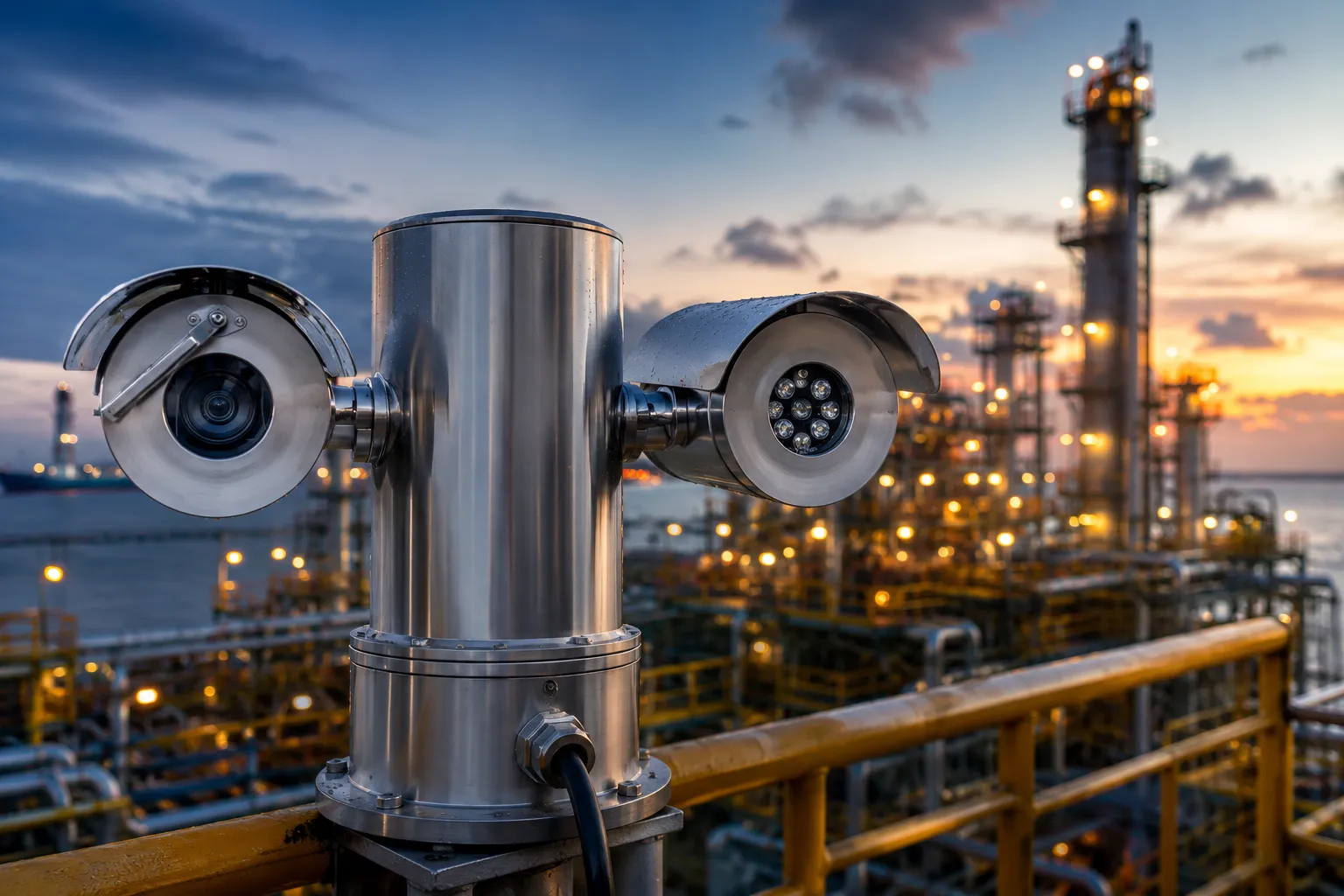
Why an Explosion Proof PTZ Camera With IR Is Essential for UK Oil & Gas Platforms
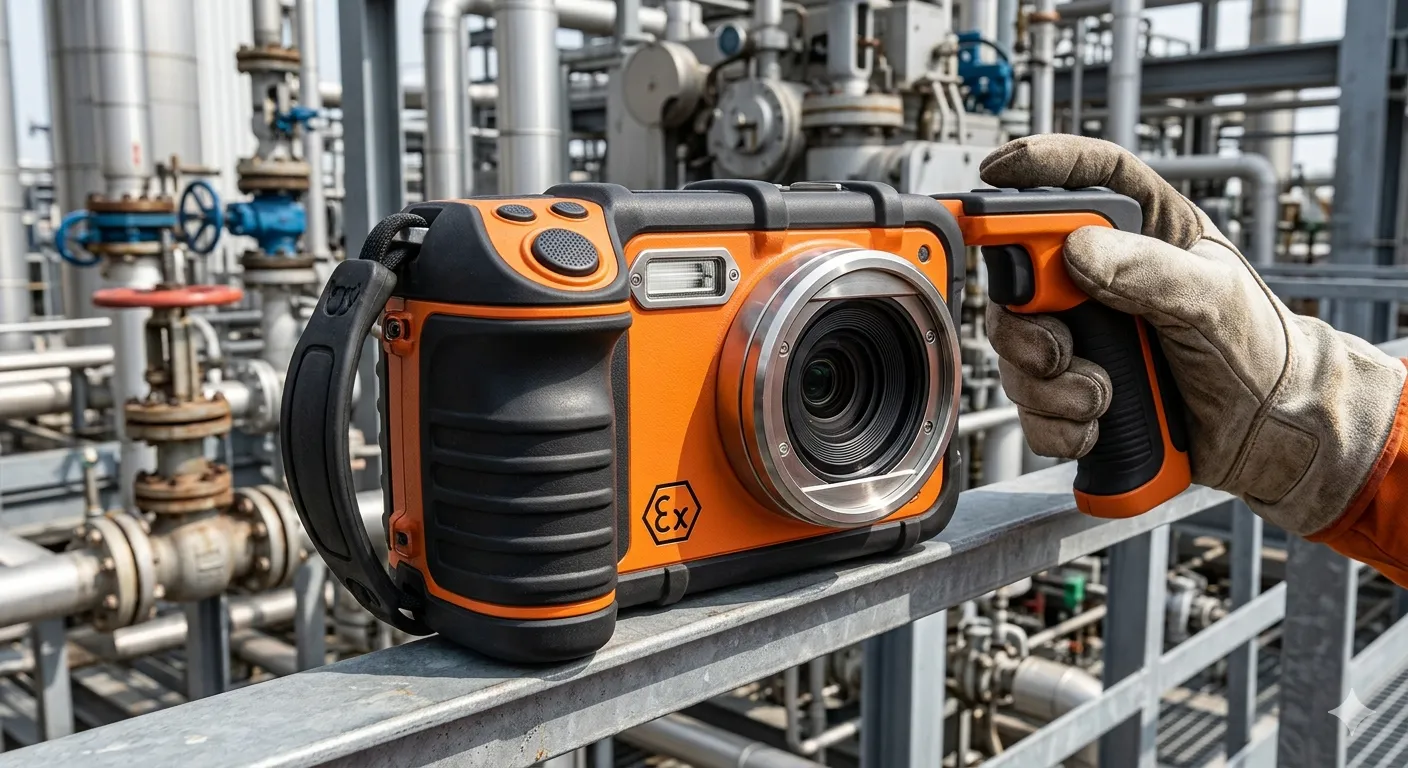
A single spark, at the wrong concentration of hydrocarbon vapour, is all it takes to turn a routine shift into a catastrophe. Loss-of-containment events remain among the leading causes of major accident hazards on UK onshore and offshore installations. For safety officers managing platforms in the North Sea or process units on Teesside, that risk isn't theoretical — it's the backdrop to every shift handover. Surveillance has to do more than record footage after the fact; it needs to help your team see trouble developing before it becomes an incident. That's where an Explosion Proof PTZ Camera With IR earns its place on the asset list, not as a nice-to-have, but as a frontline safety control.
The Risk Profile You're Already Managing
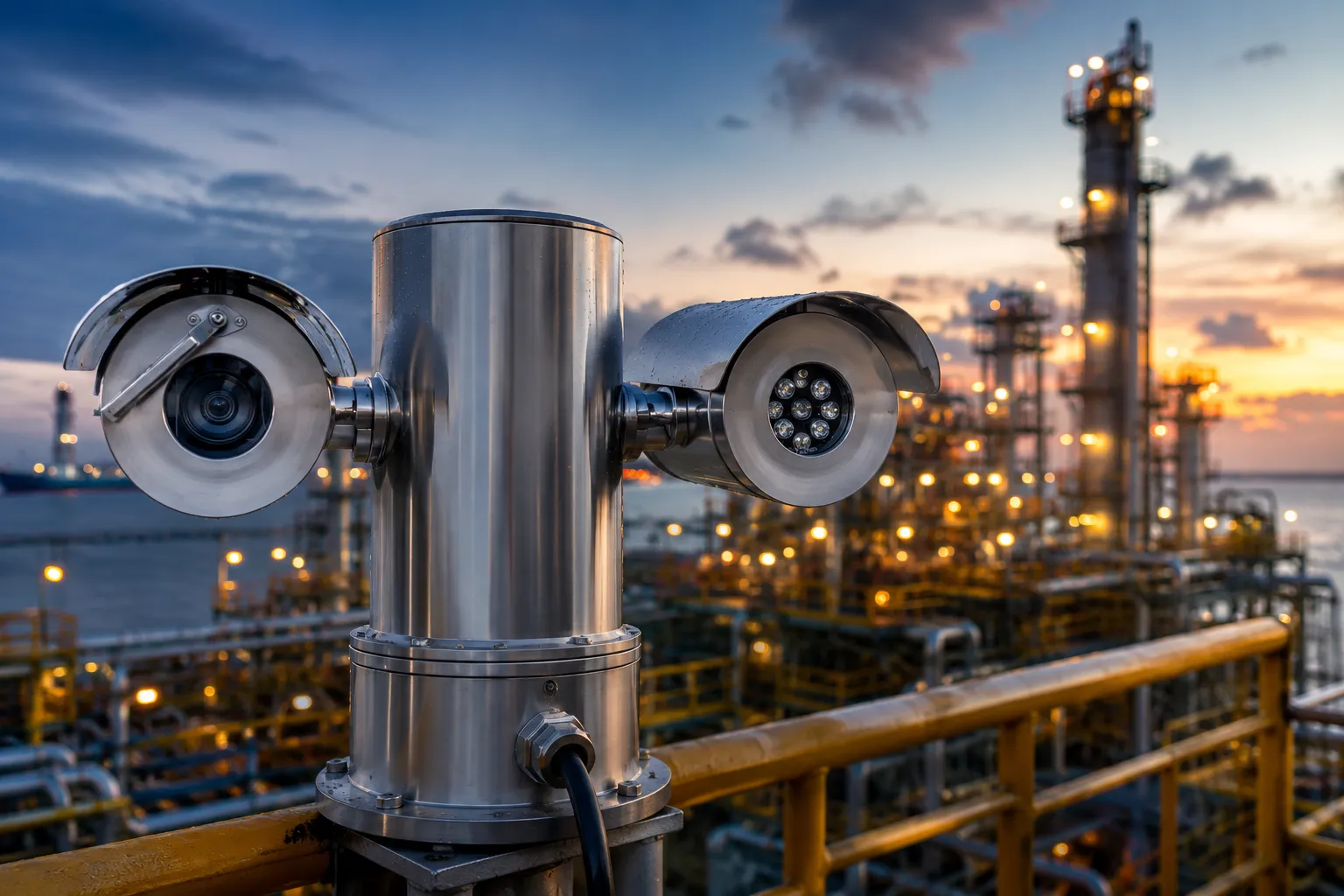
Whether you run a fixed platform in the Central North Sea, a refinery in Grangemouth, or a gas terminal on Teesside, your site carries the same hazard: flammable atmospheres. Hydrocarbon vapours, hydrogen sulphide pockets, and combustible dust mean ordinary electrical equipment — including standard CCTV — is a potential ignition source. Under DSEAR, you must classify hazardous zones and ensure equipment within them cannot itself trigger an explosion. That obligation extends well beyond pumps and valves to the cameras watching over them.
Why PTZ and IR Outperform Fixed Cameras
Fixed cameras give you a single, static view. On a platform with moving plant, changing weather, and personnel across multiple decks, that's a real limitation. Pan-tilt-zoom lets your control room operator sweep a flare stack, zoom into a suspect valve gland, or track a contractor through a restricted zone, all from one unit. Add infrared illumination and you gain reliable night-time monitoring, which matters offshore, where floodlighting is inconsistent and fog is routine. An Explosion proof ir ptz camera typically delivers:
- Wide-area coverage from a single mounting point
- Clear low-light imaging via infrared, critical through winter
- Remote control, so operators investigate anomalies without entering a hazardous zone
- Digital zoom sharp enough to read gauges from a safe distance
IP-rated, corrosion-resistant housings built for marine atmospheres
Certification: What UK Operators Must Check
Any camera destined for a classified zone needs more than a marketing claim. Confirm ATEX Directive compliance alongside IECEx certification where equipment is sourced internationally. Look for the zone and gas group marking — for example, Ex II 2G Ex db II C T6 Gb — confirming Zone 1 gas suitability and temperature class. A genuine ATEX PTZ Camera With IR carries a certificate number you can independently verify. Confirm, too, that your installer holds current DSEAR competency; a correctly certified camera fitted incorrectly still creates risk.
Placement Guidance Across the Platform
Getting coverage right matters as much as certification. Priority zones typically include:
- Flare stacks and vent points — early confirmation of flame behaviour
- Wellheads and manifolds — continuous monitoring of high-pressure connections
- Valve clusters and pipework junctions — visual verification supporting leak detection
- Helideck and personnel walkways — oversight during crew changes and evacuation
- Process decks with rotating equipment — early sight of vibration-related failures
An ir ptz camera for Hazardous Areas with overlapping fields of view closes the gaps fixed cameras leave, particularly around structural obstructions common offshore.
Integration With SCADA, Access Control, and Alarms
A camera working in isolation only tells half the story. On a well-specified IR PTZ camera hazardous area oil and gas installation, linking PTZ output to your SCADA historian lets operators correlate a pressure excursion or gas alarm with live visual confirmation in seconds. Tying the camera into access control means unauthorised entry triggers a preset camera tour automatically, and alarm integration tackles a daily control-room frustration: false positives. A gas detector trip, backed by instant visual confirmation, lets an operator rule out a false alarm in moments instead of escalating a full muster.
A Practical Example
Consider a mid-sized offshore platform logging around 40 false gas-alarm escalations a year, each triggering a partial muster and production pause. After deploying Hazardous Area PTZ Cameras With IR at key detection points and integrating them with the alarm matrix, the operator visually verified roughly 70% of alarms from the control room, cutting unnecessary musters sharply — a meaningful return before counting the safety benefit of better awareness during a real event.
Procurement Checklist for Safety Officers
Before signing off on any purchase, confirm:
- Valid ATEX and IECEx certification with a verifiable certificate number
- Correct zone rating matching your site's DSEAR classification
- IP-rated housing suited to offshore or corrosive environments
- Compatibility with existing VMS, SCADA, and alarm infrastructure
- Ongoing manufacturer support for installation and maintenance
A track record as a genuine supplier of hazardous area PTZ cameras UK operators already trust
Choosing the Right Partner
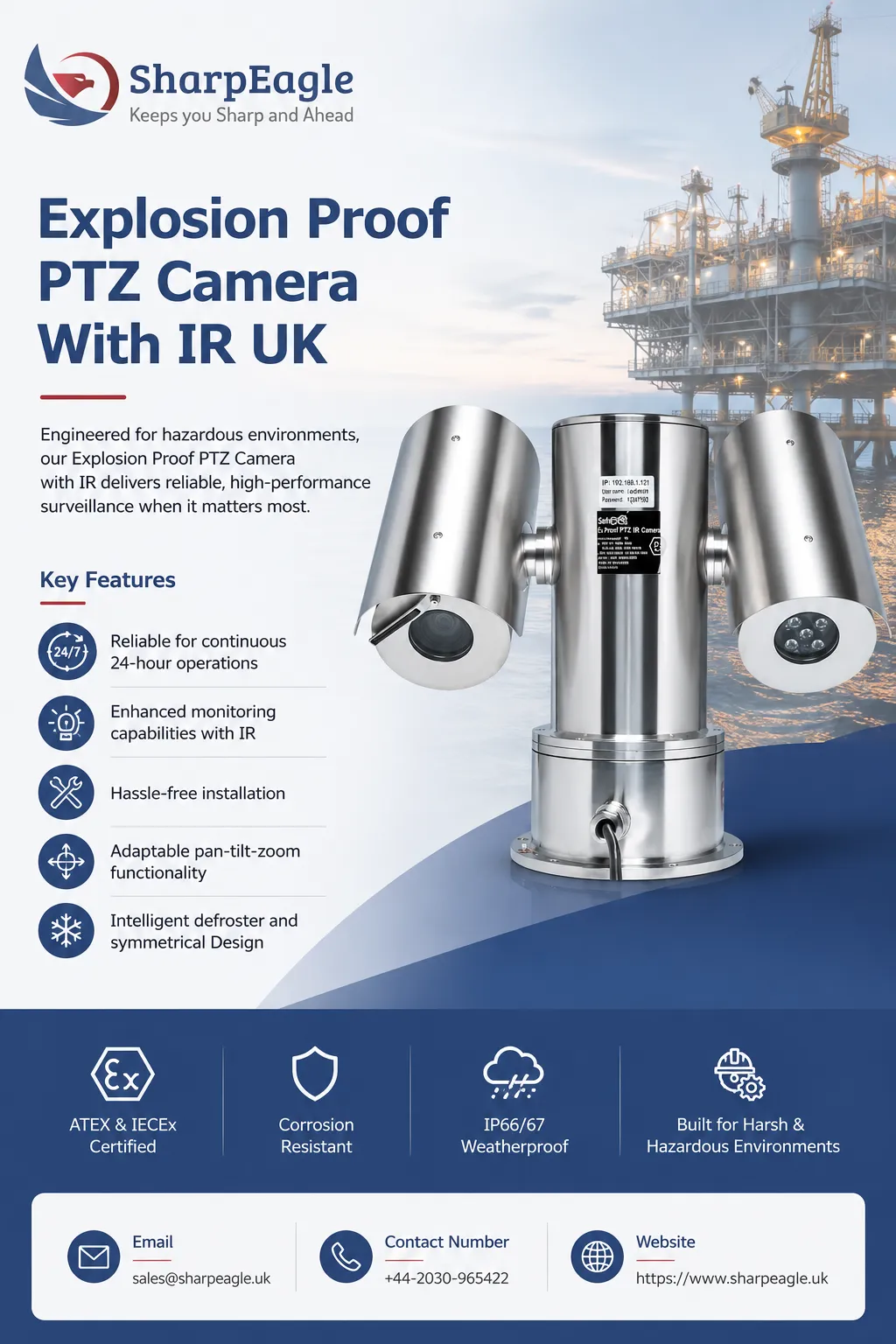
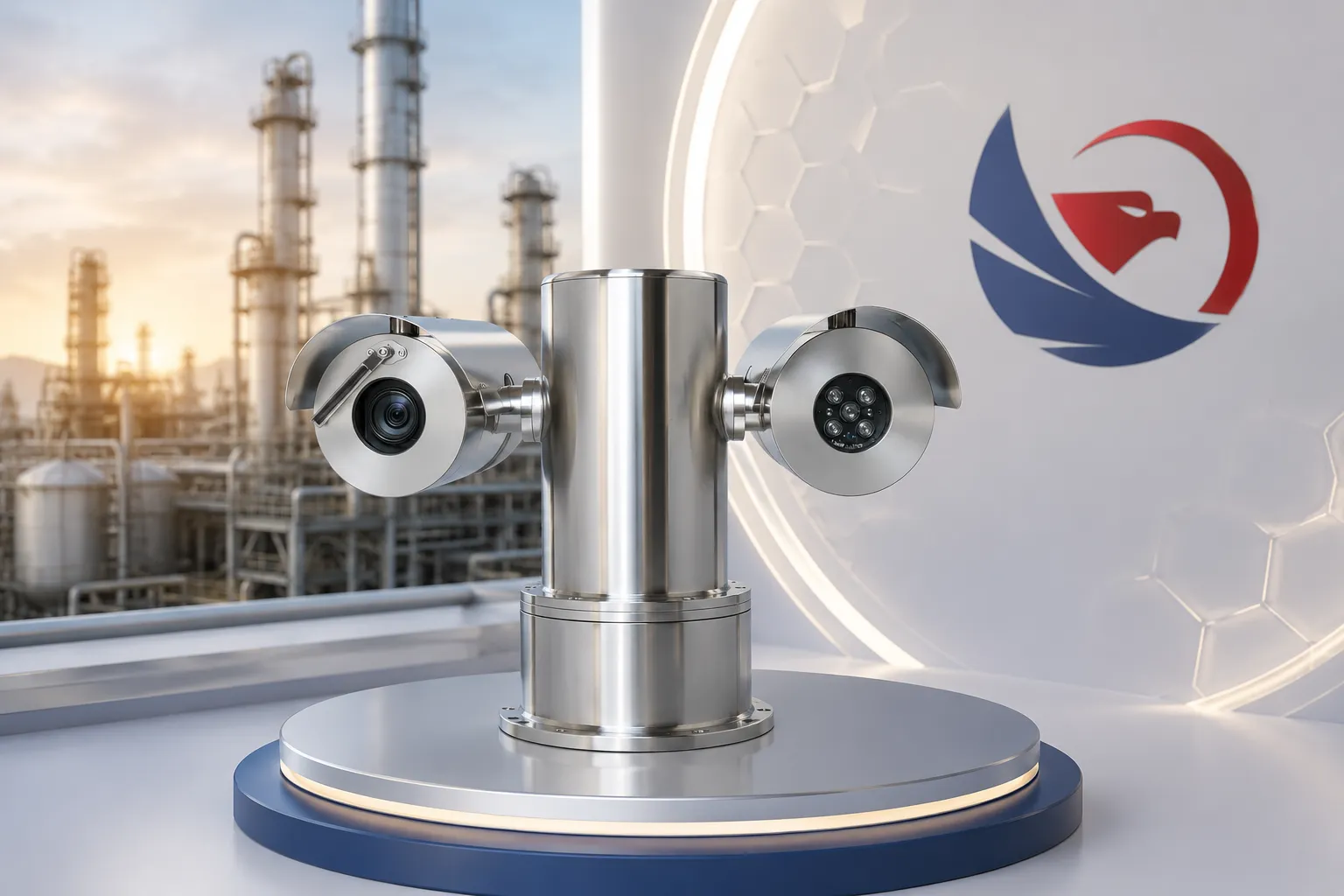
SharpEagle Technology's flagship unit is built for exactly this brief. ATEX and IECEx certified, rated Ex II 2G Ex db II C T6 Gb for Zone 1 gas environments, it's housed in a 304 stainless steel, IP68-rated body for continuous 24-hour offshore operation. The unit combines 360° pan-tilt coverage, 12x digital zoom, and infrared illumination down to 0.01 lux. An intelligent defroster and lens wiper keep the image clear through winter, and flexible mounting simplifies retrofitting onto existing structures.
As a proven ex-proof PTZ IR camera supplier UK operators rely on, SharpEagle backs the hardware with site assessment, installation, and maintenance, with a track record across explosion proof PTZ camera oil and gas UK installations.
The Bottom Line
Hazardous area surveillance isn't a compliance checkbox — it's an active safety layer shaping how quickly your team can spot, verify, and respond to a developing incident. As sites face growing pressure to demonstrate robust process safety management, certified, integrated surveillance is one of the clearer ways to close the gap between detection and action. If you're reviewing your platform's surveillance strategy, contact SharpEagle Technology to arrange a site assessment.

























Sign in to leave a comment.