

FIDO Based Authentication: Standards and Compliance
Introduction
FIDO based authentication has gained global acceptance as an advanced method of securing digital identities without relying on passwords. By adopting cryptographic techniques and public key standards, it strengthens access control and reduces risks associated with credential theft. With increasing regulatory requirements across industries, organizations are moving toward compliance frameworks that recognize and endorse FIDO standards. This article provides an in-depth exploration of FIDO authentication, its alignment with compliance requirements, and the standards that define its adoption.
What is FIDO Based Authentication?
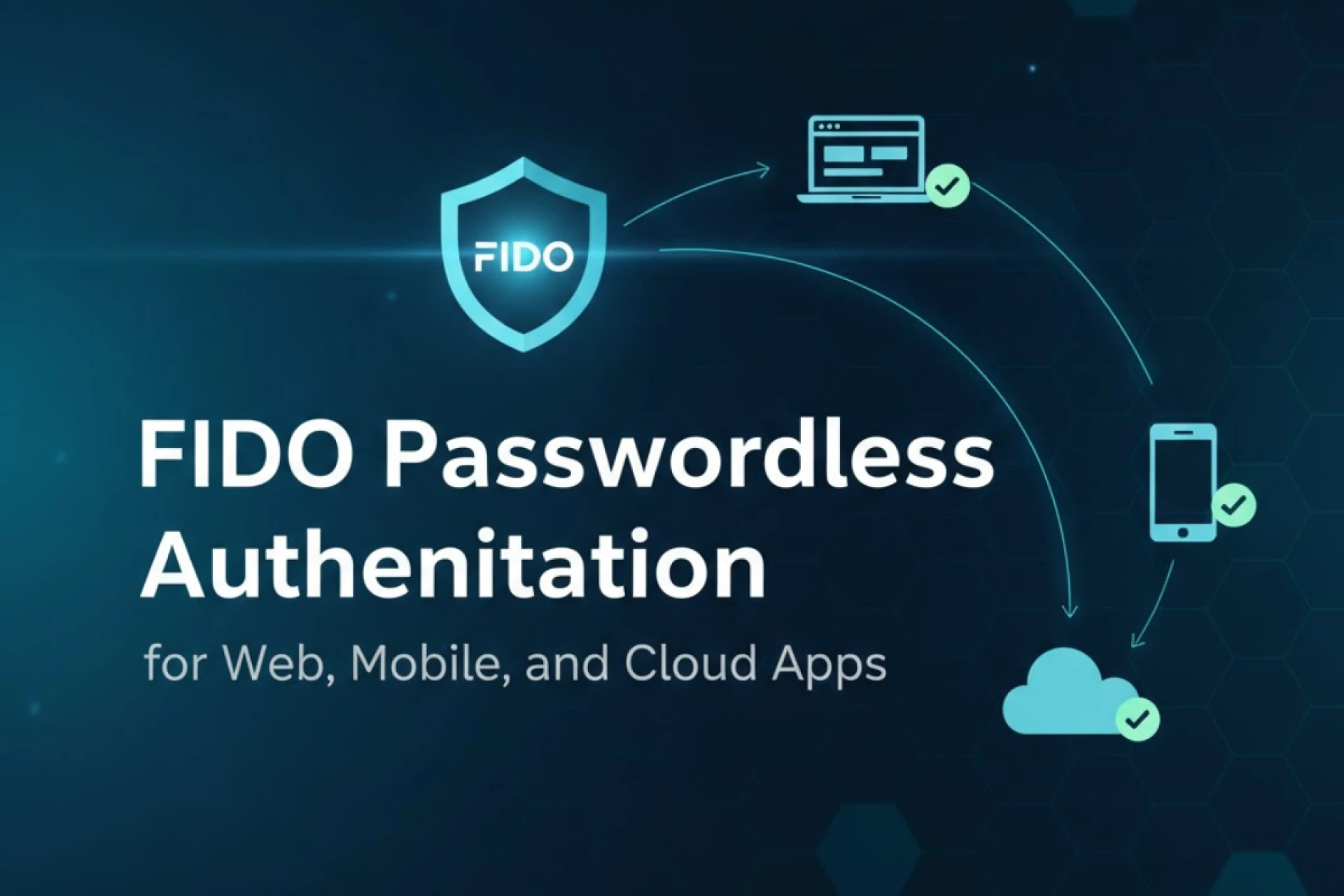
The FIDO Alliance introduced its specifications to replace password-based authentication with stronger, phishing-resistant methods. FIDO authentication depends on asymmetric cryptography, where a private key remains secured on the user’s device while a public key is registered with the service provider.
- No shared secrets: Unlike passwords, there is no central repository of sensitive credentials.
- Device-bound security: Authentication is tied to a user’s device or hardware token, making remote attacks difficult.
- Biometric or PIN unlock: Local verification methods (such as fingerprint or face recognition) enhance usability while maintaining privacy.
This mechanism not only aligns with modern cybersecurity needs but also supports compliance with strict industry regulations.
Why is Compliance Important in Authentication?
Regulatory bodies and industry frameworks consistently highlight authentication as a central factor in protecting sensitive data. Compliance serves two purposes:
- Meeting legal obligations: Organizations must follow authentication requirements set by data protection laws and cybersecurity regulations.
- Building trust: Businesses that comply with authentication standards provide users with confidence that their identities and data are well-protected.
FIDO authentication is often referenced as a recommended method across multiple compliance guidelines because of its resistance to phishing and credential stuffing.
Which Standards Govern FIDO Based Authentication?
1. FIDO U2F and FIDO2
- U2F (Universal Second Factor): Introduced as a strong second factor using hardware keys.
- FIDO2: Extends beyond U2F by enabling passwordless logins, combining WebAuthn (W3C standard) and CTAP (Client-to-Authenticator Protocol).
2. WebAuthn (W3C Standard)
WebAuthn is a web standard that enables servers to register and authenticate users using public key cryptography instead of passwords. It has become the backbone for browser-based authentication, supported by Chrome, Firefox, Safari, and Edge.
3. CTAP (Client to Authenticator Protocol)
CTAP allows external authenticators (such as hardware keys or biometric devices) to communicate with browsers and platforms. It ensures interoperability across different devices and environments.
How Does FIDO Support Regulatory Compliance?
GDPR (General Data Protection Regulation)
FIDO authentication reduces reliance on personal data stored centrally, aligning with data minimization principles in GDPR. By eliminating password databases, organizations decrease the risks of mass breaches.
PSD2 (Revised Payment Services Directive)
European financial institutions must implement Strong Customer Authentication (SCA). FIDO authentication, with device-based keys and biometric verification, directly supports SCA requirements.
NIST Guidelines (SP 800-63)
The National Institute of Standards and Technology (NIST) sets digital identity guidelines in the U.S. FIDO2 and WebAuthn methods are recognized as strong authentication options meeting high assurance levels.
HIPAA (Health Insurance Portability and Accountability Act)
Healthcare organizations in the U.S. must protect sensitive patient data. FIDO authentication provides secure access to electronic health records, meeting HIPAA’s security rule requirements.
PCI DSS (Payment Card Industry Data Security Standard)
Merchants and financial service providers must protect cardholder data. FIDO authentication aligns with PCI DSS requirements by minimizing password-related vulnerabilities.
Benefits of Adopting FIDO Based Authentication for Compliance
- Phishing resistance: Cryptographic authentication prevents credential interception.
- Reduced password risk: Eliminates password reuse, weak passwords, and credential stuffing.
- Regulatory recognition: Aligns with compliance standards across multiple industries.
- User trust: Enhances customer confidence in security practices.
Common Challenges in Implementing FIDO Authentication
While compliance alignment is strong, organizations may encounter challenges such as:
- Legacy system compatibility: Older applications may not support modern protocols.
- User education: Shifting from password habits requires awareness and training.
- Device diversity: Ensuring consistent support across hardware tokens, biometrics, and browsers.
- Policy alignment: Mapping FIDO-based authentication to regulatory requirements requires detailed policy updates.
How to Adopt FIDO Based Authentication Within Compliance Frameworks
Organizations can integrate FIDO authentication by following a structured approach:
- Assess compliance requirements: Review relevant regulations such as GDPR, PSD2, HIPAA, or PCI DSS.
- Map standards to FIDO capabilities: Identify where FIDO methods satisfy or exceed regulatory needs.
- Conduct pilot implementations: Deploy authentication with select applications before scaling.
- Update internal policies: Align authentication practices with compliance documentation.
- Train employees and users: Provide clear guidance on how authentication works.
- Audit regularly: Perform compliance checks to validate adherence and security effectiveness.
Future Outlook of FIDO Authentication in Compliance
As regulatory bodies emphasize phishing-resistant authentication, FIDO is expected to play a central role in shaping security frameworks. Global adoption is expanding across banking, healthcare, and government services. Ongoing collaboration between the FIDO Alliance, standards organizations, and regulators ensures that compliance will continue to align with passwordless authentication models.
Frequently Asked Questions (FAQs)
Q1. Is FIDO authentication legally recognized for compliance?
Yes. Regulatory frameworks such as PSD2 in Europe and NIST guidelines in the U.S. explicitly recognize cryptographic authentication methods like FIDO.
Q2. Can FIDO replace all password-based systems?
Not immediately. While FIDO2 supports passwordless logins, some legacy systems may still depend on passwords. Migration strategies are often phased.
Q3. Does FIDO meet Strong Customer Authentication (SCA) under PSD2?
Yes. Device-bound credentials and biometric/PIN verification meet the two-factor requirement of SCA.
Q4. How does FIDO improve data protection under GDPR?
By removing central password storage, FIDO reduces risks of large-scale data breaches and aligns with data minimization principles.
Q5. Are FIDO keys required for all users?
Not necessarily. Organizations can offer multiple authentication options, but regulators increasingly recommend phishing-resistant methods.
Q6. What industries benefit most from FIDO compliance?
Banking, healthcare, e-commerce, and government services are the primary sectors adopting FIDO due to strict regulatory requirements.





























Sign in to leave a comment.