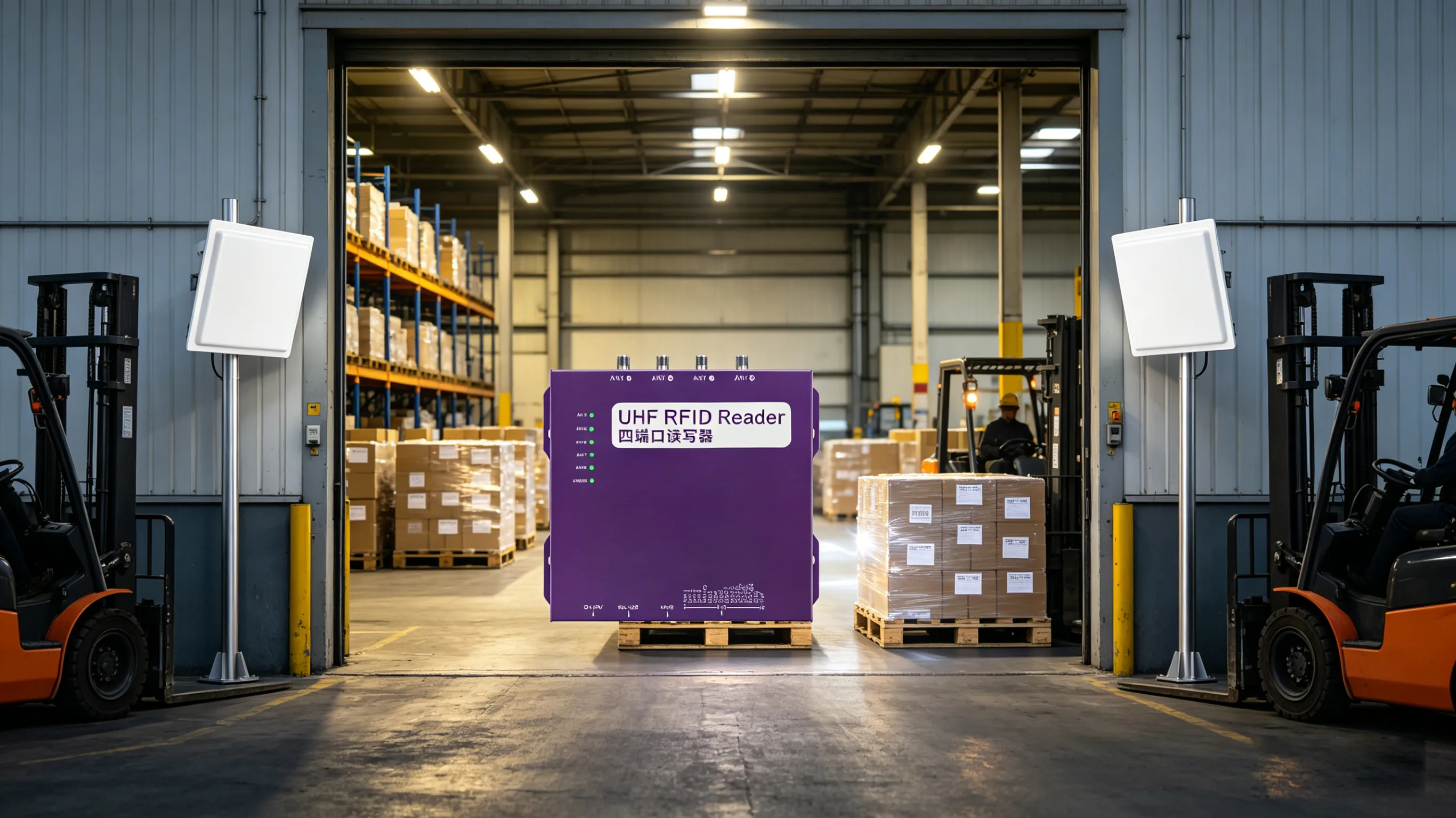

The first time I installed a Fixed RFID Reader in a live warehouse, it wasn’t a clean lab environment—it was a noisy, steel-heavy loading bay with forklifts cutting across read zones and pallets stacked inconsistently. Within 20 minutes, we learned more than any spec sheet could tell us.
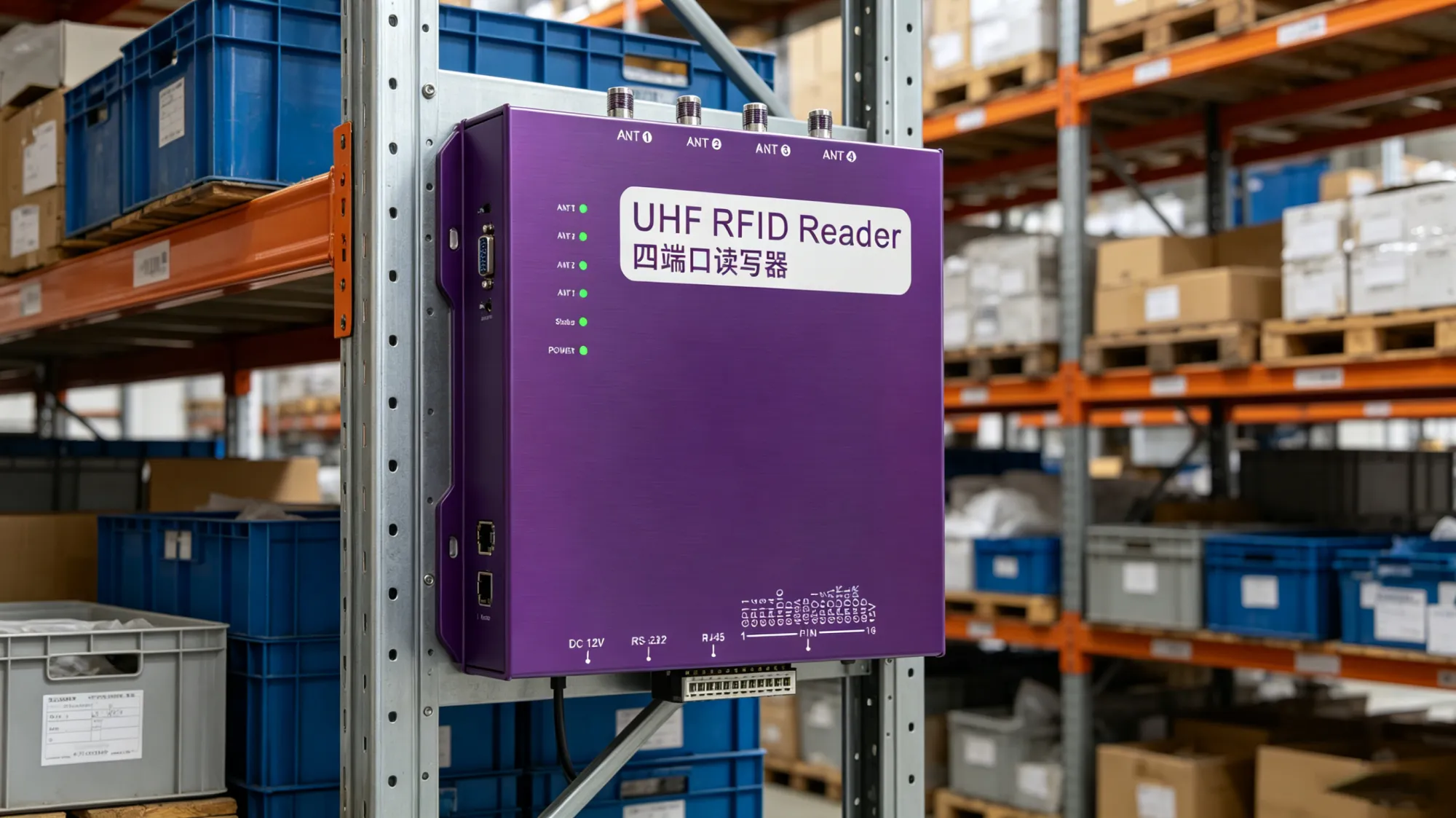
A Fixed RFID Reader is not just a static device mounted on a wall or gate. It’s the backbone of continuous, non-line-of-sight data capture. It works by emitting radio frequency signals, energizing passive tags, and capturing responses automatically—no scanning, no human trigger. According to data from RAIN RFID Alliance, UHF RFID systems can read hundreds of tags per second with read ranges exceeding 10 meters under optimal conditions. That’s not theoretical; I’ve seen 300+ tags pass through a dock door in under 5 seconds with >99% read accuracy after tuning.
But those results don’t come out of the box.
Where Fixed RFID Readers Actually Earn Their Value
In controlled demos, everything looks smooth. Real environments are different. Metal racks distort signals. Liquids absorb RF energy. Human movement introduces unpredictability.
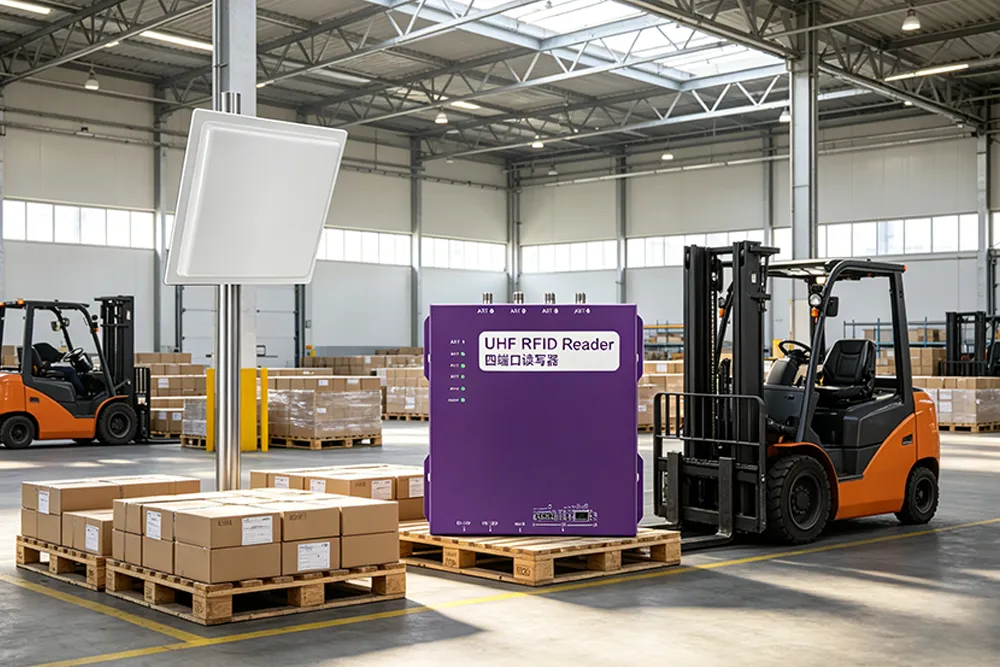
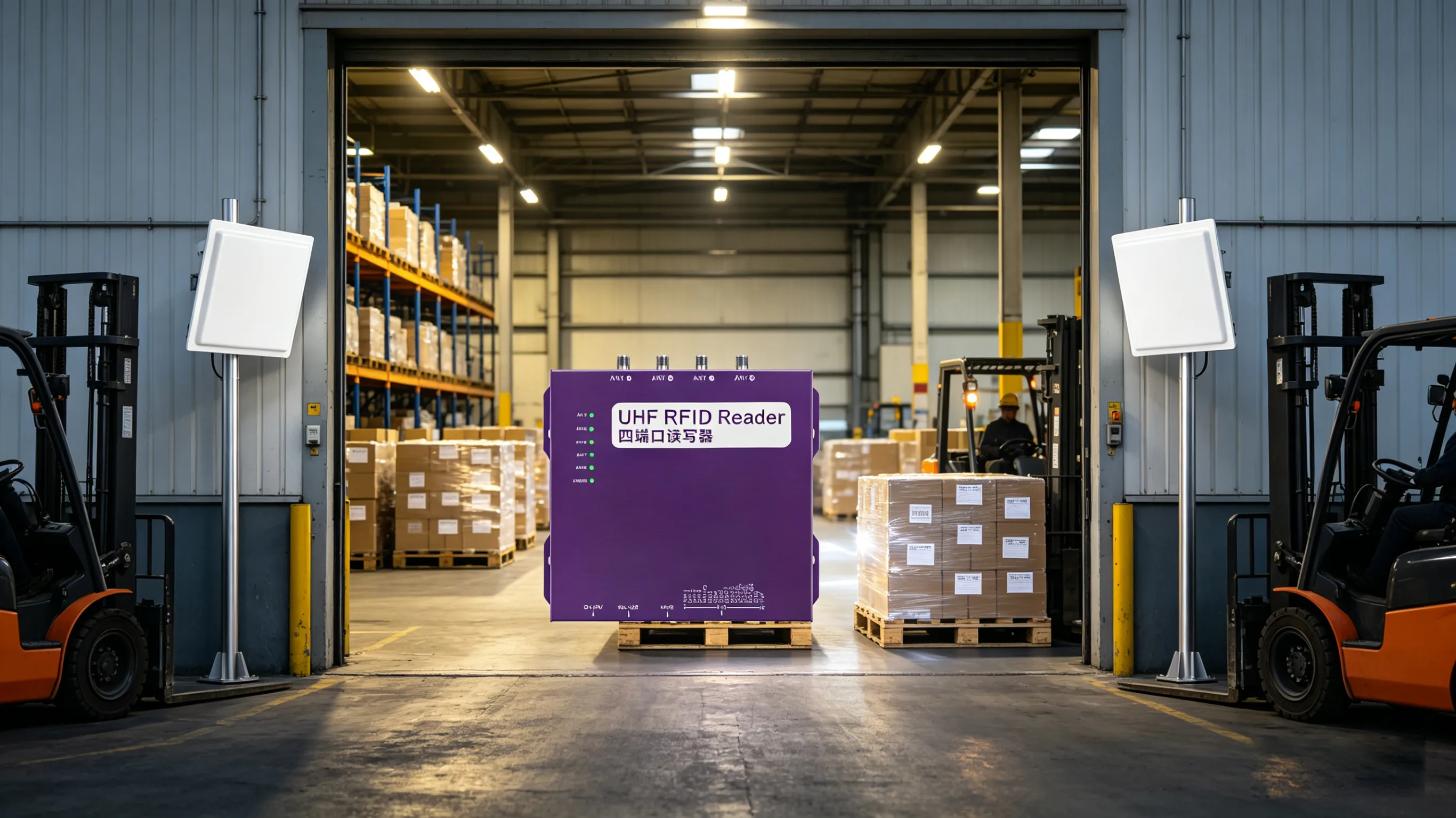
During a deployment in a mid-sized distribution center, we installed four overhead antennas connected to a single Fixed RFID Reader at a choke point between inbound receiving and storage. On day one, read rates hovered around 82%. Not acceptable.
We adjusted antenna polarization, slightly tilted the angles (about 15 degrees off-axis), reduced transmit power to minimize reflections, and redefined the read zone. By the end of the second day, accuracy climbed to 98.7%.
That’s the reality: performance is engineered, not assumed.
The Technical Core (Beyond the Brochure)
A typical industrial Fixed RFID Reader operates in the UHF band (860–960 MHz), compliant with EPC Gen2 / ISO 18000-63 standards. What matters in practice:
- Receiver sensitivity: Determines how well weak tag responses are captured
- Transmit power control: Helps avoid over-saturation and ghost reads
- Dense reader mode (DRM): Critical in facilities with multiple readers
- Anti-collision algorithms: Allow simultaneous tag reads without data loss
According to GS1 standards documentation, anti-collision protocols are essential for maintaining data integrity when reading multiple tags in the same RF field. Without it, tag responses overlap and become unreadable.
In one project involving tool tracking, we intentionally reduced power from 30 dBm to 24 dBm. Counterintuitive—but it eliminated cross-zone interference and improved zone accuracy by nearly 12%.
Fixed RFID Reader in Warehouse Tracking (What Changes Operationally)
Before RFID, inventory counts relied on barcode scanning. Labor-intensive, error-prone, and slow.
After deploying a fixed rfid reader for warehouse tracking, the shift is immediate:
- Inventory updates in real time
- No need for manual scanning at checkpoints
- Shrinkage becomes traceable instead of speculative
In a facility handling ~8,000 SKUs, cycle counting time dropped from 3 days to under 4 hours. That aligns with findings published by Auburn University RFID Lab, which reported inventory accuracy improvements from ~63% to over 95% using RFID systems in retail and logistics environments.
But the real impact isn’t just speed—it’s visibility. You stop asking “Where is it?” and start asking “Why is it there?”
Industrial Fixed RFID Reader System: Deployment Isn’t Plug-and-Play
There’s a persistent myth that you mount a reader, connect antennas, and the system works.
In reality, deployment looks more like this:
Day 1: Hardware installation
Day 2: RF mapping
Day 3: Interference mitigation
Day 5: Middleware tuning
Week 2: Data validation
In a manufacturing plant, we installed an industrial fixed rfid reader system to track work-in-progress (WIP). Initial reads were inconsistent because metal components created reflections. We switched to circularly polarized antennas and introduced RF shielding in specific zones. That stabilized reads without increasing power.
The lesson: environment dictates configuration.
UHF Fixed RFID Reader Deployment: Small Decisions, Big Consequences
One overlooked detail in uhf fixed rfid reader deployment is tag placement.
We tested three placements on the same pallet:
- Front-facing label → 91% read rate
- Side placement → 96%
- Elevated corner placement → 99%
Nothing changed except position.
According to Impinj performance guidelines, tag orientation and placement relative to antenna polarization significantly affect readability. This is rarely emphasized enough in planning stages.
Another subtle factor: cable quality. In one install, a low-grade coaxial cable introduced signal loss that reduced effective read range by nearly 20%. Swapping to a higher-quality cable fixed it instantly.
Fixed RFID Reader for Asset Tracking: Precision Over Volume
Asset tracking has different requirements than bulk inventory.
You’re not reading hundreds of tags—you’re identifying specific items with certainty.
In a hospital equipment tracking project, we deployed a fixed rfid reader asset tracking system across storage rooms and corridors. The challenge wasn’t reading tags—it was avoiding false positives from adjacent rooms.
We narrowed read zones using directional antennas and reduced transmit power. Accuracy mattered more than range.
The result: nurses could locate equipment in seconds, not minutes. And utilization rates increased simply because assets stopped “disappearing.”
What Most Buyers Underestimate
Three things consistently get overlooked:
1. RF Environment Complexity
Metal, water, and movement all affect performance. Testing is non-negotiable.
2. Middleware Matters More Than Hardware
Raw reads are useless without filtering, aggregation, and integration into existing systems.
3. Installation Geometry
A 5-degree antenna adjustment can outperform a hardware upgrade.
Author Experience & Credibility
I’ve spent over a decade working on RFID deployments across logistics, manufacturing, and asset tracking environments, with hands-on involvement in more than 40 fixed reader installations. My work aligns with implementation frameworks referenced by organizations like GS1 and performance benchmarks validated by Auburn University RFID Lab.
At Cykeo, we don’t treat RFID as a product—it’s a system shaped by physics, environment, and operational goals.
Why Fixed RFID Reader Still Isn’t “Set and Forget”
Even after successful deployment, environments change:
- Inventory density shifts
- New equipment introduces interference
- Layouts evolve
In one warehouse, read accuracy dropped six months post-installation. The cause? Newly added metal shelving altered RF reflections. A quick recalibration restored performance.
This is not failure—it’s maintenance.
Closing Thought (From the Floor, Not the Office)
A Fixed RFID Reader doesn’t fail because the technology is immature. It fails when it’s treated like a barcode scanner with longer range.
It’s closer to a wireless sensing system—dynamic, environment-dependent, and highly precise when tuned correctly.
And when it is tuned correctly, it quietly does something powerful: it removes uncertainty from operations.
That’s where the real ROI lives.























Sign in to leave a comment.