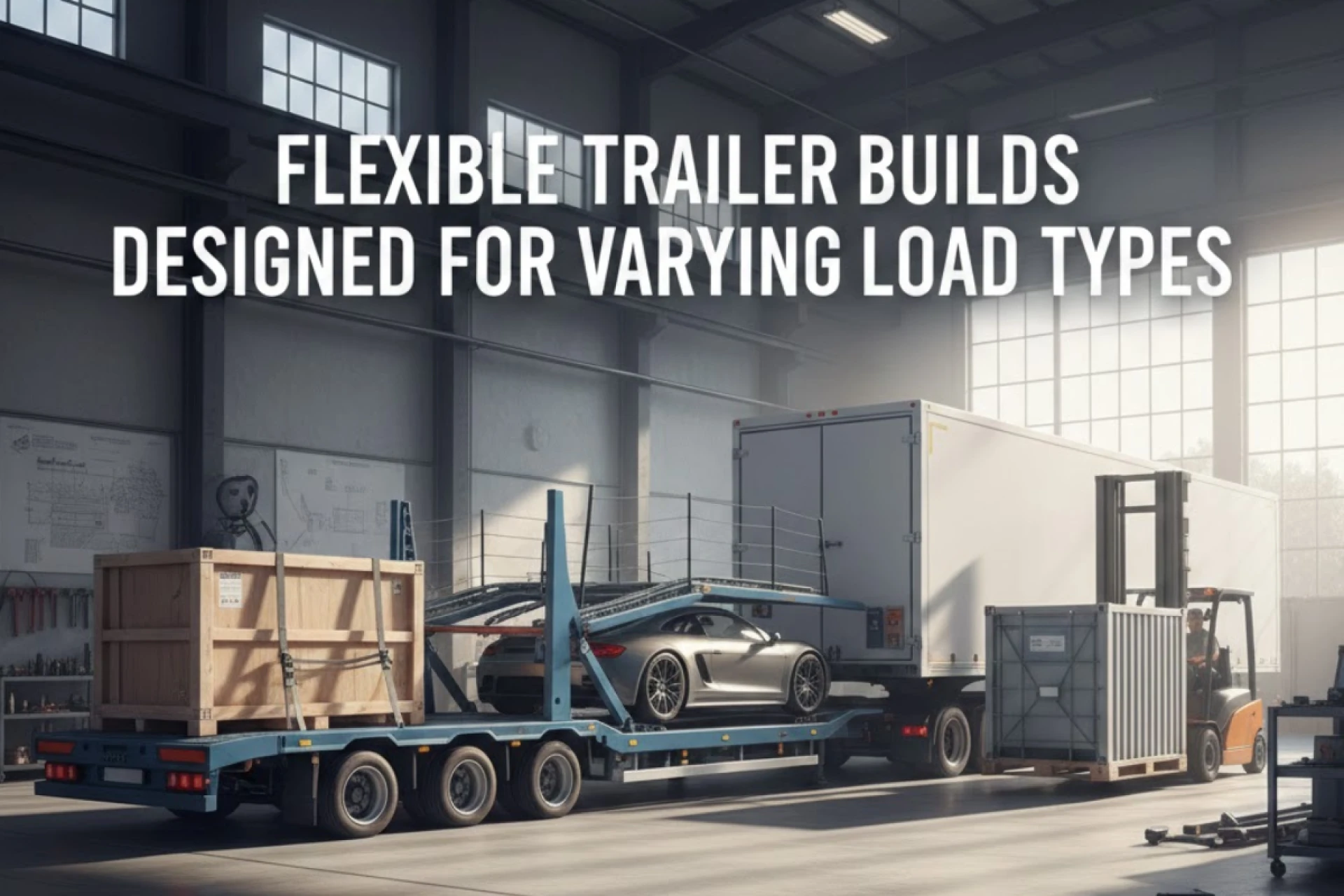

We build trailers for real work. The kind that changes week to week, sometimes day to day. One morning it’s landscaping gear, muddy and awkward. By evening it’s pallets, stacked a little uneven because that’s how life goes. That’s where custom built utility trailers and flexible trailer builds start to matter—not as a buzz phrase, just as a quiet relief when things fit without forcing it.
Right in the middle of these conversations sits custom built utility trailers. Not as a showpiece. More like a reliable tool that doesn’t complain when the job changes again.
We’ve seen loads that behave nicely. We’ve also seen loads that shift, rattle, and test patience. Flexible builds exist because loads are rarely polite.
Why Load Variety Changes Trailer Design
Different loads ask different questions. Dirt bikes want tie-down points placed with care. Construction materials care about weight spread. Furniture wants protection from sharp edges and sudden movement. A fixed layout struggles here. A flexible one adapts without drama.
We design with that reality in mind. Adjustable rails. Movable anchor points. Deck surfaces that can handle scrapes today and crates tomorrow. Nothing flashy. Just thought-through decisions based on how people actually load trailers, not how diagrams say they should.
Sometimes a load looks fine until the first turn. That’s when design shows its value.
Adjustable Deck Systems That Actually Get Used
Decks take abuse. Boots, tires, steel edges. A flexible trailer build often starts underfoot. Modular decking panels allow changes without tearing everything apart. Wood sections can swap with steel. Flat surfaces can accept side kits one week and stay open the next.
We favor deck layouts that welcome change. No over-complication. Panels lock in place, come out without swearing, and sit flat enough to trust at highway speeds.
Some folks ask for permanent fixtures. They usually change their minds after the third job.
Side Configurations That Make Sense
Fixed sides look tidy. Until they don’t fit the load. Flexible trailers lean into removable and fold-down side walls. Stake pockets placed with intent allow height changes without cutting or drilling.
High sides for bulk materials. Low sides for equipment. No sides at all for wide loads. The trailer shouldn’t argue with you. It should wait and adjust.
We’ve watched people struggle with loads because sides were just a few inches too tall. That memory sticks.
Axle Placement and Weight Balance
This part doesn’t get enough attention. Load type affects balance more than people expect. A flexible build considers axle placement that tolerates change. Tandem axles help, yes, though spacing matters more than count.
We tune balance so trailers feel calm even when the load isn’t perfect. Real-world loads rarely land dead center. A trailer that forgives small mistakes saves time and nerves.
You feel it when towing. Or when you don’t feel anything at all, which is the point.
Tie-Down Flexibility Without Clutter
Tie-down points should exist where hands naturally reach. Not just along the edges. Adjustable E-track systems shine here. They allow restraint wherever needed, not where a welder guessed years ago.
We place anchor options across the deck, along walls, near ramps. Enough to handle odd shapes. Not so many that the trailer looks confused.
A good tie-down layout fades into the background. You only notice it when it’s missing.
Ramps That Match the Load
Loads roll, slide, or drop. One ramp style rarely fits all. Flexible trailer builds often include ramp options that swap or fold. Split ramps for wheeled gear. Full-width ramps for carts. Slide-out ramps for lighter equipment.
Angle matters. Grip matters. Noise matters too, especially early mornings. We pay attention to that.
A ramp should feel steady underfoot. If it doesn’t, something’s off.
Material Choices That Age Well
Steel stays honest. Aluminum saves weight. Treated wood feels familiar. Flexible builds often mix materials, not to show off, but to handle wear where it happens.
We choose materials based on contact points. Where loads scrape. Where water pools. Where sun hits hardest. A trailer that ages well keeps its value and its manners.
Rust has a way of teaching lessons. We listen.
Brake and Suspension Choices for Changing Loads
Light loads behave differently than heavy ones. Suspension tuning matters. Leaf springs with a forgiving range keep trailers steady across load swings. Electric brakes with proper calibration respond better under mixed conditions.
We don’t chase extremes. We build for the middle ground where most loads live.
A smooth stop says more than a spec sheet.
Electrical and Accessory Flexibility
Lighting setups change as trailers change roles. Side markers might need moving. Rear lighting may shift with ramp styles. Flexible wiring paths save headaches later.
Accessory mounts follow the same idea. Toolboxes, spare tires, jacks. Bolt-on options allow rearranging without scars.
A trailer should grow with the work. Or at least not resist it.
Real Work, Real Adaptation
We’ve seen flexible trailer builds used by contractors, event crews, farmers, and weekend haulers. Different worlds, same need. Loads change. Schedules shift. Weather interferes.
Trailers that adapt quietly earn trust. Not because they shout features, but because they don’t get in the way.
There’s satisfaction in loading without thinking too hard.
Built for Change, Not Trends
Trends pass. Jobs stay. Flexible trailer builds exist for people who don’t know what next month looks like, and are fine with that.
We build with that mindset. Space to adjust. Parts that move. Designs that forgive.
That’s not romance. That’s respect for real work.

























Sign in to leave a comment.