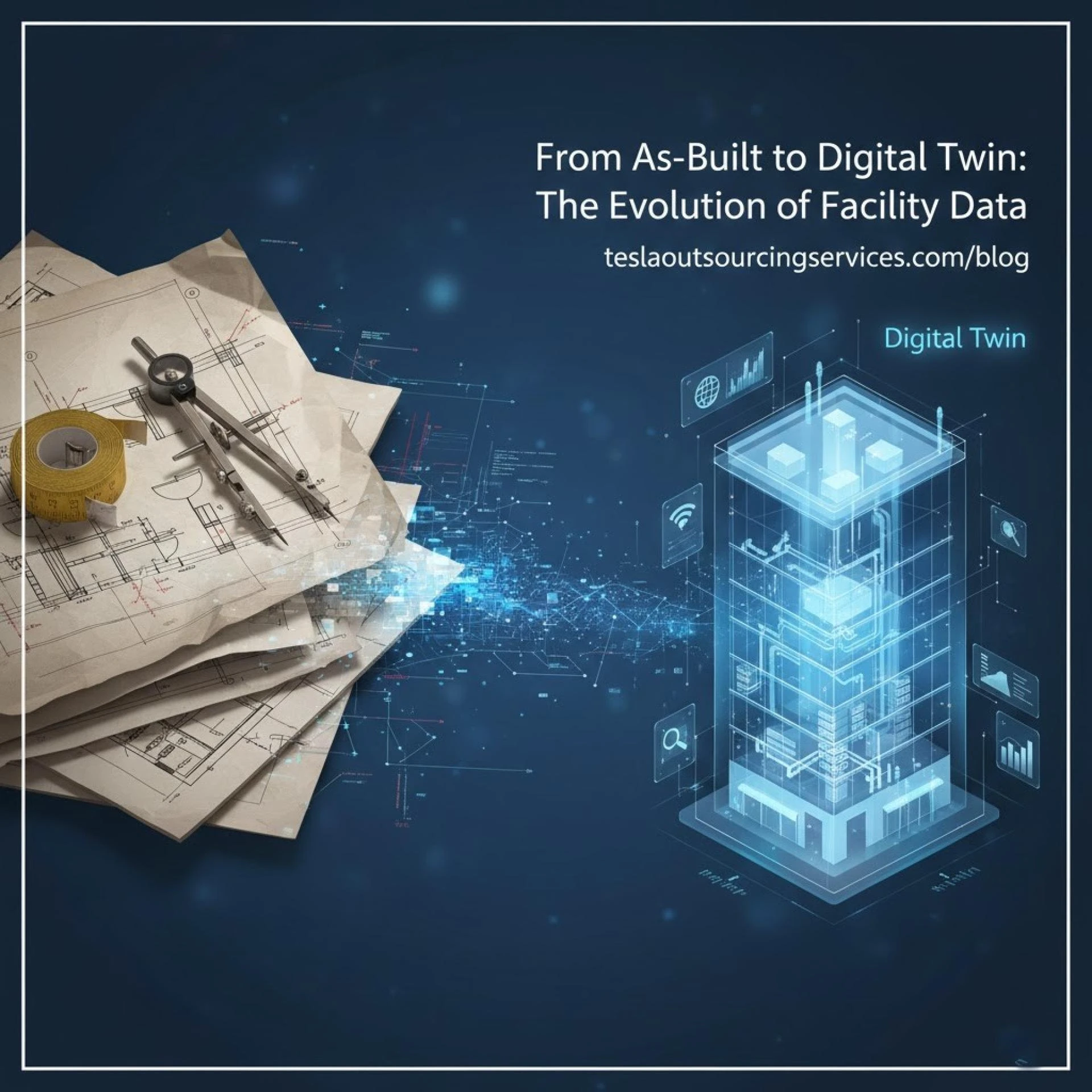

The lifecycle of a building, from design to demolition, generates an immense volume of data. For decades, this information was siloed, trapped in static "as-built" drawings, maintenance manuals, and disparate spreadsheets. This fragmented approach led to inefficiencies, costly errors, and a significant disconnect between design intent and operational reality.
Today, the AEC and Facilities Management (FM) industries are undergoing a profound transformation. The concept of the digital twin is emerging as the ultimate evolution of facility data, offering unprecedented insights and operational advantages that far surpass traditional as-built documentation.
The Limitations of As-Builts
Traditional as-built drawings, while essential, are a snapshot in time. They document the building's condition upon completion, but quickly become outdated. Equipment changes, renovations, and routine maintenance are rarely comprehensively recorded, leading to:
- Maintenance Headaches: FM teams struggle to locate crucial information, leading to longer repair times and higher operational costs.
- Inefficient Upgrades: Planning for expansions or retrofits is hampered by a lack of accurate, current data, increasing risks and budgets.
- Energy Waste: Without real-time performance data, optimizing building systems for energy efficiency becomes a guessing game.
The Power of the Digital Twin
A digital twin is a dynamic, virtual replica of a physical asset, system, or process. Unlike a static as-built, it continuously updates with real-time data from sensors, BIM models, IoT devices, and operational systems. This creates a living, breathing model that mirrors the facility's current state and predicts its future performance.
For facility owners, FM teams, and asset managers, the real benefits of digital twins are tangible:
- Predictive Maintenance: Sensors feed data on equipment performance into the twin, allowing for predictive maintenance schedules that prevent failures before they occur, drastically reducing downtime and costs.
- Optimized Operations: Real-time data on occupancy, temperature, and energy consumption enables intelligent automation, optimizing HVAC and lighting systems for comfort and efficiency.
- Enhanced Space Utilization: Tracking space usage patterns helps organizations optimize layouts, identify underutilized areas, and improve employee experience.
- Lifecycle Management: From initial design validation to end-of-life decommissioning, the digital twin provides a continuous, accurate record, facilitating smarter long-term asset management.
Bridging the Gap: Data Integration is Key
The transition from as-built to digital twin isn't just about technology; it's about data integration. It requires a strategic approach to connect disparate systems—BIM, CMMS (Computerized Maintenance Management Systems), BMS (Building Management Systems), and IoT networks—into a unified platform. This holistic view transforms raw data into actionable intelligence, empowering facility managers to make informed decisions that extend asset lifespans, reduce operational expenses, and create more sustainable, human-centric environments.




















Sign in to leave a comment.