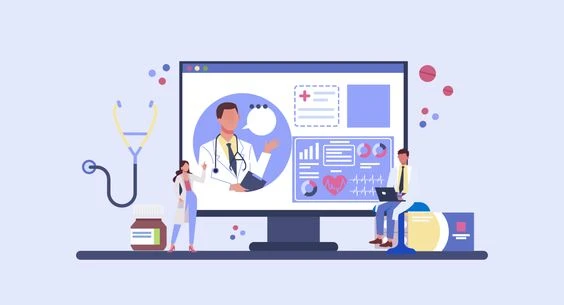

Healthcare software development is a rapidly evolving field, driven by advancements in technologies such as artificial intelligence (AI), the Internet of Things (IoT), and blockchain. This guest post will explore the latest trends in healthcare software development, focusing on the impact of Natural Language Processing (NLP) in healthcare and the development of healthcare apps.
AI in Healthcare
AI has the potential to revolutionize healthcare by improving outcomes and reducing costs. One notable example is AI-assisted robotic surgery, which can lead to a 21% reduction in a patient's hospital stay. AI can also help healthcare providers develop personalized treatment plans for patients based on their genetic makeup, medical history, and lifestyle factors.
IoT in Healthcare
IoT devices, such as wearable sensors, are collecting valuable health-related data from physical (body) blood pressure (BP), body temperature, respiration rate, and body motion. This data can be used to monitor patients' health and provide timely interventions.
Blockchain in Healthcare
Blockchain technology is being used to develop secure and transparent electronic health records (EHRs), which can improve patient care and reduce the risk of medical errors.
NLP in Healthcare
NLP is playing a significant role in healthcare by extracting meaningful insights from unstructured text data in electronic health records. This unstructured data can be turned into structured text, making it more accessible and usable for end-users and patients.
Healthcare App Development Cost
The cost of developing a healthcare app can vary depending on the platform, features, and complexity. For a native healthcare app, the cost can range between $350,000 and $400,000, while a hybrid healthcare app can cost up to $600,000 The development cost for an MVP (Minimum Viable Product) can be as low as $30,000.
Conclusion:
Healthcare Software Development is a transformative force in the healthcare industry. Technologies such as AI, IoT, and blockchain are driving innovation, while NLP is helping to make sense of the vast amounts of unstructured data generated by the healthcare system. As healthcare apps continue to gain traction, the cost of developing these apps is expected to decrease, making them more accessible to a wider range of healthcare

























Sign in to leave a comment.