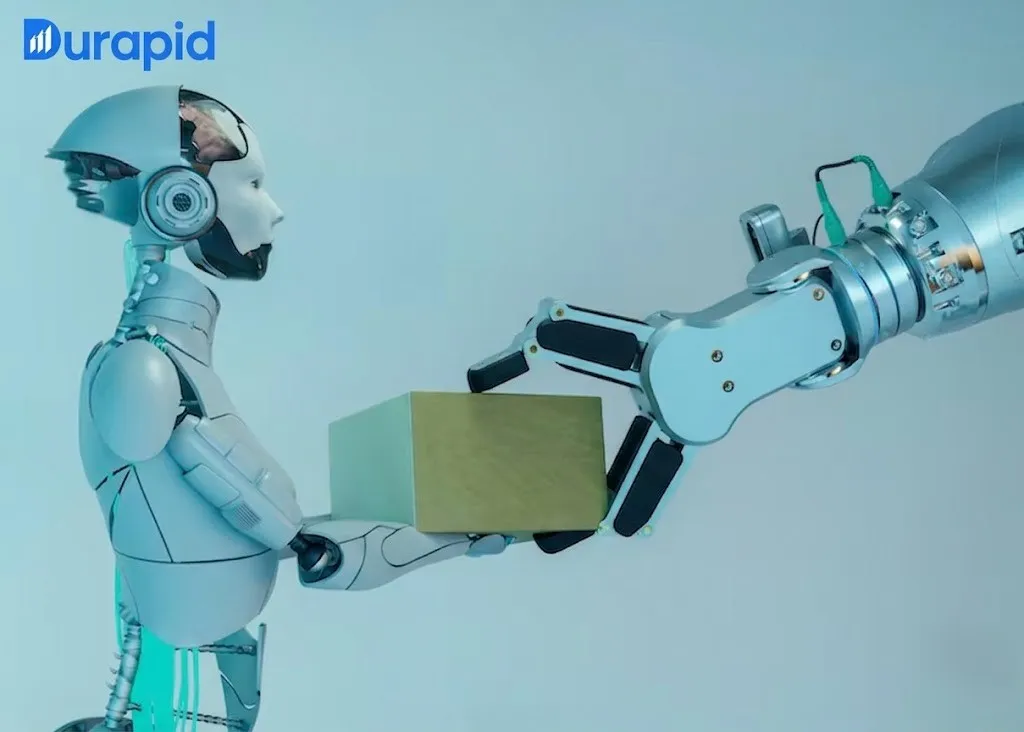

In most cities, advanced digital tools are marketed primarily as operational aids. In Los Angeles, operational success now depends on more robust solutions like AI in inventory management, which has shifted from experimental phase to standard practice through 2026. The reason is straightforward: the old approach simply stopped working. Operations teams here do more than track equipment, they must prevent inventory, procurement, and fulfillment from unraveling in a market that moves faster than most planning cycles. To meet these challenges, many organizations now integrate enterprise asset management software as a foundational layer for business resilience, rather than just an optional upgrade.
Warehouses in the San Fernando Valley are sitting on overstock they can't liquidate. Retailers from Downtown LA to Santa Monica are watching customers walk out because items aren't on the shelf. These aren't edge cases. They're what happens when inventory management relies on spreadsheets and gut instinct in a supply chain that's too complicated for either.
What Is AI Inventory Management and Why Does It Matter Now?
Inventory got complicated faster than most buying teams were ready for. A promotion overperforms. A supplier misses a window. Regional demand shifts for no obvious reason. Any one of these is annoying but manageable. All of them in the same quarter, and the spreadsheet just stops working.
That is where ai in inventory management comes in. It runs machine learning and predictive analytics against live data continuously, watching point-of-sale numbers, marketing workflows, weather signals, and promotion calendars at the same time. A conventional reorder-point system tells you what sold last week. By the time that lands on a buyer's desk, the situation has already moved. An AI model is not catching up to what happened. It is adjusting to what is happening right now.
The practical outcome is fewer stockouts and less dead stock sitting in a warehouse. Not zero, but notably less. Demand forecasting, slow-mover flagging, automated restocking, supplier tracking, and multi-location coordination. Each of those running automatically means fewer manual errors and faster response times. Operations teams feel it in their day-to-day life. Finance teams see it in the numbers at the end of the quarter.
How Fast Is AI Inventory Management Growing?
McKinsey's State of AI report puts 78% of businesses using AI in operations now, with nearly half of those focused specifically on inventory or supply chain. The global ai in inventory management market hit $5.7 billion in 2023. By 2028 that number is projected to reach $21 billion. At 29.5% annual growth, this is not a category that is still figuring out whether it works. That's not hype math. That's businesses reordering how they handle stock because the old way is costing them money.
For LA in particular, the competitive gap between early adopters and manual-process holdouts is already visible. Logistics companies running AI-assisted inventory are outbidding rivals on fulfillment time. That gap widens every quarter.
Where AI Inventory Management Is Making an Impact in Los Angeles
LA's geography creates an unusual set of inventory problems. The Port of LA feeds one of the country's largest consumer markets. Roughly 13 million people, spread across a metro area with wildly different buying patterns by neighborhood and category. Standard inventory tools weren't built for that level of variation.
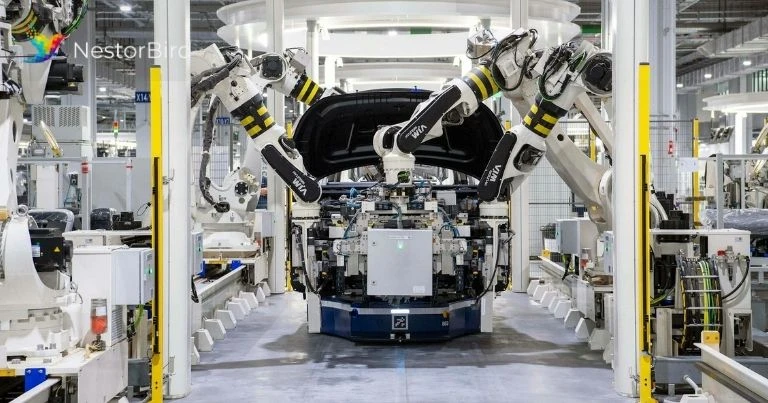
Retailers in Melrose and the Fashion District are using AI to manage SKU catalogs with hundreds of high-variance items, reducing the markdowns that follow poor buy decisions. Healthcare distributors supplying LA hospital networks use AI for expiry tracking and compliance management. Getting stock levels wrong there isn't just a financial problem. In manufacturing zones like the City of Industry and Compton, companies are combining inventory control with ai in asset management, connecting raw material tracking and production scheduling instead of running them as separate systems. Different industries, same underlying need: a system that processes more variables than any human team can.
Top Industry Use Cases Driving AI Inventory Management Adoption
AI in inventory management is not one product. What it actually does depends on the problem.
Retailers in the Inland Empire use cloud-based predictive models on Azure and AWS to project SKU-level demand weeks out, cutting carrying costs by 20 to 25%. POS-integrated systems handle automated purchase orders, reducing manual work by 40% and stockouts by 30%. LA hospitals use RFID-enabled AI to track expiry dates and compliance records, bringing product waste down 18%. Third-party logistics providers use AI to anticipate where demand is heading across their warehouse networks. Fewer surprise transfers between facilities, down 22% by most accounts.
| Industry | Key AI Use Case | Reported Improvement |
| Retail | Demand forecasting and auto-replenishment | 20 to 25% cost reduction |
| Healthcare | Expiry tracking and compliance automation | 18% wastage reduction |
| E-Commerce | SKU-level prediction models | 30% fewer stockouts |
| Manufacturing | Supplier signal monitoring | 72-hour early shortage detection |
| Logistics | Multi-location stock balancing | 22% fewer transfers |
Most businesses that go into implementation with clean data and realistic expectations hit comparable results within 9 to 12 months.
How AI Inventory Management Cuts Costs and Eliminates Stock Issues?
Poor inventory management costs US retailers over $1 trillion a year. About $471 billion from excess stock and $634 billion from lost sales due to stockouts. AI in inventory management addresses both at the same time, which is the part that surprises people. It recommends leaner purchasing based on sell-through velocity and markdown rates. It triggers replenishment from real-time demand signals pulled from AI Marketing Agents and marketing workflows, not from last quarter's averages.
Toyota's AI supply chain project cut inventory costs by 10 to 15% and accelerated inventory turnover by 20% as of 2024. For an LA business with $10 million in annual inventory spend, a 15% improvement returns $1.5 million to the budget. That number does a lot of convincing on its own.
Why Do Savings Go Beyond Just Numbers?
The financial case is clear. But there's something that doesn't appear in any ROI report. When AI handles the routine work, the forecasting, the reorder triggers, the stockout alerts, the people running operations actually get to focus on decisions that matter. Strategy instead of damage control. And when customers get reliable order fulfillment, they come back. In LA's retail environment, a lost customer from an out-of-stock item is a real cost, just one that rarely shows up in the inventory budget line.
When NOT to Use AI Inventory Management
AI forecasting models need at least two years of clean sales and inventory history to be worth trusting. They work best with broad SKU catalogs and high transaction volumes. Bespoke or one-off product businesses, or companies with less than 12 months of operating history, won't get the forecasting accuracy that makes the investment worthwhile. The other hard requirement is integration. Without solid POS and ERP data feeding the system, AI in inventory management adds a layer of complexity over existing problems. That's not an improvement.
A Step-by-Step Roadmap to AI Inventory Management Implementation
Step 1: Data Audit and Cleansing
Everything starts here, and most teams find out too late that this step takes longer than expected. You need 24 months of sales, purchase, and supplier records pulled into one place and actually cleaned, not just moved. Snowflake and Azure Data Lake are what most teams use. The problem is that bad data does not announce itself. It just quietly produces forecasts that feel plausible and are quietly wrong. Fixing the data basis comes first and foremost.
Step 2: Baseline Measurement
Write down where things stand before the system touches anything. Stockout rate, inventory turnover, carrying cost, order accuracy. All of it. This feels like busywork and almost every team deprioritizes it. In a budget discussion six months later, someone inquires about the AI's true impact on the company. That question remains unanswered in the absence of a baseline. Do not skip this.
Step 3: Model Selection and Integration
Blue Yonder, RELEX, and Oracle Fusion are solid starting points for most enterprise setups. The honest question is whether your situation fits what those platforms were built for. Unusual demand patterns, a heavily customized ERP, product categories that behave differently from standard retail assumptions. If any of that applies, bending an off-the-shelf solution to fit usually costs more time and money than starting with a custom build through AI/ML Development Services. Worth figuring out before signing a contract.
Step 4: Pilot on a Single Category or Location
One product category or one site, 60 to 90 days, then a proper comparison of what the model predicted against what actually happened. The point of a pilot is not to build confidence for the board deck. It is to find the problems while they are still contained. The data feed that drops records overnight. The edge case the model handles badly. The integration that works in testing and breaks under real transaction volumes. All of that is much cheaper to fix on one site than after a full rollout.
Step 5: Full Rollout and Continuous Training
Expand across all inventory lines and automate model retraining, typically using tools like Apache Airflow, so the system updates as markets change. A staged rollout cuts integration complications by around 40% compared to going system-wide immediately.
How E-Commerce, Healthcare, and Manufacturing Use AI for Stock Control?
E-commerce brands in LA are connecting AI Marketing Agents directly to inventory systems. When a campaign goes live and demand spikes, replenishment triggers within hours rather than sitting in a two-week approval queue. Promotions and stock move together.
Hospitals are running AI forecasting across both inventory and ai in asset management modules, tracking consumables and equipment in a single system. The goal is straightforward: eliminate the scenario where a supply shortage or equipment gap becomes a patient care problem.
Manufacturers are processing hundreds of supplier signals at once, delivery schedules, pricing changes, risk flags. The practical outcome is proactive adjustments instead of emergency orders, and a reported 17% drop in rush purchasing costs.
The thread connecting all three is integration. AI in inventory management produces real value when it connects to the full data stack: ERP, logistics platforms, supplier portals, and marketing workflows built through reliable AI/ML Development Services. Isolated, it's a forecasting tool. Connected, it changes how the whole operation runs.
Summary
AI in inventory management is working in LA in 2026 because it solves a real problem: inventory is too complex and too fast-moving for manual processes to handle accurately. The businesses getting results started with clean data, ran a proper pilot, and connected their AI system to the broader stack, ERP, marketing workflows, and AI Marketing Agents included. The cost savings are real. The operational relief is real. The companies still running spreadsheets are finding that out the hard way.




























Sign in to leave a comment.