
The promise of artificial intelligence has long revolved around the concept of autonomy—the ability for machines to not only process information but to act on it independently. In the current technological landscape, this promise is finally becoming a reality through the advent of sophisticated AI agents. However, the gap between a demonstration of a simple chatbot and a fully functional, reliable autonomous system is vast. Businesses are quickly learning that while generating text via a Large Language Model (LLM) is relatively straightforward, building an agent that can reliably execute complex workflows, handle financial transactions, or manage sensitive customer data requires a level of engineering rigor that goes far beyond prompt engineering. This is where the expertise of a specialized ai agent development company becomes indispensable. These firms do not merely dabble in AI models; they architect robust digital ecosystems designed to function with the consistency and reliability of traditional enterprise software, ensuring that the transition from human-operated to autonomous workflows is seamless, secure, and scalable.
Reliability is the defining metric for any autonomous system intended for business use. A model that hallucinates facts or breaks down when faced with an unexpected input is a novelty; an agent that operates critical business functions must be held to a higher standard. An ai agent development company approaches this challenge by treating the AI model as a component—albeit a powerful one—within a larger, structured software architecture. This architecture is built to contain the probabilistic nature of AI, implementing checks, balances, and validation loops that ensure the agent behaves predictably even when the underlying model output is variable. By leveraging comprehensive ai agent development solutions, organizations can mitigate the risks associated with AI volatility, transforming raw potential into dependable operational capacity. This article explores the specific methodologies and technical strategies that development partners employ to build systems that businesses can trust.
The Architecture of Reliability: Beyond the Model
The foundation of a reliable autonomous system lies in its cognitive architecture. While many developers focus on the "brain" (the LLM), a professional ai agent development company focuses on the "nervous system." This involves designing a framework where the agent can plan, reason, and execute tasks in a structured manner. One of the primary methods used to achieve this is the implementation of cognitive architectures such as ReAct (Reasoning and Acting) or Plan-and-Execute patterns. In these frameworks, the agent is not simply asked to provide an answer; it is forced to articulate a thought process, create a plan of action, execute specific tools, and then observe the results before proceeding. This structured approach allows for greater transparency and error correction. If an agent veers off course, the architecture allows the system to catch the error at the reasoning stage rather than at the final output stage, significantly increasing the reliability of the system.
Furthermore, modularity is a key principle in building these systems. A monolithic agent that tries to do everything is prone to failure. Instead, ai agent development solutions often involve multi-agent systems where distinct agents specialize in different tasks. For instance, in a customer service scenario, one agent might handle natural language understanding and intent recognition, while a second agent queries the database for order history, and a third agent handles the logistics of processing a refund. By decomposing complex tasks into smaller, manageable sub-tasks handled by specialized agents, the system becomes more robust. If one component fails, it can be isolated and restarted without crashing the entire workflow. This architectural modularity is a hallmark of professional ai agent development services, ensuring that the system is maintainable and resilient against localized errors.
In addition to modularity, the integration of deterministic code with probabilistic models is crucial. An AI agent might be great at understanding a user's request, but calculating a complex discount or processing a payment should likely be handled by traditional, deterministic code. A skilled ai agent development company builds "guardrails" around the agent. These are software wrappers that define strict boundaries for the agent's behavior. For example, while the agent decides what to do, the guardrails ensure that it cannot perform an action outside of its permission scope or output data in a format that the downstream systems cannot process. This synthesis of AI flexibility and software rigidity is what allows autonomous systems to be trusted in enterprise environments where consistency is non-negotiable.
Ensuring Consistency Through Advanced Memory Management
Reliability in autonomous systems also stems from the ability to maintain context and learn from past interactions. Standard LLMs are stateless, meaning they forget everything once a session ends. For an agent to be truly reliable over the long term, it requires sophisticated memory management. An ai agent development company implements various types of memory systems to solve this. Short-term memory handles the immediate context of a conversation, ensuring the agent doesn't lose track of the topic. Long-term memory, often powered by vector databases, allows the agent to store and retrieve information from past interactions or proprietary knowledge bases. This capability, often referred to as Retrieval-Augmented Generation (RAG), ensures that the agent has access to the right information at the right time, reducing the likelihood of hallucinations and improving decision accuracy.
However, building these memory systems is not just about storage; it is about retrieval efficiency and relevance. A robust ai agent development service includes the engineering of retrieval pipelines that can sift through millions of data points to find the exact needle in the haystack required for the task. This involves fine-tuning embedding models and optimizing vector search indices. When an agent can reliably access and utilize historical data, it transitions from being a simple processor to a knowledgeable partner. This capability is essential for use cases like legal research or technical support, where the reliability of the answer is directly tied to the agent's ability to recall specific, relevant precedents or documentation.
Moreover, memory systems enable learning. By storing logs of successful and failed interactions, developers can analyze this data to refine the agent's prompts and strategies. This feedback loop is vital for continuous improvement. An ai agent development company sets up analytics pipelines that monitor the agent's performance over time. If specific types of queries consistently lead to errors, the development team can introduce new training data or adjust the agent's reasoning logic. This commitment to lifecycle management ensures that the system doesn't just work reliably at launch but continues to improve and adapt to the changing needs of the business.
Testing, Evaluation, and Quality Assurance
Testing autonomous AI systems requires a paradigm shift from traditional software testing. In standard software development, tests are binary—either the function returns the correct value, or it doesn't. With AI agents, outputs can be variable and subjective. Therefore, an ai agent development company employs a range of specialized evaluation techniques to ensure reliability. One common method is the use of "LLM-as-a-judge," where a separate, highly capable model evaluates the output of the agent for accuracy, tone, and safety. This automated evaluation allows for rapid testing across thousands of scenarios that would be impossible to check manually. By rigorously testing the agent against diverse datasets, developers can identify edge cases and failure modes before the system is deployed.
Furthermore, simulation environments play a critical role. Before an agent is allowed to interact with real customers or live databases, it is often deployed in a sandbox environment that mimics the real world. Here, the agent can attempt to complete tasks without the risk of causing actual damage. A comprehensive ai agent development solution includes the creation of these simulation environments, allowing the agent to learn from its mistakes safely. For example, an agent designed for cybersecurity might be tested in a simulated network where it attempts to identify and neutralize threats. This rigorous stress testing is essential for building confidence in the system's reliability and is a core component of professional ai agent development services.
Red teaming is another essential practice. This involves a team of human testers actively trying to break the agent or force it to behave inappropriately. They might try to inject malicious prompts, confuse the agent with contradictory instructions, or exploit logic gaps. The insights gained from red teaming are used to harden the system's defenses and refine its refusal mechanisms. An ai agent development company that prioritizes security will make red teaming a standard part of their development lifecycle. This adversarial approach to testing ensures that the autonomous system is not only reliable under normal conditions but is resilient against malicious actors and unexpected inputs.
Integrating Tools and APIs Safely
For an AI agent to be truly useful, it must be able to interact with the outside world. It needs to send emails, update CRM records, query APIs, and perhaps even write code. However, granting an autonomous system the ability to execute actions introduces significant risk. A reliable ai agent development company implements strict protocols for tool integration. This starts with the principle of least privilege. An agent should only have access to the specific tools and APIs necessary for its defined tasks. For example, a marketing agent should not have access to financial transaction APIs. This granular access control limits the "blast radius" if the agent were to ever malfunction or be compromised.
Furthermore, the interface between the agent and the external tools must be meticulously engineered. APIs often have strict input requirements and can return complex error messages. An agent that sends malformed requests can cause system errors. Ai agent development solutions therefore include the development of robust "tool wrappers." These are code interfaces that sit between the agent and the API, validating the agent's inputs and sanitizing the API's outputs. If the agent tries to send an invalid date format, the wrapper catches it and prompts the agent to correct it before the request is sent. This layer of validation ensures that the agent interacts with external systems reliably and reduces the chances of breaking downstream software.
Handling API failures is another critical aspect. External services go down, networks time out, and rate limits are hit. A reliable autonomous system must be able to handle these eventualities gracefully. A professional ai agent development service programs agents with retry logic and fallback strategies. If an agent tries to send an email via a primary provider and fails, it should automatically switch to a secondary provider or queue the task for later. This resilience engineering ensures that the agent can maintain productivity even when parts of the digital environment are unstable. It is this focus on real-world operational stability that distinguishes a production-ready agent from a prototype.
Governance, Security, and Compliance
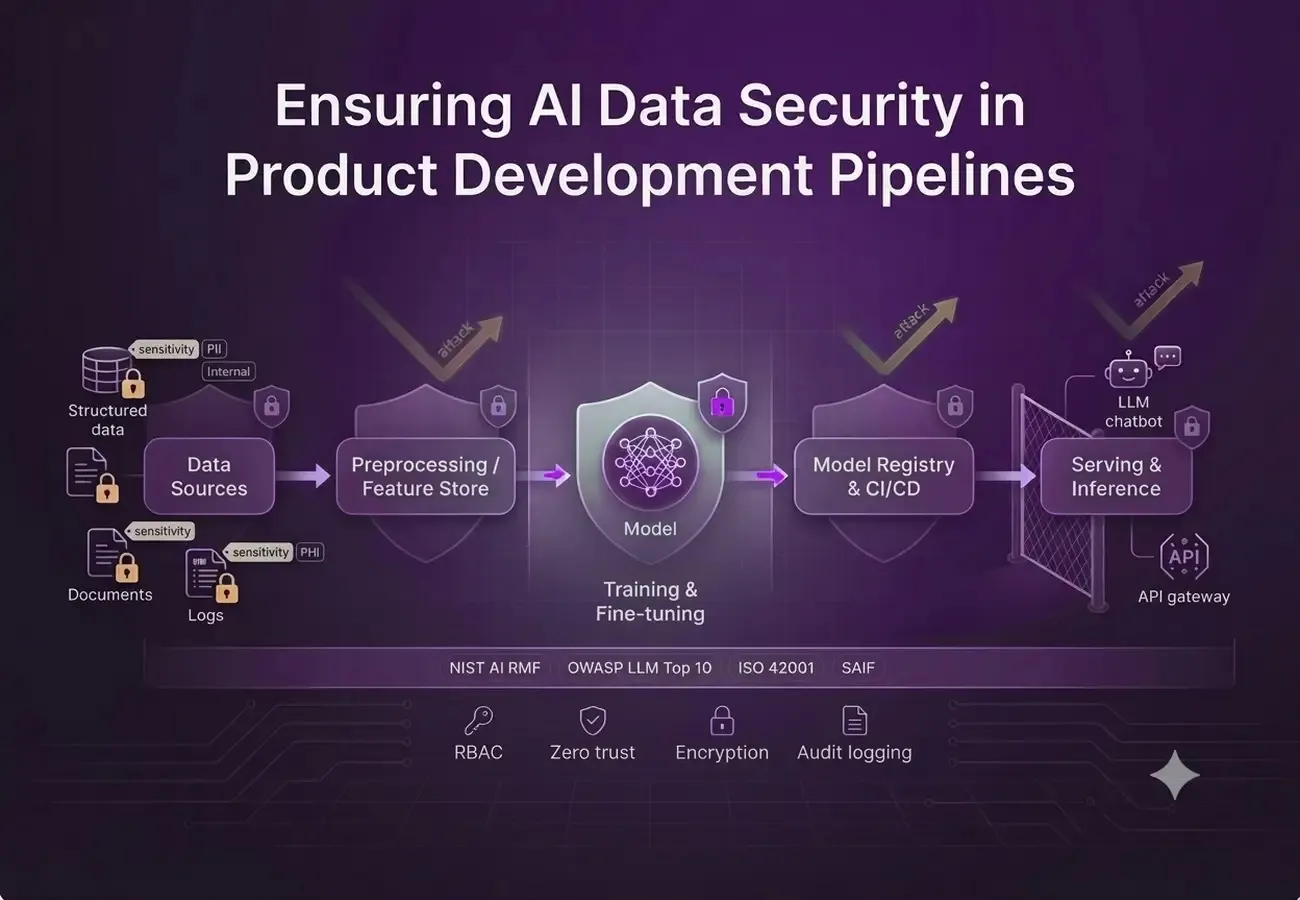
In the enterprise sector, reliability is inseparable from security and compliance. An autonomous system cannot be considered reliable if it poses a security risk or violates regulatory standards. An ai agent development company integrates governance frameworks directly into the agent's architecture. This includes comprehensive logging and audit trails. Every action the agent takes, every decision it makes, and every piece of data it accesses should be logged. This not only helps in debugging but is essential for compliance with regulations like GDPR or HIPAA. If an agent makes a mistake, the audit trail allows investigators to understand exactly what happened and why, providing the accountability that businesses require.
Data privacy is also paramount. Agents often process sensitive information, such as customer names, addresses, or financial details. Ai agent development solutions must incorporate privacy-preserving techniques. This might involve data masking, where sensitive information is hidden from the agent's view unless absolutely necessary, or the use of local models that process data on-premise rather than sending it to the cloud. A reputable ai agent development company will work closely with a client's legal and security teams to ensure that the agent's design aligns with the organization's data governance policies. This careful attention to data handling builds trust and ensures that the deployment of autonomous systems does not create legal liabilities.
Finally, user authentication and access control are vital. An autonomous system should know who is interacting with it and adjust its behavior accordingly. An agent serving a junior employee should not reveal confidential strategic documents. Implementing robust identity management ensures that the agent adheres to the organization's hierarchy and access policies. By embedding these security measures into the core of the agent, rather than as an afterthought, ai agent development services provide a secure foundation for autonomy. This proactive stance on security and governance is what allows businesses to deploy AI agents with confidence, knowing that their operations are protected by rigorous engineering standards.
The Human-in-the-Loop Paradigm
Despite the push for autonomy, the most reliable systems often incorporate a "human-in-the-loop" (HITL) design. This acknowledges that there are situations where an AI agent's confidence might be low, or the stakes of the decision are too high to leave to a machine. A sophisticated ai agent development company designs agents that know their limits. When an agent encounters a complex edge case or a sensitive request, it can pause its process and request human intervention. This might look like drafting an email but holding it in the drafts folder for approval, or flagging a transaction for review. This collaborative model ensures that the speed of automation is balanced with the judgment of human oversight, resulting in a system that is both efficient and reliable.
The implementation of HITL requires careful UI/UX design. The interface for the human reviewer must be intuitive, showing them exactly what the agent intends to do and why. It should be easy for the human to approve, reject, or modify the agent's proposed action. Ai agent development solutions often include the development of custom dashboards and control panels for this purpose. By streamlining the review process, businesses can handle exceptions quickly without bottlenecking the workflow. This creates a safety net that catches potential errors before they reach the customer or the production environment.
Over time, the data collected from these human interventions can be used to train the agent. When a human corrects the agent, that correction serves as a valuable data point for fine-tuning the model. This allows the agent to learn from its mistakes and gradually reduce the frequency of human escalations. An ai agent development company sets up these pipelines to ensure that the system evolves. This transition from high-touch oversight to low-touch supervision is the ultimate goal of autonomous systems, where reliability is achieved not through rigid programming, but through continuous learning and adaptation within a safe, governed framework.





























Sign in to leave a comment.