

Augmented Reality (AR) is no longer a futuristic concept limited to science fiction. It is now a powerful tool transforming various sectors, and healthcare is no exception. By superimposing digital information onto the real world, AR provides a new way of viewing and interacting with data, which has significant implications for medical training, diagnosis, treatment, and patient care. This blog will explore the multifaceted impact of AR on the healthcare industry, highlighting its benefits, applications, and future potential.
Enhancing Medical Training and Education
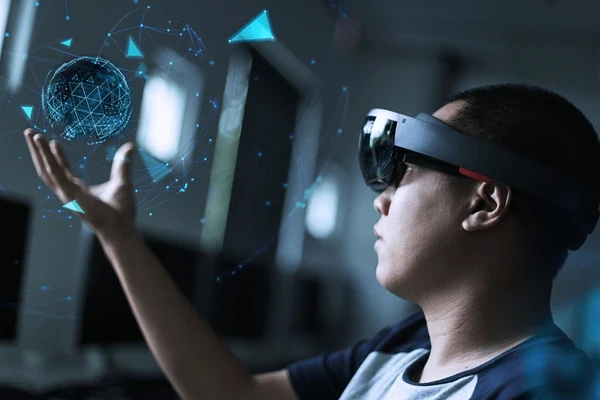
Interactive Learning: AR offers medical students and professionals interactive learning experiences. Traditional methods, such as textbooks and cadaver dissections, are being complemented and even replaced by AR simulations. These simulations provide a 3D view of the human anatomy, allowing users to explore and manipulate organs, tissues, and systems in a highly detailed and realistic manner.Surgical Training: AR enables surgeons to practice complex procedures in a risk-free environment. Platforms like Microsoft HoloLens allow trainees to perform virtual surgeries with real-time feedback. This hands-on experience is invaluable, as it helps build confidence and competence without the ethical and practical limitations of practising on live patients. Learn more.Continuing Education: For practising physicians, AR can be used for ongoing education and skill development. AR applications can provide real-time updates on new procedures, techniques, and technologies, ensuring that healthcare providers stay current with the latest advancements.Improving Diagnostic Accuracy
Enhanced Imaging: AR can overlay medical images, such as MRI or CT scans, onto a patient’s body. This capability allows doctors to see inside the patient without making an incision, improving the accuracy of diagnoses and planning for surgical procedures. For example, a cardiologist can visualize a patient’s heart in 3D to better understand anomalies and plan interventions.Remote Diagnosis: AR facilitates remote consultations and diagnostics. Specialists can use AR to view patient data and images in real time, providing accurate diagnoses without the need for physical presence. This is particularly beneficial for patients in rural or underserved areas who may not have immediate access to specialists.Revolutionizing Surgical Procedures
Preoperative Planning: Surgeons can use AR to plan and simulate surgeries. By visualizing the patient’s anatomy and the surgical site in 3D, surgeons can rehearse the procedure, identify potential challenges, and devise optimal strategies. This reduces the likelihood of complications and improves surgical outcomes.Intraoperative Assistance: During surgery, AR can provide real-time guidance and overlays, showing surgeons exactly where to make incisions and how to navigate complex anatomy. Tools like augmented reality headsets can display critical information directly in the surgeon’s field of view, minimizing the need to look away from the surgical site. A great example is Hippo.Minimally Invasive Surgery: AR aids in performing minimally invasive surgeries, where precision is crucial. By providing a detailed view of the internal structures, AR helps surgeons make smaller incisions, which leads to faster recovery times and reduced risk of infection.Enhancing Patient Care and Experience
Patient Education: AR can improve patient understanding of their conditions and treatments. By visualizing their anatomy and the effects of various treatments, patients can make more informed decisions about their care. For example, an AR application can show a patient how a hip replacement will be performed and what to expect during recovery.Pain Management and Rehabilitation: AR is being used in pain management and physical rehabilitation. Virtual environments created by AR can distract patients from pain during procedures or therapy sessions. Additionally, AR-based rehabilitation exercises provide real-time feedback and motivation, helping patients adhere to their rehabilitation programs more effectively.Mental Health Treatment: AR is making strides in mental health treatment by providing immersive experiences for therapy. For instance, AR can simulate environments for exposure therapy, helping patients confront and overcome phobias, PTSD, and anxiety disorders in a controlled and safe manner.Streamlining Healthcare Operations
Workflow Optimization: AR can optimize healthcare workflows by streamlining processes and reducing inefficiencies. For example, AR can assist nurses in locating veins for IV insertion, reducing the time and discomfort associated with multiple attempts. Additionally, AR can guide technicians in equipment maintenance and repairs, ensuring that medical devices are always in optimal condition.Medical Device Interfaces: AR provides intuitive interfaces for medical devices, making them easier to use and reducing the learning curve for healthcare providers. Complex machines like MRI scanners or robotic surgery systems can be operated more efficiently with AR-guided instructions and visual aids.Inventory Management: AR can improve inventory management in hospitals by providing real-time tracking and visualization of medical supplies. Staff can use AR to locate items quickly, ensuring that essential supplies are always available when needed. Contact us now for more details.Addressing Challenges and Considerations
Integration with Existing Systems: Integrating AR with existing healthcare systems can be challenging. Ensuring compatibility with electronic health records (EHR) and other medical software requires careful planning and execution. Healthcare providers need to work closely with technology vendors to develop seamless integrations.Cost and Accessibility: The cost of AR technology can be a barrier to widespread adoption. While the prices are gradually decreasing, initial investments in AR hardware and software can be significant. Ensuring that smaller healthcare facilities and those in low-income regions have access to AR technology is crucial for equitable healthcare improvements.Privacy and Security: AR applications in healthcare must adhere to strict privacy and security standards. Patient data is highly sensitive, and AR systems need robust encryption and security measures to protect against breaches. Compliance with regulations like HIPAA in the United States is essential to maintain patient trust.Training and Adoption: Training healthcare providers to use AR technology effectively is critical. Resistance to change and the learning curve associated with new technologies can slow adoption. Comprehensive training programs and ongoing support can help mitigate these challenges and ensure that AR is used to its full potential.Future Prospects of AR in Healthcare
Advancements in AR Technology: Continued advancements in AR technology will drive further innovation in healthcare. Improved hardware, such as lighter and more comfortable AR headsets, along with enhanced software capabilities, will make AR more practical and effective in clinical settings.Integration with AI and Machine Learning: The integration of AR with artificial intelligence (AI) and machine learning will unlock new possibilities. AI can analyze vast amounts of medical data and provide real-time insights through AR interfaces, enhancing diagnostic accuracy and treatment planning.Telemedicine and Remote Surgery: AR will play a significant role in the growth of telemedicine and remote surgery. Surgeons will be able to perform procedures on patients in different locations using AR-guided robotic systems, expanding access to specialized care and reducing the need for patient travel.Patient-Centered Care: AR will continue to shift the focus towards patient-centered care. By empowering patients with a better understanding and involvement in their treatment, AR will improve patient satisfaction and outcomes. Personalized AR applications tailored to individual patient needs will become more prevalent.Global Collaboration: AR will facilitate global collaboration among healthcare professionals. Doctors and specialists from different parts of the world can collaborate in real-time on complex cases, sharing their expertise and improving patient care. AR-enabled conferences and training sessions will also promote knowledge exchange and professional development.Conclusion
Augmented Reality is revolutionizing the healthcare industry by enhancing medical training, improving diagnostic accuracy, revolutionizing surgical procedures, and enhancing patient care. Despite the challenges of integration, cost, and training, the potential benefits of AR in healthcare are immense. As technology continues to advance and become more accessible, AR will play an increasingly vital role in shaping the future of healthcare. By embracing AR, the healthcare industry can achieve significant improvements in efficiency, accuracy, and patient outcomes, ultimately leading to a higher standard of care for all.
By exploring the various ways AR is transforming healthcare, this blog aims to provide a comprehensive understanding of its current impact and future potential. The ongoing developments in AR technology promise exciting possibilities and its integration into healthcare systems will continue to drive innovation and improvement in the years to come.

































Sign in to leave a comment.