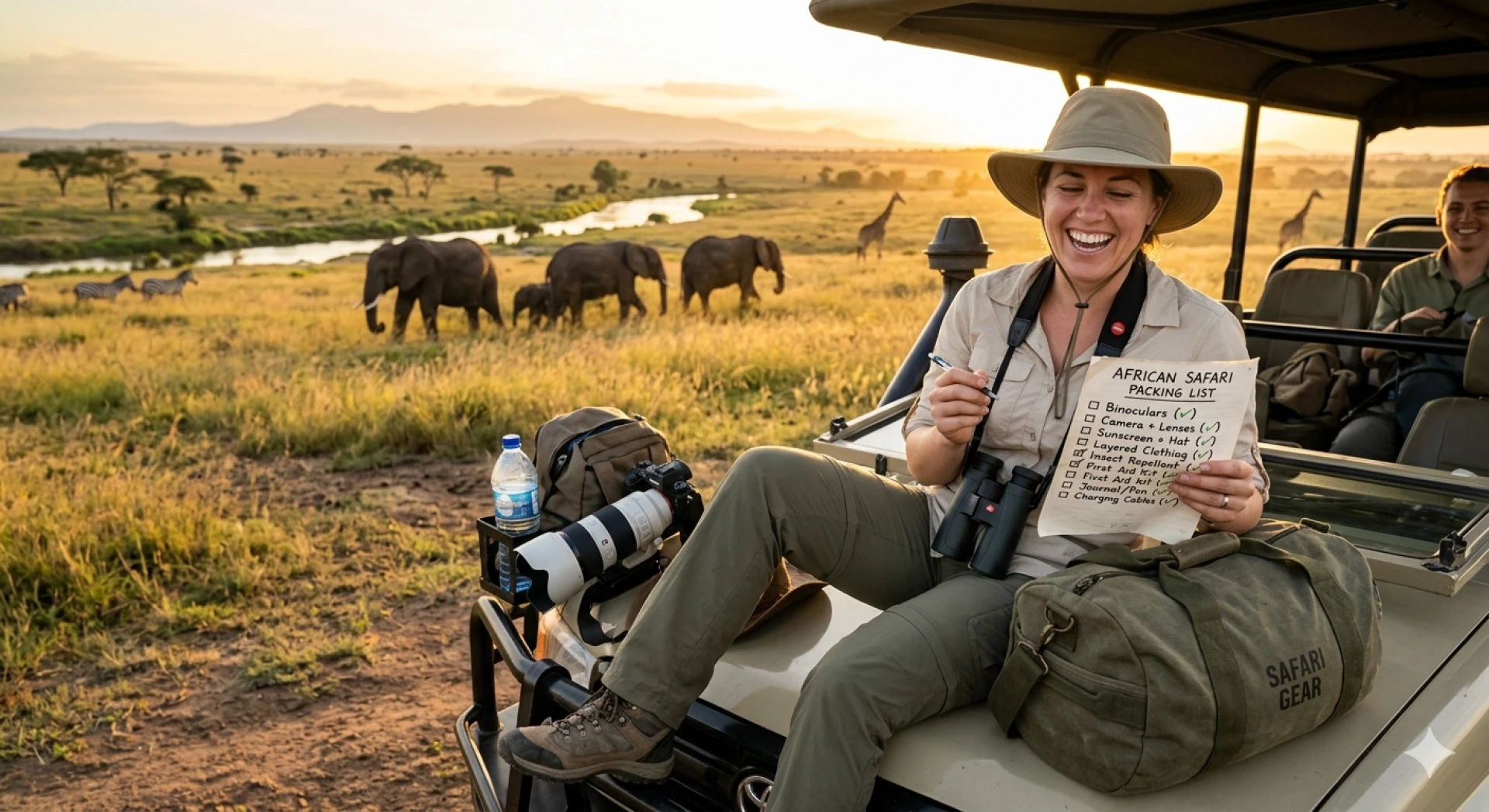

A well-planned packing list plays a critical role in shaping the quality of an African safari. Travelers often focus on destinations, lodges, and wildlife sightings, yet what they carry with them can determine how comfortable, safe, and prepared they feel throughout the journey. The right items reduce inconvenience, prevent common travel issues, and allow visitors to focus fully on the experience rather than avoidable problems.
Comfort in Changing Conditions
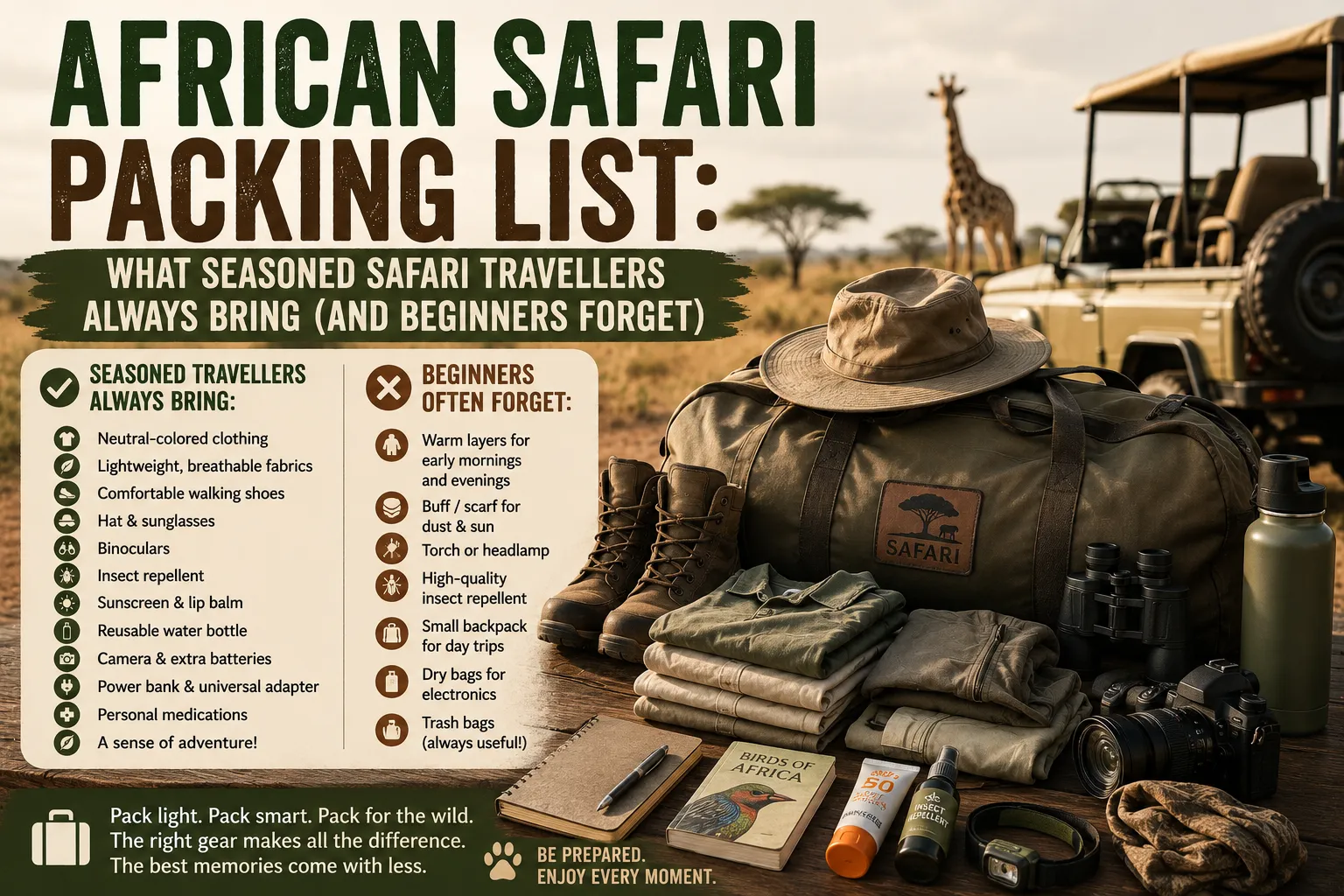
African safaris involve varied climates and environments. Early morning game drives often bring cold temperatures, while afternoons can become intensely hot. A thoughtful packing list ensures that travelers remain comfortable throughout these shifts. Lightweight, breathable clothing works well during the day, while warm layers help during cooler hours.
Neutral-colored clothing also improves comfort in a practical sense. Bright colors may attract insects or distract wildlife, while earthy tones help visitors blend into the surroundings. Comfortable clothing allows travelers to sit for long periods in safari vehicles, walk short distances when required, and relax at camps without irritation.
Footwear also plays an important role. Closed, sturdy shoes protect against dust, uneven terrain, and insects. Without proper shoes, even short walks can become uncomfortable or unsafe.
Protection Against the Elements
The African wilderness exposes travelers to strong sunlight, dust, and occasional rain. Packing the right protective items prevents unnecessary discomfort and health issues. A wide-brim hat, sunglasses, and sunscreen shield the skin and eyes from harsh sunlight. Without these, travelers risk sunburn and fatigue, which can affect their overall experience.
Insect repellent serves as another essential item. Many safari regions contain mosquitoes and other insects, especially during certain seasons. Proper protection reduces the risk of bites and related illnesses. Long-sleeved shirts and trousers add an extra layer of defense during evening hours.
A compact rain jacket prepares you for sudden weather changes. These small additions to your African safari packing list prevent discomfort and help you stay prepared in all conditions.
Better Wildlife Viewing Opportunities
Packing strategically can significantly improve wildlife viewing. Binoculars, for example, allow travelers to see animals clearly from a distance without disturbing them. Many sightings occur far from the vehicle, and without binoculars, visitors may miss important details.
A good camera with extra batteries and memory cards ensures that travelers capture key moments. Safari days often last many hours, and charging opportunities may remain limited. Running out of battery during a rare sighting can lead to disappointment.
Neutral clothing also contributes to better viewing. Animals react less to subdued colors, allowing vehicles to approach more closely. This improves both observation and photography.
Health and Safety Preparedness
A safari often takes place in remote areas where access to medical facilities may be limited. A well-prepared packing list includes basic first aid supplies, such as bandages, antiseptic wipes, and necessary medications. Travelers who carry their personal prescriptions avoid interruptions in their routine.
Hydration also plays a key role in maintaining health. Reusable water bottles help travelers stay hydrated during long game drives. Dehydration can lead to fatigue, headaches, and reduced enjoyment of activities.
Hand sanitizer and wet wipes provide additional hygiene support when access to running water remains limited. These small items help maintain cleanliness and reduce the risk of illness.
Efficient Travel and Organization
A clear packing list helps travelers avoid overpacking while ensuring they do not forget essential items. Safari trips often involve small aircraft or vehicles with strict luggage limits. Soft-sided bags work better than rigid suitcases because they fit easily into compact storage spaces.
Packing cubes or organizers allow travelers to separate clothing, accessories, and gear. This reduces time spent searching for items and keeps luggage tidy throughout the trip. Organized packing also prevents damage to delicate equipment such as cameras and binoculars.
Laundry services may be available at many lodges, which means travelers can pack fewer clothes. This approach reduces baggage weight and simplifies travel logistics.
Adaptation to Remote Locations
Safari destinations often operate far from urban centers. Travelers cannot rely on nearby stores to replace forgotten items. A complete packing list ensures that visitors carry everything they need from the start.
Items such as power banks, universal adapters, and flashlights become essential in remote camps. Electricity may operate on limited schedules, and lighting conditions can vary. A headlamp or flashlight helps during nighttime movement within the camp.
Snacks can also prove useful, especially during long drives between locations. While lodges provide meals, having personal snacks ensures that travelers remain comfortable between scheduled times.
Respect for the Environment
A thoughtful packing list also supports responsible travel. Reusable items, such as water bottles and cloth bags, reduce waste in sensitive ecosystems. Many safari areas aim to protect wildlife and natural habitats, and minimizing plastic use contributes to these efforts.
Eco-friendly toiletries further support conservation goals. Harsh chemicals can affect local water systems, so biodegradable products offer a safer alternative.
Travelers who prepare responsibly help preserve the environment for future visitors while maintaining the integrity of the safari experience.
Confidence and Peace of Mind
Preparation builds confidence. When travelers know they have packed appropriately, they can focus on the experience rather than worry about missing items. This sense of readiness allows them to participate fully in activities, whether it involves early morning drives, guided walks, or evening gatherings.
Unexpected situations often arise during travel. A well-prepared packing list reduces stress in such moments. Whether dealing with sudden weather changes or minor health concerns, having the right items on hand makes a significant difference.
Maximizing the Overall Experience
A safari offers more than wildlife sightings. It includes quiet moments in nature, cultural interactions, and time spent in unique landscapes. This becomes even more pronounced during private safaris, where flexibility allows a more personalized pace. The right packing list ensures that nothing distracts from these experiences.
Comfortable clothing, proper gear, and essential supplies allow travelers to remain present and attentive. They can focus on the sounds of the wilderness, the movement of animals, and the atmosphere of the surroundings without unnecessary discomfort.
Preparation also allows travelers to adapt to different activities with ease. Whether they take photographs, relax at camp, or participate in guided excursions, the right items support each part of the journey.
Conclusion
The success of an African safari depends not only on the destination but also on preparation. A carefully planned packing list improves comfort, supports health and safety, enhances wildlife viewing, and reduces stress. It allows travelers to move through each day with confidence and ease.
By selecting practical clothing, protective gear, essential supplies, and efficient luggage, travelers set the foundation for a rewarding safari experience. Thoughtful preparation ensures that every moment in the wilderness remains focused on the adventure itself rather than avoidable challenges.





























Sign in to leave a comment.