
How Fiber Optic Transceivers Power the Internet: A Deep Dive
In today’s hyper-connected world, data zips across the globe at the speed of light, powering everything from streaming services to cloud computing. At the heart of this high-speed data transfer lies a small but mighty device: the fiber optic transceiver. If you’ve ever wondered how the internet delivers lightning-fast connectivity, this article will break down how fiber optic transceivers work, their key components, and why they’re essential to modern communication networks.
What Is a Fiber Optic Transceiver?
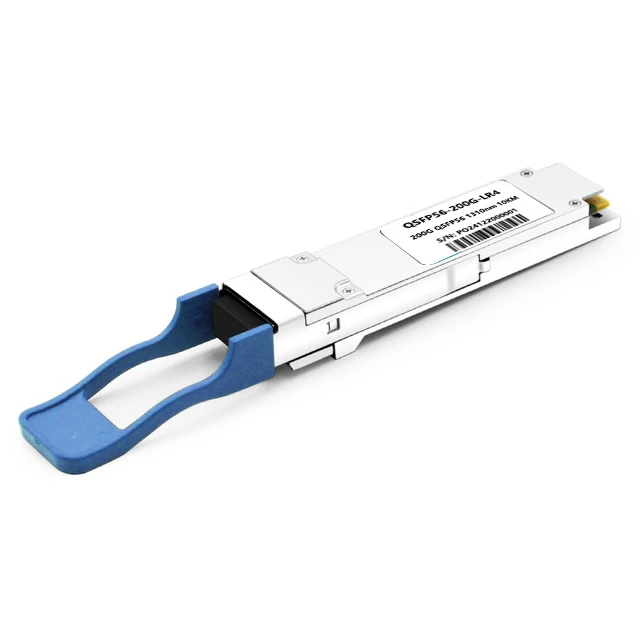
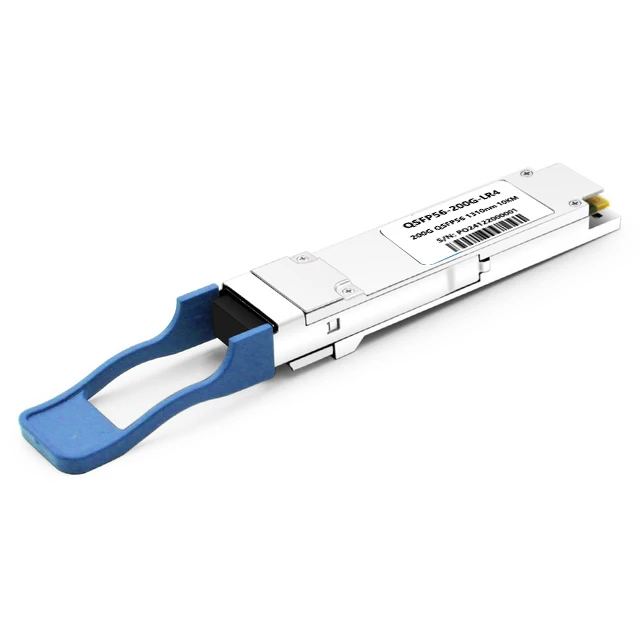
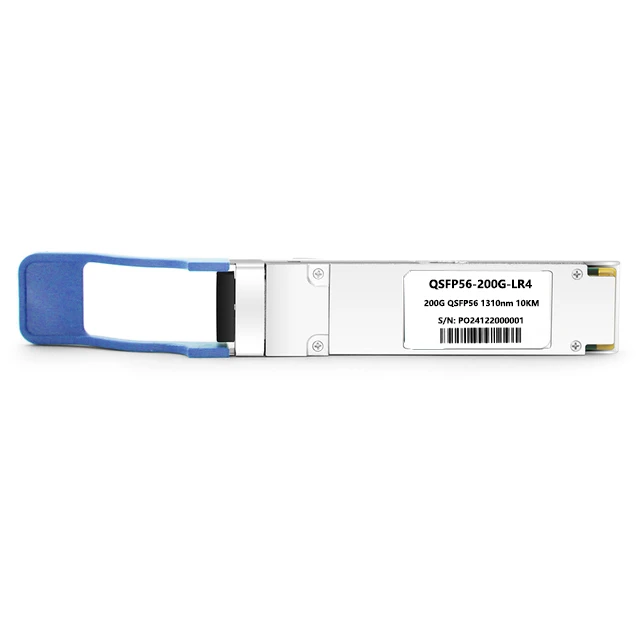
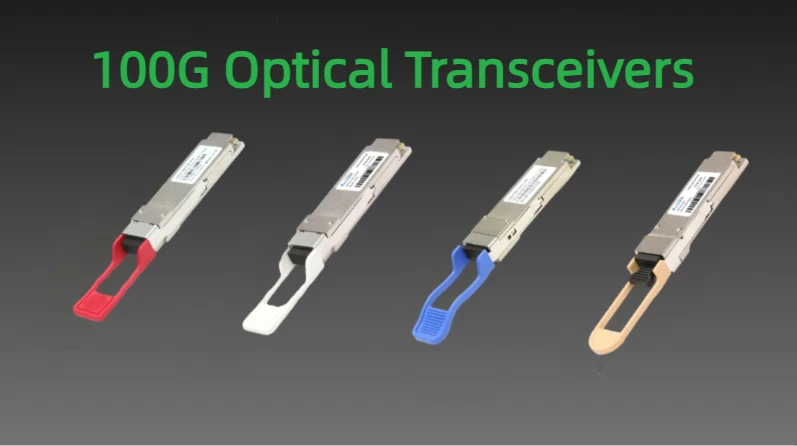
A fiber optic transceiver is a compact device that serves as the bridge between optical and electrical signals in a fiber optic communication system. The term “transceiver” is a blend of transmitter and receiver, reflecting its dual role: it converts electrical signals into optical signals for transmission and then converts incoming optical signals back into electrical ones for processing. These devices are critical in data centers, telecommunications networks, and enterprise systems, enabling high-speed, long-distance data transmission with minimal loss.
Think of a fiber optic transceiver as a translator. It takes the electrical data from your router, computer, or network switch (think 1s and 0s) and translates it into light pulses that travel through fiber optic cables. At the other end, another transceiver reverses the process, ensuring seamless communication.
The Anatomy of a Fiber Optic Transceiver
To understand how transceivers work, let’s break down their key components:
Transmitter Optical Sub-Assembly (TOSA): This is the heart of the transmitter side. The TOSA contains a light source, typically a laser diode or LED, that generates light pulses to carry data. Laser diodes are more common in high-speed applications because they produce precise, coherent light that can travel long distances without degrading.
Receiver Optical Sub-Assembly (ROSA): On the receiving end, the ROSA contains a photodetector (like a photodiode) that captures incoming light signals and converts them back into electrical signals. The photodetector is highly sensitive, ensuring even weak signals are accurately interpreted.
Electrical Interface: This component connects the transceiver to the network device (e.g., a switch or server). It handles the electrical signals before they’re converted to light or after they’re converted back from light.
Optical Interface: This is where the transceiver connects to the fiber optic cable, typically via connectors like LC or SC. The optical interface ensures the light signals are properly aligned for transmission or reception.
Control Circuitry: Modern transceivers include microcontrollers or integrated circuits that manage signal modulation, error correction, and diagnostics. This ensures reliable performance and allows network administrators to monitor the transceiver’s health.
How Do Fiber Optic Transceivers Work?
The process of transmitting and receiving data through a fiber optic transceiver can be broken down into a few key steps:
Electrical to Optical Conversion (Transmission):
When a device, like a server, sends data, it generates an electrical signal (a series of 1s and 0s).
The transceiver’s TOSA converts this electrical signal into light pulses. For example, a “1” might trigger the laser to emit light, while a “0” keeps it off.
These light pulses are sent through the fiber optic cable, which is made of a glass or plastic core that guides light with minimal loss. The light can travel vast distances—sometimes hundreds of kilometers—without needing amplification.
Optical to Electrical Conversion (Reception):
At the receiving end, another transceiver’s ROSA captures the incoming light pulses.
The photodetector converts these pulses back into electrical signals, reconstructing the original 1s and 0s.
The electrical interface then passes the data to the receiving device, such as a router or computer, for processing.
Bidirectional Communication:
Most transceivers operate in full-duplex mode, meaning they can transmit and receive data simultaneously. This is often achieved using two separate fibers—one for sending and one for receiving—or through wavelength division multiplexing (WDM), where different wavelengths of light carry data in both directions over a single fiber.
Why Are Fiber Optic Transceivers So Important?
Fiber optic transceivers are the backbone of modern communication networks for several reasons:
- Speed: Transceivers support blazing-fast data rates, from 1 Gbps to 400 Gbps and beyond, making them ideal for data-intensive applications like 5G, cloud computing, and AI.
- Distance: Unlike copper cables, fiber optic cables enabled by transceivers can transmit data over long distances (up to 100 km or more) without signal degradation.
- Reliability: Fiber optics are immune to electromagnetic interference, ensuring stable performance in noisy environments like data centers.
- Scalability: Transceivers come in various form factors (e.g., SFP, QSFP, CFP) and support different standards, making them adaptable to a wide range of network configurations.
Real-World Applications
You’ll find fiber optic transceivers in:
- Data Centers: Connecting servers and storage systems for cloud services like Google Cloud or AWS.
- Telecommunications: Powering high-speed internet and 5G networks.
- Enterprise Networks: Linking offices and campuses with secure, high-speed connectivity.
- Smart Cities: Enabling IoT devices and traffic management systems.
The Future of Fiber Optic Transceivers
As demand for bandwidth grows, transceivers are evolving to handle higher speeds and greater efficiency. Innovations like coherent optics and silicon photonics are pushing the boundaries, enabling transceivers to support terabit-per-second speeds while reducing power consumption. Additionally, advancements in AI-driven network management are making transceivers smarter, with built-in diagnostics to optimize performance in real time.
Conclusion
Fiber optic transceivers may be small, but their impact is enormous. By converting electrical signals into light and back again, they enable the high-speed, long-distance data transmission that powers our digital world. Whether you’re streaming a movie, collaborating on a cloud-based project, or browsing this blog, chances are a fiber optic transceiver is working behind the scenes to keep you connected.
At Fibrecross, we’re passionate about building the infrastructure that drives connectivity. Fiber optic transceivers are just one piece of the puzzle, but they’re a critical one in ensuring the internet remains fast, reliable, and accessible for everyone. Stay curious, and keep exploring the technology that shapes our world!


























Sign in to leave a comment.