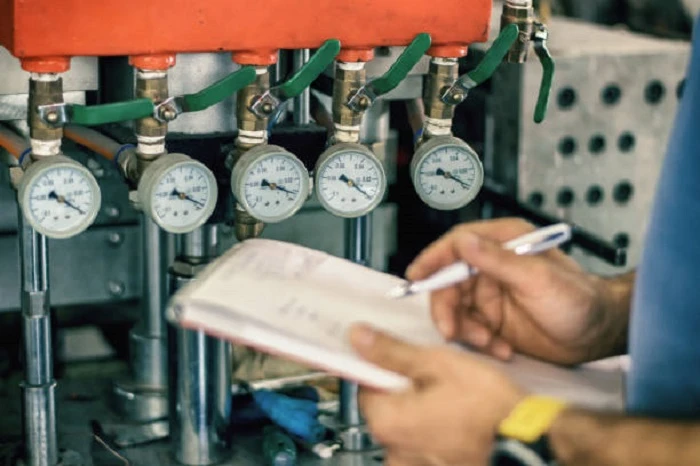

Pressure measurement is fundamental to industrial process control, safety assurance, and system efficiency. From hydraulic systems and compressed air networks to chemical processing plants and oil refineries, accurate pressure monitoring determines operational stability and equipment longevity. Over the past decades, pressure instrumentation has evolved significantly, transitioning from purely mechanical gauges to advanced digital and intelligent devices. Among the most widely used modern instruments are the Digital Pressure Gauge and the smart pressure transmitter.
Although both devices measure pressure and often rely on similar sensing technologies, their purposes, capabilities, and integration levels differ considerably. Understanding how a Digital Pressure Gauge compares with smart transmitters requires examining their sensing principles, signal processing methods, communication capabilities, accuracy characteristics, and application contexts.
Fundamental Measurement Principles
Sensor Technology in Digital Instruments
Both a Digital Pressure Gauge and a smart transmitter typically rely on electronic pressure sensing elements. Common sensing technologies include piezoresistive, capacitive, strain gauge, and thin-film sensors. These sensors convert applied pressure into an electrical signal proportional to the force exerted on a diaphragm or sensing membrane.
In a Digital Pressure Gauge, the sensor output is amplified, digitized through an analog-to-digital converter, and displayed on a local screen. The device is designed primarily for on-site visual monitoring, offering a direct numeric readout instead of a mechanical needle indication.
Smart transmitters use similar sensing elements but extend the signal processing further. In addition to digitization, they incorporate microprocessors capable of linearization, temperature compensation, diagnostics, and digital communication encoding.
Signal Conditioning and Compensation
A Digital Pressure Gauge includes internal compensation algorithms to correct for temperature drift and non-linearity. However, the compensation level is generally optimized for stability in local measurement scenarios rather than continuous process control loops.
Smart transmitters employ more advanced compensation methods. They often integrate multi-variable correction, long-term drift stabilization, and self-calibration routines. This expanded processing enhances accuracy over extended operational cycles in demanding industrial environments.
Functional Differences Between Devices
Local Indication Versus Process Integration
The primary distinction lies in functionality. A Digital Pressure Gauge serves mainly as a local indicator. It provides immediate, precise readings at the point of measurement. Technicians rely on it for equipment commissioning, troubleshooting, and routine inspection.
In contrast, smart transmitters are designed for system integration. They transmit pressure data continuously to distributed control systems or programmable logic controllers. The transmitter becomes part of a broader automation architecture rather than a standalone indicator.
While a Digital Pressure Gauge may offer optional data logging or limited output features, smart transmitters are purpose-built for continuous signal transmission and remote monitoring.
Communication Capabilities
Modern smart transmitters support industrial communication protocols such as HART, Modbus, or fieldbus systems. These protocols allow bidirectional communication, enabling remote configuration, diagnostics, and calibration adjustments without physical access to the device.
A Digital Pressure Gauge may include USB or wireless interfaces for data retrieval, but it typically does not function as a full participant in real-time process control networks. Its communication features are supplementary rather than central to its role.
Performance Characteristics and Accuracy Considerations
Measurement Precision and Stability
Accuracy is a critical factor in comparing these devices. High-quality Digital Pressure Gauge models can achieve excellent precision, often suitable for calibration tasks and verification procedures. Their digital displays eliminate parallax errors associated with analog gauges, improving readability.
Smart transmitters, however, are engineered for sustained accuracy under varying environmental conditions. They typically offer lower long-term drift rates and more robust compensation mechanisms. In continuous process environments where even small deviations can affect product quality or safety, transmitters provide superior long-term reliability.
The calibration intervals also differ. A Digital Pressure Gauge used intermittently may require periodic recalibration depending on usage. Smart transmitters are often designed for extended calibration cycles due to advanced stability engineering.
Response Time and Dynamic Performance
Response time varies depending on configuration and application. A Digital Pressure Gauge may prioritize stable display output, sometimes incorporating damping to prevent fluctuating readings from appearing unstable. This feature enhances readability but may slightly slow rapid response.
Smart transmitters are optimized for dynamic process monitoring. They can provide fast, continuous updates to control systems, ensuring accurate regulation of pressure-sensitive processes. In applications such as boiler control or chemical reactions, this rapid feedback is essential.
Installation and Application Context
Portability and Field Use
The Digital Pressure Gauge excels in portability. Many models are battery-powered, compact, and easily mounted or handheld. This makes them ideal for maintenance personnel performing spot checks or temporary monitoring.
Smart transmitters are permanently installed instruments. They are wired into power supplies and communication networks. Their installation often involves integration with junction boxes, control cabinets, and safety barriers in hazardous areas.
Because of these design differences, the Digital Pressure Gauge is frequently used in commissioning and testing, while smart transmitters remain integral components of automated systems.
Environmental Durability
Both devices can be built with rugged housings and high ingress protection ratings. However, smart transmitters are often designed to withstand extreme temperatures, vibration, corrosive atmospheres, and hazardous area classifications over extended periods.
A Digital Pressure Gauge may offer robust construction, but it is typically optimized for accessibility and user interface rather than continuous industrial immersion in harsh conditions.
Cost and Maintenance Implications
Initial Investment and Lifecycle Cost
From a cost perspective, a Digital Pressure Gauge generally requires lower initial investment compared to a smart transmitter. Its simplicity and standalone functionality reduce system integration expenses.
Smart transmitters, while more expensive initially, contribute to overall process optimization. Their ability to provide remote diagnostics and predictive maintenance data can reduce downtime and prevent costly failures.
Lifecycle cost evaluation must consider not only purchase price but also calibration intervals, replacement frequency, and the economic impact of process accuracy.
Maintenance and Diagnostics
Smart transmitters incorporate advanced diagnostic features. They can detect sensor drift, wiring faults, and abnormal process conditions, transmitting alerts to control systems. This proactive capability supports predictive maintenance strategies.
A Digital Pressure Gauge typically lacks continuous self-diagnostics. Maintenance is based on scheduled inspection rather than automated alerts. However, its straightforward design simplifies troubleshooting and replacement when necessary.
Integration with Modern Industrial Systems
Data Logging and Analytics
Industry trends emphasize digitalization and data analytics. Smart transmitters align seamlessly with these trends, supplying continuous data streams for process optimization and historical analysis.
Some advanced Digital Pressure Gauge models include data logging functionality, but their storage capacity and analytical integration are usually limited compared to networked transmitters.
Role in Calibration and Verification
Despite the technological sophistication of smart transmitters, the Digital Pressure Gauge retains critical importance in calibration procedures. Portable digital gauges often serve as reference standards when verifying transmitter accuracy in the field.
This complementary relationship highlights that these devices are not direct replacements but serve different roles within an instrumentation ecosystem.
Choosing the Appropriate Device
Application-Driven Decision Making
Selecting between a Digital Pressure Gauge and a smart transmitter depends largely on operational requirements. For localized, manual monitoring or temporary measurement tasks, the digital gauge offers simplicity and efficiency.
For automated control systems requiring continuous data flow, alarm integration, and remote configuration, smart transmitters provide indispensable functionality.
Understanding the process environment, accuracy demands, communication infrastructure, and budget constraints is essential when determining the appropriate solution.
Conclusion: Complementary Technologies in Modern Instrumentation
The comparison between a Digital Pressure Gauge and a smart transmitter reveals distinct but overlapping capabilities. Both rely on advanced sensor technologies and digital processing, yet their design philosophies diverge.
A Digital Pressure Gauge emphasizes portability, direct readability, and practical field application. Smart transmitters prioritize integration, continuous communication, and advanced diagnostics within automated systems.
Rather than competing technologies, they function as complementary tools in modern industrial instrumentation. The digital gauge supports calibration, troubleshooting, and local verification, while the smart transmitter ensures ongoing process control and system optimization.
By understanding their respective strengths and limitations, engineers can deploy each device effectively, ensuring accurate pressure measurement, operational efficiency, and long-term reliability across diverse industrial applications.



























Sign in to leave a comment.