
Introduction
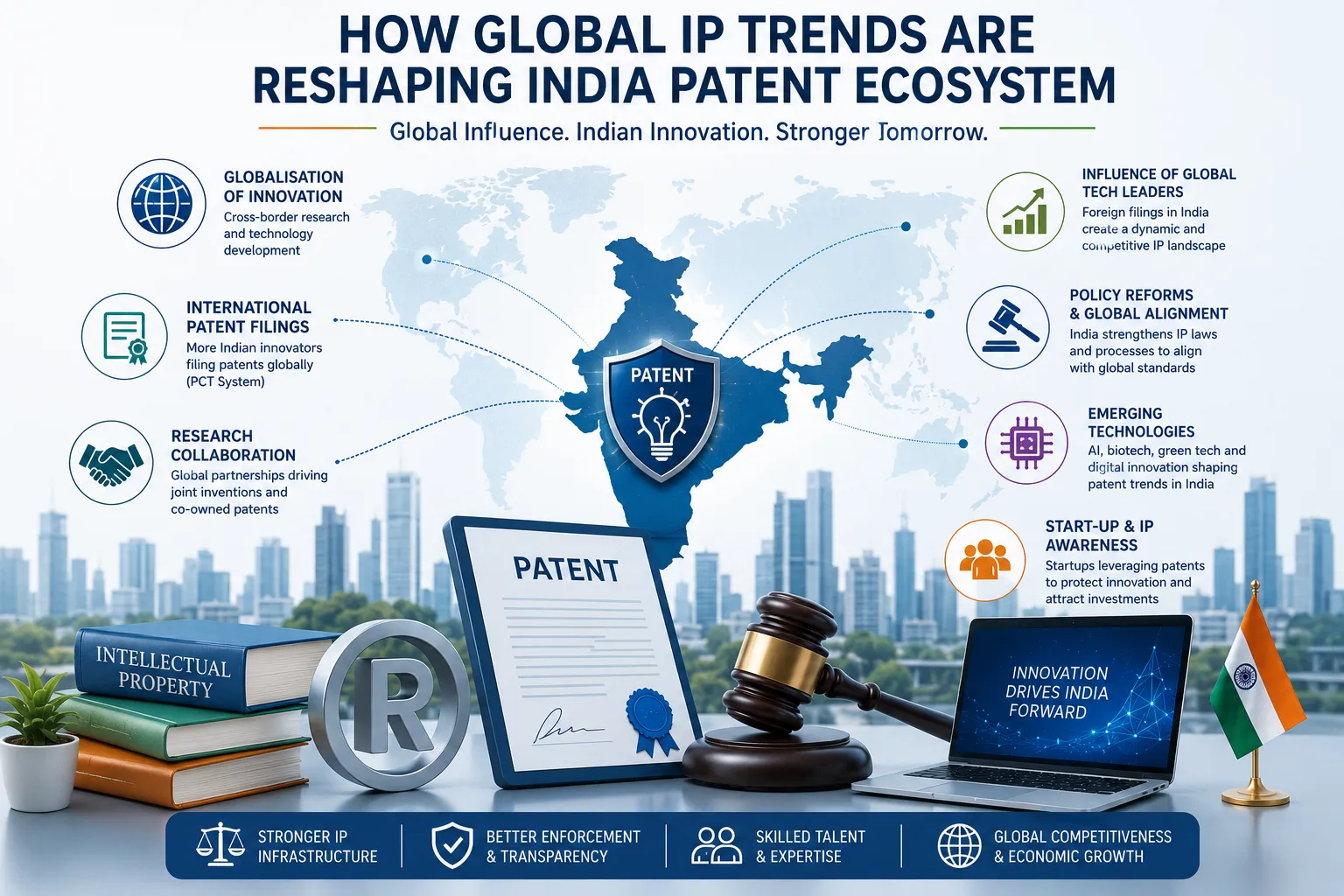
Innovation has become a global phenomenon. Research, technology development, and commercialisation often occur across multiple jurisdictions. As a result, intellectual property systems around the world increasingly influence one another.
India’s patent ecosystem has evolved rapidly in response to these global developments. International patent standards, cross border research collaboration, and expanding technology markets continue to shape the way patents are filed, examined, and enforced in India.
For Indian businesses, universities, and innovators, global intellectual property trends now play a direct role in shaping domestic patent strategies. Understanding these trends offers valuable insight into how the Indian patent landscape continues to transform.
Globalisation of Innovation
Modern innovation rarely takes place within a single country. Research teams often include experts from different jurisdictions, while technology companies operate across several markets.
This globalisation of innovation has influenced patent filing behaviour in India. Indian companies increasingly seek protection not only within the domestic market but also in international jurisdictions.
Global technology sectors such as artificial intelligence, biotechnology, digital infrastructure, and renewable energy require patent protection across multiple countries. Indian innovators participating in these sectors must therefore consider international intellectual property frameworks while developing patent strategies.
This global outlook has gradually reshaped the Indian patent ecosystem.
Rising International Patent Filings from India
One major impact of global intellectual property trends involves the steady increase in international patent filings by Indian applicants.
Technology driven companies, research institutions, and start ups often file patent applications in foreign jurisdictions through international mechanisms such as the Patent Cooperation Treaty system.
International filings allow Indian innovators to protect inventions in major global markets while maintaining a coordinated filing strategy. Such protection becomes important when products or technologies are intended for global commercialisation.
The rise of international patent activity reflects India’s growing participation in the global innovation economy.
Influence of Global Technology Leaders
Large multinational technology companies file thousands of patents every year across multiple jurisdictions. These global patent portfolios influence innovation patterns worldwide.
When multinational corporations file patents in India, domestic companies must operate within an increasingly complex patent landscape. Products developed by Indian firms may intersect with existing international patents.
For this reason, Indian companies now conduct detailed patent landscape analysis and freedom to operate assessments before introducing new technologies.
This practice ensures compliance with existing patents and reduces potential legal disputes.
Expansion of Research Collaboration
Global research collaboration continues to grow across universities, research institutions, and private companies. India actively participates in this international research environment.
Joint research projects often lead to jointly owned patents. These collaborative inventions may be filed simultaneously in multiple countries depending on the commercial potential of the technology.
Such partnerships allow Indian researchers to access advanced research infrastructure, global funding opportunities, and diverse technical expertise.
At the same time, joint patent ownership requires clear legal agreements governing licensing rights, revenue sharing, and commercial use.
Collaborative innovation has therefore become a significant factor shaping India’s patent ecosystem.
Policy Reforms Inspired by Global Standards
Global intellectual property frameworks often influence national policy development. India has gradually strengthened its patent infrastructure to align with international standards.
Reforms within the patent system aim to improve transparency, efficiency, and accessibility for innovators.
Key improvements include digital filing platforms, faster examination procedures, and specialised training for patent examiners. These measures help ensure India’s patent system remains compatible with international intellectual property practices.
Alignment with global standards encourages foreign investment and increases confidence among international innovators seeking protection within India.
Impact of Emerging Technologies
Rapid technological advancement has transformed patent activity across the world. Emerging technologies such as artificial intelligence, machine learning, advanced materials, and green energy systems generate large volumes of patent applications.
India has experienced similar growth in patent filings within these sectors. Technology start ups, research laboratories, and multinational companies actively file patents covering digital innovations and scientific discoveries.
The rise of deep technology sectors also creates new challenges for patent examination. Patent offices must evaluate complex technical subject matter while maintaining consistent legal standards.
As global technological progress accelerates, India’s patent ecosystem continues to adapt to these developments.
Strengthening of Start Up Innovation
India’s start up ecosystem has grown rapidly during the last decade. Technology driven start ups often rely on patents to protect core innovations and attract investment.
Global venture capital investors frequently evaluate intellectual property portfolios before funding technology ventures. Patents signal technological credibility and long term competitive advantage.
As Indian start ups increasingly target international markets, patent protection across multiple jurisdictions becomes essential.
This trend contributes to greater awareness of intellectual property rights within the entrepreneurial community and strengthens overall patent activity in India.
Cross Border Patent Disputes
Global patent activity also increases the likelihood of cross border intellectual property disputes. A single invention may be protected through patents in several countries.
When disputes arise, litigation may occur in multiple jurisdictions simultaneously. Decisions in one jurisdiction can influence proceedings in another.
Indian businesses expanding internationally must therefore understand global patent enforcement mechanisms. Effective intellectual property risk management helps companies navigate complex legal challenges and protect innovation assets.
Such developments highlight the growing interconnection between India’s patent system and international intellectual property frameworks.
Growing Importance of Patent Strategy
Modern patent strategy extends far beyond filing applications. Businesses now view patents as strategic business assets capable of generating revenue, attracting partnerships, and strengthening market position.
Companies often use patent portfolios for licensing, technology transfer, and joint research initiatives. Strong intellectual property portfolios also increase corporate valuation during mergers, acquisitions, and investment negotiations.
Many organisations seek guidance from experienced professionals such as a best patent lawyer in India when developing long term intellectual property strategies.
Expert advice ensures patent filings align with business goals while maintaining compliance with domestic and international intellectual property regulations.
Integration of Patent and Brand Protection
Innovation driven companies must protect not only technology but also brand identity. When businesses expand internationally, trademarks and patents often work together to safeguard intellectual assets.
Patents protect inventions and technological solutions. Trademarks protect brand reputation and consumer recognition. Together, they form a comprehensive intellectual property framework for businesses operating across borders.
Many companies therefore consult a trademark law firm in India to secure brand rights alongside patent protection. This integrated approach strengthens intellectual property portfolios and supports international business expansion.
Future Outlook for India’s Patent Ecosystem
Global intellectual property trends will continue to shape India’s patent environment in the coming years.
Several developments are likely to influence future patent activity.
Expansion of Deep Technology Innovation
Research in artificial intelligence, clean energy, biotechnology, and advanced computing will generate new patent opportunities. Indian innovators actively participate in these sectors.
Growth of Global Research Partnerships
International collaboration between universities and technology companies is expected to increase. Joint patent filings may become more common.
Increased Investment in Research and Development
Both government and private sector investments in research infrastructure continue to grow. Greater research investment generally leads to higher patent activity.
Improved Intellectual Property Awareness
Educational initiatives and industry programmes are helping innovators understand the importance of intellectual property protection.
Together, these factors will strengthen India’s position within the global innovation ecosystem.
Conclusion
Global intellectual property trends have significantly influenced the evolution of India’s patent ecosystem. International research collaboration, expanding technology markets, and stronger intellectual property frameworks continue to reshape how patents are filed and managed in India.
Indian businesses, research institutions, and start ups now operate within a global innovation environment. Patent strategies must therefore consider international markets, cross border legal frameworks, and evolving technological landscapes.
By adapting to global intellectual property trends, India can strengthen its innovation capacity and support long term technological growth. A robust patent ecosystem will remain essential for protecting innovation and fostering economic development in the years ahead.































Sign in to leave a comment.