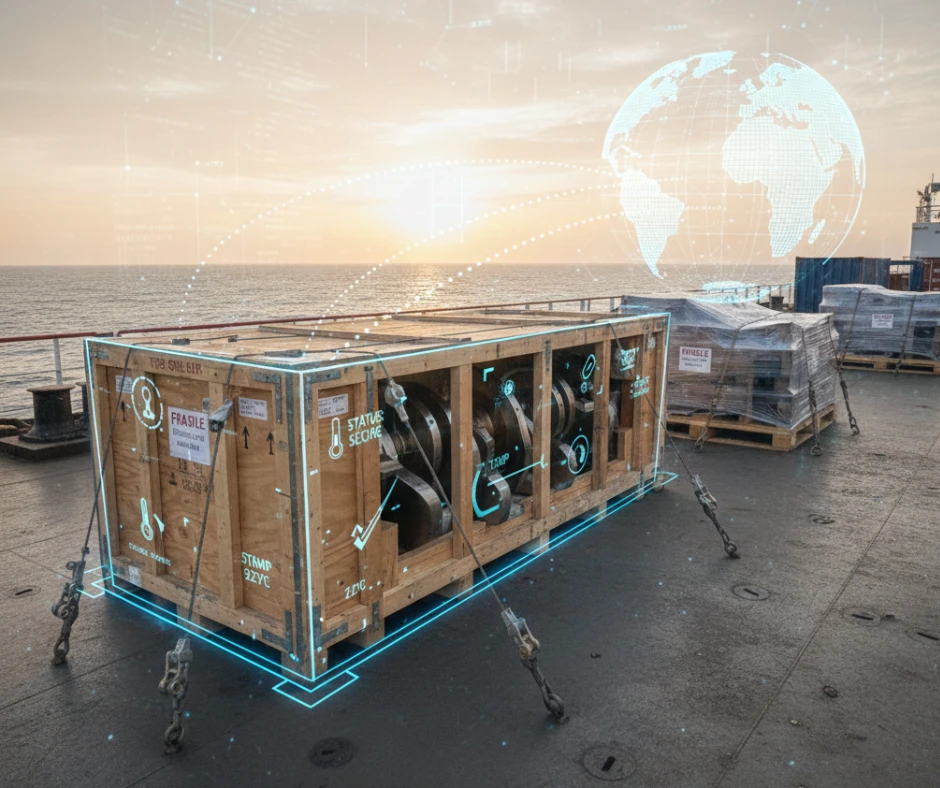

In the high-stakes world of international shipping, a vessel is only as good as its ability to move. When a critical component—like a specialized shock absorber front for a high-speed ferry—breaks down in the middle of the ocean, the clock starts ticking. For a shipowner, every hour a vessel sits idle isn't just a technical problem; it’s a financial hemorrhage that can cost tens of thousands of dollars in "off-hire" fees.
Getting a heavy, precision-engineered part from a factory in one hemisphere to a moving target in another isn't just about logistics. It is a mission that requires specialized marine solutions, real-time data, and, above all, a deep sense of trust.
1. The Art of Seaworthy Packaging
The journey begins with a battle against the elements. The ocean is a brutal environment; salt air and high humidity can turn a pristine steel part into a rusted hunk of junk in just a few days.
To prevent this, logistics experts use a bit of modern chemistry. They wrap parts in VCI (Volatile Corrosion Inhibitor) film, which releases a protective vapor to keep rust at bay. For a heavy item like a shock absorber front, the protection is also structural. These parts are "blocked and braced" inside custom-built, heat-treated wooden crates. This ensures that even if the crate is tilted at a sharp angle during a storm or handled roughly at a busy terminal, the expensive component inside doesn’t move an inch.
2. Choosing the Right Path: Door vs. Deck
Depending on how urgent the repair is, there are two primary ways to handle the delivery:
Door to Door Delivery
This is the "stress-free" option for routine maintenance. The logistics provider manages the entire chain—picking up the part from the manufacturer (the first "door") and delivering it directly to the shipowner’s local warehouse or the port agent (the second "door"). It’s a seamless process that lets the ship’s crew focus on their daily operations while the supply chain moves quietly in the background.
Deck to Deck Delivery
When a ship is "dead in the water" and cannot leave port, the strategy changes. This is where deck to deck delivery comes in. This is the "emergency room" version of shipping. The logistics team coordinates everything so that the part doesn't just sit in a warehouse; it is delivered directly onto the vessel's deck. This often involves precision timing, using cranes or small launch boats to meet the ship the moment it arrives.
3. Navigating with Marine Traffic Data
The ocean is unpredictable, and ships rarely run on a perfect schedule. Storms, port congestion, and mechanical delays happen every day. To stay ahead of these changes, logistics providers integrate live marine traffic data into their tracking systems.
By watching a ship’s GPS location, speed, and heading in real-time, the delivery team can be agile. If marine traffic shows a vessel is delayed by two days, they can slow down the inland transport to avoid expensive storage fees at the pier. If the ship arrives early, they can expedite the final leg. This constant eye on the horizon ensures the part and the ship meet at the exact moment they are both ready.
4. A Business Built on Trust
Shipping across international borders is a legal maze. Between customs forms, import taxes, and safety certificates, it is incredibly easy for a part to get stuck in a government warehouse for weeks.
This is why trust is the most valuable "part" in any shipment. Shipowners need to trust that their logistics partner understands the specific rules of the maritime world. For example, parts marked as "Ship Spares in Transit" can often enter a country duty-free because they are technically destined for international waters. A partner who knows these nuances can save a shipowner thousands in taxes and days in delays.
5. The Final Hand-Off
The "last mile" is often the most nerve-wracking. Delivering a heavy, fragile crate to a ship that is bobbing in the water requires a specialized touch.
Whether it is a standard door to door delivery or a high-pressure deck to deck delivery at sea, the final hand-off is the moment of truth. Professional "last mile" teams check the serial numbers, verify the technical certificates, and ensure the part is hoisted safely on board. Only when the Chief Engineer signs the paperwork and the repair begins is the mission truly complete.
Conclusion
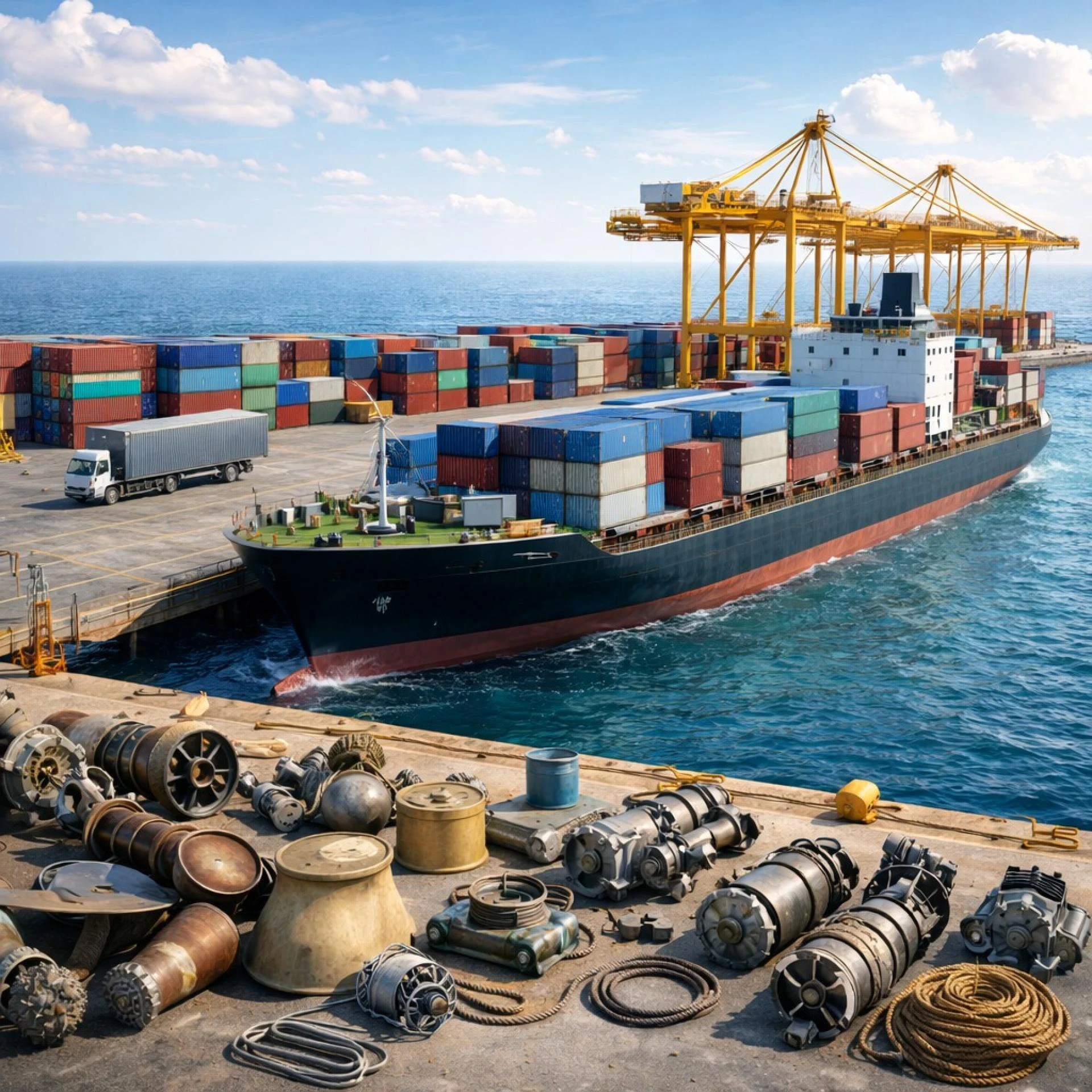
Shipping marine spare parts isn't just about moving boxes; it’s about keeping the world’s supply chains alive. By combining smart marine solutions, real-time monitoring of marine traffic, and a rock-solid foundation of trust, the industry ensures that help is always on the way.
From a small sensor to a massive shock absorber front, every part represents a promise: that no matter where a ship is in the world, it won't be left stranded.
At the heart of these time-critical operations stands Labdhi Marine—a partner built for moments when failure is not an option. With deep expertise in marine spare parts sourcing, export packaging, and emergency logistics, Labdhi Marine understands what’s truly at stake when a vessel is waiting. From precision-engineered components to shock absorber fronts and mission-critical spares, every shipment is handled with technical accuracy, seaworthy packaging, and compliance with global maritime regulations. Backed by industry knowledge, trusted networks, and a commitment to on-time delivery, Labdhi Marine doesn’t just move parts—it helps keep vessels moving, schedules intact, and global trade uninterrupted.
























Sign in to leave a comment.