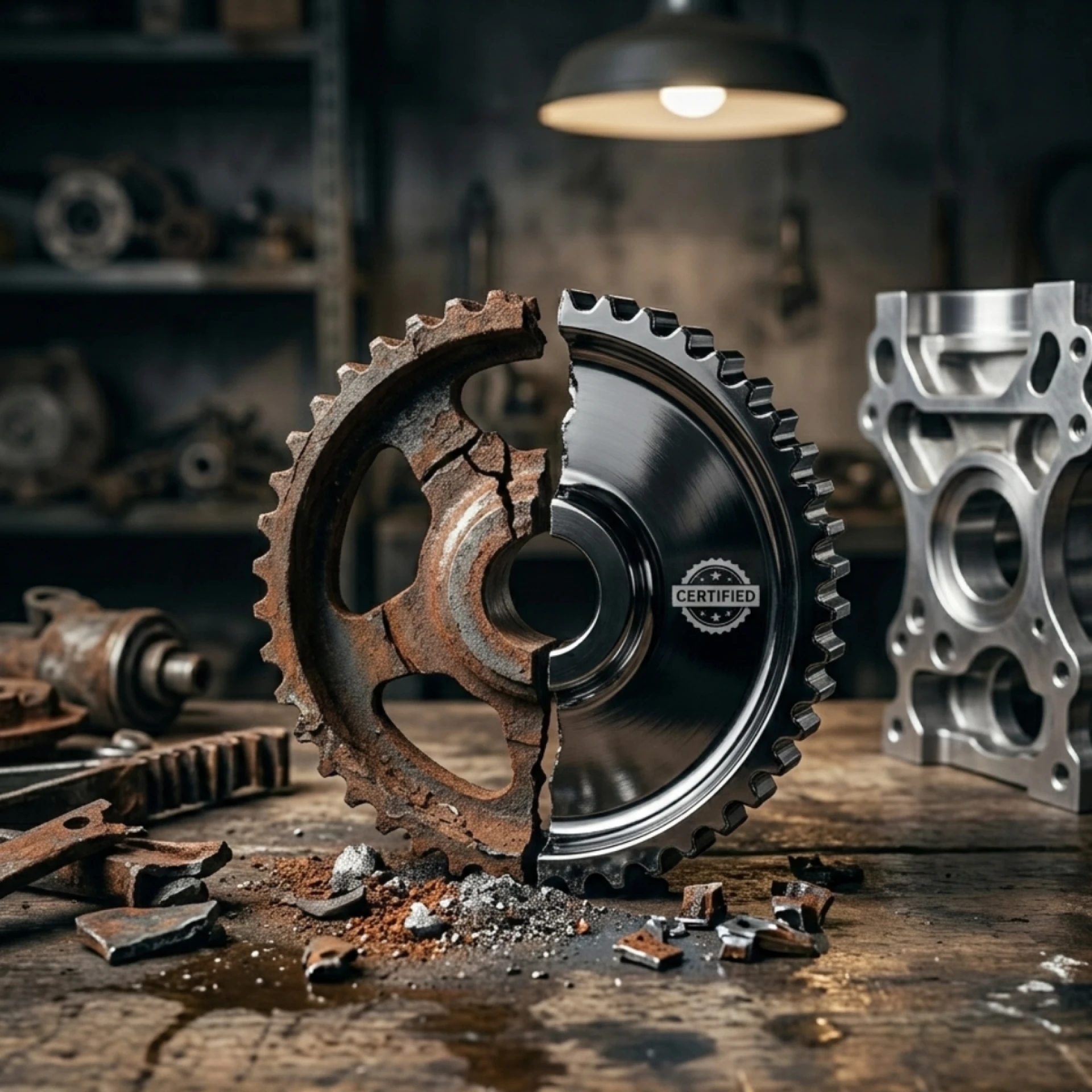

In the marine line, everyone tries to save money somewhere. Spares are expensive, maintenance never really stops, and breakdowns usually happen at the worst time. So when someone offers engine spares at a much lower price, it feels like a relief. Same part number, same size, much cheaper — why not?
The problem is, engines don’t care how much you saved.
I’ve seen many cases where cheap engine spares looked fine on the outside but caused trouble after installation. Sometimes the engine runs well for a few days, sometimes a few weeks — and then problems start showing up. By the time you realize what’s wrong, the damage is already done.
Cheap Parts Are Cheap for a Reason
Most cheap spares are made using low-quality material and poor machining. The tolerances are off, the finishing is rough, and proper testing is usually skipped. On paper, the part “matches” the engine, but in real operating conditions, it simply can’t handle the load.
Marine engines run continuously, under heat, vibration, and pressure. A part that isn’t built properly won’t survive long in this environment. Instead of lasting years, it may fail in months — or even days.
And when one part fails, it usually affects others too.
One Small Spare Can Damage the Whole Engine
Many people think small parts don’t matter much. That’s not true at all.
A low-quality gasket can cause oil leakage.
A cheap bearing can damage a shaft.
A badly made injector can increase fuel consumption and wear.
A poor valve can affect combustion and power output.
At first, the engine may still run. But slowly, efficiency drops, temperatures rise, vibrations increase, and wear spreads to other components. What started as a small saving turns into a major repair job.
In marine engines, precision matters. Even a small deviation can cause long-term damage.
At Sea, Reliability Is Everything
On land, if something fails, you stop and fix it. At sea, it’s not that simple.
Engine failure offshore can mean loss of propulsion, overheating, or even fire risk. Cheap spares fail without warning because they are not tested properly. A cooling part failure can overheat the engine quickly. A fuel system issue can turn dangerous in minutes.
No owner or chief engineer wants to face an emergency because of a part chosen only for its low price.
Safety should never depend on the cheapest option available.
Cheap Spares Lead to Expensive Downtime
The biggest cost of cheap spares is not the part itself — it’s the downtime.
When a part fails:
- The vessel may have to stop operations
- Repairs may need to be done at the nearest port
- Emergency sourcing costs more
- Schedules get delayed
- Crew time and fuel get wasted
For commercial vessels, even one day of downtime can cost more than the price difference between a cheap part and a reliable one. And if the same cheap part fails again, the losses multiply.
In the end, you don’t really save anything.
Inspection and Compliance Issues
Marine vessels are regularly inspected by authorities and class societies. Certain engine parts are expected to meet specific standards.
Cheap spares often come without proper documentation, test reports, or traceability. During inspection, this becomes a problem. In some cases, vessels are asked to replace parts before clearance is given.
That means delays, extra expenses, and unnecessary pressure — all because of poor spare selection.
Cheap Is Not the Same as Cost-Effective
It’s important to understand one thing clearly: not every affordable part is bad.
There is a big difference between cheap and properly sourced.
This is where experienced suppliers like Labdhi Marine make a difference. Instead of selling low-grade parts, they deal in new, refurbished, and used marine engine spares that are carefully selected and inspected.
Refurbished spares, when sourced from the right place and checked properly, can perform very well and cost much less than brand-new parts. The key is experience and inspection — not just price.
With access to ship recycling yards like Alang and years in the marine spare parts industry, Labdhi Marine understands which parts are worth supplying and which are not. That knowledge protects customers from unnecessary risk.
How to Buy Engine Spares the Right Way
Before buying engine spares, it’s better to slow down and think:
- Is this part critical to safety or performance?
- Has it been checked or tested?
- Does the supplier understand my engine?
- Is the price realistic or suspiciously low?
A genuine supplier will answer clearly. A risky one usually avoids details.
Think Long Term, Not Just Today
Marine engines are long-term assets. The spares you install today decide how smoothly the engine will run tomorrow.
Cheap engine spares may reduce today’s expense, but they often increase tomorrow’s repair cost. Quality spares reduce breakdowns, protect major components, and keep vessels operational.
In the marine industry, reliability always pays back.
Final Words
Cheap engine spares might look attractive, but they often bring more problems than savings. Poor quality, safety risks, downtime, and inspection issues all come with a cost — and that cost is usually much higher than expected.
Choosing the right spares from reliable suppliers like Labdhi Marine helps vessel owners manage costs without compromising safety or performance.
Because at sea, you don’t need the cheapest part —you need the part that works.


































Sign in to leave a comment.