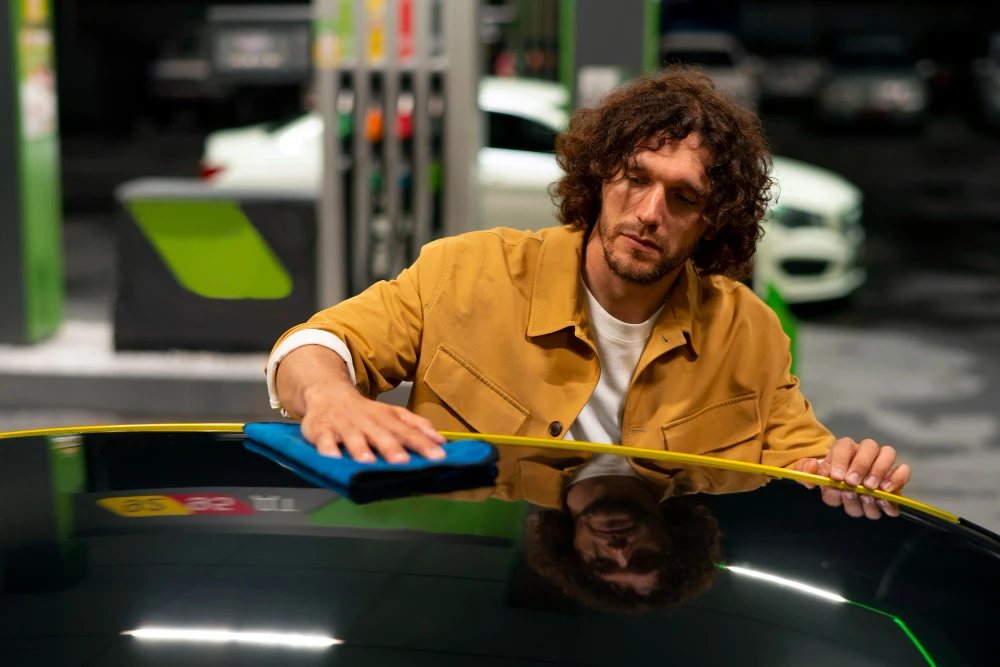

You just bought a new car.
Maybe it's a dream car you've been saving up for years. Maybe it's just your daily driver that you want to keep looking sharp.
Either way, you've heard about Paint Protection Film — and now you're wondering: Is it worth the price? And what exactly IS the price?
Here's the thing: PPF pricing is one of the most confusing topics in the car care world. Quotes can range from $300 to over $10,000 for the same vehicle. That's not a typo.
But by the end of this post, you'll know exactly what drives those numbers — and how to get the best value for your budget.
Let's break it down.
What Is PPF (And Why Does It Cost What It Does)?
Paint Protection Film is a transparent thermoplastic urethane film applied directly over your car's paint. Think of it as an invisible armor — one that absorbs rock chips, resists scratches, blocks UV rays, and even self-heals minor swirl marks when exposed to heat.
Unlike wax or even ceramic coating, PPF is a physical barrier. That's what makes it so effective — and also what makes it more expensive than most alternatives.
The material itself is engineered at a molecular level. Premium films from brands like Gyeon, XPEL, 3M, SunTek, and STEK feature self-healing elastomeric polymers, hydrophobic topcoats, and anti-yellowing technology. That kind of engineering doesn't come cheap — but it does last. Most high-quality PPF carries a 7–10 year manufacturer warranty.
PPF Cost by Coverage Package (2026 Price Breakdown)
Here's the big picture. PPF pricing in 2026 generally falls into four main packages:
1. Partial Front End — $300 to $900
This entry-level option typically covers just the front bumper and partial hood. It's a good starting point if budget is tight, but know that it leaves a lot of vulnerable surface exposed. Best for city drivers who don't see much highway debris.
2. Full Front Package — $1,200 to $3,000
This is the most popular option — and for good reason. A full front package covers the entire hood, full fenders, front bumper, side mirrors, and headlights. If you do any highway driving at all, this is the minimum coverage most professionals recommend.
The seam-free hood wrap is a key benefit here: no visible cut lines across the center of your hood, which keeps the look clean and seamless.
3. Enhanced Protection Package — $2,000 to $4,000
Do you drive track days on weekends? Commute on debris-heavy highways? Then you need more than just front-end coverage.
This package adds rocker panels, A-pillars, door cup guards, and sometimes the roofline to the full front package. Rocker panels alone take a brutal beating from your own tires kicking up debris — a detail many car owners overlook until it's too late.
4. Full Vehicle PPF — $4,000 to $8,000+
Full coverage means every painted surface on your car is protected. No compromises, no vulnerable spots.
A small coupe might land on the lower end of that range. But a large luxury SUV, a vehicle with complex aerodynamic curves, or an exotic car can easily push past $10,000. Complex body panels require more film, more labor, and a higher skill level from the installer.
6 Factors That Determine Your Final PPF Quote
Now that you have the baseline numbers, here's what will move your quote up or down.
1. Vehicle Size and Complexity
Bigger vehicles require more film. That's straightforward. But complexity matters just as much as size. A Tesla Model 3 has smooth, flowing panels that are relatively easy to wrap. A G-Wagon has sharp angles, complex trim, and aggressive body lines that require more labor-intensive stretching and heat forming. Installers often use software that assigns an installation difficulty rating by vehicle model.
2. Film Type and Brand
Not all PPF is created equal. There are three general tiers:
- Standard/PVC films: Budget options, prone to yellowing and cracking within 1–2 years. Avoid these.
- Premium TPU films: The industry standard. Aliphatic TPU offers superior clarity, flexibility, and longevity.
- Ceramic-infused PPF: Top tier. Combines the physical protection of PPF with the hydrophobic properties of ceramic coating. Easier to maintain, longer-lasting gloss, and yes — more expensive.
Trusted brands in 2026 include XPEL, 3M, SunTek, STEK, Avery Dennison, and Hexis. If your installer quotes a brand you've never heard of, ask questions before committing.
3. Installation Quality
This is arguably the biggest variable — and the hardest to price. A great installer charges more for a reason: precision cutting close to panel edges, wrapped edges where possible, no stretch marks in the film, and zero cuts in the paint underneath.
A cheaper installer might deliver wavy edges, visible seams, or worst case — actual cuts in your clear coat from the blade. That's damage you're paying to prevent, now caused by the protection itself.
Do your research. Look at installer portfolios. Ask to see completed jobs in person. The difference between a $1,400 and a $2,200 quote isn't always quality — but it often is.
4. Paint Correction Before Installation
Here's a cost most people don't anticipate: if your vehicle has swirl marks, oxidation, or scratches before PPF goes on, those defects get sealed underneath the film permanently.
That's why most quality shops perform paint correction first — and charge accordingly. Expect to add $300 to $1,000 to your total depending on your car's paint condition. This isn't upselling; it's a necessary step for a proper result.
5. Geographic Location
Shops in major metropolitan areas charge more due to higher overhead, rent, and labor rates. The same full front package might cost $1,400 in a mid-sized city and $2,200 in Los Angeles or New York. When searching for quotes, compare local rates specifically — not national averages.
6. Add-On Services
Many shops bundle PPF with ceramic coating for a discounted combined rate. This combo is genuinely worth considering: PPF provides the physical protection, and ceramic coating on top adds a hydrophobic layer that makes washing easier and boosts gloss significantly. Just make sure the film is fully cured (typically 24–48 hours) before ceramic is applied.
DIY PPF: Can You Do It Yourself?
Yes. You can also do your own root canal.
Technically, DIY PPF kits exist and range from $500 to $1,000 for partial coverage. For experienced enthusiasts with a clean workspace, the right tools, and patience, it's doable on simpler panels.
But PPF installation is genuinely difficult. The film needs to be stretched and heat-formed around three-dimensional curves. Bubbles, lifting edges, and installation marks are common beginner mistakes — and once they're there, they're very hard to fix without starting over.
For most people, professional installation is the smarter investment.
Is PPF Worth the Money? The Long-Term Math
Let's look at the numbers honestly.
A full front PPF package at $1,800 sounds steep. But consider: a single rock chip repair costs $150–$400. A full hood repaint runs $800–$2,500. And a car with visible paint damage sells for 5% to 15% less than one with pristine paint — on a $40,000 car, that's $2,000 to $6,000 walking out the door at trade-in time.
PPF doesn't just protect your car's appearance. It protects its resale value. For new cars, luxury vehicles, and daily drivers that see regular highway use, the math usually works in PPF's favor over a 5–10 year ownership period.
How to Choose the Right PPF Product
Not sure where to start when shopping for film? Greenz Car Care's PPF product collection offers a curated selection of high-quality paint protection films suited for different vehicles and budgets. It's a solid resource whether you're a professional installer sourcing material or a car owner who wants to understand what your installer should be using.
PPF vs. Ceramic Coating: Which Should You Choose?
This comes up constantly, so let's settle it quickly.
PPF = physical barrier. Protects against rock chips, scratches, and road debris. No liquid coating can replicate this.
Ceramic Coating = chemical bond to the paint surface. Excellent UV protection, hydrophobic properties, and gloss enhancement. But it won't stop a rock chip.
The best answer? Both — in that order. PPF first for physical protection, ceramic coating on top for easier maintenance and enhanced shine. Many detailing shops now offer bundled packages for this exact combination.
Quick Reference: 2026 PPF Cost Summary
| Coverage Level | Price Range |
|---|---|
| Partial Front End | $300 – $900 |
| Full Front Package | $1,200 – $3,000 |
| Enhanced Protection | $2,000 – $4,000 |
| Full Vehicle | $4,000 – $8,000+ |
| Exotic/Complex Vehicles | $8,000 – $10,000+ |
| Paint Correction (add-on) | $300 – $1,000 |
| Ceramic Coating (add-on) | $500 – $2,000 |
Final Thoughts: Get the Right Quote
PPF is one of the best investments you can make in a vehicle you care about. But it's also one where the quality gap between installers is enormous — and price alone won't tell you which side of that gap you're on.
For a deeper look at what professional installation actually costs and what goes into every job, check out this detailed breakdown from Greenz Car Care on paint protection film installation cost. It gives you the kind of transparency that helps you walk into any installer conversation with confidence.
Get multiple quotes. Ask about the film brand. Look at the installer's portfolio. And don't let price be the only factor — because with PPF, the cheapest option often ends up being the most expensive mistake.
Your car's paint is one of the first things people see — and one of the most expensive things to restore. Protect it right the first time.























Sign in to leave a comment.