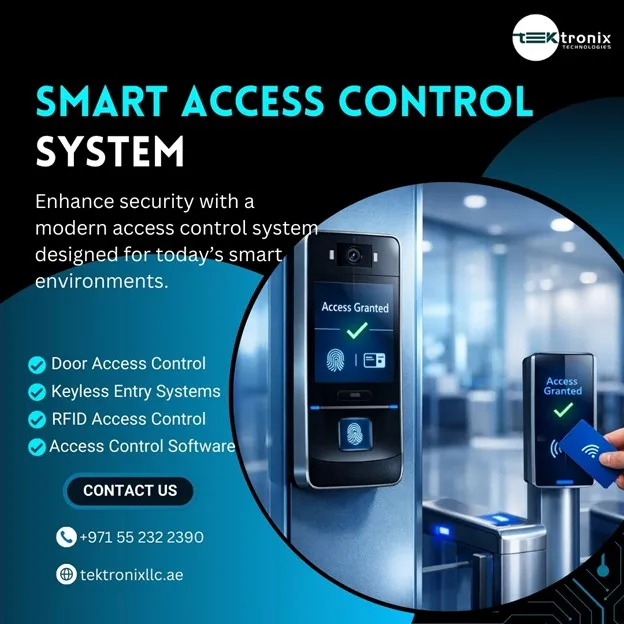

Selecting the ideal Access Control System for a data center is one of the most critical decisions any IT infrastructure manager or facilities director can make in today's digitally connected world. In the UAE - a region rapidly emerging as a global hub for cloud computing, fintech, and smart city initiatives - data centers are mission-critical assets that demand the highest levels of physical security, operational efficiency, and regulatory compliance.
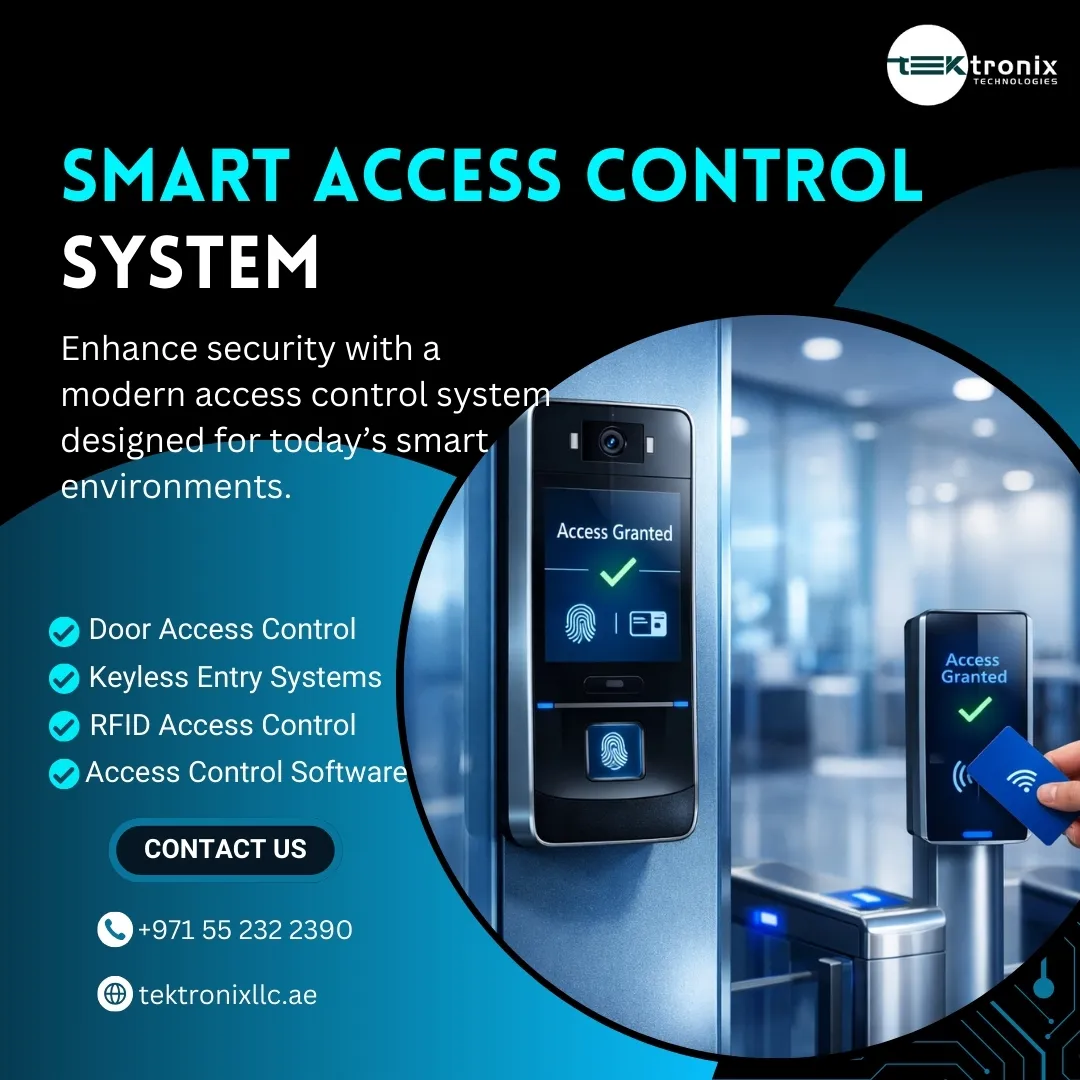
This comprehensive guide walks you through every major consideration, from evaluating technology types and compliance standards to understanding region-specific requirements across Dubai, Abu Dhabi, and Sharjah. Whether you are building a new facility or upgrading an existing one, the insights here will help you make an informed, future-proof decision.
Why Data Centers in the UAE Demand an Advanced Access Control System
Data centers house servers, networking infrastructure, and sensitive client data worth millions of dirhams. A breach - whether physical or cyber-enabled - can result in catastrophic financial loss, reputational damage, and regulatory penalties. The UAE government, through frameworks like the National Cybersecurity Strategy and ADDC (Abu Dhabi Digital Competitiveness) standards, mandates robust physical security layers for any facility handling critical data.
An Advanced Access Control System goes far beyond a simple keycard reader. It creates a dynamic, layered security perimeter around your most vulnerable assets - server halls, network operation centers (NOCs), and power management rooms - while maintaining an auditable trail of every entry and exit event. This combination of protection and accountability is non-negotiable for Tier III and Tier IV data center certifications.
Key threat vectors an effective Security Access Control framework addresses include:
- Unauthorized physical intrusion by insider threats or external actors
- Tailgating and piggybacking through secured zones
- Credential theft via cloned access cards or compromised PINs
- Social engineering attacks exploiting weak human verification procedures
- Non-compliance with data sovereignty regulations mandating access logs
Step 1 - Understand Your Data Center Security Zones and Threat Model
Before selecting any Access Control Device, map your facility into concentric security zones using the internationally recognized perimeter-lobby–data hall-cage model. Each zone demands a progressively stricter authentication requirement:
- Perimeter Zone: Fencing, vehicle barriers, CCTV, and external door alarms.
- Reception & Lobby: Visitor management systems, biometric identity verification, and mantrap/airlock vestibules.
- Operations Floors: Multi-factor authentication (MFA), role-based access policies, and anti-passback controls.
- Server Halls & Cages: Biometric plus smart card dual-verification, individual cabinet locks with electronic audit logs.
This zone-mapping exercise informs the hardware and software specifications you need from your Access Control Solutions provider, ensuring you neither over-engineer low-risk areas nor under-protect your highest-value assets.
Step 2 - Evaluate Access Control Technology Types
The UAE market offers a wide spectrum of authentication technologies. Understanding each option's strengths and limitations is essential for a data center environment where both security and operational continuity are paramount.
2.1 Biometric Authentication
Fingerprint scanners, iris recognition systems, facial recognition cameras, and palm vein readers offer the highest assurance that the person entering a zone is who they claim to be. Unlike passwords or cards, biometric credentials cannot be shared or easily replicated. For UAE data centers operating under international standards such as ISO/IEC 27001 or SOC 2, biometric systems provide strong E-E-A-T (Evidence of Expertise, Authoritativeness, and Trustworthiness) that your facility takes physical identity verification seriously.
2.2 Smart Card and RFID Systems
Proximity cards and smart cards using MIFARE DESFire or HID iCLASS SE technology remain popular for their balance of cost-effectiveness and security. When integrated with encrypted communication protocols, these credentials are significantly more resistant to cloning than older 125 kHz technology. A modern Door Access Control solution typically combines smart card readers with a secondary factor - a PIN or biometric scan - to enforce MFA at critical thresholds.
2.3 Mobile and Cloud-Based Credentials
Mobile access control, where employees or authorized technicians use a smartphone app to gain entry, is gaining rapid adoption across UAE data centers. Cloud-based management platforms allow security administrators to provision, suspend, or revoke credentials in real time from any location - a crucial capability for facilities that host third-party colocation clients or international technical staff. These systems also simplify compliance reporting by maintaining centralized, tamper-evident logs.
2.4 Two-Factor and Multi-Factor Authentication
Leading data center operators across Dubai, Abu Dhabi, and Sharjah are now mandating MFA at every internal boundary. A typical deployment combines a smart card ("something you have") with a biometric scan ("something you are") or a PIN ("something you know"). This layered approach drastically reduces the risk of unauthorized access even if one credential factor is compromised.
Step 3 - Prioritize Seamless Integration with Existing Security Infrastructure
A standalone access control system, no matter how sophisticated, delivers suboptimal value if it operates in isolation. World-class data center security is built on converged, interoperable platforms. When evaluating any Access Control System UAE provider, insist on native integrations with:
- Video Management Systems (VMS): So every access event is automatically tagged with synchronized CCTV footage for forensic investigation.
- Intrusion Detection Systems (IDS): To trigger alarms or lockdowns when unauthorized access attempts are detected after business hours.
- Building Management Systems (BMS): Enabling environmental controls (HVAC, fire suppression) to respond intelligently to occupancy data.
- IT Service Management (ITSM) Tools: For automated provisioning and de-provisioning of access rights tied to HR onboarding and offboarding workflows.
- SIEM Platforms: Security Information and Event Management tools aggregate physical access logs with digital threat intelligence for unified risk visibility.
Open-architecture platforms using OSDP (Open Supervised Device Protocol) or RESTful APIs are preferred over proprietary-only ecosystems, as they protect your long-term investment and vendor flexibility.
Step 4 - Ensure Regulatory Compliance and UAE-Specific Standards
Operating a data center in the UAE means navigating a complex but well-defined regulatory landscape. Compliance is not optional - it is a prerequisite for commercial viability and for attracting international clients with their own compliance obligations.
Key frameworks to align your physical security posture with include:
- UAE Information Assurance Standards (IAS): Issued by the UAE Cybersecurity Council, these standards prescribe physical security controls for government and critical infrastructure facilities.
- NESA (National Electronic Security Authority) Guidelines: Mandate access control logging, incident response procedures, and regular security audits for operators of critical national infrastructure.
- Uptime Institute Tier Standards: Tier III and Tier IV certifications require demonstrably redundant and fault-tolerant access control infrastructure.
- ISO/IEC 27001: The international information security management standard, increasingly required by enterprise clients across the GCC region.
- PCI DSS: For data centers handling payment card data, strict physical access controls and audit trails are mandated under section 9 of the standard.
Your chosen Access Control System Dubai, Access Control System Abu Dhabi, or Access Control System Sharjah implementation partner should have documented experience helping clients achieve and maintain these certifications.
Step 5 - Plan for Scalability, Redundancy, and Business Continuity
UAE data centers are expanding rapidly, with hyperscale facilities being developed across Dubai Internet City, Abu Dhabi's Masdar City, and Sharjah's industrial zones. Your access control infrastructure must scale horizontally to accommodate new server halls, additional floors, or satellite facility locations without requiring a complete system overhaul.
Critical scalability and resilience features to demand from any vendor include:
- Distributed Controller Architecture: Ensures local doors continue to operate during WAN outages or central server failures.
- Failover and Redundant Power: UPS-backed controllers and PoE+ (Power over Ethernet Plus) readers guarantee continued operation during power disruptions.
- High-Availability Database Clustering: Credential and event databases should run in active-active or active-passive clusters to eliminate single points of failure.
- Modular Licensing: Software platforms should support incremental licensing to add users, doors, or features without re-architecting the deployment.
Step 6 - Calculate Total Cost of Ownership (TCO), Not Just Capital Expenditure
Many facilities managers make the mistake of selecting an access control platform based primarily on upfront hardware costs. A genuinely informed procurement decision evaluates the full 5–10-year TCO, which includes software licensing, annual maintenance contracts, cloud hosting fees, integration development costs, staff training, and the eventual cost of system replacement or expansion.
Leading Access Control Solutions providers in the UAE offer transparent pricing models that break down both CapEx and OpEx components. Request detailed TCO scenarios from any shortlisted vendor, and factor in the cost of non-compliance - regulatory fines and the reputational damage from a single security incident can dwarf the savings made by choosing a cheaper system.
Step 7 - Selecting the Right Access Control Solutions Partner in the UAE
Technology is only as effective as the expertise behind its implementation and support. When evaluating vendors, prioritize partners who demonstrate:
- Proven UAE Data Center Experience: Ask for verifiable case studies from similar facilities in Dubai, Abu Dhabi, Sharjah, or the wider GCC region.
- Certified Engineers: Technical staff should hold certifications such as PSP (Physical Security Professional), CPP (Certified Protection Professional), or manufacturer-specific accreditations from brands like HID Global, Lenel, Genetec, or Honeywell.
- 24/7 Local Support: Data centers operate around the clock; your security partner must provide on-call support with guaranteed SLA response times.
- Compliance Consulting: The right partner proactively helps you stay ahead of evolving UAE regulatory requirements, not just deploy hardware.
- Comprehensive Warranty and AMC: Annual Maintenance Contracts with clearly defined response times protect your investment and ensure system uptime.
Tektronix LLC is a trusted name across the UAE for enterprise-grade physical security infrastructure. With decades of combined experience delivering Access Control System UAE projects across data centers, banking institutions, government entities, and smart buildings, Tektronix brings the technical depth and local market knowledge your project demands.
Emerging Trends Shaping Access Control for UAE Data Centers in 2025 and Beyond
The access control landscape is evolving rapidly, driven by AI, IoT proliferation, and Zero Trust Architecture (ZTA) mandates. Forward-thinking data center operators in the UAE are already adopting:
- AI-Powered Behavioural Analytics: Systems that learn normal access patterns and flag anomalies - for example, an employee badging in at an unusual time or from an unexpected location - for immediate investigation.
- Zero Trust Physical Security: Moving beyond perimeter-based trust to continuously verify every access request, regardless of whether it originates from inside or outside the facility.
- Unified Physical and Logical Access Control (PACS/LACS): Converging building access with IT network authentication to ensure that a revoked employee loses both physical and digital access instantly.
- Touchless and Frictionless Access: Post-pandemic awareness has accelerated adoption of facial recognition and mobile-based access that eliminates touch points entirely.
- Blockchain-Based Audit Trails: Immutable, decentralized logs that make access event records tamper-evident - increasingly relevant for compliance-sensitive colocation clients.
Conclusion
Choosing the right Access Control System for a UAE data center is a multi-dimensional decision that encompasses technology selection, regulatory compliance, system integration, vendor expertise, and long-term cost management. As the UAE continues its trajectory as a world-class digital infrastructure hub - with major facilities operating across Dubai, Abu Dhabi, and Sharjah - the security standards expected of data center operators will only increase.
By following the structured seven-step framework outlined in this guide - mapping your security zones, evaluating technology types, ensuring seamless integration, meeting compliance mandates, planning for scalability, calculating true TCO, and partnering with a proven local expert - you position your facility at the forefront of physical security best practice.
Tektronix LLC delivers comprehensive Access Control Solutions tailored to the unique operational and regulatory requirements of UAE data centers.
FAQs
1. What authentication method is best for a Tier IV data center in Dubai?
For a Tier IV facility, dual-factor biometric authentication - combining iris or fingerprint recognition with encrypted smart card credentials - is considered the gold standard. This approach satisfies the stringent identity assurance requirements of Uptime Institute certification, aligns with UAE IAS guidelines, and provides the highest resistance to credential compromise. Deploying a Door Access Control solution with anti-passback enforcement and mantrap integration at all critical thresholds is strongly recommended.
2. How does an Access Control System UAE deployment differ from global implementations?
UAE deployments must account for local regulatory frameworks including NESA guidelines and UAE Cybersecurity Council standards, which prescribe specific requirements around access logging retention periods, incident reporting timelines, and data sovereignty. Additionally, the UAE's extreme ambient temperatures require hardware rated for heat tolerance, and many facilities must accommodate multilingual interfaces for a highly diverse international workforce. Working with a locally established Access Control System UAE integrator ensures these region-specific nuances are addressed from the design phase.
3. Can an Access Control Device integrate with my existing CCTV and fire safety systems?
Yes - modern enterprise-grade platforms are specifically architected for convergence. Leading Access Control Device manufacturers provide open API frameworks, OSDP support, and pre-built integrations with major VMS and fire panel vendors. A professional systems integrator will design the integration architecture during the project scoping phase, ensuring that your access events trigger synchronized video recording, that fire alarm activations automatically release all electronically secured doors, and that your SIEM platform receives a consolidated feed of physical security events.
4. What is the typical implementation timeline for an Advanced Access Control System in a mid-size UAE data center?
For a mid-size facility (5,000–20,000 sqm with 50–200 access points), a phased implementation of an Advanced Access Control System typically takes 8–16 weeks from site survey to full commissioning. This includes design and engineering (2–3 weeks), hardware procurement (3–4 weeks, noting UAE import lead times), installation and configuration (3–5 weeks), integration testing (1–2 weeks), and staff training (1 week). Early engagement with a UAE-based integrator accelerates procurement and ensures customs clearance and TDRA compliance requirements are handled efficiently.
5. How often should a data center's security access control infrastructure be audited or upgraded?
Industry best practice - and UAE regulatory guidance - recommends a formal Security Access Control audit at minimum annually, with quarterly vulnerability assessments for high-criticality environments. Technology refresh cycles of 5-7 years are typical for controller hardware, while software and firmware should be updated on a continuous patch management schedule. Any material changes to your facility footprint, staffing structure, or client portfolio should trigger an immediate access rights review. Partnering with an integrator who provides ongoing managed security services ensures your system evolves in step with emerging threats and compliance requirements.
Advanced Access Control System
























Sign in to leave a comment.