

Pressure does not begin with violence. It begins earlier, in moments that feel uncertain. A tone shifts. Distance closes. A boundary is tested in a way that is easy to dismiss. Many women sense these changes but hesitate because the situation is not yet clear enough to justify action.
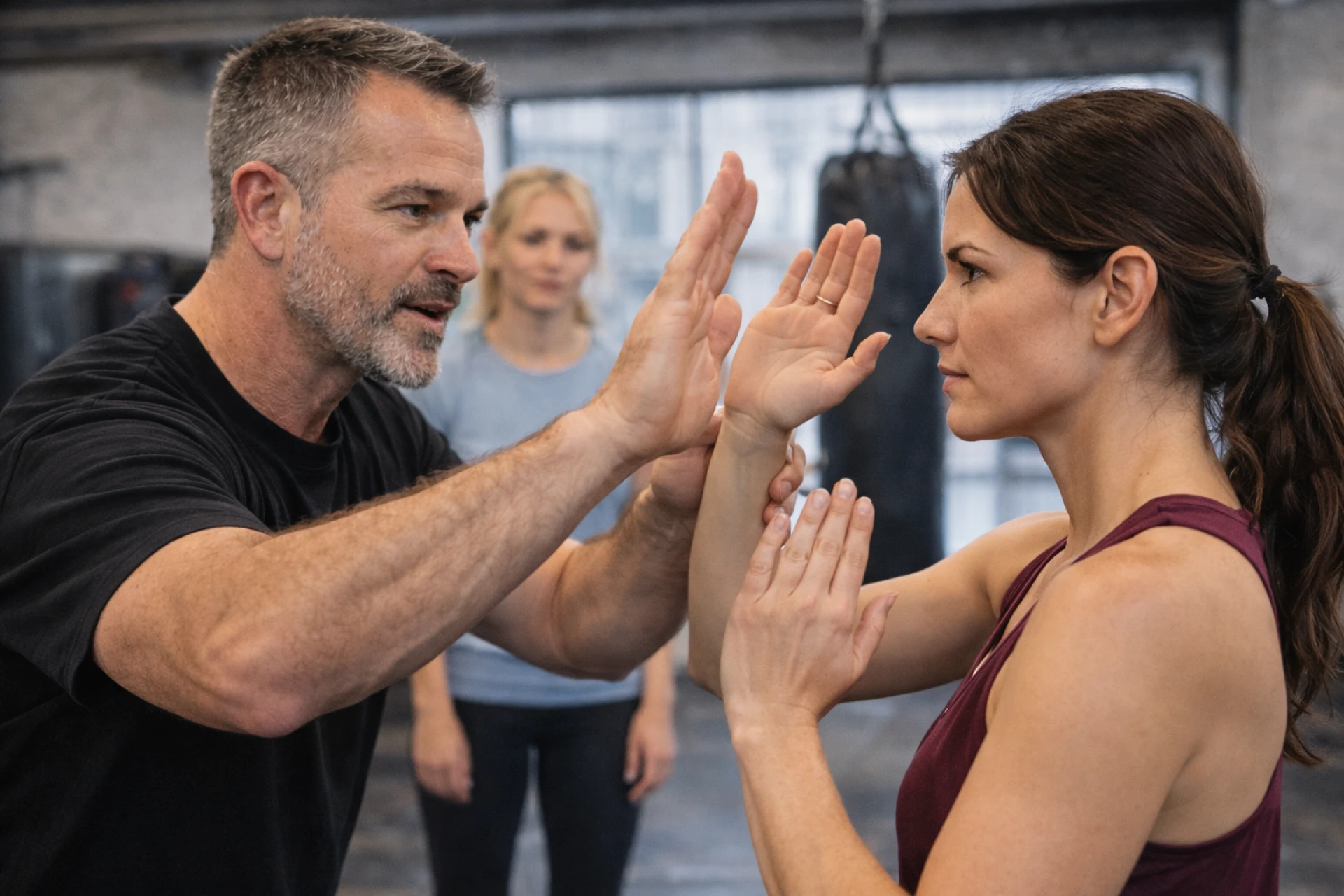
Women’s self-defense training focuses on those early moments. It changes how decisions are made before anything turns physical. Instead of waiting for certainty, women learn to respond when options are still available.
How pressure affects decisions before anything happens
Under pressure, the body reacts quickly. Breathing shortens. Attention narrows. Thoughts compete. The mind looks for confirmation before acting. This delay is common. It often appears as politeness, second-guessing, or hoping the situation resolves on its own.
Training addresses this pattern directly. Women learn how pressure builds and how hesitation shapes outcomes. When the early signs of risk are recognized, decisions happen sooner and with less internal conflict.
Pressure does not remove choice immediately. It compresses it over time. The earlier the decision, the more control remains.
Recognizing change before escalation
Most situations do not begin dramatically. They develop through small shifts. Someone stands closer than before. A question is repeated after it was already answered. A conversation changes tone. These signals are subtle but important.
Women’s self-defense training teaches how to notice these changes without overreacting. Awareness is not constant suspicion. It is the ability to recognize when something feels off and treat that information as valid.
When change is noticed early, responses can stay simple. Repositioning. Creating space. Ending the interaction. Seeking support. These actions are easier and more effective before tension rises.
Why early action reduces stress
Many people believe confidence comes from physical skill. In reality, confidence under pressure often comes from clarity. When a woman understands what is happening and what her options are, stress decreases.
Training reinforces:
- Acting before certainty becomes absolute
- Setting boundaries without apology
- Leaving early instead of explaining repeatedly
- Choosing clarity over social comfort
These habits reduce the mental load that often builds under pressure. Decisions become deliberate rather than reactive.
Boundary setting as a decision skill
Boundary setting is not about confrontation. It is about interrupting momentum. When a line is crossed and nothing is said, pressure grows. When a response comes early and clearly, many situations resolve at that point.
Women practice using tone, posture, and timing to communicate limits without escalating. This is a skill developed through repetition, not personality. The goal is to reduce hesitation so that response becomes natural rather than forced.
Clear boundaries change conditions. They prevent small moments from turning into larger ones.
Physical response depends on earlier choices
Stress affects coordination and judgment. Under high pressure, complex movements are difficult to execute. That is why physical techniques are introduced within a larger framework of awareness and timing.
Physical response is treated as a final layer. It works best when:
- Distance has been managed
- Positioning has been maintained
- Early signals were recognized
- Decisions were not delayed
Training changes decision-making first. Physical skill supports those decisions when needed.
How training carries into daily life
The most visible changes often appear outside the gym. Women begin to notice shifts in situations sooner. They speak earlier. They hesitate less when something feels wrong.
This does not create aggression. It creates steadiness. Decision-making becomes clearer because the pattern of waiting has been replaced with the habit of acting early.
Women’s self-defense training reshapes how pressure is interpreted and handled. Instead of freezing, overexplaining, or reacting late, women learn to recognize change and respond while options remain open. That shift in timing is what alters outcomes.





























Sign in to leave a comment.